How to Choose the Best Aluminum Grade for CNC Machining

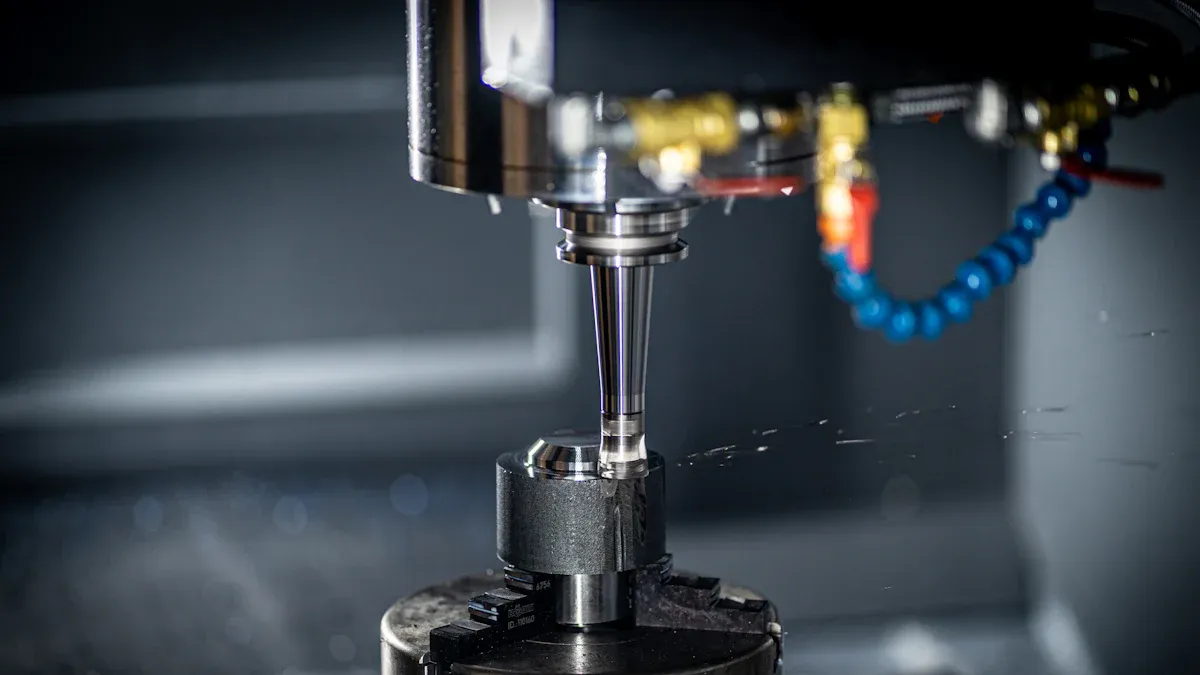
Selecting the right aluminum grade for Aluminium CNC Machining ensures better performance and cost efficiency. You must consider factors like machinability, strength, and corrosion resistance.
Aluminum’s high malleability can cause issues like poor surface finish, burrs, and chip formation. Built-up edges often reduce tool life.
Common challenges include:
Strength
Machinability
Cost
Availability
Understanding these challenges helps you make informed decisions for your Aluminium CNC Machining project.
Key Takeaways
Think about how easy it is to machine aluminum. Alloys like 6061 are easy to work with and save money.
Check how strong and durable the aluminum needs to be. Strong alloys like 7075 are great for tough jobs, while 6061 is strong and affordable.
Look at how well it resists rust in its environment. Alloys like 5052 are great for boats and last in tough conditions.
Key Factors to Consider in Aluminium Grade Selection
Machinability
When selecting aluminum for CNC machining, machinability plays a crucial role. The ease of cutting, shaping, and finishing aluminum depends on its alloy composition, heat treatment, and cutting speeds. For instance, alloys with silicon or magnesium improve hardness and strength, making them easier to machine. Heat treatments like T6 tempering further enhance machinability by refining these properties. Choosing the right tools and speeds also minimizes tool wear and ensures smooth chip formation. This makes machining efficient and cost-effective, especially for producing high-quality CNC machined components.
Strength and Durability
Strength and durability are essential for applications requiring robust aluminum parts. Certain grades, like 7075 aluminum, are known for their exceptional strength, often referred to as "aircraft-grade" aluminum. Despite its lightweight nature, aluminum offers high tensile and yield strength, making it suitable for demanding industries like aerospace and automotive. This strength-to-weight ratio allows you to create durable yet lightweight designs, ensuring performance without compromising on weight.
Corrosion Resistance
Corrosion resistance determines the longevity of aluminum parts, especially in harsh environments. Aluminum naturally forms a protective oxide layer, enhancing its resistance to rust and corrosion. Some common aluminum grades, such as 5000 and 6000 series, offer excellent corrosion resistance. For example, 6061 aluminum alloy combines medium strength with good corrosion resistance, making it ideal for structural and marine applications. Selecting the right grade ensures your components withstand environmental challenges effectively.
Weight and Density
Aluminum's low density, about one-third that of steel, makes it a preferred material for lightweight applications. This property enhances machinability and allows for thicker, stronger designs without adding unnecessary weight. Industries like aerospace and automotive benefit significantly from aluminum's high strength-to-weight ratio. Lightweight aluminum parts improve fuel efficiency and reduce overall costs, making them a practical choice for CNC machining projects.
Cost and Budget
Cost is a critical factor when choosing aluminum for CNC machining. High-performance alloys like 7075-T6 can cost up to $80 per pound, while more affordable options like 6061-T6 cost around $6 per pound. Balancing performance and budget is key. For instance, 6061 aluminum alloy offers a cost-effective solution with good machinability and corrosion resistance, making it suitable for a wide range of applications. Understanding your project's requirements helps you select the most economical grade without compromising quality.
Overview of Common Aluminum Grades for CNC Machining
6061 Aluminum
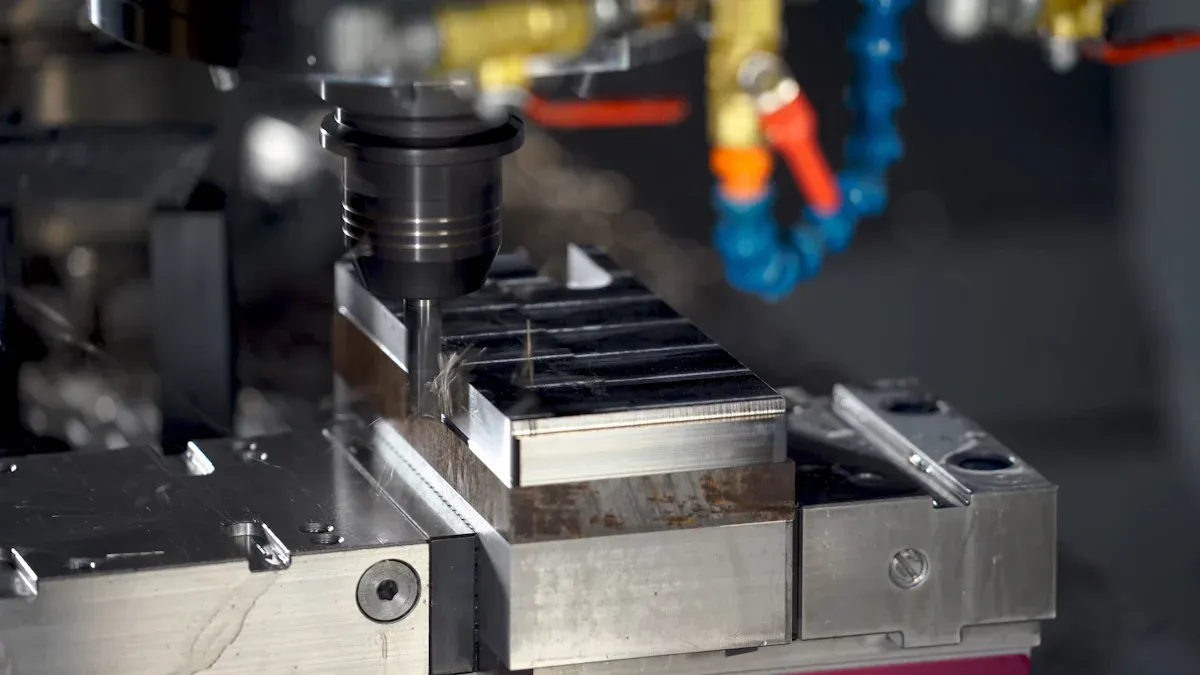
6061 aluminum alloy is one of the most versatile and widely used grades in CNC machining. Its excellent machinability, combined with good corrosion resistance and medium strength, makes it suitable for a variety of applications. You’ll find this material in industries such as:
Aerospace and aviation
Automotive
Electronics
Medical
Marine and shipbuilding
Construction and consumer goods
6061 aluminum alloy is also popular for transport operations, truck frames, and heat exchangers. Its adaptability ensures that it meets the needs of diverse projects, from structural components to lightweight CNC machined components.
7075 Aluminum
7075 aluminum stands out for its exceptional strength, often referred to as "aircraft-grade" aluminum. It is widely used in aerospace applications, particularly for highly stressed components. Despite its lower corrosion resistance compared to other alloys, its tensile strength of 572 MPa and yield strength of 503 MPa make it ideal for demanding environments. This grade is perfect when strength is your top priority.
Aluminum Grade | Tensile Strength (MPa) | Yield Strength (MPa) |
|---|---|---|
7075 | 572 | 503 |
6061 | 310 | N/A |
5052 | 220 | N/A |
5052 Aluminum
5052 aluminum is known for its excellent corrosion resistance and formability. It is commonly used in marine environments and sheet metal fabrication. Industries rely on this grade for applications like shipbuilding and chemical equipment, where durability and resistance to harsh conditions are critical.
Industry | Application |
|---|---|
Marine | Corrosion resistance and formability |
Sheet Metal Fabrication | Good formability and corrosion resistance |
2024 Aluminum
2024 aluminum offers a high strength-to-weight ratio, making it a favorite in aerospace and automotive industries. Its good fatigue resistance ensures durability under cyclic stresses, while its excellent machinability allows for precise and efficient CNC machining. These properties make it a reliable choice for performance-critical aluminum parts.
Property | Benefit | Impact |
|---|---|---|
High Strength-to-Weight Ratio | Provides significant strength without excessive weight | Essential for aerospace and automotive industries where performance and fuel efficiency are critical. |
Good Fatigue Resistance | Withstands cyclic stresses over prolonged periods | Increases the lifespan of components subjected to repeated loading. |
Excellent Machinability | Facilitates efficient and precise machining | Reduces manufacturing costs and time, especially in CNC machining parts production. |
6082 Aluminum
Aluminium 6082 is a strong and corrosion-resistant material, particularly effective in marine environments due to its higher manganese content. It also offers good machinability when paired with the right cutting tools and techniques. This grade is ideal for structural applications where strength and durability are essential.
MIC 6 Aluminum
MIC 6 aluminum is a cast plate known for its excellent dimensional stability. It can be machined to tight tolerances, making it a top choice for precision CNC machining projects. This material resists distortion and deformation, ensuring consistent performance. Its uniform chip production and impurity-free composition further enhance its machinability.
Advantages of MIC 6 aluminum include:
Excellent dimensional stability
Tight tolerances
Resistance to distortion and deformation
Uniform chip production
Void-free and impurity-free composition
Comparison of Aluminum Grades for CNC Machining
Strength-to-Weight Ratio
When strength and weight are critical, aluminum stands out as a top choice. Among the various grades, 7075 aluminum offers the highest strength-to-weight ratio, making it ideal for aerospace and automotive applications. Its exceptional tensile strength ensures durability without adding unnecessary weight. On the other hand, 6061 aluminum alloy provides a balanced combination of medium strength and lightweight properties, making it versatile for structural components and CNC machined components. For projects requiring moderate strength with minimal weight, 2024 aluminum is another excellent option due to its fatigue resistance and high performance under stress.
Corrosion Resistance
Corrosion resistance is vital for aluminum parts exposed to harsh environments. Grades like 5052 and 5083 excel in marine and chemical processing industries due to their ability to withstand saltwater and corrosive atmospheres. Alloy 5052, in particular, is highly resistant to marine environments, while 6061 aluminum is widely used in construction for its strength and corrosion resistance. Choosing the right material ensures your components maintain their integrity over time, even in challenging conditions.
Top corrosion-resistant grades:
5052: Excellent resistance to saltwater and marine atmospheres.
6061: Suitable for structural applications with good corrosion resistance.
Machinability and Ease of Use
The machinability of aluminum varies across different alloys. 6061 aluminum is known for its excellent machinability, making it a popular choice for aluminium CNC machining projects. It is versatile and easy to work with, ensuring efficient production of high-quality components. In contrast, 7075 aluminum, while offering superior strength, presents more challenges during machining due to its hardness. The table below highlights the machinability of these two common grades:
Aluminum Alloy | Machinability |
|---|---|
6061 | Good |
7075 | Fair |
Cost Comparison
Cost plays a significant role in selecting aluminum for CNC machining. For high-volume projects, cost-effective grades like 6061 aluminum alloy strike a balance between performance and affordability. Alloy 1100, a commercially pure aluminum, offers excellent corrosion resistance and machinability at a lower cost, making it suitable for less demanding applications. On the other hand, high-strength alloys like 7075 come at a premium price but deliver unmatched performance for critical applications. Evaluating your project requirements helps you choose the most economical option without compromising quality.
Aluminum Grade | Description | Machining | Strength | Corrosion Resistance | Applications |
|---|---|---|---|---|---|
6061 | Versatile, medium strength, good corrosion resistance | Good | Medium | Good | Structural components, automotive, aerospace |
7075 | High strength, lower corrosion resistance | Fair | High | Moderate | Aerospace, high-stress components |
5052 | Excellent corrosion resistance, moderate strength | Good | Moderate | Excellent | Marine, chemical processing |
Practical Tips for Choosing Aluminum for CNC Machining
Assessing Project Requirements
To select the most suitable aluminum alloy for your project, you must first evaluate its specific requirements. Start by identifying the strength needed for your aluminum parts. For example, aerospace components often demand high-strength alloys like 2024 aluminum alloy. Next, consider the environment where the material will be used. High corrosion resistance is essential for marine or outdoor applications, making alloys like 5052 aluminum alloy a great choice. Additionally, assess the formability and weldability of the material, especially if your design involves complex shapes or joints. Finally, factor in cost efficiency to ensure the selected grade aligns with your budget.
Tip: Create a checklist of these factors—strength, corrosion resistance, formability, weldability, and cost—to streamline your decision-making process.
Consulting with CNC Machining Experts
Collaborating with CNC machining experts can significantly enhance your project outcomes. These professionals bring advanced knowledge and access to cutting-edge CNC technology, enabling the production of precision parts with complex geometries. Their expertise ensures accurate measurements and minimizes defects during aluminum machining. This is particularly beneficial when working with challenging alloys like 6063 aluminum alloy or aluminium 6082. By consulting experts, you can also accelerate the transition from design to production, especially for prototypes or custom designs.
Balancing Performance and Cost
Balancing performance and cost is crucial when choosing aluminum for CNC machining. Begin by identifying the specific properties your project requires, such as high corrosion resistance or machinability. For instance, 6061 aluminum alloy offers a cost-effective solution with good machinability, while 7075 provides superior strength at a higher price. Evaluate the availability of the material, as some grades may be harder to source. By carefully weighing these factors, you can select a grade that meets both your performance needs and budget constraints.
Note: While high-performance alloys like 7075 deliver unmatched strength, they may not always be necessary. Opt for a more economical option, such as 6061, for less demanding applications.
Understanding the properties of different types of aluminum is essential for successful CNC machining. Evaluate your project’s strength, corrosion resistance, and cost requirements to select the right grade. For example, aluminium 6082 offers excellent machinability and durability. Consulting experts ensures you choose the most suitable 6061 aluminum alloy or other grades for your needs.
FAQ
What is the best aluminium grade for high-strength applications?
Aluminium 7075 is ideal for high-strength applications. Its exceptional strength-to-weight ratio makes it perfect for aerospace and automotive industries.
How does aluminium 7075 compare to other common aluminium alloys?
Aluminium 7075 offers superior strength but lower corrosion resistance compared to other common aluminium alloys like 6061 or 5052. It suits demanding environments requiring durability.
Can CNC machining handle aluminium 7075 effectively?
Yes, CNC machining can handle aluminium 7075 effectively. However, its hardness requires precise tools and techniques to ensure smooth machining and minimal tool wear.
See Also
A Comprehensive 2024 Overview of CNC Machining Aluminum Alloys
Uncovering the Benefits of Aluminum CNC Machining Solutions
Key Strategies for Achieving Scratch-Free CNC Machining Results
Insights into CNC Machining Processes for Aluminum Alloy 7075
Become Proficient in CNC Machining: Technical Drawing and Material Guide
About US
Follow Us
Your prototype holds unparalleled significance, and we deeply value its uniqueness. Collaborating with you during the preparation phase for running your prototype or parts is a commitment we gladly embrace. Whether it's a single part or a complex assembly, we are dedicated to selecting the optimal tools and pathways to bring your envisioned product to life.
At Precision Fab CNC Machining, we specialize in producing parts for prototypes, short runs, and high-volume production. Our prototyping machine capabilities extend across metal, plastic, and wood machining, with welding fabrication services available to complement and finalize your prototype if required.
Address
Address: Room320 10F, Building A,Nanshan international building, Dayawan District, Huizhou, Guangdong, 516001 China
Contacts
billy@timaycnc.com