What Materials Are Best for CNC Machining Custom Robot Parts

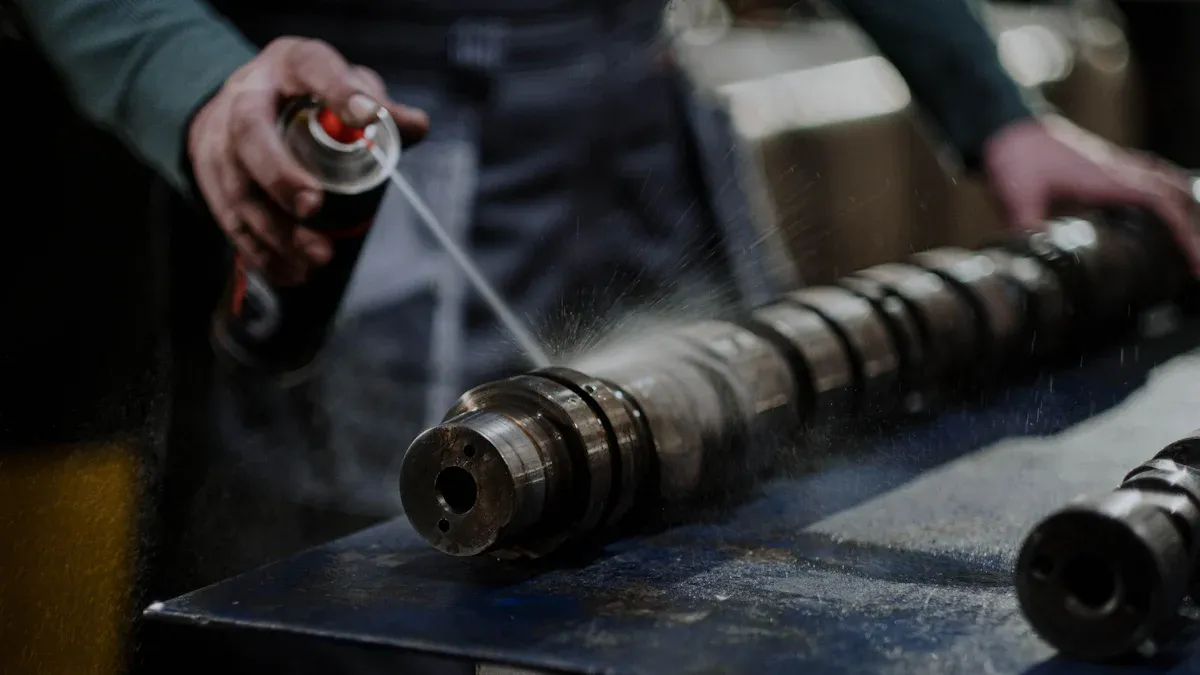
Choosing the right material for CNC machining custom robot parts ensures durability and performance. You must consider factors like strength, weight, and cost. The material’s resistance to heat, corrosion, or chemicals is critical for specific environments. Lightweight options may suit drones, while heavy-duty robots demand stronger components. Always balance performance with budget.
Key Takeaways
Pick materials that are strong and long-lasting to handle pressure and avoid damage.
Think about weight and thickness; lighter materials save energy, while heavier ones add strength for tough jobs.
Check what the robot does and where it works. Use materials that fit its needs, like rust-proof ones for outside or heat-proof ones for factories.
Key Properties of Materials for Custom Machining
Strength and Durability
When selecting materials for custom machining, strength and durability are critical. Strength ensures that the material can withstand external forces without breaking, while durability determines how well it resists wear and tear over time. For example, tensile strength measures the maximum stress a material can endure before failing. Hardness, another key property, indicates resistance to deformation, which is vital for durable materials used in CNC machining. Metals like aluminum and stainless steel offer excellent strength-to-weight ratios, making them ideal for robot parts that require both durability and efficiency.
Property | Description |
|---|---|
Load Capacity | Determines the weight the robot needs to carry. |
Impact Resistance | Assesses the likelihood of impacts or rough handling. |
Material Examples | Aluminum and stainless steel provide high strength and impact resistance. |
Weight and Density
Weight and density play a significant role in the performance of robot components. Lightweight materials improve efficiency and mobility, especially in drones or mobile robots. However, there are trade-offs. Lightweight options may lack the durability needed for heavy-duty applications. You should define the load-bearing requirements and assess the expected lifespan of the parts to strike the right balance between weight and durability.
Machinability and Precision
Machinability affects how easily a material can be shaped during the machining process. Materials like aluminum 6061 and brass C36000 are known for their excellent machinability, allowing for precise machining with tight tolerances. Precision is crucial in robotics, where even minor inaccuracies can impact the quality and functionality of the final components. Choosing materials with good machinability ensures efficient manufacturing without compromising accuracy.
Material | Characteristics |
|---|---|
Aluminum 6061 | Excellent machinability, weldability, and corrosion resistance. |
Brass C36000 | High machinability, low friction, and aesthetic appeal, suitable for high-speed operations. |
POM (Delrin) | High strength, low friction, and excellent dimensional stability, used in precision parts. |
Resistance to Environmental Conditions
Environmental factors like moisture, chemicals, and temperature variations can affect material performance. For outdoor or marine robots, corrosion-resistant materials like stainless steel are ideal. In high-temperature environments, materials with high melting points, such as titanium, ensure structural integrity. Always consider the operating environment to select materials that maintain their properties over time.
Cost and Availability
Material costs vary based on availability and demand. High-performance options like titanium or hardened steel are expensive and may require specialized machining techniques, increasing costs. On the other hand, widely available materials like aluminum or ABS plastic offer a cost-effective solution for many applications. Balancing performance and budget is essential to optimize the machining process.
Common Materials for CNC Machining Custom Robot Parts
Aluminum (e.g., 6061, 7075)
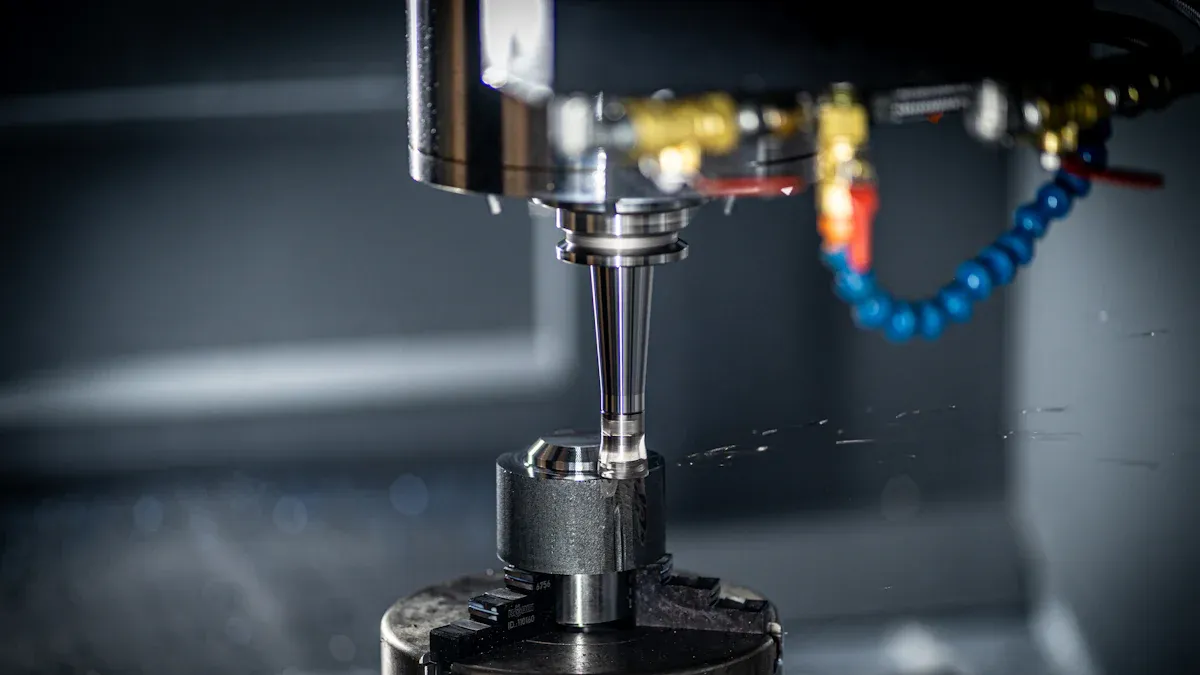
Aluminum is one of the most popular materials for CNC machining custom robot parts. Its lightweight nature and excellent machinability make it ideal for applications requiring precision and efficiency. You can choose from several aluminum alloys based on your needs:
6061: Lightweight, easy to machine, and resistant to corrosion.
7075: Offers the highest strength-to-weight ratio, perfect for aerospace and high-stress applications.
5052: Known for its corrosion resistance, often used in pressure vessels.
MIC-6: Provides high machinability and dimensional accuracy, suitable for electronics and precision components.
Aluminum alloys like 6061 and 7075 are widely used in robotics due to their balance of strength, weight, and cost-effectiveness.
Stainless Steel (e.g., 304, 17-4PH)
Stainless steel is a durable option for robot parts that require high strength and resistance to wear. Alloys like 304 and 17-4PH are commonly used in CNC machining. Stainless steel resists corrosion, making it suitable for outdoor or marine robots. It also withstands high temperatures, ensuring reliability in industrial environments. While it is heavier than aluminum, its durability often justifies the added weight.
Plastics (e.g., ABS, Nylon, PEEK)
Plastics are versatile materials for custom machining. They are lightweight, easy to machine, and offer unique properties like electrical insulation. For example:
Material | Key Properties |
|---|---|
ABS | High strength-to-weight ratio, impact resistance, and ease of machining. |
Nylon | Excellent wear resistance and low friction, ideal for moving components. |
PEEK | High-temperature resistance and chemical stability, used in demanding environments. |
Plastics like ABS are perfect for electronic enclosures, while PEEK works well in high-performance robotics.
Titanium
Titanium is a premium material for CNC machining. It combines high strength with low weight, making it ideal for aerospace and heavy-duty robot applications. Titanium resists corrosion and extreme temperatures, ensuring durability in harsh environments. However, its cost and machining difficulty may limit its use to specialized parts.
Brass and Copper
Brass and copper are excellent choices for components requiring conductivity and machinability. Copper offers superior electrical and thermal conductivity, making it ideal for wiring and heat dissipation. Brass, a copper-zinc alloy, provides better machinability and corrosion resistance. It is often used for low-friction parts like gears and bearings. Both materials are valuable for custom robot parts where precision and performance are critical.
Application-Specific Material Recommendations for Custom Robot Parts
Lightweight Materials for Drones and Mobile Robots
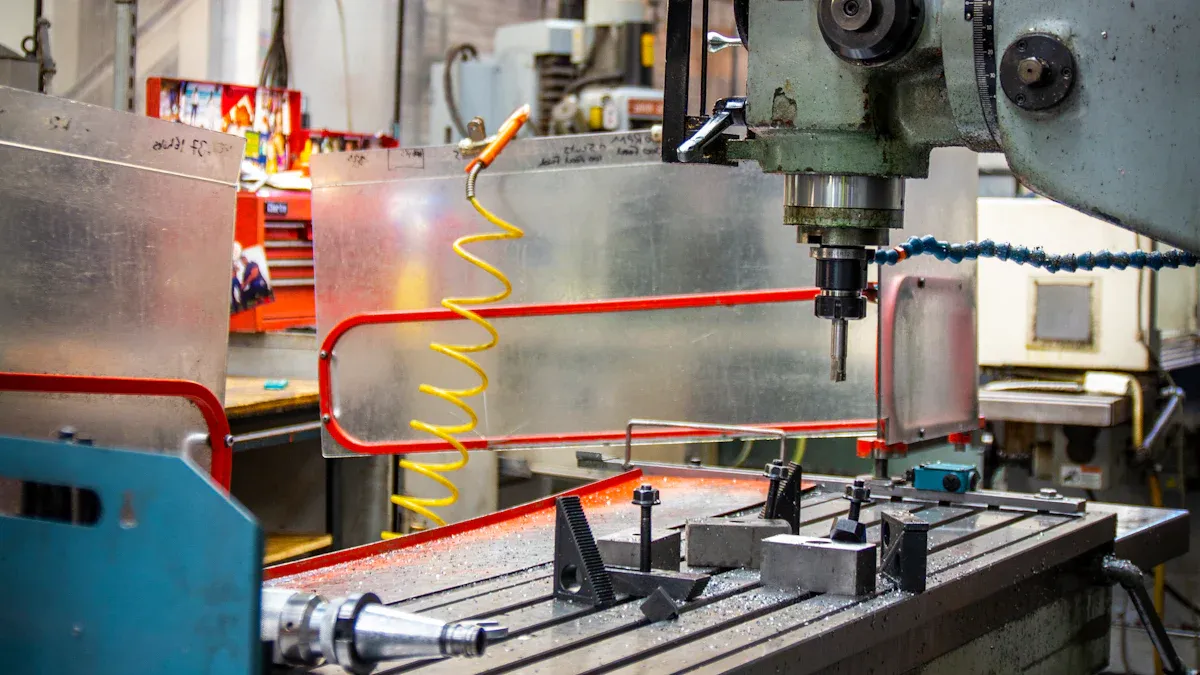
For drones and mobile robots, lightweight materials are essential to enhance mobility and efficiency. Aluminum alloys, such as 6061 and 7075, are excellent choices due to their low density and high strength-to-weight ratio. These materials allow you to reduce the overall weight of the robot without compromising durability. Plastics like ABS and Nylon also work well for non-structural components, offering further weight reduction while maintaining machinability. By selecting lightweight materials, you can improve battery life and maneuverability in mobile applications.
Heat-Resistant Materials for Industrial Robots
Industrial robots often operate in high-temperature environments, requiring materials that can withstand extreme heat. Titanium stands out for its exceptional heat resistance and strength, making it ideal for components exposed to intense thermal conditions. Aluminum alloys with high heat resistance, such as 5052, are also suitable for CNC machining custom robot parts in industrial settings. These materials ensure that your robot parts maintain structural integrity and performance under thermal stress.
Corrosion-Resistant Materials for Marine or Outdoor Robots
Marine and outdoor robots face constant exposure to moisture and corrosive elements. Stainless steel, particularly grades like 304 and 316, offers excellent corrosion resistance due to its chromium content, which forms a protective oxide layer. You can also enhance corrosion resistance by applying protective coatings or using materials with passivation properties. The table below highlights key properties of corrosion-resistant materials:
Property | Description |
|---|---|
Chemical composition | Materials like stainless steel contain chromium, forming a protective oxide layer. |
Passivation | Certain materials develop a protective oxide layer when exposed to air or water. |
Coatings | Protective coatings create a barrier between the material and the environment. |
Resistance to electrochemical reactions | Some materials resist electrochemical reactions, reducing corrosion likelihood. |
Mechanical properties | High strength and toughness in materials can enhance their corrosion resistance. |
By choosing corrosion-resistant materials, you can extend the lifespan of your custom robot parts in harsh environments.
High-Strength Materials for Heavy-Duty Robots
Heavy-duty robots require materials that can endure significant mechanical stress. Stainless steel is a popular choice for its high strength, toughness, and resistance to harsh conditions. G10 and FR-4, high-pressure fiberglass laminates, also provide excellent mechanical strength and flame-retardant properties, making them suitable for structural components. Aluminum alloys, with their combination of strength, heat resistance, and corrosion resistance, are another reliable option for CNC machining custom robot parts. These materials ensure that your robot performs reliably in demanding applications.
Cost and Sustainability in CNC Machining for the Robotics Industry
Balancing Performance and Budget
Balancing performance and budget is essential when selecting materials for CNC machining custom robot parts. You can achieve this by carefully evaluating your project requirements and understanding the application’s needs. Consider factors like mechanical strength, thermal resistance, and environmental conditions. High-performance materials, such as tool steel, offer exceptional hardness but come at a higher cost. Alternatively, materials like aluminum or plastics, such as POM (Delrin), provide good machinability and durability at a lower price.
To optimize costs without sacrificing quality, focus on maximizing the desired material properties while minimizing expenses. Evaluate your budget constraints early in the process to avoid overspending. By choosing cost-effective materials that meet your performance needs, you can ensure a successful and economical machining process.
Recyclability and Environmental Impact
Sustainability plays a growing role in CNC machining for robotics. Many materials, including aluminum and steel alloys, are highly recyclable, making them excellent choices for eco-conscious projects. For plastics, options like PET and HDPE are preferred due to their recyclability, while polystyrene should be avoided.
CNC machining generates waste due to its subtractive nature. However, techniques like near-net-shape manufacturing and optimized nesting software can reduce material waste. Additionally, using biodegradable cutting fluids minimizes environmental harm. These practices help lower the carbon footprint of custom machining while promoting sustainability.
Long-Term Maintenance and Replacement Costs
When choosing materials for custom robot parts, consider their long-term maintenance costs. Materials like aluminum and stainless steel often require finishing processes, such as anodizing or polishing, to enhance durability and corrosion resistance. While these processes add to initial expenses, they reduce maintenance needs over time.
Durable materials, such as titanium and hardened steel, may have higher upfront costs but offer lower lifecycle expenses. Their resistance to wear and environmental damage minimizes replacement needs, saving you money in the long run. By factoring in lifecycle costs, you can make informed decisions that balance initial investment with long-term savings.
Tips for Choosing the Right Material for Custom Machining
Evaluate the Robot's Function and Environment
Understanding your robot's function and operating environment is the first step in selecting the right material for custom machining. Different applications demand specific material properties. For example:
Robots operating underwater or in corrosive environments require corrosion-resistant materials like stainless steel.
High-temperature applications benefit from heat-resistant materials such as ceramics or titanium alloys.
Indoor robots often prioritize aesthetics and lightweight materials, while outdoor robots need durability to withstand weather conditions.
Consider exposure to moisture, chemicals, or abrasive environments when evaluating material options.
By analyzing these factors, you can ensure that your custom machining for robot parts meets both functional and environmental demands.
Consult with CNC Machining Experts
Collaborating with CNC machining experts can streamline the material selection process. These professionals bring valuable insights to your project:
They help identify materials that align with your robot's mechanical and environmental requirements.
Their expertise ensures optimal machining processes, improving the quality of your custom parts.
Experts can recommend cost-effective materials that balance performance and budget.
Consulting with specialists not only enhances the efficiency of custom machining but also reduces the risk of costly errors.
Prototype and Test with Different Materials
Prototyping is a critical step in refining your robot's design and material selection. Testing different materials during this phase offers several benefits:
Using the same materials as the final product ensures accurate performance predictions.
Prototypes reveal design flaws, enabling you to make improvements before full-scale production.
Functional testing validates manufacturing processes, ensuring higher-quality custom parts.
Early identification of issues reduces the risk of recalls and enhances safety compliance.
Prototyping allows you to assess material performance, optimize designs, and achieve better results in custom machining for robot parts.
Choosing the right material for CNC machining custom robot parts ensures optimal performance and longevity. You should evaluate factors like strength, machinability, and environmental conditions. Collaborating with experts helps you navigate project requirements and industry standards. By balancing performance, cost, and sustainability, you can create efficient custom machining solutions for your robot's needs.
FAQ
What is the best material for CNC machining lightweight robot parts?
Aluminum alloys like 6061 and 7075 are excellent choices. They offer a high strength-to-weight ratio, making them ideal for lightweight and mobile robot applications.
How do you choose materials for robots in harsh environments?
Focus on corrosion-resistant materials like stainless steel or titanium. These materials withstand moisture, chemicals, and extreme temperatures, ensuring durability in challenging conditions.
Can plastics be used for CNC machining custom robot parts?
Yes, plastics like ABS and PEEK work well. They are lightweight, easy to machine, and provide unique properties like electrical insulation and chemical resistance.
See Also
Achieving Precision Parts Production Through CNC Machining Mastery
Grasping Material Needs for CNC Precision Machining Success
CNC Machining Mastery: Tolerances, Prototyping, And Material Choices
Comprehensive Guide to CNC Turning for RC Car Aluminum Components
About US
Follow Us
Your prototype holds unparalleled significance, and we deeply value its uniqueness. Collaborating with you during the preparation phase for running your prototype or parts is a commitment we gladly embrace. Whether it's a single part or a complex assembly, we are dedicated to selecting the optimal tools and pathways to bring your envisioned product to life.
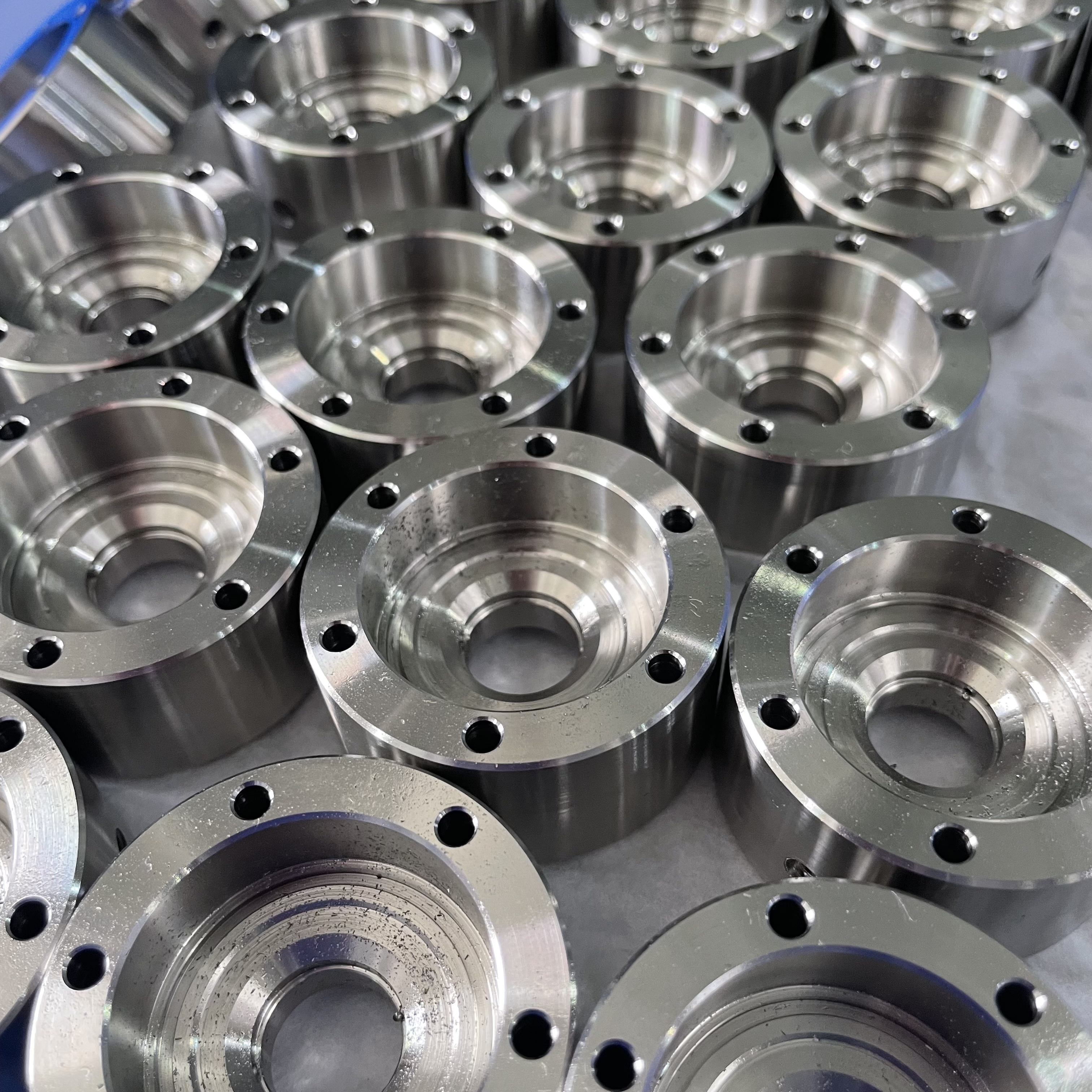
At Precision Fab CNC Machining, we specialize in producing parts for prototypes, short runs, and high-volume production. Our prototyping machine capabilities extend across metal, plastic, and wood machining, with welding fabrication services available to complement and finalize your prototype if required.
Address
Address: Room320 10F, Building A,Nanshan international building, Dayawan District, Huizhou, Guangdong, 516001 China
Contacts
billy@timaycnc.com