The Role of CAD/CAM in CNC Precision Part Design and Production

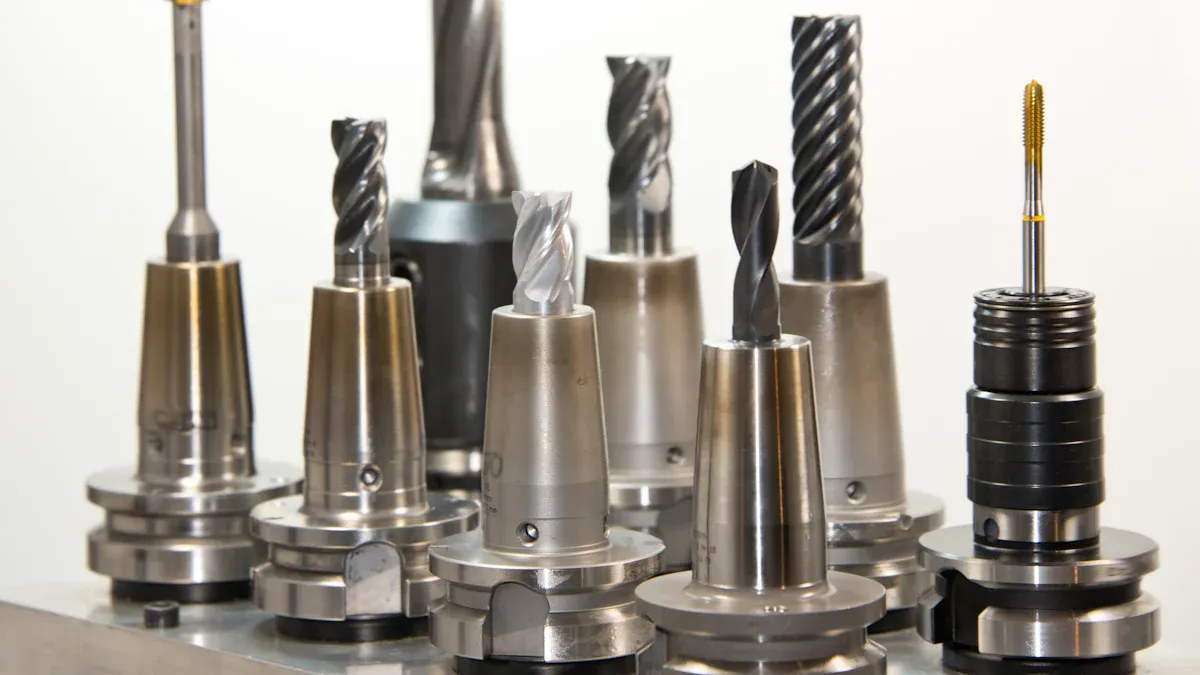
You rely on cad/cam software to achieve precision and efficiency in manufacturing. This technology transforms your ideas into detailed designs and ensures flawless execution. It simplifies the creation of CNC Precision Part designs by automating complex processes. With its accuracy and innovation, cad/cam software redefines how you approach production challenges.
Key Takeaways
CAD/CAM software improves accuracy by automating design and machining steps.
Simulation tools let you test designs on a computer to find problems early.
Automation in CAD/CAM makes work faster, easier, and saves time in CNC machining.
Understanding CAD/CAM Software in CNC
CAD: The Foundation of Precision Design
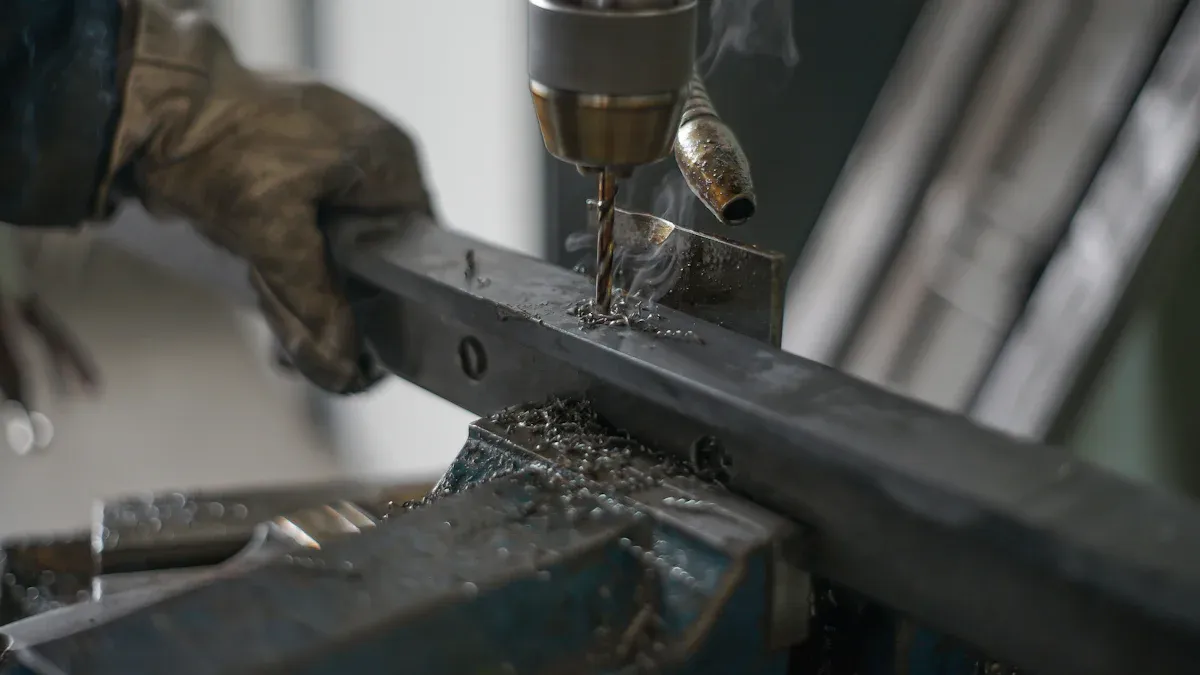
You rely on CAD (Computer Aided Design) software to create precise and adaptable designs for CNC machining. This tool streamlines the design process, allowing you to move seamlessly from concept to production. With CAD, you can develop 2D or 3D models that enhance accuracy and reduce errors. It also supports parametric modeling, enabling you to adjust designs quickly without starting from scratch.
CAD software fosters collaboration among engineers and designers, ensuring everyone works on the same platform. Industries like aerospace, automotive, and medical heavily depend on CAD for intricate designs. For example, aerospace engineers use CAD to design lightweight yet durable components. By integrating CAD with digital manufacturing technologies, you can optimize workflows and achieve superior results.
CAM: Translating Designs into CNC Instructions
CAM (Computer Aided Manufacturing) software bridges the gap between design and production. It converts CAD designs into CNC instructions, such as G-Code, which guides the machine's movements. CAM verifies your design for errors, generates a toolpath, and selects the best settings for cutting. This process ensures efficient manufacturing and minimizes material waste.
CAM acts as a translator, turning geometrical values into precise instructions for CNC machines. It calculates optimal toolpaths for operations like drilling, milling, and cutting. By doing so, it helps you maintain accuracy and speed during production. However, challenges like programming complexity and tool wear require careful attention to ensure consistent quality.
How CAD/CAM Software Enhances CNC Workflows
CAD/CAM software revolutionizes CNC workflows by simplifying machine setup and toolpath management. You can define machining origins, manage multi-axis operations, and edit setups with ease. The software’s post-processor translates toolpath data into G-Code, reducing the need for manual adjustments.
Real-world applications highlight its benefits. For instance, CAD/CAM software enables rapid prototyping, helping you develop products faster. It also reduces material wastage by optimizing cutting paths. By integrating directly with CNC machines, the software ensures a seamless transition from design to manufacturing. These features improve efficiency and precision, making CAD/CAM indispensable in modern CNC machining.
Integrating CAD/CAM with CNC for Precision
Toolpath Optimization in CNC Machining
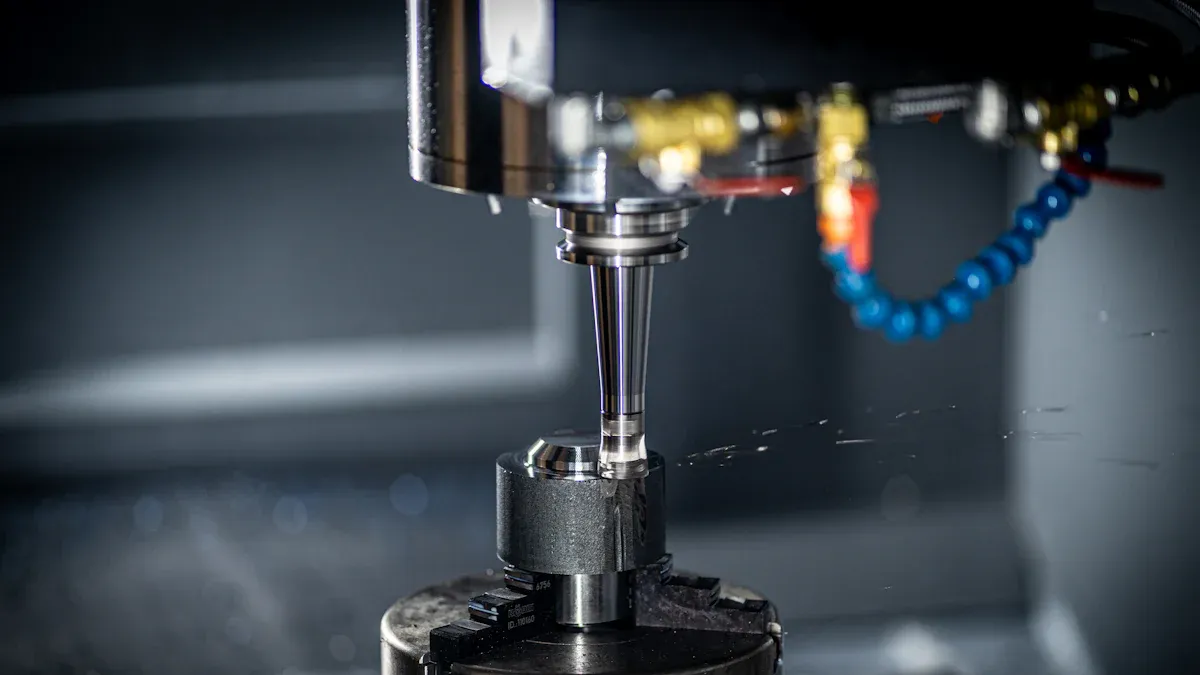
Toolpath optimization plays a critical role in achieving precision and efficiency in CNC machining. By refining the paths that cutting tools follow, you can produce intricate parts with exceptional accuracy. This is especially important in industries like aerospace and medical, where precision and complexity are non-negotiable. Optimized toolpaths also reduce errors during machining, leading to higher-quality results and fewer material losses.
Recent advancements in toolpath optimization, such as Genetic Algorithms and Deep Learning, have further enhanced CNC capabilities. These technologies allow you to create more complex parts while improving production efficiency. For example, optimized toolpaths minimize cutting time and extend tool life, saving costs and boosting productivity. By integrating CAD/CAM software, you can automate toolpath operations, ensuring consistency and precision in every project.
Aspect | Explanation |
|---|---|
Precision and Complexity | Toolpath optimization ensures high precision and intricate features in CNC machining processes. |
Reducing Errors and Enhancing Quality | Optimized paths lower machining errors, improving the quality of finished parts. |
Enhanced Capabilities | CNC machines achieve greater precision and handle complex machining strategies effectively. |
Simulation and Virtual Testing for Accuracy
Simulation and virtual testing are essential for ensuring accuracy in CNC machining. With CAD/CAM software, you can visualize and refine designs before production begins. This process helps you identify and resolve potential issues, such as tool collisions or programming errors, that could disrupt machining. Dedicated simulation tools like Mastercam and Fusion 360 allow you to test toolpaths, feed rates, and cutting speeds in a virtual environment.
By using digital twins of CNC machines, you can create interactive simulations that mimic real-world machining conditions. These tools not only improve accuracy but also enhance training and verification processes. For instance, CNC programming errors can be detected and corrected during simulation, saving time and resources. Virtual testing ensures that your design-to-production workflow remains seamless and error-free.
Automated Processes for CNC Precision Part Production
Automation has transformed CNC precision part production by streamlining repetitive tasks and reducing human error. CAD/CAM software enables you to automate processes like milling, turning, and even 3D printing. For example, automated toolpath generation optimizes cutting operations, increasing throughput and minimizing waste.
AI-driven algorithms in CAD/CAM software further enhance productivity by refining machining strategies and reducing programming complexity. This allows you to focus on innovation rather than manual adjustments. Automated processes also improve quoting accuracy, helping you plan projects more effectively. By adopting automation, you can achieve consistent quality and efficiency in CNC machining.
Benefits of CAD/CAM in CNC Precision Part Design
Achieving Superior Precision and Accuracy
CAD/CAM software ensures you achieve unmatched precision and accuracy in CNC machining. With computer-aided design, you can create highly detailed and exact models that align perfectly with your specifications. CAM software complements this by optimizing toolpaths and machining strategies, ensuring every cut is precise. By automating complex calculations and reducing manual input, you minimize errors and enhance repeatability in the part-making process.
For example, industries like aerospace and medical rely on CAD/CAM software to manufacture intricate components such as impellers and connectors. These parts demand high precision and a deep understanding of material properties. Companies like Big Drum Precision Machining use dynamic toolpaths tied to 3D models to deliver superior results. This approach ensures consistent quality and integrity in every part produced.
Boosting Efficiency and Reducing Lead Times
CAD/CAM software significantly boosts your productivity by streamlining CNC machining processes. Automated functions like milling, turning, and toolpath generation reduce machining time and improve operational efficiency. For instance, American Micro Industries reported an 80% reduction in machining time after implementing integrated CAD/CAM systems.
The software also enhances collaboration by ensuring all teams work from the same design data. This reduces errors and accelerates production cycles. Multi-axis machining, supported by CAD/CAM, allows you to handle complex geometries efficiently. By optimizing machining strategies, you can achieve faster lead times without compromising quality.
Impact Type | Description |
|---|---|
Machining Time Reduction | CAD/CAM software can reduce machining time significantly, with one case showing an 80% reduction. |
Enhanced Accuracy | Integration of CAM software minimizes human error, ensuring high repeatability in production. |
Improved Operational Efficiency | Streamlined workflows and real-time collaboration lead to faster production cycles. |
Enabling Customization and Design Flexibility
CAD/CAM software empowers you to create customized parts and prototypes with ease. It supports the realization of unique customer ideas while maintaining precision and efficiency. Modern CAD tools allow you to design for various CNC machining axes, enabling the production of complex geometries. You can also visualize designs in 3D, identify errors early, and simulate machining processes to optimize outcomes.
For example, CAD/CAM technology enables the creation of intricate aerospace components with curves and angles that traditional methods cannot achieve. The ability to make geometric changes during the design phase ensures rapid adjustments and customization. By integrating CAD/CAM with CNC machines, you streamline the manufacturing process and deliver tailored solutions to meet diverse needs.
CAD/CAM software has transformed CNC machining by enhancing precision, efficiency, and adaptability. Its ability to integrate with computer numerical control machines ensures seamless workflows and consistent quality.
Key takeaways include:
Design flexibility for creating complex geometries.
Rapid prototyping for faster product development.
Simulation tools to optimize processes and reduce waste.
Customization for unique part production.
Future advancements, such as AI-driven toolpath optimization and Industry 4.0 connectivity, will further revolutionize CNC machining. These innovations promise shorter lead times, increased automation, and enhanced productivity, redefining the future of manufacturing.
FAQ
What is the main advantage of using CAD/CAM software in CNC machining?
CAD/CAM software improves precision and efficiency. It automates design and machining processes, reduces errors, and ensures consistent quality in CNC part production.
Can CAD/CAM software handle complex geometries?
Yes, CAD/CAM software supports multi-axis machining. It allows you to create intricate designs and produce complex parts that traditional methods cannot achieve.
How does simulation in CAD/CAM software help?
Simulation identifies potential issues like tool collisions. It lets you test toolpaths and machining strategies virtually, ensuring accuracy and saving time during production.
💡 Tip: Always verify your designs through simulation to avoid costly errors in CNC machining.
See Also
Achieving Precision in CNC Machining for Parts Production
A Comprehensive Guide to CNC Parts Production Techniques
Key Processes Involved in CNC Precision Machining Explained
Investigating CNC Machining Solutions for High-Precision Manufacturing
About US
Follow Us
Your prototype holds unparalleled significance, and we deeply value its uniqueness. Collaborating with you during the preparation phase for running your prototype or parts is a commitment we gladly embrace. Whether it's a single part or a complex assembly, we are dedicated to selecting the optimal tools and pathways to bring your envisioned product to life.
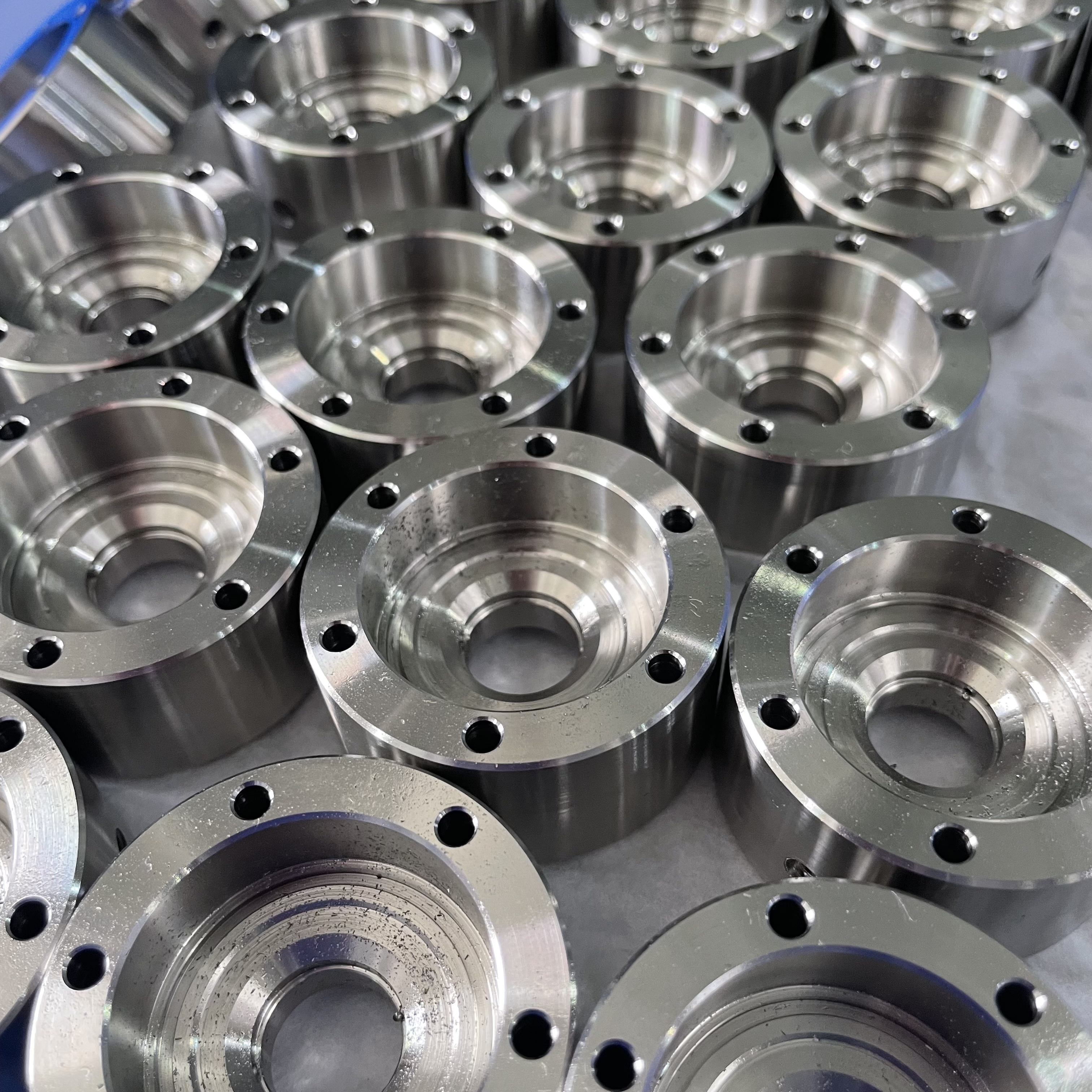
At Precision Fab CNC Machining, we specialize in producing parts for prototypes, short runs, and high-volume production. Our prototyping machine capabilities extend across metal, plastic, and wood machining, with welding fabrication services available to complement and finalize your prototype if required.
Address
Address: Room320 10F, Building A,Nanshan international building, Dayawan District, Huizhou, Guangdong, 516001 China
Contacts
billy@timaycnc.com