Choosing the Right Composite Materials for CNC Machining Prototyping

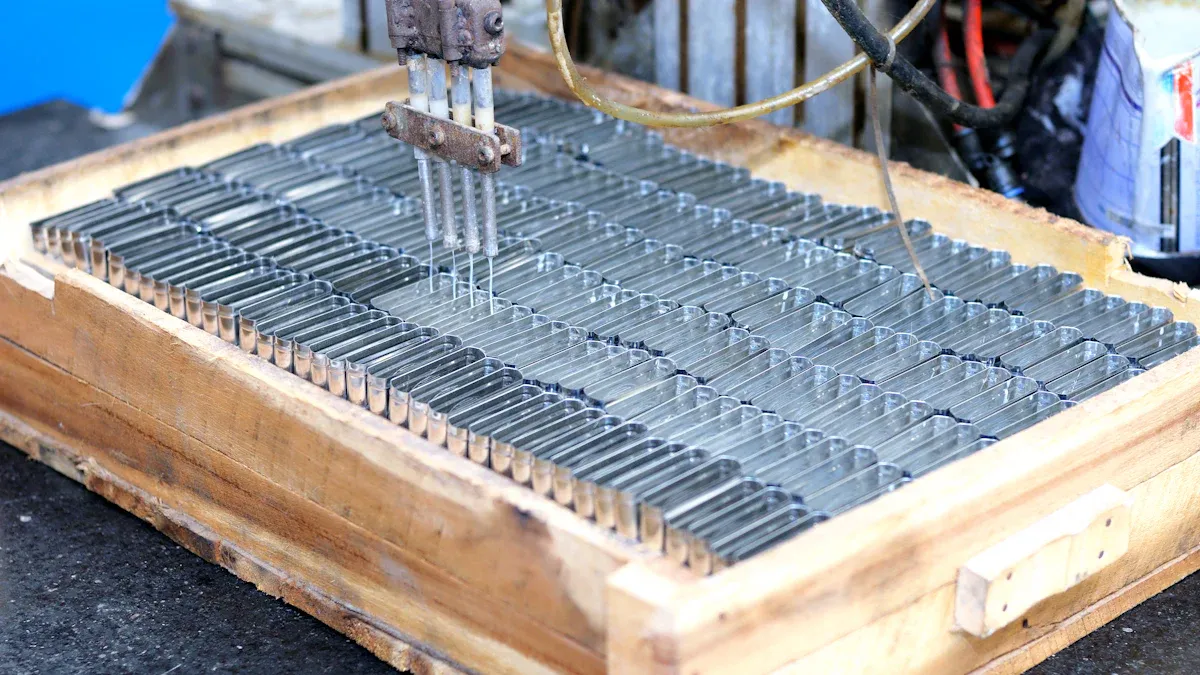
Choosing the right material is essential for CNC Machining prototyping. It directly impacts tool life, cutting speed, and surface finish quality. Poor material selection can lead to excessive tool wear and higher costs. High-performance materials may justify their expense by improving efficiency, while cost-effective options suit projects with tighter budgets.
Key Takeaways
Picking the right composite material is very important for CNC machining. It impacts how long tools last, cutting speed, and surface smoothness.
Think about material traits like strength, ease of cutting, and price. Match these to your project's needs for the best outcome.
Use special tools and cooling methods to avoid problems like layers peeling apart or tools wearing out when cutting composite materials.
Understanding Composite Materials
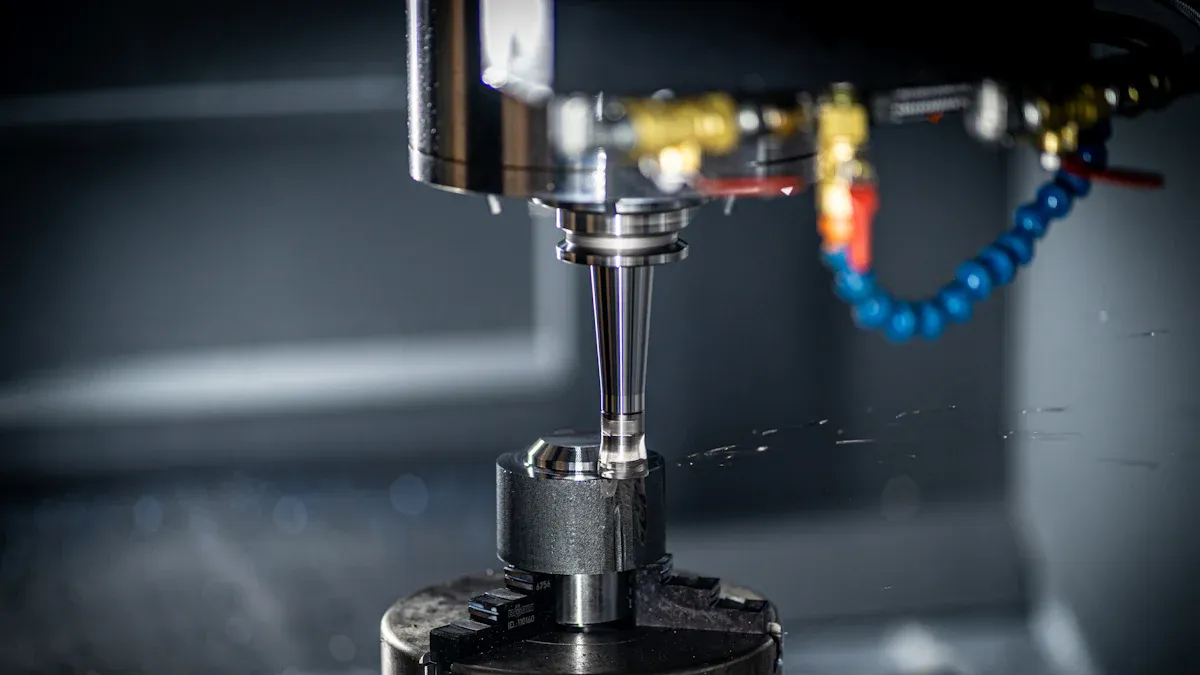
What Are Composite Materials
Composite materials are engineered by combining two or more distinct substances to create a material with superior properties. These materials often outperform their individual components in strength, durability, or other characteristics. You’ll find them widely used in industries like aerospace, automotive, and construction due to their versatility and performance.
Some common types of composite materials include:
Carbon Fiber Reinforced Polymer (CFRP)
Glass Fiber Reinforced Polymer (GFRP)
Aramid Fiber Reinforced Polymer (AFRP)
Metal Matrix Composites (MMC)
Ceramic Matrix Composites (CMC)
Hybrid Composites
Natural Fiber Reinforced Polymer (NFRP)
Each type offers unique benefits, making it essential to match the material to your project’s needs.
Components: Matrices and Reinforcements
Every composite material consists of two main components: the matrix and the reinforcement. The matrix acts as the binder, holding the material together and distributing stress. Common matrix materials include polymers, metals, and ceramics. Reinforcements, such as fibers or particles, provide strength and stiffness. For example, carbon fibers in CFRP or glass fibers in GFRP significantly enhance the material's mechanical properties.
By combining these components, you can achieve a balance of flexibility, strength, and durability tailored to specific applications.
Properties of Composite Materials
Composite materials stand out due to their exceptional properties. These include:
Property | Description |
|---|---|
Tensile Strength | Can reach up to 600 MPa, significantly higher than basic polymers. |
Thermal Stability | Exhibits superior thermal stability, suitable for high-temperature applications. |
Abrasion Resistance | High hardness and abrasion resistance, effective in wear-resistant applications. |
Environmental Resistance | Resistance to environmental degradation ensures longevity and performance. |
These properties make composite materials ideal for CNC machining. Their strength-to-weight ratio, thermal stability, and resistance to wear ensure reliable performance in demanding environments.
Criteria for Selecting the Right Material
Strength and Durability
When selecting the right material for CNC machining, strength and durability are critical factors. Materials with high strength ensure that your prototype can withstand mechanical stress without deforming or breaking. For example, carbon fiber composites offer a high strength to weight ratio, making them ideal for aerospace and automotive applications. Similarly, aluminum and steel provide excellent durability, ensuring long-lasting performance in demanding environments. Always consider the material's resistance to wear and environmental factors to ensure reliability.
Machinability and Processing Ease
Machinability directly affects the efficiency and precision of your machining process. Materials with good machinability reduce tool wear and improve cutting accuracy. For instance, aluminum is easier to machine compared to steel, making it a popular choice for prototypes requiring intricate designs. However, composite materials often present challenges like delamination and heat accumulation. To address these, you can use high-speed spindles, specialized tools, and effective cooling techniques. These measures enhance machining efficiency and maintain precision.
Thermal and Electrical Conductivity
Thermal and electrical conductivity play a significant role in applications requiring heat dissipation or electrical insulation. Aluminum, known for its excellent thermal conductivity, is ideal for heat-sensitive components. On the other hand, composite materials like carbon fiber offer low electrical conductivity, making them suitable for insulating applications. Understanding these properties helps you align material selection with your project's functional requirements.
Weight and Density
Weight and density influence the performance and handling of your prototype. Materials with a high strength to weight ratio, such as carbon fiber composites, are perfect for lightweight yet strong designs. Aluminum also offers a good balance of weight and strength, making it a versatile choice. By prioritizing lightweight materials, you can improve efficiency and reduce energy consumption in your final product.
Cost and Availability
Cost and availability often determine the feasibility of your material choice. Composite materials for CNC machining typically have higher initial costs due to expensive raw materials and complex manufacturing processes. For instance, carbon fiber and resin production depend on global supply chains, which can face disruptions. Aluminum and steel, being more readily available, offer cost-effective alternatives for budget-conscious projects. Always weigh the material's benefits against its cost to make an informed decision.
Popular Composite Materials for CNC Machining
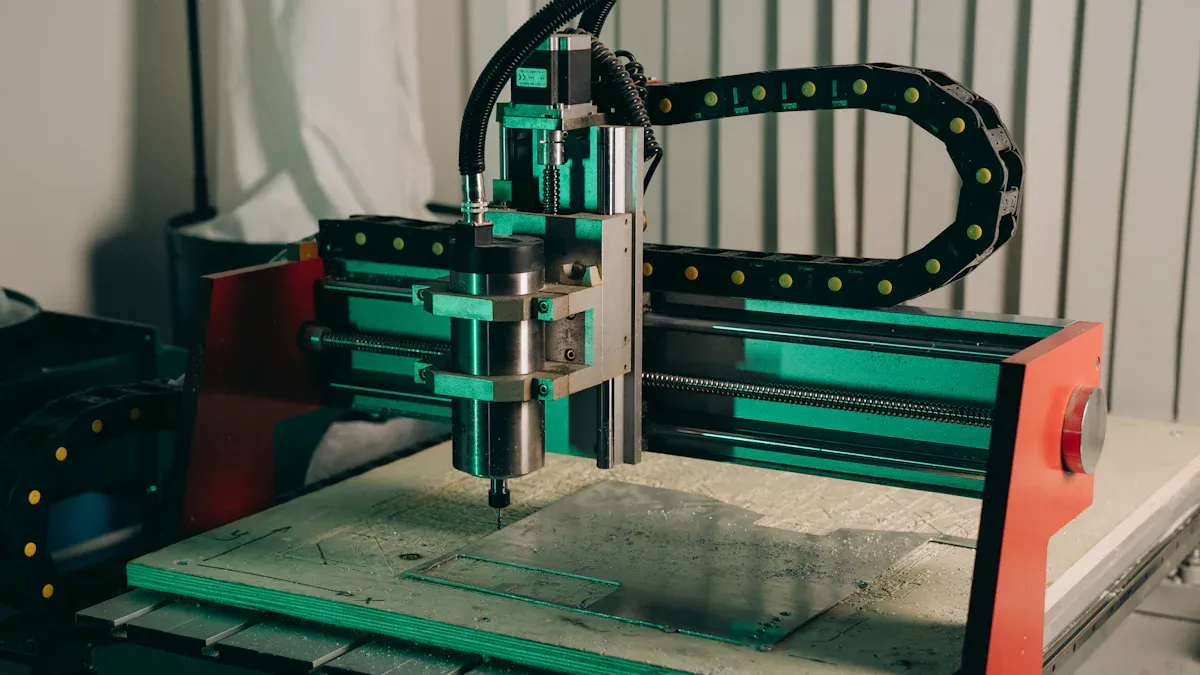
Carbon Fiber Composites
Carbon fiber composites are among the most popular materials for CNC machining. Their unique properties make them ideal for high-performance applications. These composites combine high tensile strength, low density, and excellent fatigue resistance. They also resist corrosion, ensuring durability in harsh environments.
Property | Description |
|---|---|
High Tensile Strength | Can reach up to 3,500 MPa, providing exceptional strength for machining. |
Low Density | Lightweight, which is crucial for applications requiring weight savings. |
Excellent Fatigue Resistance | Maintains performance over repeated stress cycles, ideal for dynamic applications. |
Corrosion Resistance | Resists degradation in aggressive environments, ensuring longevity. |
When machining carbon fiber composites, you must use specialized cutting tools to prevent delamination and maintain precision. These tools help you achieve clean cuts and extend tool life.
Glass Fiber Composites
Glass fiber composites, or fiberglass, offer a cost-effective alternative to carbon fiber. While not as strong, they still outperform many metals like steel in strength-to-weight ratio. Fiberglass is also significantly less expensive, costing about $6 per yard compared to $30 per yard for carbon fiber.
Strength: Stronger than steel but less than carbon fiber.
Cost: About five times cheaper than carbon fiber.
For CNC machining, glass fiber composites require cutting tools designed to handle abrasive materials. These tools ensure smooth machining and reduce wear.
Kevlar Composites
Kevlar composites are known for their exceptional impact resistance and toughness. They are widely used in applications requiring high durability, such as protective gear and aerospace components. However, Kevlar’s fibrous nature can make machining challenging. You should use sharp cutting tools and proper cooling techniques to avoid fraying and overheating.
Thermoplastic Composites
Thermoplastic composites combine lightweight properties with excellent machinability. Unlike thermoset composites, they can be reshaped with heat, making them versatile for prototyping. These materials are ideal for applications requiring flexibility and recyclability. Using the right cutting tools ensures precise machining and prevents material deformation.
Hybrid Composites
Hybrid composites combine two or more reinforcement fibers, such as carbon fiber and fiberglass. This combination optimizes mechanical properties by leveraging the strengths of each material. For example, carbon fiber adds strength, while fiberglass improves impact resistance. Hybrid composites are perfect for applications requiring a balance of strength, flexibility, and durability. When machining hybrids, you must select cutting tools that can handle varying material properties effectively.
Practical Tips for Selecting the Right Material
Aligning Material Properties with Project Needs
Selecting the right material begins with understanding your project’s requirements. Follow these steps to align material properties with your needs:
Function and Environment: Identify how the prototype will be used. Consider factors like stress, chemical exposure, and temperature resistance.
Machinability: Evaluate how easily the material can be machined. This impacts production time and tool wear.
Cost and Availability: Ensure the material fits your budget and is readily available to avoid delays.
Desired Finish and Aesthetics: Determine the appearance and finishing options required for your project.
Design Complexity: Choose materials that can handle intricate designs and tight tolerances.
For example, if you need a lightweight yet strong component, aluminum is a great choice. For high-temperature or corrosive environments, stainless steel or titanium may be better options.
CNC Machining Capabilities and Limitations
CNC machining offers precision but has limitations when working with composites. You may encounter challenges like:
Tool Wear: Abrasive fibers can wear down tools quickly.
Delamination: The layered structure of composites may lead to surface defects.
Heat Management: Poor thermal conductivity can cause heat buildup, risking material damage.
Vibration: Lightweight materials may cause tool deflection, reducing accuracy.
Dust Handling: Fine dust requires effective collection systems to maintain safety and cleanliness.
Understanding these limitations helps you plan for better machining outcomes.
Tool Selection and Maintenance
The right tools ensure precision and durability when machining composites. Use tools like polycrystalline diamond (PCD) tips or diamond-coated cutters for superior wear resistance. Specialized tool geometries also reduce delamination and improve surface finishes.
Tool Type | Benefits |
|---|---|
Diamond-Coated and Carbide | Superior wear resistance, extending tool life and maintaining cutting performance. |
Specialized Tool Geometries | Reduces delamination and improves surface finishes. |
Additionally, cooling techniques like spray mist or cryogenic machining prevent heat buildup, protecting both tools and materials.
Cooling and Heat Management
Effective cooling is essential for machining composites. It prevents heat buildup, prolongs tool life, and protects the material. Consider these techniques:
Spray Mist: Cools the material during machining.
Air Cooling: Maintains controlled temperatures.
Cryogenic Machining: Uses extreme cold to manage heat effectively.
Lubricants also reduce friction, enhancing surface quality and tool longevity.
Testing and Prototyping
Testing ensures your material performs as expected. Common methods include:
Testing Method | Description |
|---|---|
Tensile Testing | Measures strength using modified ASTM D3039 procedures. |
Compression Testing | Evaluates material under compressive loads (ASTM D6641). |
Interlaminar Shear Strength | Assesses bonding strength between layers (ASTM D2344). |
Fracture Toughness | Tests resistance to crack propagation using DCB and ENF methods. |
Impact Testing | Simulates real-world impacts with ASTM D7136 and CAI testing. |
Choose testing methods based on your project’s goals, whether for quality control or structural design.
Selecting the right material for CNC machining prototyping is essential for achieving optimal performance and efficiency. Material properties like hardness, tensile strength, and machinability directly impact tool wear, cutting precision, and overall productivity.
A systematic approach ensures success. Use tools like Coordinate Measuring Machines (CMM) for precision and hardness testers to verify material suitability. Non-destructive testing methods also help detect flaws without damaging the material.
By aligning material properties with your project’s functional and aesthetic needs, you can create prototypes that excel in quality and durability.
FAQ
What is the best material for CNC machining prototypes?
The best material depends on your project’s needs. Carbon fiber composites work well for lightweight strength, while aluminum offers excellent machinability and cost-effectiveness.
How do you prevent delamination when machining composites?
Use sharp tools with specialized geometries. Apply cooling techniques like spray mist or air cooling to reduce heat buildup and maintain precision.
Can CNC machining handle all composite materials?
CNC machining works with most composite materials, but some require specialized tools and techniques to avoid issues like tool wear or surface defects.
See Also
CNC Machining Essentials: Tolerances, Prototyping, And Material Choices
Overcoming Obstacles: Improving CNC Prototyping Precision And Speed
Grasping Material Needs For CNC Precision Machining Success
Become Proficient In CNC Machining: Technical Drawings And Material Choices
Your 2024 Resource For CNC Machining Aluminum Alloys 6061 And 7075
About US
Follow Us
Your prototype holds unparalleled significance, and we deeply value its uniqueness. Collaborating with you during the preparation phase for running your prototype or parts is a commitment we gladly embrace. Whether it's a single part or a complex assembly, we are dedicated to selecting the optimal tools and pathways to bring your envisioned product to life.
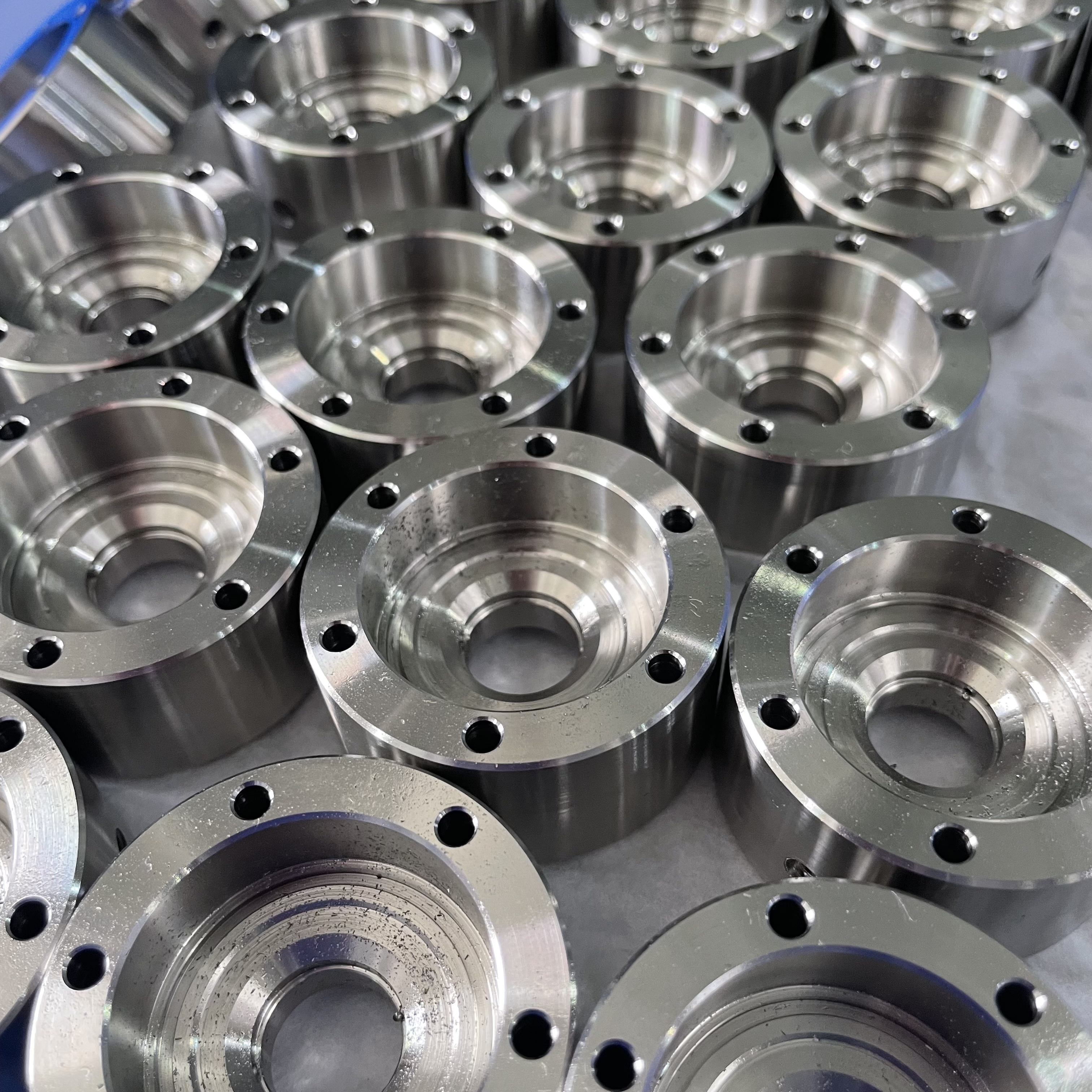
At Precision Fab CNC Machining, we specialize in producing parts for prototypes, short runs, and high-volume production. Our prototyping machine capabilities extend across metal, plastic, and wood machining, with welding fabrication services available to complement and finalize your prototype if required.
Address
Address: Room320 10F, Building A,Nanshan international building, Dayawan District, Huizhou, Guangdong, 516001 China
Contacts
billy@timaycnc.com