CNC Applications in the Production of Prosthetics and Orthotics

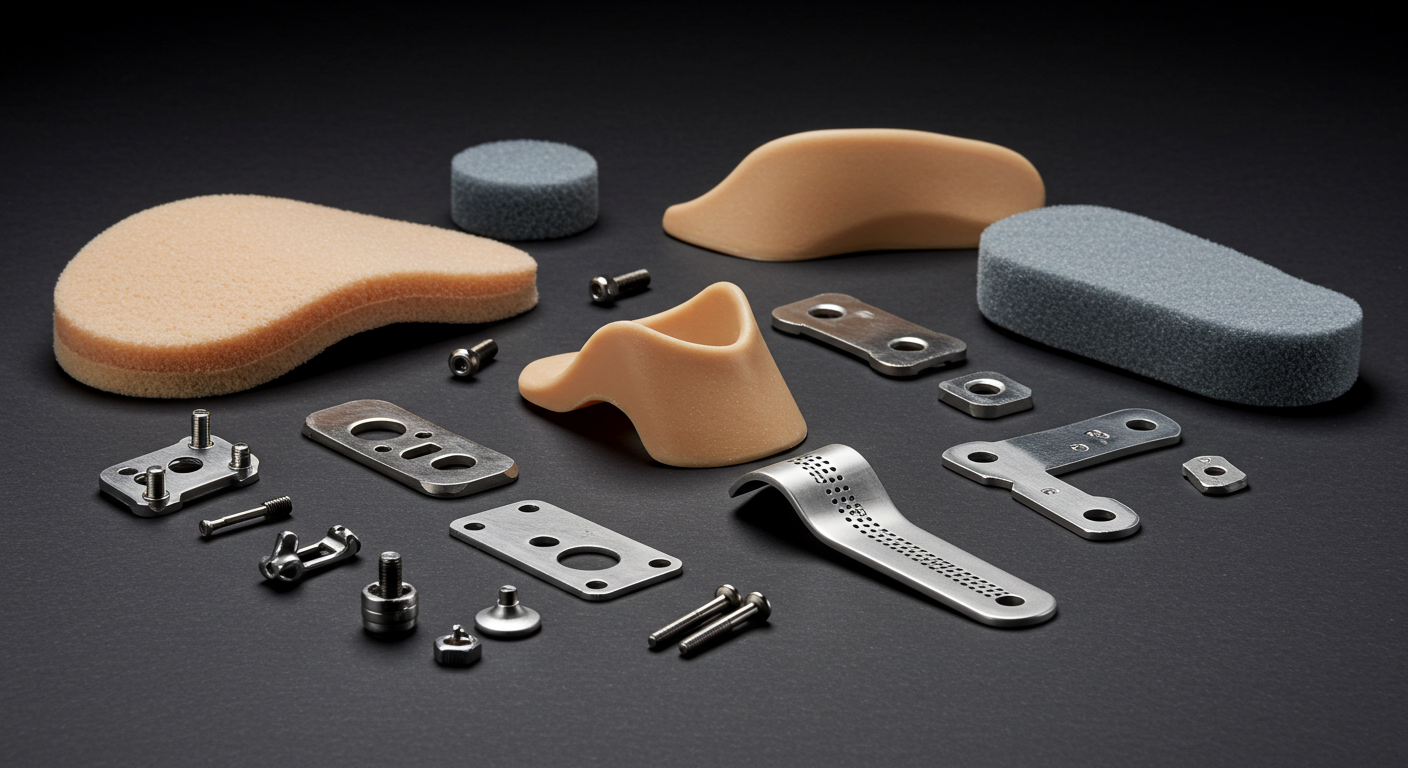
The demand for personalized prosthetics and orthotics continues to rise, with the global market projected to grow from $6.63 billion in 2022 to $9.43 billion by 2031. You need solutions that are efficient, cost-effective, and tailored to individual needs. CNC technology revolutionizes this process by enabling digital manufacturing. It uses 3D scanning and CAD modeling to create precise, custom devices. This approach reduces production time, minimizes costs, and ensures optimal comfort and functionality for patients. CNC applications have transformed the industry, making advanced, personalized care more accessible than ever.
Key Takeaways
CNC machines save time and money in making prosthetics and orthotics. This helps more people get custom care.
3D scanning and digital tools make devices fit better. They improve comfort and how well the devices work.
Automated CNC machines create high-quality products with fewer mistakes. They can make both custom and mass-produced items quickly.
Rapid prototyping helps designers test and change ideas fast. This makes it easier to meet each patient’s needs.
CNC technology helps companies by cutting waste and costs. It also makes patients happier with better-fitting, more useful devices.
Challenges in Traditional Prosthetics and Orthotics Manufacturing
Time-Consuming Processes
Manual labor and its impact on production timelines
Traditional prosthetics and orthotics manufacturing relies heavily on manual labor. This dependency slows down production timelines significantly. Each device requires skilled technicians to shape, mold, and assemble components by hand. This process often involves multiple steps, each demanding precision and time. As a result, the overall production becomes inefficient, especially when scaling up to meet growing demands.
Delays in delivering custom solutions to patients
Manual processes also lead to delays in providing custom solutions. Patients requiring orthopedic implants or other medical devices often face long waiting periods. These delays can impact their quality of life, as they must wait for devices tailored to their specific needs. The lack of streamlined production technologies further exacerbates this issue, leaving patients without timely access to essential devices.
High Costs of Production
Expensive materials and labor-intensive methods
The high costs of materials and labor-intensive methods drive up expenses in traditional medical device manufacturing. For example, the table below highlights some of the primary cost drivers:
Cost Driver | Estimated Cost Range |
|---|---|
Medical Equipment and Prosthetics | $50,000 to $200,000 |
Office Space Lease or Purchase | $2,000 to $5,000 per month |
Licensing and Legal Fees | $1,000 to $10,000 |
Renovation and Setup Costs | $20,000 to $100,000 |
Insurance Coverage Costs | $5,000 to $15,000 annually |
Marketing and Branding Expenses | $5,000 to $20,000 |
Technology and Software Solutions | $10,000 to $30,000 |
Staff Recruitment and Initial Training | $15,000 to $50,000 |
Inventory for Orthotic Supplies | $10,000 to $30,000 |
These costs make it challenging for manufacturers to produce affordable prosthetics and orthotics while maintaining profitability.
Limited scalability for manufacturers
Scaling up production is another challenge. Traditional methods often require additional resources, such as skilled labor and specialized equipment. This limitation restricts manufacturers from meeting the increasing demand for orthopedic implants and other devices.
Lack of Customization
Difficulty in achieving precise fits for individual patients
Achieving a customized fit for patients is a significant challenge in traditional manufacturing. The process often involves expensive tooling, which limits small-scale production and rapid prototyping. Additionally, material waste increases costs and harms the environment. Complex designs pose further difficulties, as traditional methods struggle to accommodate intricate geometries. These limitations result in devices that may not provide optimal comfort or functionality.
Limited ability to adapt to unique patient needs
Traditional production technologies lack the flexibility to adapt to unique patient requirements. This rigidity often leads to inconsistencies in quality, especially when producing delicate parts. Patients may receive devices that fail to meet their specific needs, impacting their overall satisfaction and well-being.
CNC Applications in Prosthetics and Orthotics
Precision in Measurements
Use of 3D scanning for accurate patient data collection
You can achieve remarkable precision in prosthetics manufacturing through 3D scanning. This technology captures detailed anatomical data in just 2 to 5 minutes using handheld scanners. The scans are then converted into 3D models, which serve as the foundation for creating custom devices. This process eliminates the need for traditional plaster casting, saving time and improving accuracy. It also enhances patient outcomes by ensuring a better fit and greater comfort.
Key benefits of 3D scanning include:
Accurate capture of anatomical details.
Efficient design using automated tools.
High customization for prosthetics and orthotics.
Digital modeling for exact specifications
Digital modeling transforms the scanned data into precise designs. Using advanced software, you can create models tailored to individual needs. These models guide the production process, ensuring that every device meets exact specifications. This approach not only improves the quality of prosthetics but also reduces material waste, making it a sustainable solution in medical device manufacturing.
Rapid Prototyping
Quick creation of prototypes for testing and adjustments
Rapid prototyping allows you to create and test prosthetic designs quickly. With CNC applications, you can produce prototypes that closely mimic the final product. This enables faster testing and adjustments, ensuring the device meets the patient's needs. For example, rapid prototyping helps customize artificial limbs for a more comfortable fit in less time.
Reduction in development time for new designs
By streamlining the design and testing phases, rapid prototyping accelerates the development of new prosthetics. You can create patient-specific implants and devices faster, enhancing both fit and functionality. This efficiency benefits medical manufacturing teams by reducing production timelines and improving patient satisfaction.
Efficient Production Processes
Automated machining for consistent quality
CNC machining ensures consistent quality in prosthetics production. Automated processes eliminate human error, achieving tolerances as fine as 0.004 mm. This precision is crucial for creating intricate components that fit perfectly within the human body. Additionally, CNC machining operates continuously, maintaining reliability and reducing the need for constant supervision.
Advantages of automated machining include:
Exceptional precision and accuracy.
Consistency in part production.
Elimination of errors through computer-controlled operations.
Scalability for mass production or custom orders
CNC technology offers scalability, whether you need to produce a single custom device or a large batch of prosthetics. For small orders, CNC machining provides quick turnaround times without the expense of specialized tooling. For mass production, it ensures efficiency and cost-effectiveness. This flexibility makes CNC applications ideal for meeting diverse production demands in medical device manufacturing.
Benefits of CNC Technology for Manufacturers and Patients
Advantages for Manufacturers
Cost efficiency through reduced material waste
CNC machining in the medical industry optimizes material usage, significantly reducing waste. Unlike traditional methods, CNC systems precisely cut and shape materials, ensuring minimal excess. This precision lowers purchasing costs since less material is required for production. Additionally, CNC machines maximize cutting efficiency, leading to long-term savings. By implementing energy-efficient practices, you can also reduce energy bills, further enhancing cost efficiency.
Key benefits of CNC technology for cost savings:
Precise cutting reduces material waste.
Lower material costs due to optimized usage.
Energy-efficient operations decrease utility expenses.
Scalability for both small and large production runs
CNC machining provides exceptional scalability, making it ideal for both small custom orders and large-scale production. For personalized prosthetic components, CNC systems ensure accurate shaping of parts like sockets and joints tailored to individual anatomies. This precision guarantees that wearable medical devices meet safety standards and functional requirements. CNC systems also accommodate fluctuating production needs, allowing for on-demand manufacturing. With the ability to run continuously with minimal supervision, CNC technology enhances productivity during high-demand cycles.
Advantages for Patients
Enhanced comfort through personalized designs
CNC machining in the medical industry enables the creation of customized patient implants. By using digital manufacturing techniques, you can design prosthetics and orthotics that fit perfectly. This level of personalization enhances comfort, ensuring that wearable medical devices adapt seamlessly to the patient’s body. Whether it’s a prosthetic limb or cardiovascular devices, CNC technology ensures a precise fit, improving the overall patient experience.
Improved functionality and aesthetics of devices
CNC technology allows for intricate designs that improve both the functionality and aesthetics of wearable medical devices. For example, robotic surgery components and cardiovascular devices benefit from the precision of CNC machining. Patients receive devices that not only perform better but also look more natural. This combination of functionality and visual appeal boosts patient confidence and satisfaction.
Real-World Applications and Case Studies
Case Study: The Use of CNC in Prosthetic Limb Production
Overview of a project by a leading prosthetics manufacturer
CNC technology has transformed how prosthetic limbs are produced. Leading manufacturers now use CNC systems to create custom prosthetics tailored to each patient’s unique needs. By combining 3D scanning and CAD modeling, you can achieve intricate designs and precise dimensions. This ensures that prosthetic limbs fit comfortably and function effectively. CNC machines also allow for the use of various materials, such as lightweight metals and durable plastics, to meet specific patient requirements.
Notable advancements in CNC prosthetic production include:
Custom-made devices designed for individual physiological characteristics.
Milling, turning, and 3D printing of prosthetics for enhanced functionality.
Results achieved through CNC technology, such as improved fit and reduced production time
The integration of CNC technology has led to remarkable results. Patients benefit from prosthetic limbs that offer a perfect fit, improving their mobility and comfort. CNC systems also reduce production time significantly. For example, rapid prototyping allows you to test and refine designs quickly, ensuring faster prosthetic component development. This efficiency not only enhances patient outcomes but also supports manufacturers in meeting growing demands.
Broader Industry Impact
Adoption of CNC in medical device manufacturing
CNC technology has become a cornerstone of medical device manufacturing. Its precision ensures compliance with strict safety standards for devices like pacemakers and surgical instruments. You can also use CNC systems to produce intricate parts for advanced equipment, such as dental implants and microfluidic devices. This capability supports the creation of highly customized and effective medical solutions.
Key benefits of CNC adoption in the medical field:
Improved precision and customization of devices.
Greater design flexibility for complex medical equipment.
Enhanced production efficiency and cost-effectiveness.
Future potential for innovation in prosthetics and orthotics
The future of prosthetics and orthotics looks promising with CNC technology. Automated machining and smart sensors will further improve accuracy and productivity. Hybrid manufacturing, which combines CNC machining with 3D printing, will enable the creation of complex geometries while reducing material waste. Additionally, advancements in biocompatible materials will enhance the reliability and performance of prosthetic devices.
Emerging innovations driven by CNC technology:
Personalized implants for better comfort and functionality.
High-precision surgical instruments for minimally invasive procedures.
Additive manufacturing for intricate, patient-specific prosthetics.
CNC technology continues to push the boundaries of what’s possible in medical device production. Its role in faster prosthetic component development and digital manufacturing ensures a future where patients receive better care and improved quality of life.
CNC technology has revolutionized prosthetics and orthotics manufacturing by addressing key challenges in traditional methods. It enables the creation of intricate components with unmatched precision, ensuring both functionality and comfort. You can now achieve greater customization through digital manufacturing, tailoring devices to meet individual patient needs. This approach reduces wait times, speeds up production, and enhances patient outcomes.
For manufacturers, CNC machining improves efficiency by automating processes, reducing material waste, and adhering to strict quality standards. Patients benefit from personalized designs that offer better comfort and functionality. As CNC technology continues to evolve, it holds immense potential for driving innovation in medical device production. Exploring its capabilities further will pave the way for more accessible and effective healthcare solutions.
FAQ
What is CNC technology, and how does it help in prosthetics manufacturing?
CNC technology uses computer-controlled machines to create precise components. In prosthetics manufacturing, it ensures accurate shaping of parts like sockets and joints. This precision improves the fit and functionality of devices, enhancing patient comfort and satisfaction.
How does digital manufacturing improve customization in prosthetics?
Digital manufacturing uses tools like 3D scanning and CAD modeling to design custom prosthetics. These tools capture detailed patient data, enabling the creation of devices tailored to individual needs. This process ensures better comfort and functionality for users.
Can CNC machines handle both small and large production runs?
Yes, CNC machines are highly scalable. They can efficiently produce single custom devices or large batches of prosthetics. This flexibility makes them ideal for meeting diverse production demands in the medical field.
Are CNC-manufactured prosthetics more cost-effective?
CNC technology reduces material waste and automates production, lowering costs. It also minimizes errors, saving time and resources. These factors make CNC-manufactured prosthetics more affordable for manufacturers and patients.
What materials can CNC machines use for prosthetics?
CNC machines work with various materials, including lightweight metals, durable plastics, and biocompatible composites. These materials ensure prosthetics are strong, lightweight, and safe for medical use.
See Also
Understanding CNC Technology's Role in Modern Manufacturing Processes
Discovering Precision Manufacturing Through CNC Machining Services
A Comprehensive Guide to CNC Precision Parts Production
The Impact of CNC Precision Parts on Manufacturing Expenses
The Transformation of High-End Manufacturing Through CNC Machining
About US
Follow Us
Your prototype holds unparalleled significance, and we deeply value its uniqueness. Collaborating with you during the preparation phase for running your prototype or parts is a commitment we gladly embrace. Whether it's a single part or a complex assembly, we are dedicated to selecting the optimal tools and pathways to bring your envisioned product to life.
At Precision Fab CNC Machining, we specialize in producing parts for prototypes, short runs, and high-volume production. Our prototyping machine capabilities extend across metal, plastic, and wood machining, with welding fabrication services available to complement and finalize your prototype if required.
Address
Address: Room320 10F, Building A,Nanshan international building, Dayawan District, Huizhou, Guangdong, 516001 China
Contacts
billy@timaycnc.com