The Use of CNC Machined Aluminum in the Aerospace Industry

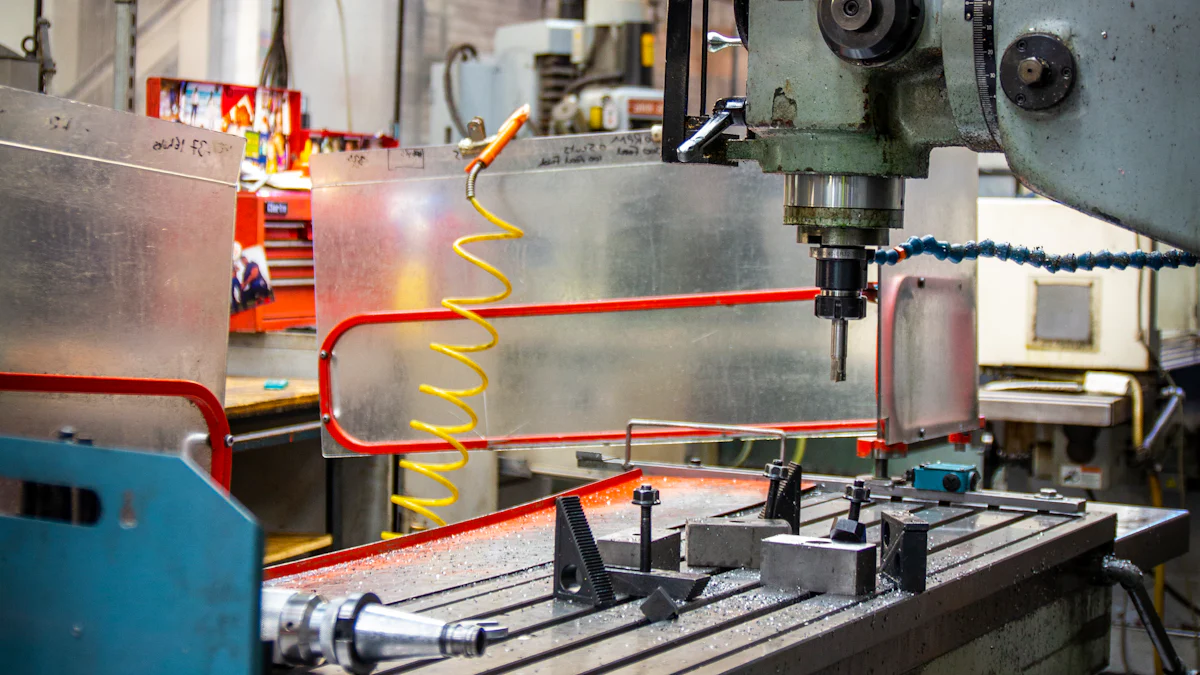
The aerospace industry relies heavily on cnc machining to create components that meet strict performance and safety standards. Aerospace grade aluminum plays a vital role in this process due to its unique combination of properties. Its lightweight nature reduces aircraft weight, while its strength ensures structural integrity. This material also resists corrosion, making it ideal for harsh environments. Cnc machining enhances these benefits by delivering precision and consistency. Together, cnc technology and aerospace grade aluminum enable engineers to design innovative solutions that improve aircraft efficiency and reliability.
Key Takeaways
CNC machining is very accurate, with tolerances as small as ±0.001 inches. This accuracy is important for safety in aerospace.
Aerospace aluminum is strong but light. It helps make parts lighter, which saves fuel.
Aluminum resists rust, so airplane parts last longer. This lowers repair costs and makes planes more reliable.
New ideas like multi-axis machines and AI make CNC machining faster and more accurate for airplanes.
Recycling aluminum uses only 5% of the energy to make new aluminum. This makes it a better choice for the environment in aerospace.
CNC Machining and Its Importance in the Aerospace Industry
What is CNC Machining?
CNC machining, or Computer Numerical Control machining, is a manufacturing process that uses computer-controlled tools to create precise components. This technology automates the machining process, allowing for the production of intricate designs and complex geometries. CNC machines operate with exceptional accuracy, often achieving tolerances as tight as ±0.001 inches. This level of precision is essential for industries like aviation, where even minor deviations can compromise safety and performance. CNC machining works with various materials, including aerospace grade aluminum, titanium, and composites, making it a versatile solution for manufacturing lightweight components.
Why CNC Machining is Critical for Aerospace Applications
The aerospace industry demands components that meet strict safety and performance standards. CNC machining for aerospace fulfills these requirements by offering unmatched precision, material versatility, and efficiency. It enables the creation of lightweight components, such as lattice structures and cooling channels, which optimize performance without sacrificing durability. The ability to produce complex geometries ensures that parts like turbine blades and avionics housings meet the industry's stringent specifications. Additionally, CNC machining minimizes material waste, making it a cost-effective choice for manufacturing high-performance aerospace components.
Precision and Reliability in Aerospace CNC Machining
Aerospace CNC machining relies on advanced technology to ensure accuracy and precision. Modern CNC machines, equipped with software like SolidWorks, allow engineers to design detailed CAD models and execute complex machining tasks with high repeatability. For example, 5-axis CNC machines are commonly used to create intricate shapes and add surface finishes to components. These machines achieve tolerances as tight as 4 microns, ensuring that parts fit perfectly and function reliably. This level of precision is critical for safety-critical systems, such as jet engines and landing gear, where even the smallest error can have significant consequences.
Properties of Aerospace Grade Aluminum
Strength-to-Weight Ratio
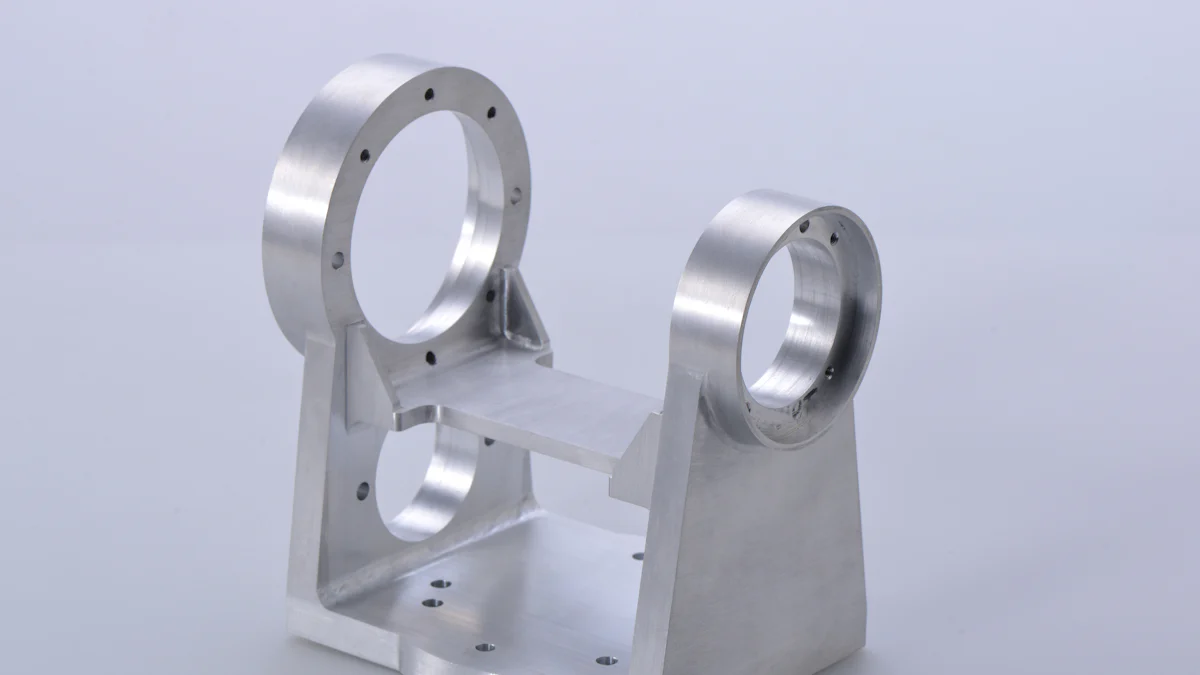
Aerospace-grade aluminum is renowned for its high strength-to-weight ratio, making it an essential material in the aerospace industry. This property allows engineers to design lightweight components that maintain structural integrity under extreme conditions. Compared to common aluminum alloys, aerospace-grade aluminum offers superior strength while remaining lightweight, which is crucial for high-performance applications. Its use in aircraft manufacturing enhances fuel efficiency by reducing overall weight. Although heavier materials like titanium may perform better in high-stress environments, aluminum remains a cost-effective and versatile choice for most aerospace applications.
Property | Description |
|---|---|
Exceptional Strength-to-Weight Ratio | Offers maximum strength while remaining lightweight, crucial for aircraft components. |
Excellent Fatigue Resistance | Can endure cyclic loads without cracking, vital for structural integrity and safety. |
Corrosion Resistance and Durability
The corrosion resistance of aerospace-grade aluminum ensures the longevity and safety of aircraft. This property allows the material to withstand harsh environmental conditions, such as exposure to moisture, salt, and temperature fluctuations, without degrading. For example, aluminum alloys used in aerospace applications resist oxidation, which prevents structural weakening over time. This durability reduces maintenance costs and enhances the reliability of aircraft components. Additionally, the lightweight nature of aluminum contributes to cost savings by improving fuel efficiency, making it a preferred choice in material selection for aerospace manufacturing.
Thermal Conductivity and Machinability
Aerospace-grade aluminum exhibits excellent thermal conductivity, which is beneficial for applications requiring efficient heat dissipation. This property makes it ideal for components like avionics housings and engine parts, where temperature regulation is critical. Furthermore, its machinability allows for the production of intricate designs with tight tolerances. CNC machining of aluminum reduces production time and costs due to its ease of cutting and forming. The material's machinability also minimizes tool wear, extending tool life and further lowering manufacturing expenses. These advantages make aluminum a versatile and practical option among aerospace materials.
Key benefits of aluminum's machinability:
Reduces production time and costs.
Extends tool life by minimizing wear.
Enables the creation of complex shapes with high precision.
Comparing Aluminum with Other Materials in Aerospace
Aluminum vs. Titanium
Aluminum and titanium are two of the most commonly used materials in aerospace manufacturing. Each offers unique advantages and trade-offs.
Titanium costs significantly more than aluminum, with raw titanium being up to ten times more expensive.
Titanium's higher strength-to-weight ratio provides excellent performance in high-stress environments, potentially reducing transportation and assembly costs.
Aluminum production consumes more energy and has a greater environmental impact compared to titanium, which may influence sustainability-focused decisions.
While titanium excels in strength and durability, aerospace-grade aluminum remains a cost-effective choice for many applications due to its lightweight nature and machinability.
Aluminum vs. Steel
Aluminum and steel differ significantly in weight and corrosion resistance, both of which are critical factors in aerospace design.
Material | Weight Comparison | Corrosion Resistance |
|---|---|---|
Aluminum | Significantly lighter than steel | Naturally forms a protective oxide layer, preventing corrosion |
Steel | Heavier than aluminum | Stainless steel resists corrosion but at a higher cost; other steels require coatings |
Aerospace-grade aluminum offers an impressive strength-to-weight ratio, enhancing fuel efficiency and reducing environmental impact. Steel, while stronger in some cases, adds weight and requires additional protection against corrosion, increasing costs and complexity.
Aluminum vs. Composites
Composites, such as carbon fiber-reinforced polymers (CFRP), are increasingly used in aerospace. However, aluminum continues to hold several advantages:
Aerospace-grade aluminum resists fatigue, enduring repeated stress without cracking.
Its malleability and machinability allow for the creation of complex components with tight tolerances.
Aluminum is recyclable without losing its properties, making it an environmentally friendly option.
Its lightweight nature improves fuel efficiency, reducing operational costs.
While composites offer high strength and low weight, aluminum's recyclability and ease of machining make it a versatile and sustainable choice for many aerospace applications.
Applications of CNC Machined Aluminum in Aerospace
Structural Components
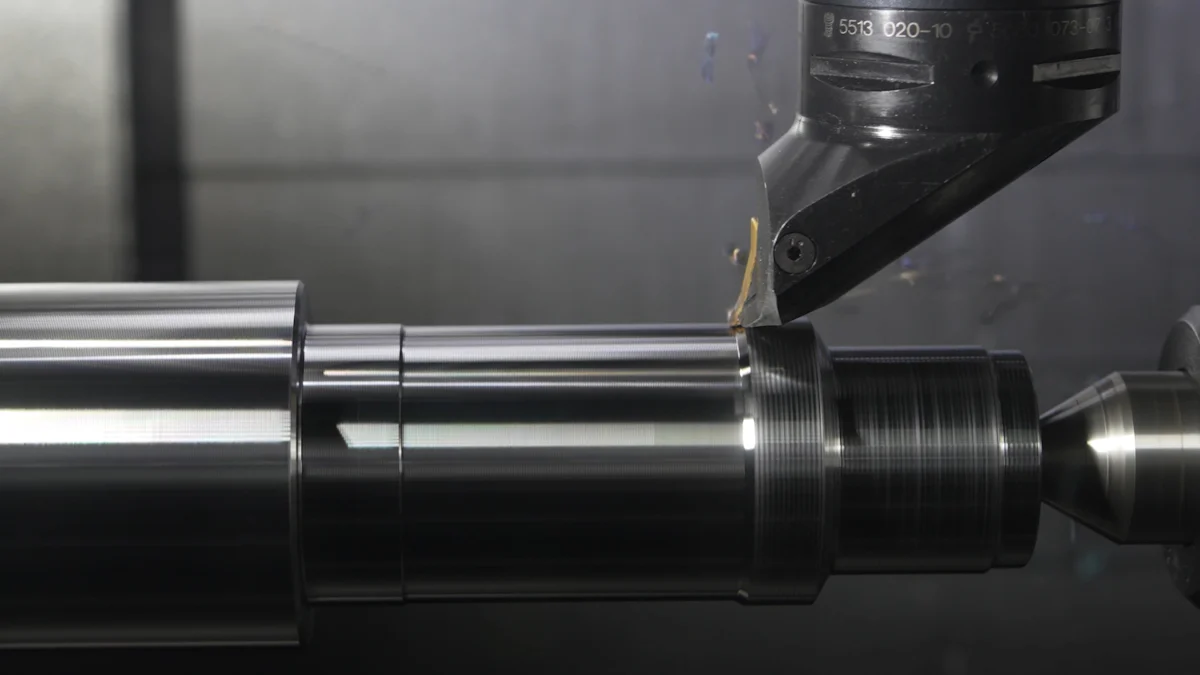
CNC machined aluminum plays a vital role in the production of structural components for aerospace manufacturing. Its lightweight nature and high strength-to-weight ratio make it ideal for creating parts that must endure significant stress while minimizing overall aircraft weight. Common structural components made from aerospace-grade aluminum include:
Tail Section Components: Internal structures for vertical and horizontal stabilizers, elevators, and rudders.
Engine and Powertrain Components: Turbine blades, engine mounts, and pylons.
Interior Components: Seat tracks, support brackets, and clamps.
Doors and Hatches: Landing gear doors and access panels.
These applications of aluminum CNC machined parts demonstrate the material's versatility and ability to meet high quality standards. The accuracy and precision achieved through aerospace CNC machining ensure that these components meet tight tolerances, enhancing both safety and performance.
Engine Components
Engine components in aviation require materials that combine strength, durability, and lightweight properties. Aerospace-grade aluminum, particularly the 7075 alloy, is a preferred choice for these critical parts. This alloy offers exceptional tensile strength and a high strength-to-weight ratio, making it suitable for components that endure extreme stress during flight. CNC machining for aerospace enables the production of complex aircraft components such as turbine blades and engine mounts. These parts must meet tight tolerances to ensure reliability and efficiency. The benefits of CNC machining include reduced material waste and improved accuracy, which are essential for aerospace parts manufacturing. By leveraging aerospace CNC machining, manufacturers can produce high-quality engine components that meet the rigorous demands of aviation.
Avionics and Electronics
CNC machined aluminum is indispensable in the production of avionics and electronics for aerospace applications. This material provides robust protection for delicate electronic devices while maintaining a lightweight profile. Structural parts and housings made from aerospace-grade aluminum shield avionics from environmental hazards such as moisture and temperature fluctuations. Additionally, these housings prevent electromagnetic interference, ensuring the reliable operation of critical systems. The machinability of aluminum allows for the creation of intricate geometries, enabling manufacturers to meet the unique requirements of avionics and electronics. These applications highlight the benefits of CNC machining in producing aerospace machined parts that combine durability, accuracy, and performance.
Challenges in Aerospace CNC Machining and Solutions
Common Challenges in Machining Aluminum
Aerospace CNC machining of aluminum presents several challenges that manufacturers must address to ensure high-quality components. One significant issue involves fatigue and fracture caused by repeated stress cycles. This problem is particularly critical for aerospace parts manufacturing, where components like wings and fuselage sections endure constant stress during flight. Additionally, machining large components with thin walls often leads to deformation or warping due to residual stresses. These issues can compromise the performance and reliability of the final product.
Another challenge arises from the need to create complex geometries. Engineers design intricate shapes to reduce weight while maintaining strength, but achieving these designs requires advanced CNC machining techniques. The high cost of aerospace-grade aluminum alloys further complicates the process. These materials are expensive, making cost management a priority for manufacturers. Environmental considerations also play a role, as the production of aerospace-grade aluminum is energy-intensive and contributes to a larger carbon footprint.
Innovations and Solutions in CNC Machining for Aerospace
Innovations in CNC machining have addressed many of these challenges, enabling manufacturers to improve efficiency and precision. Multi-axis machining is one such advancement. This technique allows simultaneous movement in multiple dimensions, making it easier to produce complex aerospace components with tight tolerances. It also reduces material waste and accelerates production times, which are critical for aerospace manufacturing.
The integration of artificial intelligence (AI) and the Internet of Things (IoT) has further enhanced aerospace CNC machining. AI-driven design software enables engineers to optimize component designs for strength and weight. IoT-enabled machinery improves efficiency by monitoring and adjusting machining processes in real time. These technologies ensure consistent quality and reduce errors during production.
Sustainability has also become a focus in aerospace machining certifications. Manufacturers now prioritize eco-friendly materials and processes to minimize environmental impact. By adopting sustainable practices, the aerospace industry can reduce its carbon footprint while maintaining high standards of quality and performance. These innovations demonstrate how CNC machining continues to evolve to meet the demands of modern aviation and space exploration.
The Future of CNC Machined Aluminum in Aerospace
Advancements in CNC Technology
Recent advancements in CNC technology are transforming aerospace manufacturing by enhancing efficiency and precision. AI and machine learning now optimize toolpaths, improving both accuracy and production speed. Automation and robotics have also become integral, reducing human error and increasing productivity. High-speed machining techniques allow manufacturers to produce aerospace parts manufacturing components faster while maintaining quality, especially for materials like aluminum and composites.
The integration of additive manufacturing with CNC machining has opened new possibilities. This combination enables the creation of complex geometries that were previously unattainable. Smart manufacturing, powered by IoT devices, allows real-time monitoring and optimization of CNC processes. Advanced software solutions further enhance design capabilities, offering simulation and real-time feedback to refine machining operations. These innovations ensure that CNC machining remains at the forefront of aviation and space technology.
Sustainability and Recycling in Aerospace Manufacturing
Sustainability has become a priority in aerospace manufacturing, with CNC machining playing a pivotal role. Manufacturers now focus on optimizing material usage and reducing waste. Techniques like near-net shape machining and optimized toolpath generation minimize energy consumption and material waste. For example, coolant skimmers enable the reuse of coolant, significantly reducing waste. Scrap metal briquette presses compress aluminum scraps, enhancing recyclability and lowering CO2 emissions.
Recycling aerospace-grade aluminum offers significant environmental benefits. The material retains its properties after recycling, making it a sustainable choice. Recycling aluminum requires only 5% of the energy needed to produce new aluminum, drastically reducing the carbon footprint. These efforts align with the industry's commitment to eco-friendly practices.
Emerging Applications in Aerospace and Space Exploration
CNC machined aluminum is finding new applications in aerospace and space exploration. Its ability to withstand extreme conditions makes it ideal for space shuttle components, satellite parts, and space station modules. CNC machining ensures these components meet the rigorous demands of space, including resistance to temperature fluctuations and radiation.
In aviation, CNC machining continues to support the development of lightweight, high-performance components. The material's machinability and strength-to-weight ratio make it indispensable for creating innovative designs. As space exploration advances, CNC machined aluminum will play a crucial role in enabling humanity's reach beyond Earth.
CNC machining has revolutionized aerospace manufacturing by enabling the production of lightweight, durable, and precise aluminum components. This process supports innovation by allowing engineers to create intricate designs that enhance fuel efficiency and performance. Aluminum’s recyclability and machinability make it a cost-effective and sustainable choice for aerospace applications. Selecting alloys like 6061-T6 reduces machining costs while maintaining high strength-to-weight ratios. As CNC technology advances, its integration with sustainable practices will continue to shape the future of aerospace, driving efficiency and innovation in both aviation and space exploration.
FAQ
What makes CNC machined aluminum ideal for aerospace applications?
CNC machined aluminum combines a high strength-to-weight ratio, corrosion resistance, and excellent machinability. These properties allow engineers to create lightweight, durable components with tight tolerances, essential for aerospace safety and performance.
How does CNC machining ensure precision in aerospace manufacturing?
CNC machining uses computer-controlled tools to achieve tolerances as tight as ±0.001 inches. Advanced software and multi-axis machines enable the production of intricate designs, ensuring components meet strict aerospace standards.
Which aluminum alloys are commonly used in aerospace?
Aerospace applications often use alloys like 6061-T6 and 7075. These alloys offer high tensile strength, corrosion resistance, and excellent machinability, making them suitable for structural, engine, and electronic components.
How does CNC machining contribute to sustainability in aerospace?
CNC machining minimizes material waste through optimized toolpaths and near-net shape machining. Aluminum’s recyclability further enhances sustainability, as recycled aluminum retains its properties while requiring only 5% of the energy needed for new production.
What are the challenges of machining aerospace-grade aluminum?
Machining aerospace-grade aluminum involves challenges like managing thin-wall deformation, achieving complex geometries, and minimizing material waste. Innovations like multi-axis machining and AI-driven design tools address these issues effectively.
Tip: Choosing the right alloy and machining technique can significantly improve efficiency and reduce costs in aerospace manufacturing.
See Also
Discovering CNC Machining Accuracy in the Aerospace Sector
Benefits of Utilizing Aluminum CNC Machining Services
CNC Machining Aluminum Alloys 6061 and 7075: 2024 Overview
CNC Machining Techniques and Uses for Aluminum Alloy 7075
Comprehensive Guide to CNC Turning RC Car Aluminum Components
About US
Follow Us
Your prototype holds unparalleled significance, and we deeply value its uniqueness. Collaborating with you during the preparation phase for running your prototype or parts is a commitment we gladly embrace. Whether it's a single part or a complex assembly, we are dedicated to selecting the optimal tools and pathways to bring your envisioned product to life.
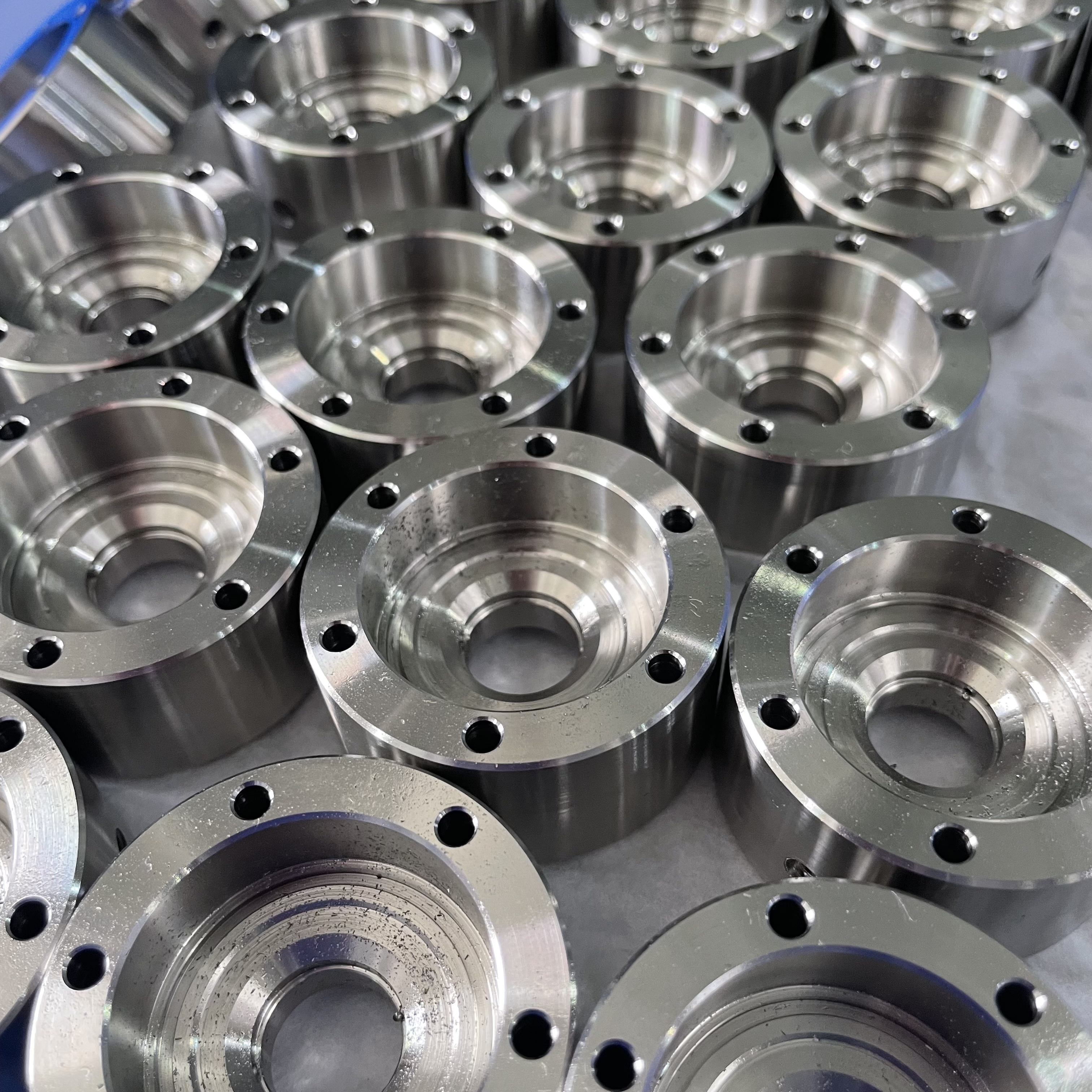
At Precision Fab CNC Machining, we specialize in producing parts for prototypes, short runs, and high-volume production. Our prototyping machine capabilities extend across metal, plastic, and wood machining, with welding fabrication services available to complement and finalize your prototype if required.
Address
Address: Room320 10F, Building A,Nanshan international building, Dayawan District, Huizhou, Guangdong, 516001 China
Contacts
billy@timaycnc.com