How CNC Services Integrate with 3D Printing


Imagine combining the precision of cnc machining with the design freedom of 3D printing. Together, they create a powerful duo that transforms how you approach manufacturing. While 3D printing shines at crafting intricate geometries and internal structures, cnc machining steps in to deliver flawless finishing and unmatched accuracy. This hybrid approach isn’t just innovative—it’s practical.
Modern manufacturing faces challenges like integrating processes, material limitations, and cost optimization. By blending these technologies, you can tackle these hurdles head-on. For instance, using 3D printing for prototypes and cnc machining for final production ensures both speed and precision. The result? High-quality, complex components that meet today’s demanding standards.
Key Takeaways
Mixing CNC machining and 3D printing improves making things faster and easier.
Use 3D printing to quickly create models and CNC for exact parts.
This mix saves materials and speeds up making products.
Fields like planes, cars, and medicine gain a lot from this.
Try both tools to discover the best way for your work.
Overview of CNC Machining and 3D Printing
CNC Machining Basics
Key processes and applications
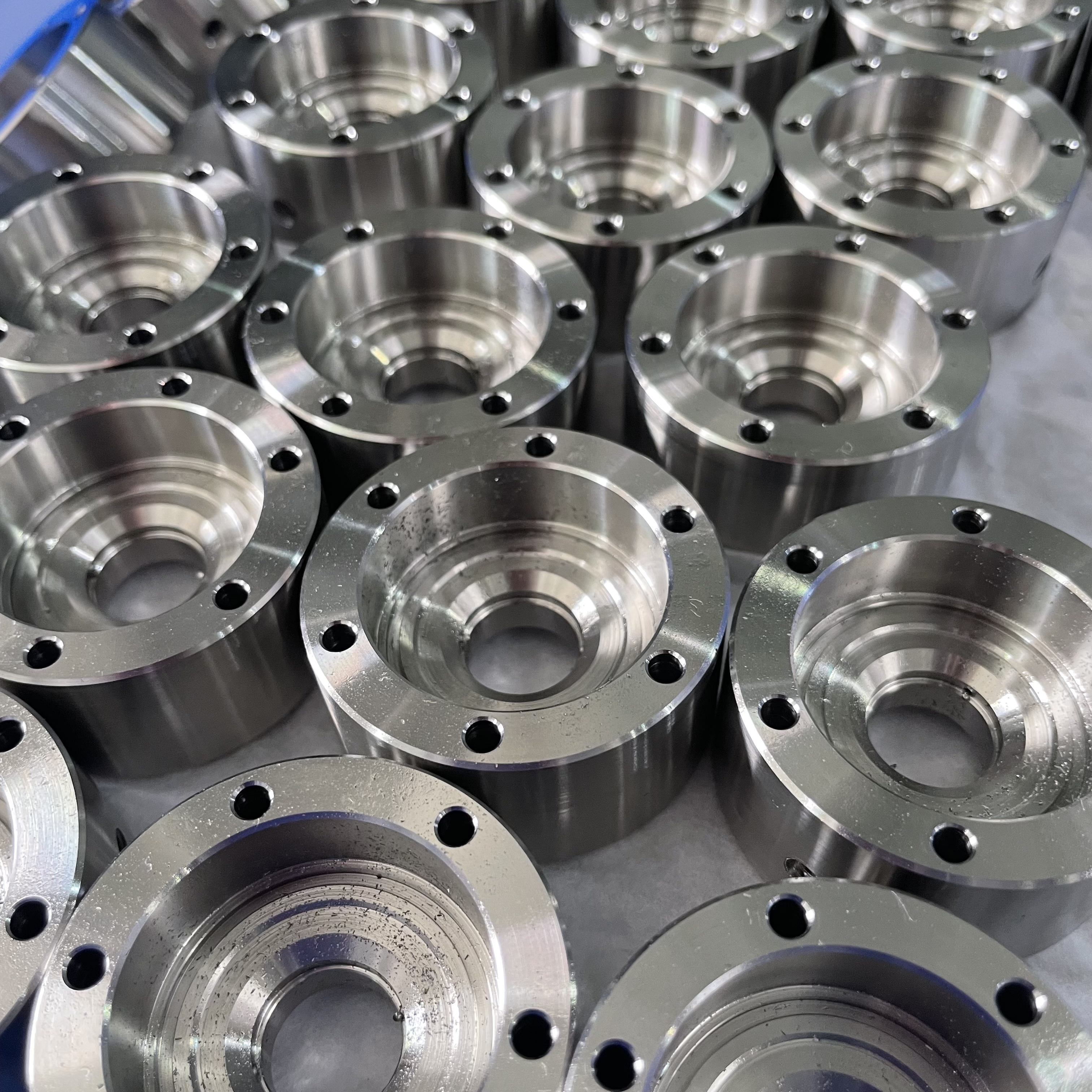
CNC machining revolves around automating tools like lathes and mills to shape materials with precision. Here’s how it works:
A digital design is created using CAD (Computer-Aided Design) software.
This design is converted into instructions for the CNC machine.
The machine then removes material from a solid block to create the desired part.
You’ll find CNC machining in industries like aerospace and automotive, where precision is non-negotiable. It’s used to craft high-precision molds, casings, PCBs, and even robotic arms. Whether you’re making custom dies or prototyping tools, CNC machining ensures consistency and accuracy.
Strengths of CNC machining
CNC machining stands out for its ability to handle a wide range of materials, including metals, plastics, and wood. It achieves tight tolerances, often as precise as ±0.005 mm, making it ideal for parts requiring high accuracy. Plus, it’s faster for large-scale production compared to other methods.
3D Printing Basics
Additive manufacturing processes and uses
Unlike CNC machining, which removes material, 3D printing builds parts layer by layer. This additive process starts with a digital model, which the printer uses to deposit material in precise layers.
3D printing shines in industries like healthcare, where it’s used for prosthetics and implants. In aerospace and automotive, it creates lightweight, complex parts. It’s even making waves in construction, fashion, and food, from printing houses to crafting intricate desserts.
Strengths of 3D printing
3D printing excels at rapid prototyping, letting you test and refine designs quickly. It also handles complex geometries that traditional methods struggle with. While it’s slower for mass production, its ability to create intricate designs makes it invaluable for customization.
How They Complement Each Other
Differences in processes and materials
CNC machining and 3D printing take opposite approaches. CNC machining removes material, while 3D printing adds it. CNC works with a broader range of materials, including strong metals, whereas 3D printing focuses on plastics and select metals. CNC machining offers unmatched precision, but 3D printing allows for more creative freedom in design.
Combining their strengths for better results
By combining these technologies, you get the best of both worlds. Start with 3D printing for quick prototyping and complex designs. Then, use CNC machining for refining dimensions and achieving tight tolerances. This hybrid approach ensures efficiency, precision, and flexibility, making it perfect for modern manufacturing challenges.
Benefits of Combining 3D Printing and CNC Machining

Enhanced Precision and Quality
CNC machining for post-processing 3D-printed parts
When you combine 3D printing with CNC machining, you unlock a new level of precision. For example:
Custom implants and prosthetics benefit from 3D printing’s biocompatible designs, while CNC machining ensures a perfect fit and finish.
Complex engine parts, like those with internal cooling channels, are 3D-printed first. CNC machining then refines the sealing surfaces for gaskets.
Tooling and molds start as quick prototypes from 3D printing, but CNC machining adds durability for long-term use.
This hybrid approach ensures your parts meet exact specifications while maintaining high quality.
Achieving tight tolerances and smooth finishes
CNC machining is your go-to for achieving tight tolerances and smooth finishes. It can deliver tolerances as precise as ±0.005 mm, which is far superior to what most 3D printers can achieve. Plus, CNC machining avoids issues like warping or distortion caused by heat during 3D printing. This makes it ideal for applications where consistency and accuracy are critical.
Improved Efficiency and Cost Savings
Reducing material waste with hybrid workflows
A hybrid workflow minimizes waste by combining the strengths of both methods:
3D printing uses only the material needed to build each part, reducing waste.
Materials for 3D printing are often cheaper than those used in CNC machining.
Starting with 3D printing reduces setup time and material waste during initial builds.
This makes your manufacturing method more sustainable and cost-effective.
Streamlining production timelines
Integrating these technologies speeds up production. For instance, a project that initially cost 10,000 € was completed for just 790 USD using 3D printing, saving 86%. Additionally, CNC machining can cut production time significantly. A task that took 20 hours manually was reduced to under 11 hours with CNC machining. This hybrid approach saves both time and money.
Greater Design Flexibility
Creating complex designs with additive and subtractive methods
3D printing excels at creating intricate geometries and internal structures. CNC machining complements this by refining the details and adding precision. Together, they allow you to produce designs that would be impossible with just one manufacturing method.
Overcoming individual limitations of each technology
By combining these methods, you overcome their individual limitations. For example:
3D printing creates lightweight, complex parts, while CNC machining ensures they meet exact dimensions.
Medical devices, like custom implants, benefit from 3D printing’s flexibility and CNC machining’s precision.
Automotive components, such as engine parts, use 3D printing for internal features and CNC machining for external surfaces.
This hybrid approach gives you the freedom to innovate without compromising on quality or functionality.
Practical Applications of CNC Service and 3D Printing Integration

Hybrid Manufacturing Workflows
Using 3D printing for prototyping and CNC for final production
When you combine 3D printing and CNC machining, you unlock a workflow that’s both efficient and cost-effective. Start with 3D printing for prototyping. It’s faster and lets you test intricate designs without breaking the bank. Then, switch to CNC machining for final production. This approach works wonders for mass production since CNC machining becomes more affordable as you scale up. Plus, it ensures your parts are durable and precise, especially when working with metals.
Here’s why this method works so well:
3D printing offers consistent costs, making it ideal for quick prototypes.
CNC machining shines in precision and material range, perfect for final products.
You can even get overnight 3D-printed prototypes, speeding up your design process.
Combining additive and subtractive manufacturing in a single process
Hybrid workflows take things a step further by blending additive (3D printing) and subtractive (CNC machining) methods in one seamless process. Here’s how it works:
Begin with precision 3D printing to create complex designs quickly.
Follow up with CNC machining to refine critical dimensions and surfaces.
This combination gives you the best of both worlds. You get the design freedom of 3D printing and the accuracy of CNC machining. It’s a game-changer for industries that demand high-quality, intricate parts.
Industry Applications
Aerospace and automotive manufacturing
The aerospace and automotive sectors are leading the charge in hybrid manufacturing. For example:
The U.S. Air Force and Lockheed Martin used a 3D-printed aluminum component in the AEHF-6 satellite.
Ford combines 3D printing and CNC machining to produce auto parts like performance vehicle spoilers.
These examples show how hybrid manufacturing boosts efficiency and design flexibility in these industries.
Medical and dental applications
In healthcare, hybrid manufacturing is revolutionizing how you create custom implants and prosthetics. 3D printing handles the biocompatible designs, while CNC machining ensures a perfect fit and smooth finish. Imagine a 3D-printed knee implant refined with CNC machining for precise dimensions. This approach also works for dental crowns and surgical tools, where accuracy is critical.
Real-World Examples
Case studies of successful hybrid manufacturing
Sidus Space’s LizzieSat is a shining example of hybrid manufacturing in action. This lightweight, durable satellite combines 3D printing and CNC machining to meet the demanding requirements of space exploration. Another success story comes from Pennsylvania State University’s CIMP-3D facility, where advanced CAD design and lattice optimization were used to create innovative hybrid parts.
Lessons learned from integrating these technologies
You can learn a lot from real-world hybrid manufacturing projects:
Combining 3D printing and CNC machining simplifies workflows and boosts production capabilities.
3D printing excels at creating complex geometries, while CNC machining ensures smooth finishes and tight tolerances.
This hybrid approach expands customization options and enhances product quality.
By integrating these technologies, you can tackle even the most challenging manufacturing tasks with ease.
Comparing Materials, Scalability, and Costs
Material Considerations
Materials compatible with CNC machining
CNC machining works with a wide variety of materials, giving you flexibility in your projects. Metals like aluminum, steel, and titanium are common choices due to their strength and durability. Plastics such as nylon and POM are also popular for their toughness and wear resistance. CNC machining ensures isotropic properties, meaning the material strength is consistent in all directions. This makes it ideal for applications requiring reliability and precision.
Materials suitable for 3D printing
3D printing, on the other hand, uses a more limited range of materials. It’s great for specific plastics like ABS, PETG, and polycarbonate, as well as some metals like titanium and stainless steel. However, high-melting-point metals and certain engineering plastics may not be suitable for most 3D printers. While 3D printing offers design freedom, its material options often lack the mechanical and thermal properties you’d get with CNC machining.
Material | Properties | CNC Machining Suitability | 3D Printing Suitability | Use Cases |
|---|---|---|---|---|
ABS | Tough, impact-resistant | Ideal for durable parts | Popular for FDM printing | Enclosures needing precision and complexity |
Nylon | Strong, wear-resistant | Great for gears and structural components | Suitable for SLS and MJF printing | Gears and brackets combining both techniques |
Polycarbonate | High impact and heat resistance | Works for impact-resistant applications | Strong parts via 3D printing | Protective covers or assemblies |
PEEK | Exceptional strength and chemical resistance | Preferred for aerospace and medical parts | Available in specialty printers | Demanding environments needing precision and complex features |
Scalability in Manufacturing
Small-batch vs. mass production
When it comes to scalability, CNC machining excels in mass production. Once the setup is complete, CNC machines can produce large batches efficiently, spreading the initial costs across the total output. This makes it cost-effective for high-volume manufacturing. For smaller runs, though, the setup time and costs can increase the per-unit price.
3D printing shines in small-batch production and prototyping. Its consistent per-unit cost makes it ideal for limited runs or custom designs. However, the print time for individual parts can slow down throughput, making it less competitive for large-scale production.
On-demand manufacturing and customization
Both CNC machining and 3D printing support on-demand manufacturing, but they excel in different ways. CNC machining offers precision and repeatability, perfect for industries needing tight tolerances. 3D printing, with its ability to create intricate designs, is better for customization. On-demand systems reduce storage and logistics costs, allowing you to produce only what’s needed. This approach also boosts innovation by enabling rapid prototyping and quicker time-to-market.
Benefit | Description |
|---|---|
Reduced storage and logistics costs | Eliminates the need for warehousing and distribution. |
Less waste | Produces only what’s sold, preventing overproduction. |
Encourages innovation | Enables rapid prototyping and faster product development. |
Accessible for small businesses | Requires less expensive equipment, lowering the barrier to entry. |
Cost Analysis
Cost factors for CNC machining
CNC machining involves higher initial costs due to machinery setup and tooling. However, it becomes more economical as production scales up. Material costs are often lower, especially for metals, and skilled labor ensures high-quality output. For large production runs, CNC machining offers better returns on investment.
Cost factors for 3D printing
3D printing has lower startup costs, making it perfect for small runs or prototypes. Its per-unit cost remains constant regardless of volume, which is great for custom designs. However, it doesn’t benefit from economies of scale, so it’s less cost-effective for mass production. Complex designs don’t increase costs, giving you more freedom to innovate.
CNC machining and 3D printing work together to revolutionize manufacturing. You get the precision of CNC machining and the design freedom of 3D printing, creating a perfect balance. This hybrid approach simplifies workflows, reduces costs, and enhances part functionality.
Key Takeaways:
Hybrid manufacturing combines efficiency and versatility.
It boosts production capabilities by leveraging the strengths of both methods.
Custom solutions for industries like aerospace, automotive, and healthcare are becoming more common.
The hybrid additive manufacturing market is growing rapidly, with a projected annual growth rate of 22.2% through 2030. This trend highlights the importance of integrating these technologies. By exploring tools like CNC Engineering’s advanced solutions or learning from resources on post-processing strategies, you can unlock new possibilities for your projects. Why not start today?
FAQ
What are the main advantages of combining CNC machining and 3D printing?
By combining these methods, you get the precision of CNC machining and the design freedom of 3D printing. This hybrid approach improves efficiency, reduces waste, and allows you to create complex designs that meet tight tolerances.
Can I use CNC machining and 3D printing for small-batch production?
Absolutely! 3D printing is perfect for prototyping and small runs due to its consistent per-unit cost. CNC machining ensures precision for final products. Together, they make small-batch production efficient and cost-effective.
Which industries benefit the most from hybrid manufacturing?
Industries like aerospace, automotive, and healthcare benefit greatly. For example, you can create lightweight aerospace parts, precise automotive components, or custom medical implants using this approach.
Is it expensive to integrate CNC machining with 3D printing?
Not necessarily. While CNC machining has higher setup costs, 3D printing balances it out with lower initial expenses. The hybrid approach often saves money by reducing waste and streamlining production timelines.
How do I decide which technology to use first?
Start with 3D printing for prototypes or complex designs. Then, use CNC machining for refining dimensions and achieving smooth finishes. This sequence ensures efficiency and high-quality results.
💡 Tip: Experiment with both methods to find the workflow that best suits your project needs!
See Also
Discovering CNC Machining Solutions For Accurate Production
Streamlined CNC Machining Services For Exact Manufacturing
Grasping Key Techniques In CNC Precision Machining
CNC Technology: Exploring Innovations And Uses In Manufacturing
The Impact Of CNC Machining On Premium Precision Manufacturing
About US
Follow Us
Your prototype holds unparalleled significance, and we deeply value its uniqueness. Collaborating with you during the preparation phase for running your prototype or parts is a commitment we gladly embrace. Whether it's a single part or a complex assembly, we are dedicated to selecting the optimal tools and pathways to bring your envisioned product to life.
At Precision Fab CNC Machining, we specialize in producing parts for prototypes, short runs, and high-volume production. Our prototyping machine capabilities extend across metal, plastic, and wood machining, with welding fabrication services available to complement and finalize your prototype if required.
Address
Address: Room320 10F, Building A,Nanshan international building, Dayawan District, Huizhou, Guangdong, 516001 China
Contacts
billy@timaycnc.com