The Benefits of Integrating CNC with 3D Printing for Enhanced Prototyping

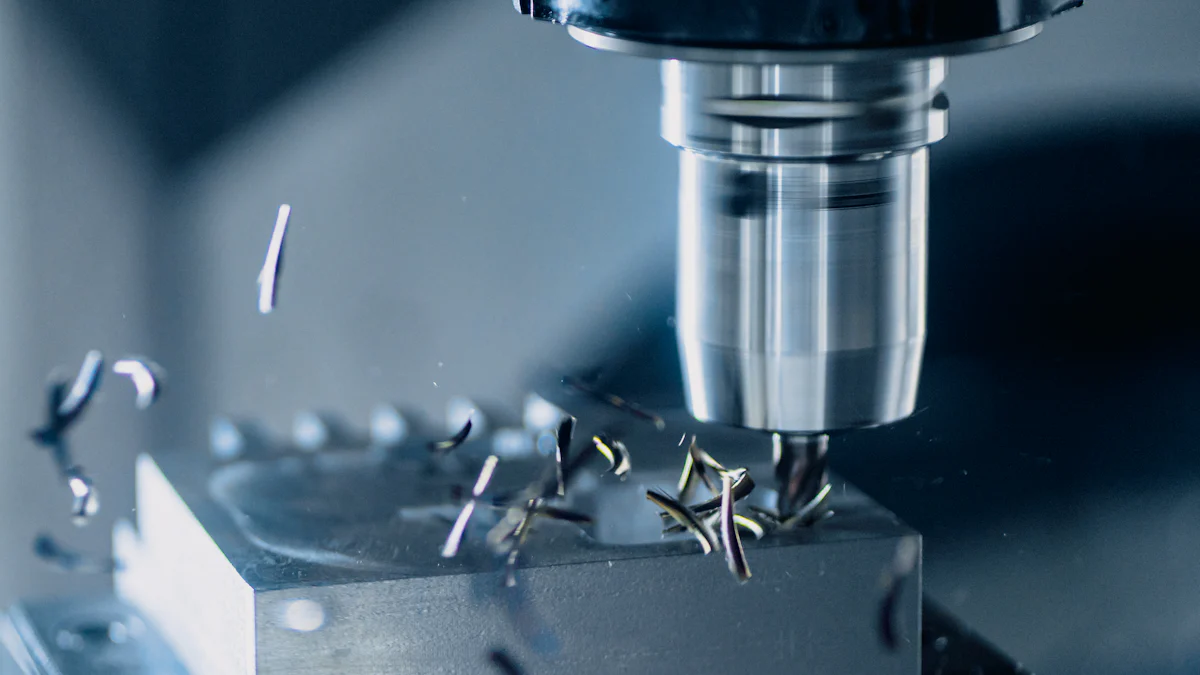
Industries today demand faster and more cost-effective prototyping methods. The global prototyping market, valued at $19.34 billion in 2023, is projected to grow at a CAGR of 11.5%, reaching $63.90 billion by 2034. Combining 3D printing and CNC machining offers a transformative solution. This hybrid approach reduces material waste by up to 97%, accelerates development cycles, and enables intricate designs like lattice structures. You can achieve unmatched precision and flexibility while optimizing costs and material usage.
Key Takeaways
Using CNC and 3D printing together cuts material waste by 97%. This makes prototyping cheaper and better for the environment.
This mix speeds up prototyping, so ideas become ready prototypes in days, not months.
Combining these tools improves design options. It helps make tricky shapes and parts with different materials for better use.
Understanding CNC Machining and 3D Printing
Key Features of CNC Machining
CNC machining stands out for its precision and efficiency. It automates the control of machines like lathes and mills, converting digital designs into physical products with minimal variation. A CNC system includes six key components: input gadgets, a machine control unit (MCU), a machine tool, a driving mechanism, a feedback mechanism, and a display unit. These parts work together seamlessly to execute the machining process.
You’ll find that CNC machining excels in creating intricate designs by removing material from a solid block. This subtractive process ensures high accuracy, making it ideal for applications requiring tight tolerances. Additionally, CNC machining supports a wide range of materials, including metals, plastics, and composites, enhancing its capabilities for prototyping.
Advantages of 3D Printing in Prototyping
3D printing, also known as additive manufacturing, offers unmatched design freedom and flexibility. It builds objects layer by layer, allowing you to create complex geometries that traditional methods cannot achieve. Technologies like Fused Deposition Modeling (FDM), Stereolithography (SLA), and Selective Laser Sintering (SLS) enable rapid prototyping with diverse materials such as thermoplastics, resins, and powders.
This technology minimizes waste by using only the material needed for the design. It also accelerates the prototyping process, making it a cornerstone of 3D rapid prototyping and rapid prototyping services. Whether you’re developing a prototype for consumer products or medical devices, 3D printing empowers you to iterate quickly and cost-effectively.
Comparing Additive Manufacturing and Subtractive Manufacturing
Manufacturing Type | Efficiency | Material Usage |
|---|---|---|
Additive Manufacturing (AM) | Excels in customization and rapid prototyping but is slower for high-volume production. | Minimizes waste and enhances sustainability by using only necessary materials. |
Subtractive Manufacturing (SM) | Ensures precision and efficiency for high-volume production after setup. | Generates substantial waste through material removal, posing environmental challenges. |
When comparing these methods, additive manufacturing shines in customization and sustainability, while subtractive manufacturing delivers precision and scalability. By combining both, you can leverage their strengths to achieve optimal results in prototyping.
Benefits of Combining CNC Machining with 3D Printing
Enhanced Precision and Accuracy
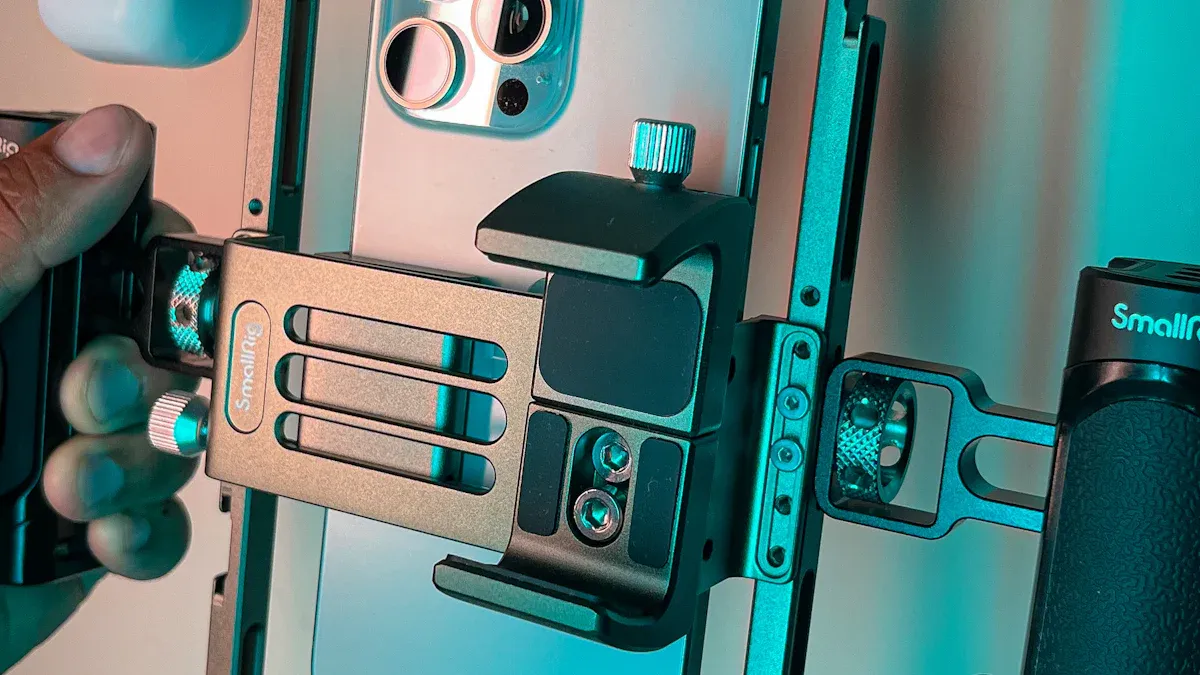
Combining CNC machining with 3D printing allows you to achieve unmatched precision in prototyping. This hybrid approach begins with 3D printing a part to near-net shape, where material is added layer by layer. You can then transfer the printed part to a CNC machine to refine critical dimensions with exact specifications.
3D printing enables the creation of intricate geometries that CNC machining alone cannot produce.
CNC machining ensures the strength and accuracy of essential areas, making the final prototype production-ready.
This integration significantly shortens development timelines. What once took months can now be completed in days or weeks, giving you a competitive edge in agile production capabilities.
Faster Prototyping and Iteration Cycles
The hybrid process accelerates prototyping by combining the speed of 3D printing with the precision of CNC machining. You can quickly create initial prototypes using 3D printing and refine them with CNC machining for functional prototypes. This streamlined workflow supports parallel prototyping, enabling you to test multiple prototype variations simultaneously. Faster iteration cycles mean you can bring your designs to market more efficiently.
Cost-Effective Material Usage
3D printing operates on an additive manufacturing principle, using only the material required for the design. This reduces waste by up to 97%, lowering material costs and environmental impact. When paired with CNC machining, you can further optimize material usage by focusing machining efforts only on critical areas. This combination enhances operational efficiency and reduces overall production costs.
Greater Design Flexibility and Material Options
The integration of these technologies offers unparalleled design freedom. 3D printing allows you to create complex internal channels and lattice structures, while CNC machining ensures precision in critical areas. You can also explore multi-material parts, placing high-performance materials only where needed. This flexibility enables you to produce prototypes with optimized functionality and cost. With CNC machining, you gain access to a wide range of materials, including metals like titanium and plastics like nylon, expanding your prototyping capabilities.
Real-World Applications of Integrated Prototyping
Automotive Industry Innovations
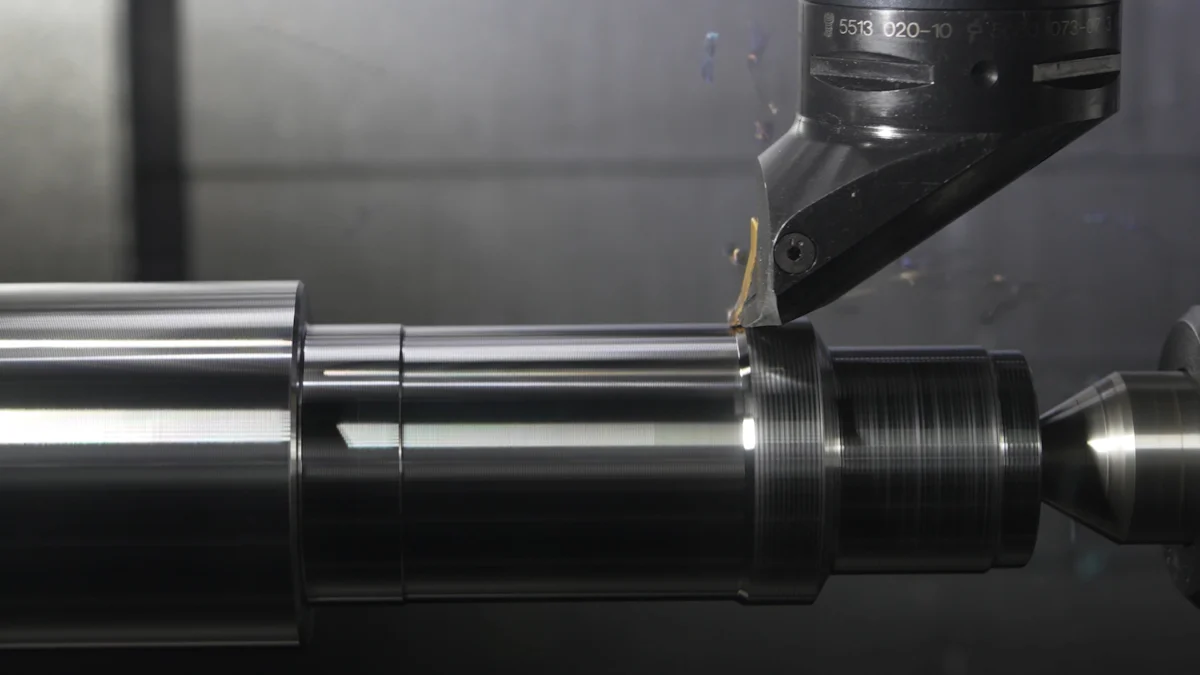
You can see how integrated prototyping has transformed the automotive industry by enabling faster and more efficient design iterations. Companies like GM Australia have leveraged this approach to create award-winning vehicles. For example:
GM Australia used 3D Systems' rapid prototyping technology to develop the Buick Avenir concept car.
The prototype grill was produced using 3D Systems’ Quickparts service, showcasing the precision and flexibility of combining 3D printing with CNC machining.
This innovative process contributed to the Buick Avenir winning awards for Best Concept Vehicle and Best Innovative Use of Color, Graphics, and Materials at the EyesOn Design Awards 2015.
By integrating 3D printing and CNC machining, automotive manufacturers can produce intricate prototypes quickly, refine them with precision, and bring innovative designs to life.
Advancements in Medical Device Prototyping
In healthcare, integrated prototyping has revolutionized the development of medical devices. 3D printing allows you to create customized prosthetics, implants, and surgical guides tailored to individual anatomies. This technology enhances treatment outcomes in fields like orthopedics and dentistry. For instance, 3D rapid prototyping enables the production of custom prosthetic limbs that fit perfectly, reducing the need for multiple adjustments.
Large components can be fabricated quickly using 3D printing, while CNC machining ensures precision in critical areas like high-wear surfaces. This hybrid approach not only saves time but also reduces costs, making advanced medical solutions more accessible. Whether you’re developing surgical instruments or orthopedic implants, the combination of these technologies ensures high-quality, patient-specific results.
Consumer Product Development Success Stories
Integrated prototyping has also driven success in consumer product development. Products refined through consumer input during prototyping have a 50% higher market success rate. Companies like Procter & Gamble have demonstrated this with products like the Swiffer. Launched in 1999, the Swiffer revolutionized household cleaning by addressing consumer frustrations.
Rapid prototyping services allowed the team to test and refine designs based on user feedback. This iterative process improved collaboration by 20% and reduced time to market by 25%. The Swiffer’s success highlights how combining 3D printing and CNC machining can lead to innovative, consumer-focused products that dominate the market.
Integrating CNC machining with 3D printing transforms prototyping by combining precision, speed, and cost-effectiveness. This hybrid approach reduces material waste by up to 97%, shortens lead times from weeks to days, and cuts costs by 50–86% on certain parts.
Impact | Measurement |
|---|---|
Material Waste | Reduction by up to 97% |
Lead Time | Reduced from weeks to days |
Cost Savings | Reduction by 50–86% on certain parts |
You can rapidly produce complex geometries with 3D printing and achieve precise finishing using CNC machining. This combination enhances productivity, accelerates design iteration, and fosters innovation. By adopting this technology, you can streamline your prototyping process and stay ahead in competitive markets.
FAQ
What industries benefit the most from integrating CNC and 3D printing?
Industries like automotive, healthcare, and consumer products gain the most. You can achieve faster prototyping, cost savings, and improved design flexibility in these fields.
Tip: Explore hybrid prototyping for aerospace and electronics to unlock even more innovation.
How does this integration reduce material waste?
3D printing uses only the required material, minimizing waste. CNC machining then refines specific areas, ensuring efficient material usage without unnecessary removal.
Can small businesses afford this hybrid approach?
Yes! Many affordable 3D printers and CNC machines exist today. You can start small, scale gradually, and still enjoy significant cost savings and faster prototyping cycles.
Note: Look for entry-level machines with hybrid capabilities to maximize your investment.
See Also
Overcoming Obstacles: Improving CNC Prototyping Precision And Speed
Unveiling Seven Essential Advantages of CNC Machining In Manufacturing
Discovering The Benefits Of Aluminum CNC Machining Solutions
Understanding CNC Machining: Precision, Prototyping, And Material Choices
Investigating CNC Machining Solutions For Accurate Manufacturing Needs
About US
Follow Us
Your prototype holds unparalleled significance, and we deeply value its uniqueness. Collaborating with you during the preparation phase for running your prototype or parts is a commitment we gladly embrace. Whether it's a single part or a complex assembly, we are dedicated to selecting the optimal tools and pathways to bring your envisioned product to life.
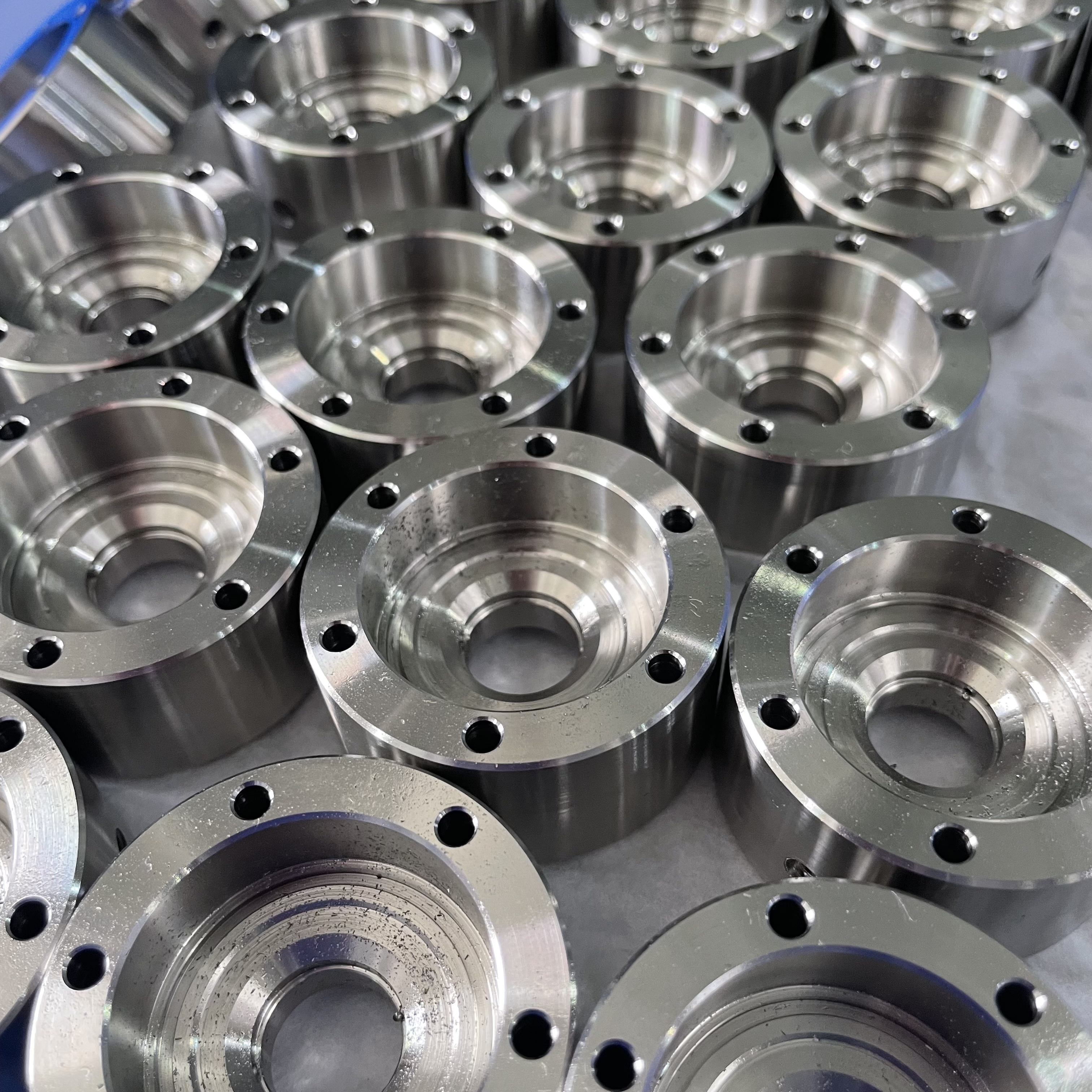
At Precision Fab CNC Machining, we specialize in producing parts for prototypes, short runs, and high-volume production. Our prototyping machine capabilities extend across metal, plastic, and wood machining, with welding fabrication services available to complement and finalize your prototype if required.
Address
Address: Room320 10F, Building A,Nanshan international building, Dayawan District, Huizhou, Guangdong, 516001 China
Contacts
billy@timaycnc.com