CNC Machining for the Aerospace Industry – Challenges and Solutions

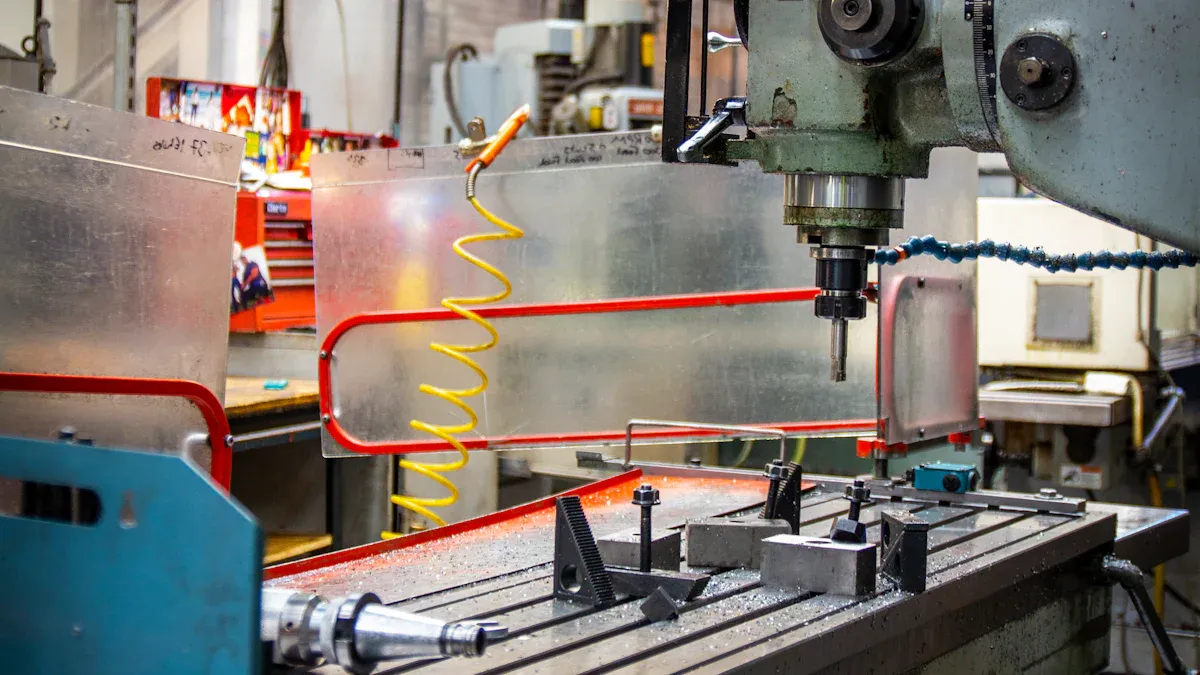
CNC machining plays a pivotal role in aerospace manufacturing by delivering unmatched precision and reliability. The aerospace industry demands high-quality, complex components with tight tolerances.
Even the slightest defect in aerospace components can lead to catastrophic failures, underscoring the necessity for precision CNC machining in producing critical engine components that meet rigorous industry standards.
Addressing challenges like material selection, complex geometries, and tight tolerances ensures efficiency, safety, and innovation in aerospace manufacturing.
Key Takeaways
CNC machining is important for making precise airplane parts. Small mistakes can cause big safety problems, so accuracy is key.
New tools like 5-axis machines and robots make work faster and better. These tools help meet the tough rules of the airplane industry.
Using eco-friendly materials and recycling in CNC machining is growing. These green practices are now more important for making airplane parts.
Key Challenges in CNC Machining for the Aerospace Industry
Precision and Accuracy Requirements
The aerospace industry demands the highest level of precision in manufacturing components. Even minor deviations can compromise safety and performance. CNC machining for aerospace components must meet strict requirements for tight tolerances. For example, engine components require tolerances as fine as ±0.0001 inches, while structural components typically range from ±0.005 to ±0.002 inches. Surface finishes also play a critical role, with rotating components requiring finishes as smooth as 0.25 µin Ra.
Achieving such precision machining requires advanced manufacturing technologies and meticulous quality control processes.
Component Type | Tolerance Range |
|---|---|
Structural Components | ±0.005 to ±0.002 inches |
Engine Components | ±0.0001 inches |
Control Surfaces | Up to ±0.002 inches |
Surface Finish | 8 µin Ra (standard), up to 0.25 µin Ra (rotating components) |
Complex Geometries in Aerospace Components
Aerospace components often feature intricate designs that challenge CNC machining processes. Turbine blades, for instance, require precise airfoil shapes to optimize aerodynamic performance. Engine housings include complex internal cavities and cooling channels, while structural components demand high strength-to-weight ratios. These designs necessitate custom CNC machined parts and advanced techniques to ensure tight tolerances and reliability.
Examples of complex aerospace components:
Turbine blades and housings
Engine mounts
Engine pylons
Difficult-to-Machine Materials in Aerospace Manufacturing
The aerospace industry frequently uses materials like titanium and Inconel, which are difficult to machine. Titanium alloys offer excellent strength-to-weight ratios and fatigue resistance but require specialized tools due to their toughness. Inconel, a superalloy designed for extreme conditions, presents challenges due to its hardness and resistance to thermal deformation. These materials demand innovative CNC machining techniques to maintain efficiency and precision.
Common difficult-to-machine materials:
Titanium
Inconel
Superalloys
Compliance with Aerospace Regulatory Standards
CNC machining for aerospace components must adhere to stringent regulatory standards to ensure safety and quality. Organizations like the FAA and EASA enforce guidelines for engine component testing and aviation safety compliance. Standards such as AS9100 and ISO 9001 establish benchmarks for quality assurance in aerospace manufacturing.
Standard | Description |
|---|---|
FAA | Guidelines on engine component testing to prevent in-flight failures and ensure passenger safety. |
EASA | European standards for aviation safety compliance. |
AS9100 | Quality assurance standard specific to aerospace, ensuring rigorous safety and performance benchmarks. |
ISO 9001 | General quality management standard applicable across industries. |
ITAR | Regulations governing the manufacture and distribution of defense-related technologies, ensuring security compliance. |
Cost and Maintenance Challenges in CNC Machining Aerospace Parts
Manufacturing aerospace components involves high costs due to material selection, part complexity, and low production volumes. Specialized equipment and maintenance of CNC machines further increase expenses. Fluctuating demand for parts and the need for fast turnaround suppliers add to these challenges. Manufacturers must balance cost efficiency with the strict requirements of aerospace production.
Key cost and maintenance challenges:
Material selection and part complexity
Low-quantity production runs
Specialized equipment costs
CNC machine maintenance
Innovative Solutions for CNC Machining Aerospace Parts
Advanced Machining Technologies for Aerospace Applications
The aerospace industry relies on cutting-edge technologies to meet its stringent requirements. CNC machining techniques form the backbone of aerospace manufacturing, enabling the production of complex components with unmatched precision. Among these, 5-axis CNC machining stands out for its ability to handle intricate geometries while reducing production time. Multi-tasking machines further enhance efficiency by integrating multiple processes, such as milling and turning, into a single setup.
High-speed machining has become essential for working with lightweight materials like aluminum and composites, increasing production rates without compromising quality. Additive manufacturing, or 3D printing, complements traditional CNC machining by creating lightweight, complex geometries that were previously unattainable. Automation and Industry 4.0 technologies, including robotics and smart systems, streamline production and improve quality control.
These advancements not only boost productivity but also ensure the reliability of aerospace machining processes.
Material-Specific Strategies for CNC Machining
Machining aerospace components requires strategies tailored to specific materials. High-quality materials like titanium alloys, aluminum alloys, and composites are essential for their strength, lightweight properties, and corrosion resistance. Using the right tooling ensures smooth finishes and dimensional accuracy, even for challenging materials like Inconel.
Heat management plays a critical role in preventing deformation or cracking during machining. Coolants and lubricants help control temperatures, ensuring consistent results. Tight tolerances, achieved through advanced metrology equipment, guarantee accuracy for critical applications. Efficient workflows, supported by CAD/CAM software and automation, maintain productivity and quality in aerospace machining.
Enhanced Quality Control in Aerospace Manufacturing
Quality control is paramount in aerospace manufacturing. Rigorous testing and inspections, including first article inspections, prevent defects and ensure components meet performance standards. Non-destructive testing methods, such as ultrasonic testing, detect hidden flaws, enhancing safety and reliability.
Simulating extreme conditions validates the durability of components, while precision instruments verify dimensional accuracy. Compliance with regulatory standards like FAA and EASA further ensures safety benchmarks are met. These measures collectively uphold the integrity of cnc machining aerospace parts.
Traceability Systems for Aerospace Components
Traceability systems play a vital role in aerospace machining. They enhance safety by ensuring every component meets stringent testing and safety standards. Digital systems store certifications, making documentation accessible during audits and inspections. This capability facilitates regulatory compliance and builds customer trust.
The ability to track components throughout their lifecycle prevents costly errors and aids in quality control. Quick identification of defective parts minimizes downtime and ensures the reliability of aerospace manufacturing processes. Traceability systems are indispensable for maintaining the high standards expected in the aerospace industry.
Real-World Applications of CNC Machining for Aerospace Components
Precision Manufacturing of Aircraft Engines
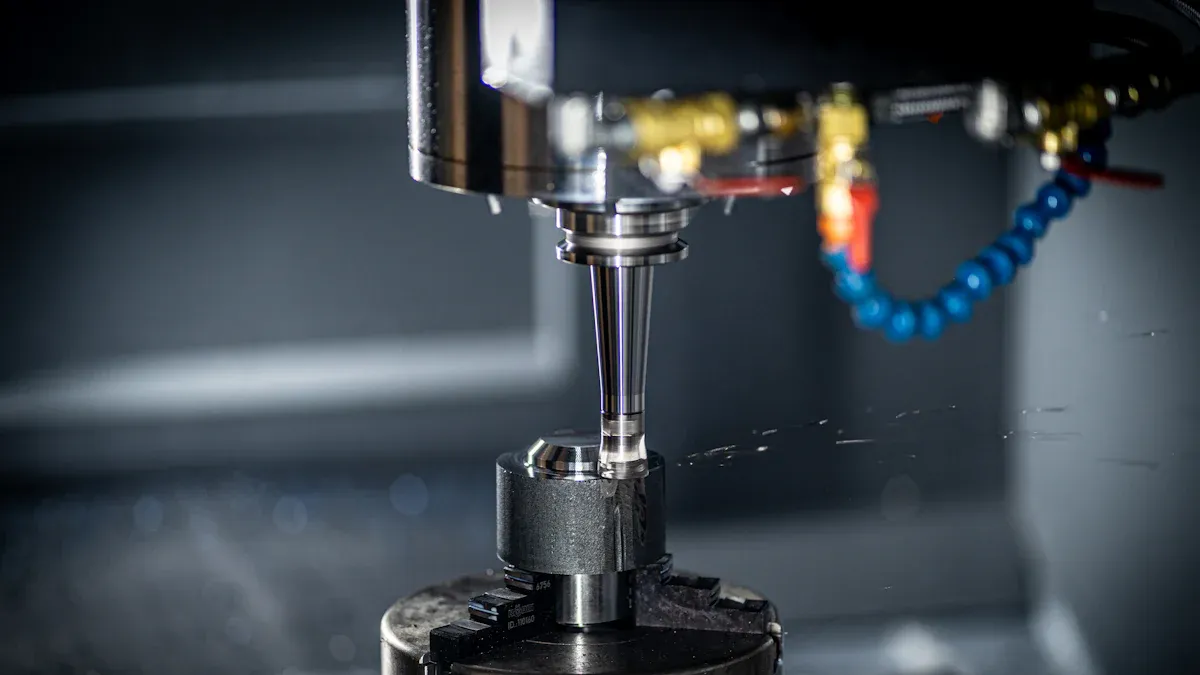
CNC machining plays a critical role in the production of aircraft engines, where precision is paramount. Engine components such as turbine blades, rotors, and engine mounts require tight tolerances to ensure optimal performance and safety. Turbine blades, for instance, must maintain aerodynamic efficiency under extreme temperatures and pressures. CNC machined parts like engine housings and pylons also demand exceptional accuracy to meet the rigorous standards of the aerospace industry.
The ability of CNC machining to deliver consistent results makes it indispensable for manufacturing these critical aerospace parts. Advanced techniques, including 5-axis machining, enable the creation of intricate geometries while maintaining high levels of precision.
CNC Machining for Landing Gear Components
Landing gear components present unique challenges due to their size, material requirements, and complex geometries. Engineers often select harder materials to withstand the stresses of takeoff and landing. However, machining these materials can be difficult. Large components with thin walls also pose risks of residual stress and material waste.
To address these challenges, manufacturers utilize advanced CNC machines capable of handling sizable parts. Techniques like External Removed Material Ratio (ERMR) and Internal Removed Material Ratio (IRMR) optimize material removal, reducing waste. Additionally, 5-axis CNC machining simplifies the production of complex geometries, ensuring reliability and durability. Suppliers with AS9100 certification further guarantee quality control in the production of these critical components.
High-Accuracy Machining for Satellite Parts
Satellites rely on CNC machined parts for their structural integrity and operational success. These components must meet stringent precision requirements to function effectively in space. Any deviation in accuracy can lead to mission failures. CNC machining ensures the production of complex satellite components with consistent quality.
Satellite parts must also endure harsh space environments, including extreme temperatures and radiation. Precision CNC machining guarantees the reliability and durability of these aerospace parts, enabling them to perform over extended periods.
Future Trends in CNC Machining for the Aerospace Industry
Advancements in CNC Automation and Artificial Intelligence
The aerospace industry is embracing automation and artificial intelligence (AI) to revolutionize CNC machining processes. These technologies enhance precision, efficiency, and cost-effectiveness in manufacturing.
Digital twins, 3D AI, robotics automation, and immersive reality technologies are fundamentally altering how the aerospace industry approaches production, quality control, and overall operational efficiency. Digital twins allow for real-time monitoring and optimization of manufacturing operations, while 3D AI enables the creation of lightweight, optimized structures. Robotics automation enhances precision in assembly tasks, and immersive reality technologies improve training and maintenance processes.
Key advancements include:
Digital twins providing virtual replicas for real-time monitoring.
3D AI optimizing designs and simulating physical conditions.
Robotics automation ensuring precision in assembly tasks.
Immersive reality technologies enhancing training and maintenance.
These innovations redefine the capabilities of CNC machining, enabling manufacturers to meet the aerospace industry's stringent demands.
Combining Additive and Subtractive Manufacturing for Aerospace
The integration of additive and subtractive manufacturing methods is transforming aerospace production. Additive manufacturing excels at creating complex geometries, while subtractive techniques ensure tight tolerances and superior surface finishes.
Hybrid systems merge these approaches, allowing manufacturers to maximize production efficiency. For instance, additive methods can build intricate structures, which are then refined through subtractive machining to achieve precise dimensions. This combination not only enhances production capabilities but also reduces material waste, making it a cost-effective solution for aerospace applications.
Sustainable Practices in CNC Machining for Aerospace Components
Sustainability is becoming a priority in aerospace CNC machining. Manufacturers are adopting eco-friendly practices to minimize environmental impact.
Baker Industries, for example, has implemented a scrap metal briquette press and a coolant skimmer to reduce waste and enhance recyclability. Other sustainable practices include:
Dry machining techniques to save water and reduce coolant use.
Closed-loop coolant systems to recycle and reuse resources.
Use of biodegradable plastics and sustainable metals.
Integration of renewable energy sources like solar panels.
These efforts not only lower the carbon footprint but also align with the aerospace industry's commitment to environmental responsibility.
CNC machining addresses critical challenges in aerospace manufacturing, including material selection, large component sizes, and complex geometries. Solutions like 5-axis machining, optimized heat treatments, and sourcing certified manufacturers ensure precision and reliability.
Key contributions of CNC machining:
Produces components with micrometer-level tolerances.
Enables innovative designs using advanced materials.
Enhances safety and efficiency in aerospace systems.
Continued advancements in CNC technologies will drive future aerospace innovation.
FAQ
What are the benefits of using CNC machining in aerospace manufacturing?
CNC machining ensures precision, repeatability, and efficiency. It produces complex components with tight tolerances, meeting the aerospace industry's stringent safety and performance standards.
How does CNC machining handle difficult-to-machine materials?
Specialized tools, advanced techniques, and heat management strategies enable CNC machining to process tough materials like titanium and Inconel effectively.
Why is traceability important in aerospace machining services?
Traceability ensures compliance with regulatory standards, enhances safety, and builds customer trust by tracking components throughout their lifecycle.
See Also
Discovering CNC Machining Accuracy Within Aerospace Applications
Exploring CNC Technology Advancements and Its Manufacturing Applications
Investigating CNC Machining Solutions for Accurate Manufacturing
Understanding CNC Precision Machining Benefits and Upcoming Trends
Streamlined CNC Machining Solutions for High-Precision Production
About US
Follow Us
Your prototype holds unparalleled significance, and we deeply value its uniqueness. Collaborating with you during the preparation phase for running your prototype or parts is a commitment we gladly embrace. Whether it's a single part or a complex assembly, we are dedicated to selecting the optimal tools and pathways to bring your envisioned product to life.
At Precision Fab CNC Machining, we specialize in producing parts for prototypes, short runs, and high-volume production. Our prototyping machine capabilities extend across metal, plastic, and wood machining, with welding fabrication services available to complement and finalize your prototype if required.
Address
Address: Room320 10F, Building A,Nanshan international building, Dayawan District, Huizhou, Guangdong, 516001 China
Contacts
billy@timaycnc.com