How CNC Machining Helped Optimize Aluminum Product Manufacturing Costs

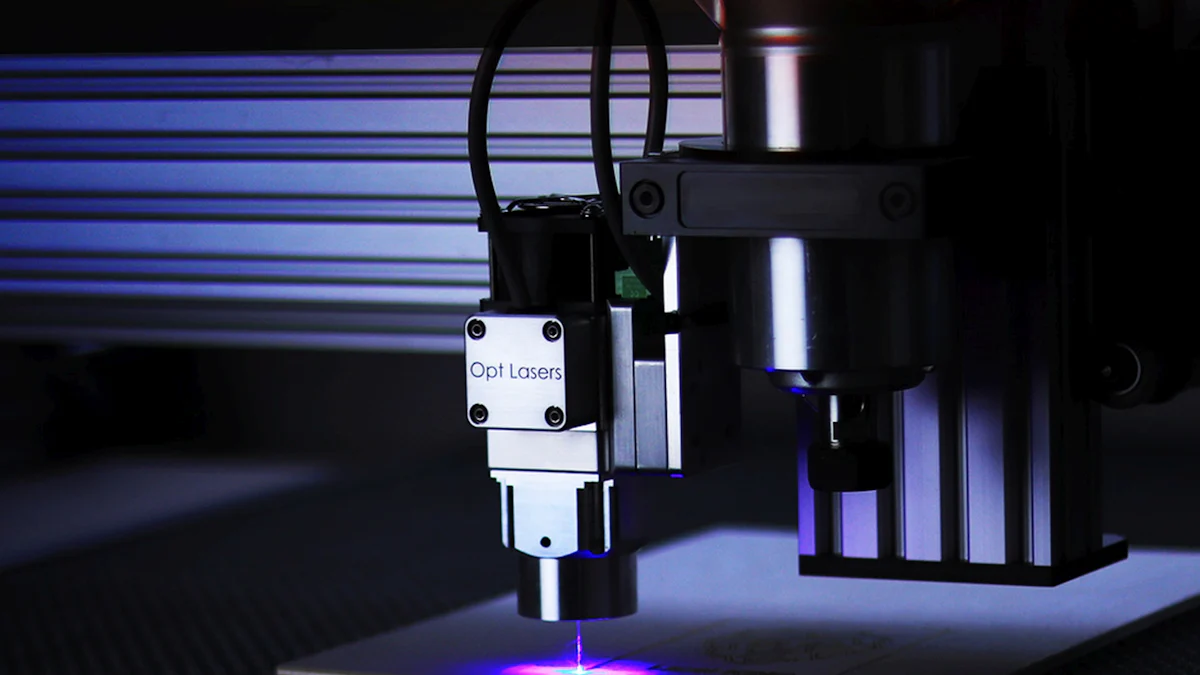
CNC machining has revolutionized aluminum manufacturing by enhancing efficiency and precision. You can achieve significant cost savings through automation, which reduces human error and ensures consistent quality. For example, aerospace manufacturers using 6061-T6 aluminum alloy and high-efficiency machining techniques have cut production costs by 30%. This approach also minimizes waste and boosts throughput.
Key Takeaways
CNC machining lowers costs by improving speed and accuracy. This can save up to 30% in making aluminum products.
CNC machines use automation to avoid mistakes, work faster, and keep quality steady. Even though setup costs are high, it’s worth the money.
Using Design for Manufacturing (DFM) ideas helps make better aluminum parts. It cuts down machining time and reduces wasted materials, saving money.
Cost-Saving Benefits of CNC Machining
Material Efficiency in Aluminum CNC Parts
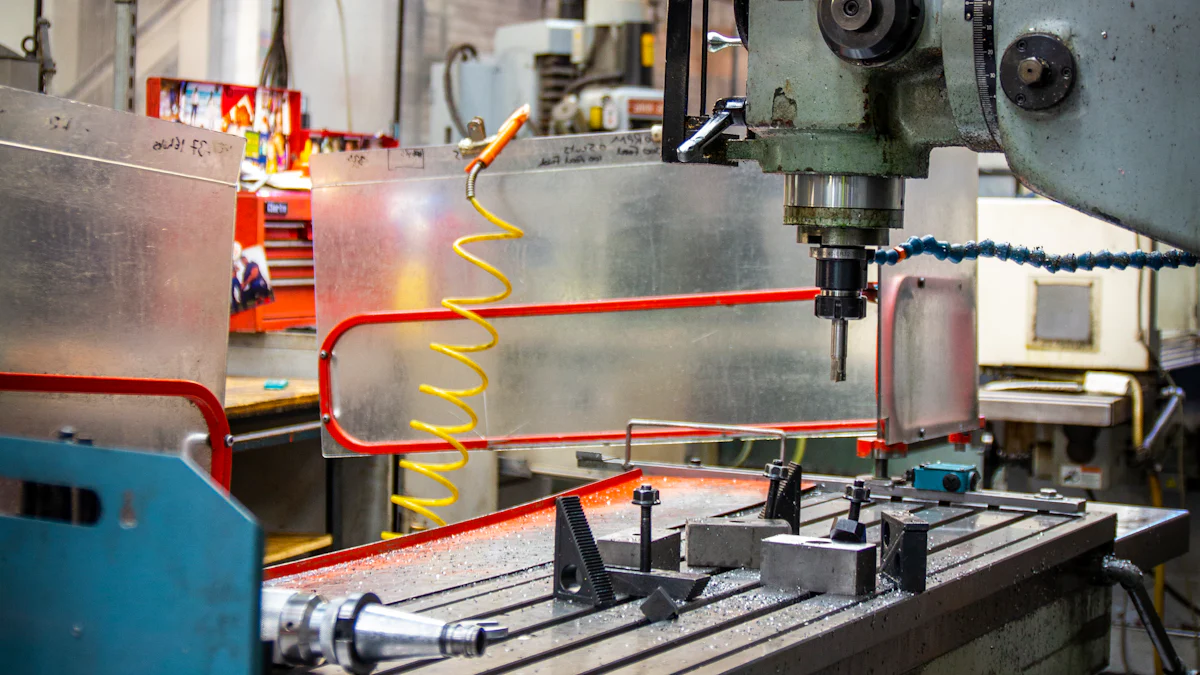
CNC machining optimizes material usage, especially when producing aluminum CNC parts. By removing only the necessary material, CNC machines minimize waste and reduce scrap. Advanced nesting algorithms and precise cutting techniques allow you to produce more parts from fewer raw materials. This approach not only lowers material costs but also supports sustainable manufacturing practices.
Minimized Waste: CNC systems adjust in real-time, reducing material wastage. This is particularly important when working with high-cost aluminum grades.
Additionally, improved material efficiency reduces energy consumption and waste sent to landfills. These practices lower your carbon footprint and enhance your reputation among environmentally conscious customers. By adopting CNC machining, you can achieve cost-saving strategies while contributing to a greener future.
Automation and Manufacturing Efficiency
Automation plays a critical role in enhancing production efficiency for aluminum CNC parts. CNC machines operate with pre-programmed instructions, eliminating the need for manual intervention. This automation reduces labor costs and ensures consistent quality.
Automation improves precision and consistency, reducing defects.
It accelerates production cycles by enabling simultaneous operations.
AI-powered systems monitor processes in real-time, predicting failures and maintaining high standards.
For example, robotics allow you to create complex geometries that are difficult to achieve manually. Automation also extends to post-machining operations, ensuring efficiency throughout the production process. While the initial setup costs of CNC machining may be high, the long-term savings from reduced labor and material costs make it a worthwhile investment.
Precision and Waste Reduction
CNC machining delivers unmatched precision, which is vital for aluminum CNC parts. Automated processes eliminate human error, ensuring tight tolerances within a few microns. Advanced technologies like multi-axis machining and real-time feedback systems further enhance accuracy.
This precision directly impacts waste reduction. By minimizing errors, CNC machining reduces the need for rework, saving both time and materials. Improved efficiency allows you to produce parts faster while using less material. Specialized cutting tools and cooling systems also maintain the integrity of aluminum, preventing warping and dimensional inaccuracies.
By leveraging the precision of CNC machining, you can achieve significant cost savings and improve production efficiency. This approach not only enhances product quality but also strengthens your competitive edge in the industry.
Strategies for Cost Optimization in Aluminum Manufacturing
Design for Manufacturing (DFM) for Aluminum CNC Parts
Design for Manufacturing (DFM) ensures that your aluminum CNC parts are optimized for efficient production. By simplifying designs and focusing on manufacturability, you can lower costs and improve machining efficiency. Following best practices in DFM can significantly reduce machining time and material waste.
Avoid deep pockets to minimize machining time.
Prevent narrow features that may cause tool breakage.
Use radiused corners instead of sharp internal corners for better manufacturability.
Ensure cutting tools have full access to all features.
Opt for chamfered edges instead of outside fillets to save costs.
Maintain adequate wall thickness to prevent chatter and warping.
Avoid flat-bottomed holes to simplify machining.
Design holes with perpendicular start and end faces for easier processing.
Tip: Simplify complex geometries and standardize features to reduce custom tooling needs. This approach enhances toolpath efficiency and minimizes cost drivers.
Problem | Solution |
|---|---|
Excessive undercuts and internal features | Redesign to prevent deep undercuts and simplify geometries. |
Thin walls and fragile features | Maintain minimum wall thickness for structural integrity. |
Ignoring tooling limitations | Consult machinists to adjust designs for tooling capabilities. |
Choosing the Right Aluminum Alloys
Selecting the appropriate aluminum alloy is crucial for cost-effective CNC machining. Alloys like 6061-T6 are widely used due to their excellent machinability and affordability. This alloy offers good corrosion resistance and strength, making it versatile for various industries.
Aluminum 7075-T6, while stronger, requires more machining time and increases tool wear, leading to higher costs. On the other hand, 6082 provides a balance between strength and machinability. Choosing the right alloy based on your application can reduce machining time and material expenses.
Note: Opt for alloys with high machinability to achieve tight tolerances and lower overall costs.
Batch Production for Cost Efficiency
Batch production is a proven strategy for reducing the cost per part in CNC aluminum machining. By increasing production volumes, you can spread setup and tooling costs over a larger number of units. This approach leverages economies of scale, reducing material and operational expenses.
CNC machines can produce large quantities of aluminum parts autonomously.
Automation reduces labor costs and ensures consistent quality.
Scheduling production in batches minimizes machine downtime and improves efficiency.
Evidence Type | Description |
|---|---|
Cost Reduction | Batch production lowers the average cost per part by spreading setup costs. |
Economies of Scale | Larger runs reduce costs in material purchasing and machining time. |
Machine Downtime | Batch scheduling optimizes workflow and reduces idle time. |
Tip: A higher production run not only reduces costs but also ensures tight tolerances across all parts.
By implementing these strategies, you can achieve significant cost savings and enhance your manufacturing processes.
Real-World Applications of CNC Machining in Aluminum Manufacturing
Aerospace: Reducing Scrap and Improving Efficiency
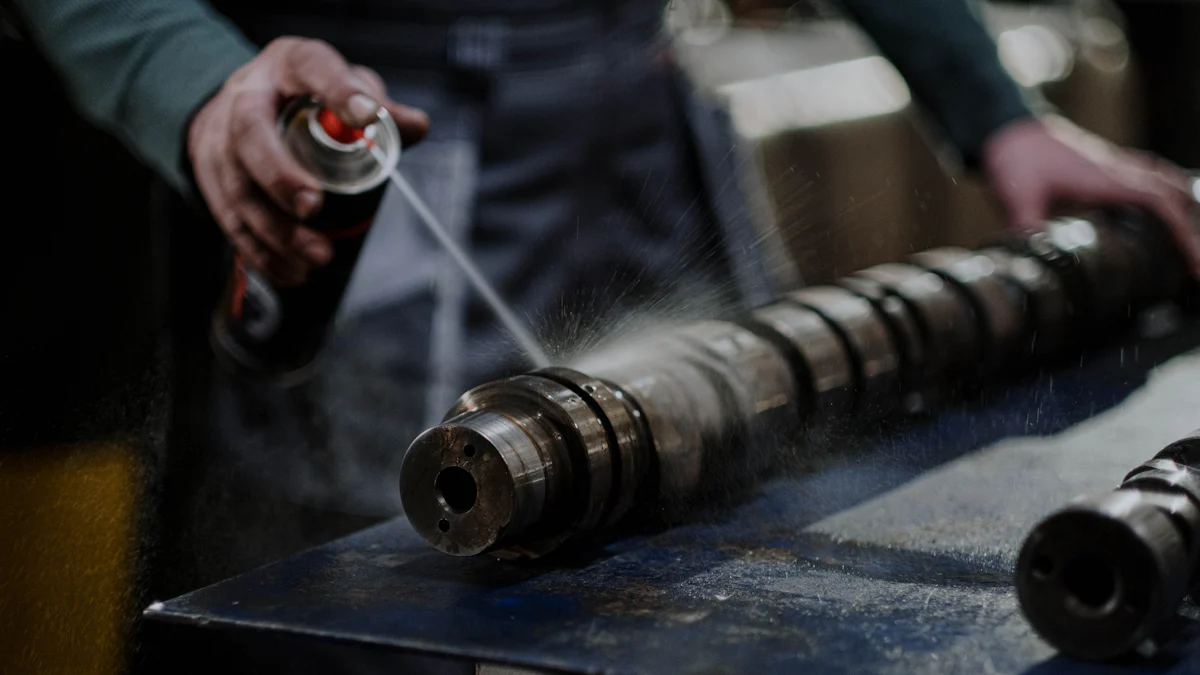
CNC machining plays a vital role in aerospace manufacturing by ensuring high precision and efficiency. You can achieve exact specifications for complex engine components and airframe structures, which are critical for safety and performance. Automation eliminates human error, reducing the need for rework and saving time.
Real-time data monitoring improves part accuracy and minimizes dimensional inaccuracies.
Predictive maintenance reduces downtime and enhances productivity.
Connected manufacturing ecosystems streamline workflows, cutting waste.
For example, Baker Industries uses a scrap metal briquette press to compress aluminum scrap, making it easier to recycle and reducing CO2 emissions. A coolant skimmer also allows thousands of gallons of coolant to be reused annually, further lowering costs. These innovations demonstrate how CNC machining reduces waste and improves sustainability in aerospace production.
Consumer Electronics: Streamlining Aluminum CNC Parts Production
CNC machining supports the miniaturization trend in consumer electronics. You can produce smaller, more powerful components with high precision and tight tolerances. This technology ensures consistent quality in high-volume production runs.
Automated processes reduce human error and enhance efficiency.
Integrated CAD/CAM solutions speed up prototyping and production transitions.
Multiple operations, like milling and drilling, can be performed in one setup.
For instance, CNC machining optimizes aluminum's strength-to-weight ratio, making it ideal for lightweight electronic components. This method minimizes material waste, leading to faster turnaround times and cost savings.
Automotive: Achieving Cost Savings with CNC Machining
In the automotive industry, CNC machining enhances efficiency and reduces costs. You can simplify designs to lower machining time and material waste. Automation enables high-volume production with consistent quality, reducing labor costs.
Optimized cutting techniques minimize scrap and waste.
Continuous operation increases throughput and lowers energy consumption.
CAD/CAM software streamlines design-to-production transitions, reducing lead times.
Aluminum's machinability allows CNC machines to operate at higher speeds, further improving efficiency. By integrating these strategies, you can achieve significant cost savings while maintaining high precision in automotive manufacturing.
CNC machining offers a transformative approach to reducing manufacturing costs for aluminum products. Its precision minimizes defects, cutting production costs and enhancing quality control. Automation reduces labor expenses while improving efficiency. By leveraging CNC technology, you can achieve faster production times, lower energy consumption, and minimal waste, ensuring profitability and superior product quality.
FAQ
What are CNC setups, and why are they important?
CNC setups refer to the preparation and configuration of CNC machines for production. Efficient setups ensure accurate machining, reduce downtime, and improve overall productivity.
How do CNC setups affect manufacturing costs?
Optimized CNC setups minimize material waste, reduce labor time, and enhance machine efficiency. These factors significantly lower production costs and improve profitability.
What is the financial impact of CNC setups on small-scale manufacturers?
Efficient CNC setups reduce operational costs, enabling small-scale manufacturers to compete with larger companies. This financial impact improves scalability and long-term sustainability.
See Also
Benefits of Utilizing Aluminum CNC Machining Services
Impact of CNC Precision Parts on Manufacturing Expenses
Streamlined CNC Machining Solutions for Accurate Manufacturing
The Role of CNC Machining in Advanced Precision Manufacturing
Investigating CNC Machining Options for Precision Production
About US
Follow Us
Your prototype holds unparalleled significance, and we deeply value its uniqueness. Collaborating with you during the preparation phase for running your prototype or parts is a commitment we gladly embrace. Whether it's a single part or a complex assembly, we are dedicated to selecting the optimal tools and pathways to bring your envisioned product to life.
At Precision Fab CNC Machining, we specialize in producing parts for prototypes, short runs, and high-volume production. Our prototyping machine capabilities extend across metal, plastic, and wood machining, with welding fabrication services available to complement and finalize your prototype if required.
Address
Address: Room320 10F, Building A,Nanshan international building, Dayawan District, Huizhou, Guangdong, 516001 China
Contacts
billy@timaycnc.com