CNC Machining for the Automotive Industry

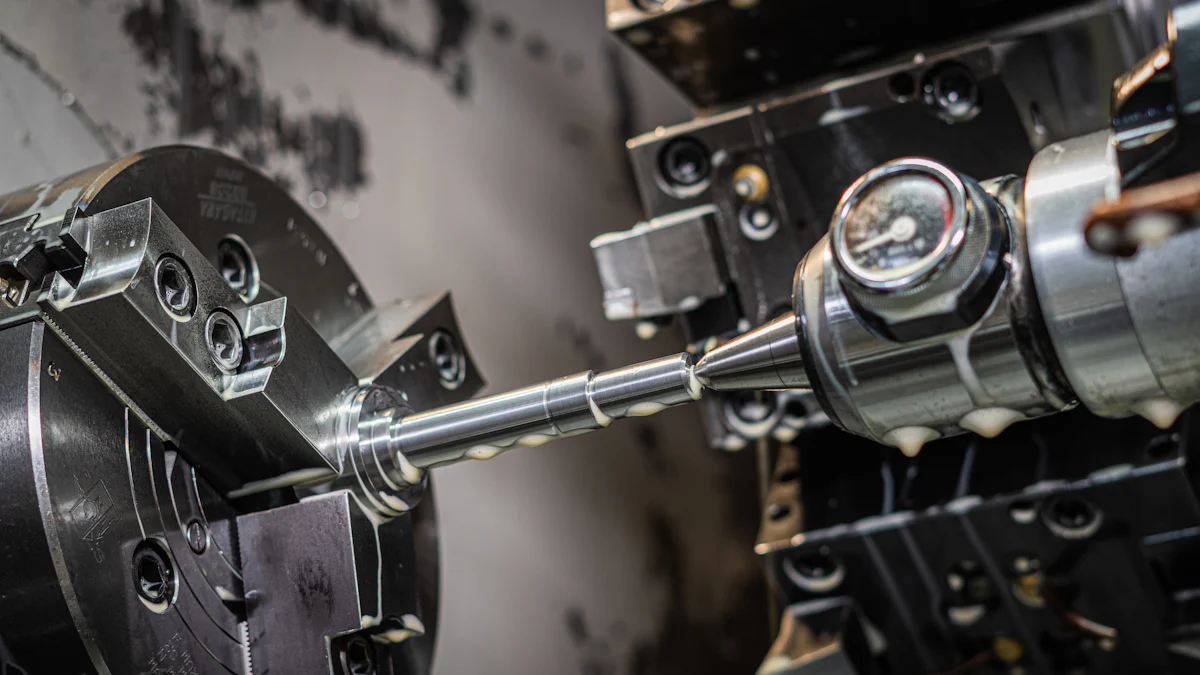
CNC machining plays a crucial role in automotive manufacturing. You benefit from its precision and efficiency, which are vital in this industry. CNC machining automates production, reducing human error and speeding up processes. It meets the automotive industry's demand for high-volume production and tight tolerances. You find it versatile, handling various materials essential for automotive components. This technology bridges the gap between advanced design requirements and practical manufacturing constraints, ensuring precision and versatility in the automotive sector.
Key Takeaways
CNC machining uses machines to make car parts more accurate.
It helps create tricky and special parts quickly for new ideas.
CNC machining wastes less material, saving money and helping the planet.
Adding AI and IoT makes machines easier to fix and faster to use.
As cars become electric and self-driving, CNC will make strong, light parts.
CNC Machining in Automotive Manufacturing
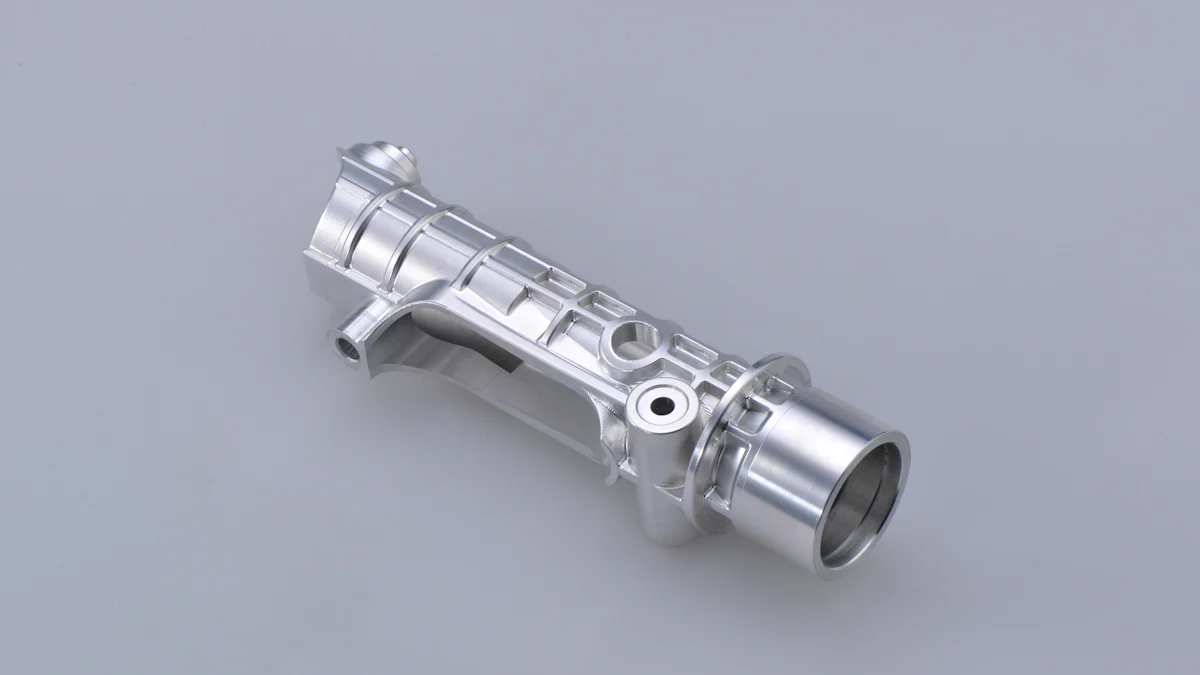
What is CNC Machining?
Definition and principles of CNC machining
CNC machining, or computer numerical control machining, is a manufacturing process that uses pre-programmed software to control machinery. This technology automates the movement of tools and machinery, enabling precise cutting, drilling, and shaping of materials. You benefit from its ability to produce parts with tight tolerances and consistent quality. Key principles include repeatability, precision, and automation. These principles make CNC machining ideal for the automotive industry, where high-volume production and accuracy are essential. The process also supports customization, allowing you to create bespoke automotive components tailored to specific needs.
Key components and tools used in CNC machining
CNC machining relies on several critical components and tools. Machines like lathes, mills, and routers perform various operations. Cutting tools, such as drills and end mills, shape materials with precision. Controllers interpret the software instructions and guide the machine's movements. Workholding devices secure materials during machining, ensuring stability. These tools and components work together to produce high-quality automotive parts efficiently.
Applications in the Automotive Industry
Manufacturing critical engine components
CNC machining plays a vital role in producing engine blocks, cylinder heads, and transmission gears. These components require high precision to ensure optimal performance and safety. The process also creates shafts, drive axles, and gearboxes, which are essential for vehicle functionality.
Production of suspension and exhaust systems
You can rely on CNC machining to manufacture suspension components, such as control arms and struts. It also produces exhaust system parts, including manifolds and mufflers. These parts demand durability and precision, which CNC machining delivers consistently.
Creation of custom and prototype automotive parts
CNC machining excels in creating prototypes for innovative vehicle designs. It allows you to test and refine complex geometries quickly. This capability is crucial for developing custom parts, such as turbine blades for turbochargers or unique chassis components.
Importance of Automotive CNC Machining
Ensuring precision and consistency in production
Automotive CNC machining ensures every part meets exact specifications. This precision guarantees safety and performance, especially for critical automotive components. The process also maintains consistency, even in large-scale production.
Supporting complex and innovative vehicle designs
CNC machining enables you to bring complex designs to life. It handles intricate geometries and lightweight materials, essential for modern vehicles. Rapid prototyping allows you to test and refine designs efficiently, fostering innovation in automotive manufacturing.
Benefits of CNC Machining for Automotive Parts
Increased Efficiency and Productivity
Faster production cycles with automation
You can achieve faster production cycles with CNC machining due to its high level of automation. The technology drastically reduces machining cycle times, enabling you to meet tight production deadlines. CNC machines operate continuously with minimal manual intervention, allowing you to produce large volumes of automotive parts efficiently. Quick design changes are also possible without extensive retooling, helping you adapt to market demands rapidly.
Reduced errors and downtime in manufacturing
Automation in CNC machining minimizes errors by ensuring consistent tool paths and precise operations. AI-powered systems further enhance this by optimizing cutting paths and predicting maintenance needs. Predictive maintenance can reduce unplanned downtime by up to 40%, ensuring your production methods remain uninterrupted. This reliability helps you maintain high productivity levels while reducing costs associated with errors and machine breakdowns.
Superior Precision and Quality
Achieving tight tolerances for critical components
CNC machining delivers micrometer-level precision, essential for automotive parts like cylinder heads, drive axles, and gearboxes. These components require tight tolerances to ensure proper functionality and safety. By achieving such accuracy, you can reduce defects and improve the overall quality of your products.
Consistency in mass production of automotive parts
The repeatability of CNC machining ensures every part you produce is identical to the last. This consistency is vital for maintaining the integrity of mechanical systems in vehicles. Automation eliminates human error, guaranteeing uniformity across large production runs. As a result, you can meet the rigorous safety and performance standards of the automotive industry.
Cost-Effectiveness and Sustainability
Minimizing material waste through optimized processes
CNC machining optimizes material usage, reducing waste compared to traditional production methods. Techniques like adaptive cutting and laser precision ensure efficient material utilization. By minimizing waste, you lower raw material costs and contribute to sustainable manufacturing practices.
Lower labor costs due to automation
Automation reduces the need for manual labor, allowing you to manage multiple machines with fewer operators. This streamlining lowers per-part labor costs, making CNC machining a cost-effective solution for producing automotive parts. Additionally, the reduced need for rework and defects further enhances your cost savings.
Enhanced Safety and Reliability
Safer working environments with minimal manual intervention
CNC machining creates a safer workspace by reducing the need for manual operations. Automated systems handle tasks like cutting, drilling, and shaping, which minimizes your exposure to potentially hazardous machinery. This automation also reduces the risk of workplace injuries caused by human error or fatigue. You can rely on CNC machines to operate with precision and consistency, ensuring safety for operators.
Modern CNC systems often include safety features like emergency stop buttons and protective enclosures. These features shield you from flying debris or accidental contact with moving parts. Additionally, remote monitoring capabilities allow you to oversee operations without being physically present near the machines. This further enhances safety by limiting direct interaction with heavy equipment.
Tip: By investing in CNC machining, you not only improve production efficiency but also create a safer environment for your workforce.
Reliable production of safety-critical automotive components
CNC machining ensures the reliable production of essential automotive parts, such as brake systems, steering components, and airbags. These parts must meet strict quality standards to guarantee vehicle safety. Even minor defects can compromise performance, making precision crucial. CNC machines operate with high accuracy, producing parts that adhere to exact specifications.
The process also supports stringent quality control measures. You can achieve consistent dimensions and tolerances, ensuring every part functions as intended. For example, engine blocks and gears require tight tolerances to maintain efficiency and reduce friction. CNC machining delivers this level of precision, helping you meet the safety and performance demands of the automotive industry.
Evidence | Description |
|---|---|
High Precision | CNC machines ensure accurate dimensions and tolerances for automotive parts. |
Impact on Safety | Minor deviations can affect the safety and performance of critical components. |
Improved Efficiency | Tight tolerances enhance engine efficiency and reduce wear and tear. |
You can trust CNC machining to produce complex and custom parts quickly while maintaining high standards. This reliability is essential for manufacturing safety-critical automotive components that protect drivers and passengers.
Advancements in Automotive CNC Machining
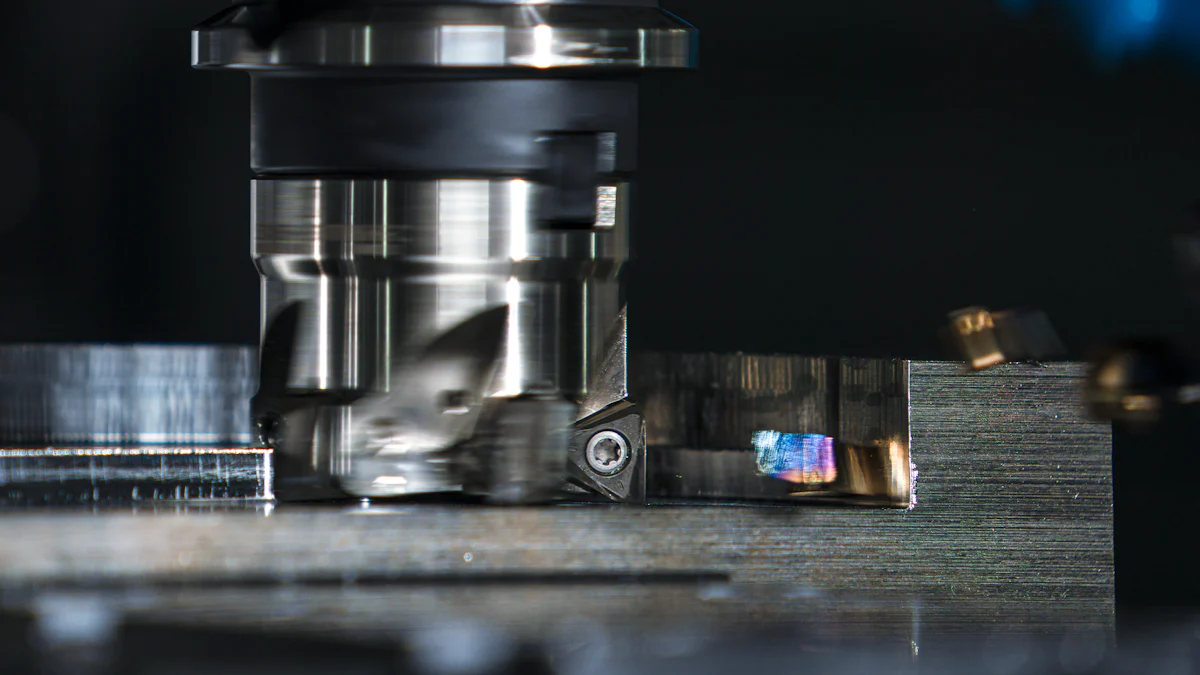
Integration of AI and Machine Learning
Predictive maintenance for CNC machines
You can rely on AI-powered predictive maintenance to keep your CNC machines running smoothly. Machine learning algorithms analyze sensor data to detect anomalies, allowing you to address potential issues before they escalate. This approach prevents unexpected breakdowns and ensures continuous production. Predictive systems also align maintenance schedules with the actual condition of your equipment, reducing unnecessary servicing and extending machine life.
AI-driven maintenance reduces unplanned downtime by up to 40%.
Condition-based maintenance optimizes workflows and minimizes interruptions.
Data analytics help you monitor performance trends and make informed decisions about repairs or upgrades.
Enhanced process optimization and quality control
Machine learning enhances the efficiency of CNC machining by optimizing machining parameters in real time. This ensures higher precision and reduces material waste. AI-powered quality control measures allow you to detect defects early, improving product consistency.
Application | Benefit |
|---|---|
Predictive Maintenance | Prevents unexpected downtime and reduces maintenance costs, improving machine reliability. |
Process Optimization | Adjusts machining parameters in real-time for higher precision and efficiency. |
Quality Control | Enables real-time monitoring to detect defects early, improving product quality. |
AI systems can reduce defect rates by up to 50% and lower maintenance costs by 25%. These advancements ensure your production processes remain efficient and reliable.
Multi-Axis CNC Machining
Flexibility for complex geometries in automotive parts
Multi-axis CNC machines allow you to create intricate designs and geometries that traditional methods cannot achieve. These machines excel at machining undercuts and hard-to-reach areas, enabling you to produce complex engine components and transmission parts with exceptional precision.
Multi-axis machining delivers smoother parts with excellent surface finishes.
It allows for deep cuts and complex shapes, enhancing design capabilities.
You can achieve superior precision and efficiency in producing critical automotive components.
Reduction in setup time and secondary operations
With multi-axis CNC machines, you can complete complex parts in a single setup. This eliminates the need for multiple reorientations, reducing downtime and potential errors. Simultaneous axis movements significantly speed up production, boosting overall productivity in automotive manufacturing.
Five-axis machines allow machining from nearly all angles in one setup.
Fewer interruptions lead to faster turnaround times and higher output.
Reduced setup time minimizes errors and enhances consistency.
Hybrid CNC Systems and Additive Manufacturing
Combining CNC machining with 3D printing for innovative designs
Hybrid CNC systems combine additive and subtractive manufacturing techniques, giving you the flexibility to create innovative designs. This approach allows you to produce complex geometries and lightweight structures that meet the demands of modern automotive manufacturing.
Lightweight and durable automotive components
Hybrid CNC machining enables the use of advanced materials, resulting in lightweight yet durable automotive components. For example, you can create strong suspension parts or precision-engineered drivetrain elements. This technology also supports the development of lightweight electric vehicle frames, contributing to sustainability and performance.
Hybrid systems enhance material efficiency and reduce waste.
They allow for the production of durable components with complex designs.
Custom CNC solutions help you explore innovative approaches to automotive manufacturing.
Smart Manufacturing and IoT
Real-time monitoring and data-driven decision-making
You can leverage IoT technology to monitor CNC machining processes in real time, ensuring optimal performance and efficiency. IoT sensors collect continuous feedback from machines, allowing you to make immediate adjustments to production activities. This real-time data monitoring eliminates the need for manual data collection, enabling operators to focus on higher-value tasks.
IoT also enhances machine utilization by identifying downtime issues. For example, it can pinpoint bottlenecks in production or highlight areas requiring operator training. Predictive maintenance becomes more effective with IoT integration. By analyzing machine condition data, you can schedule maintenance before failures occur, reducing unplanned downtime.
Note: Predictive maintenance powered by IoT can reduce machine breakdowns by up to 40%, ensuring uninterrupted production.
IoT further improves precision and automation in CNC machining. Remote operation capabilities allow you to manage machines from anywhere, increasing flexibility. Automated systems can adjust machining parameters without human intervention, ensuring consistent quality. IoT sensors even track product quality, halting production if defects are detected. This proactive approach minimizes waste and ensures high standards for automotive components.
Improved supply chain and production management
IoT transforms supply chain and production management by providing real-time insights into every stage of the manufacturing process. Continuous feedback from CNC machines enhances your ability to monitor production activities. You can make immediate adjustments to workflows, ensuring efficiency and reducing delays.
Remote operation capabilities improve operational flexibility, allowing you to oversee production from different locations. IoT also supports predictive maintenance, helping you forecast machine failures and reduce downtime. This transition from preventive to predictive maintenance enhances operational efficiency.
Automated data collection streamlines processes, allowing operators to focus on strategic tasks. IoT-enabled automation reduces labor costs and improves workplace safety by minimizing manual intervention. Additionally, enhanced precision and automation ensure consistent quality in mass production. These advancements make IoT an essential tool for modern automotive manufacturing.
Tip: By integrating IoT into your CNC machining operations, you can optimize production, reduce costs, and improve overall efficiency.
The Future of CNC Machining in the Automotive Industry
Emerging Trends in Automotive Manufacturing
Growing demand for electric and autonomous vehicles
The rise of electric and autonomous vehicles is reshaping automotive manufacturing. You see an increasing need for lightweight, precise, and durable components. Electric vehicles require specialized parts like battery housings and motor mounts. Autonomous vehicles demand sensor enclosures and lidar mounts to support advanced technologies. CNC machining plays a vital role in meeting these demands. It enables the production of complex geometries and tight tolerances essential for these applications. Advanced materials like aluminum and titanium are becoming more common, as they enhance lightweight designs and improve vehicle performance.
Focus on lightweight materials and sustainability
Lightweight materials are transforming automotive manufacturing. They improve fuel efficiency and vehicle performance. CNC machining supports this trend by enabling precise shaping of materials like carbon fiber and aluminum. Sustainability is also a growing focus. You see manufacturers adopting eco-friendly practices to reduce environmental impact. CNC machining aligns with these goals by minimizing material waste and supporting energy-efficient processes. On-demand manufacturing and digital twin technology further enhance efficiency, helping you meet modern sustainability standards.
Trend | Impact on Automotive Manufacturing |
|---|---|
AI and Automation | Increases efficiency and reduces production costs. |
Lightweight Materials | Enhances vehicle performance and fuel efficiency. |
Sustainability Practices | Minimizes environmental impact. |
Challenges and Opportunities
Adapting to evolving automotive technologies
Evolving technologies present challenges for CNC machining in automotive manufacturing. Rising material costs for aluminum and steel can strain production budgets. Labor shortages make it difficult to find skilled CNC operators. The increasing connectivity of CNC systems introduces cybersecurity risks, making data protection critical. You must address these challenges to stay competitive in the automotive industry.
Opportunities for innovation in CNC machining processes
Innovation offers exciting opportunities in CNC machining. Investing in training programs can bridge the skills gap, ensuring a steady supply of skilled operators. Collaborating with AI and IoT firms can enhance machining capabilities. AI-powered programming optimizes toolpaths and reduces human error. Five-axis CNC machining allows you to create complex geometries essential for modern automotive components. IoT sensors provide real-time feedback, improving machine performance and reducing downtime. These advancements position you to lead in automotive manufacturing.
AI-Powered Programming: Optimizes cutting efficiency and reduces errors.
5-Axis CNC Machining: Enables machining of intricate geometries.
Real-Time Monitoring with IoT: Enhances operational efficiency and minimizes downtime.
CNC machining has revolutionized automotive manufacturing by combining precision, speed, and versatility. It bridges the gap between innovative designs and practical production, ensuring high-quality components with tight tolerances. You benefit from its ability to streamline processes, reduce waste, and support customization. Advancements like AI integration and multi-axis systems are shaping the future, enabling real-time optimization and complex geometries. As the industry moves toward electric and autonomous vehicles, CNC machining will play a vital role in producing lightweight, durable, and high-precision parts. This technology continues to drive innovation and efficiency, ensuring a sustainable and advanced automotive future.
FAQ
What is the main advantage of CNC machining in automotive manufacturing?
CNC machining provides unmatched precision and consistency. You can produce high-quality automotive parts with tight tolerances, ensuring safety and performance. Its automation also reduces errors and speeds up production.
Can CNC machining handle lightweight materials for electric vehicles?
Yes, CNC machining works well with lightweight materials like aluminum and carbon fiber. You can create durable, lightweight components that improve electric vehicle efficiency and performance.
How does CNC machining support sustainability in automotive production?
CNC machining minimizes material waste through optimized cutting processes. You can also use energy-efficient machines and sustainable materials, aligning with eco-friendly manufacturing goals.
Is CNC machining suitable for creating custom automotive parts?
Absolutely! CNC machining excels at producing custom and prototype parts. You can test and refine designs quickly, making it ideal for innovative automotive projects.
What role does IoT play in CNC machining?
IoT enables real-time monitoring of CNC machines. You can track performance, detect issues early, and optimize production. This technology improves efficiency and reduces downtime in automotive manufacturing.
See Also
Discovering CNC Machining's Accuracy Within Aerospace Applications
Streamlined CNC Machining Solutions for Accurate Production
Investigating CNC Machining Options for High-Precision Production
CNC Technology: Advancements and Uses in Modern Manufacturing
Perfecting CNC Machining Techniques for Precision Component Creation
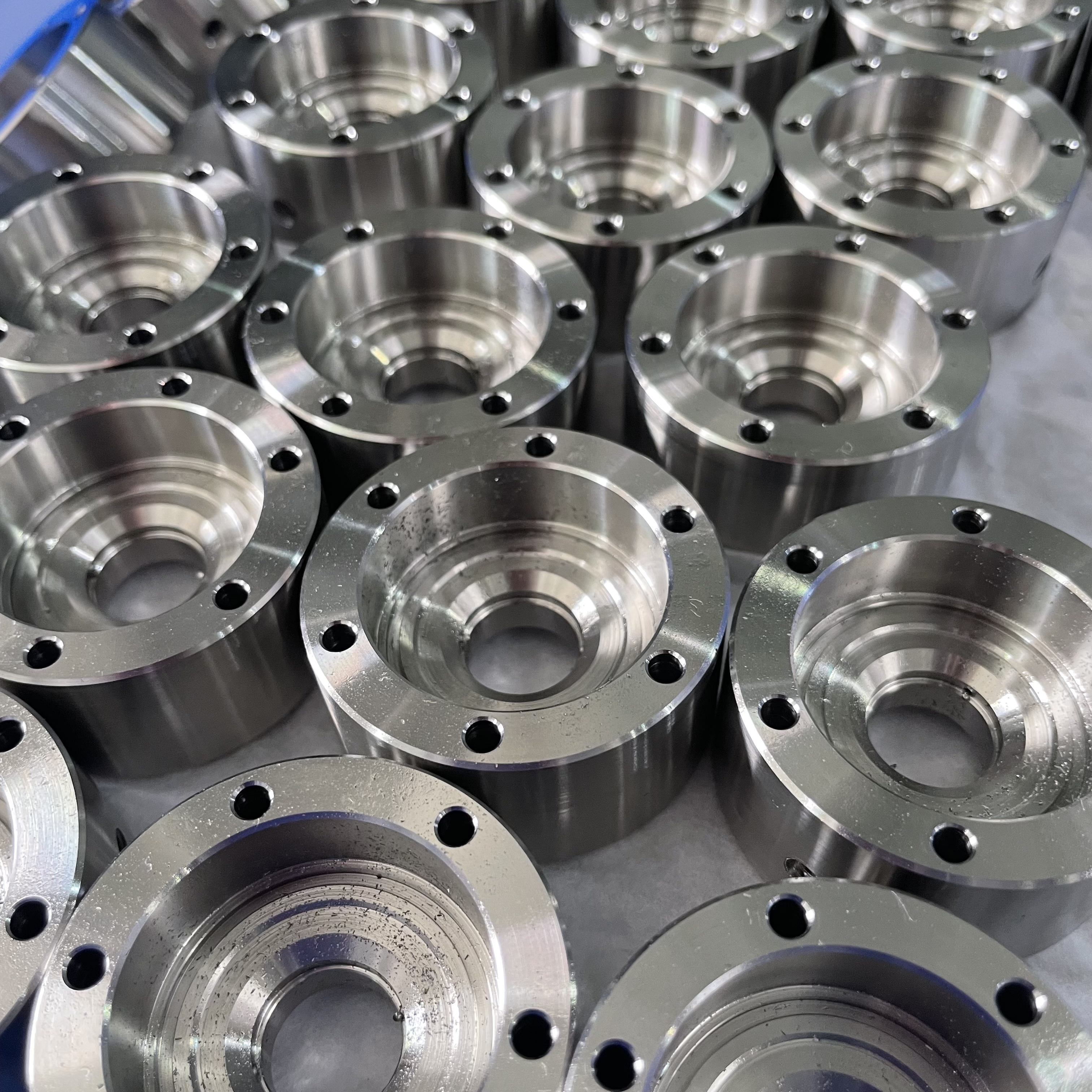
About US
Follow Us
Your prototype holds unparalleled significance, and we deeply value its uniqueness. Collaborating with you during the preparation phase for running your prototype or parts is a commitment we gladly embrace. Whether it's a single part or a complex assembly, we are dedicated to selecting the optimal tools and pathways to bring your envisioned product to life.
At Precision Fab CNC Machining, we specialize in producing parts for prototypes, short runs, and high-volume production. Our prototyping machine capabilities extend across metal, plastic, and wood machining, with welding fabrication services available to complement and finalize your prototype if required.
Address
Address: Room320 10F, Building A,Nanshan international building, Dayawan District, Huizhou, Guangdong, 516001 China
Contacts
billy@timaycnc.com