How CNC Machining Handles Advanced Materials for Custom Robot Parts

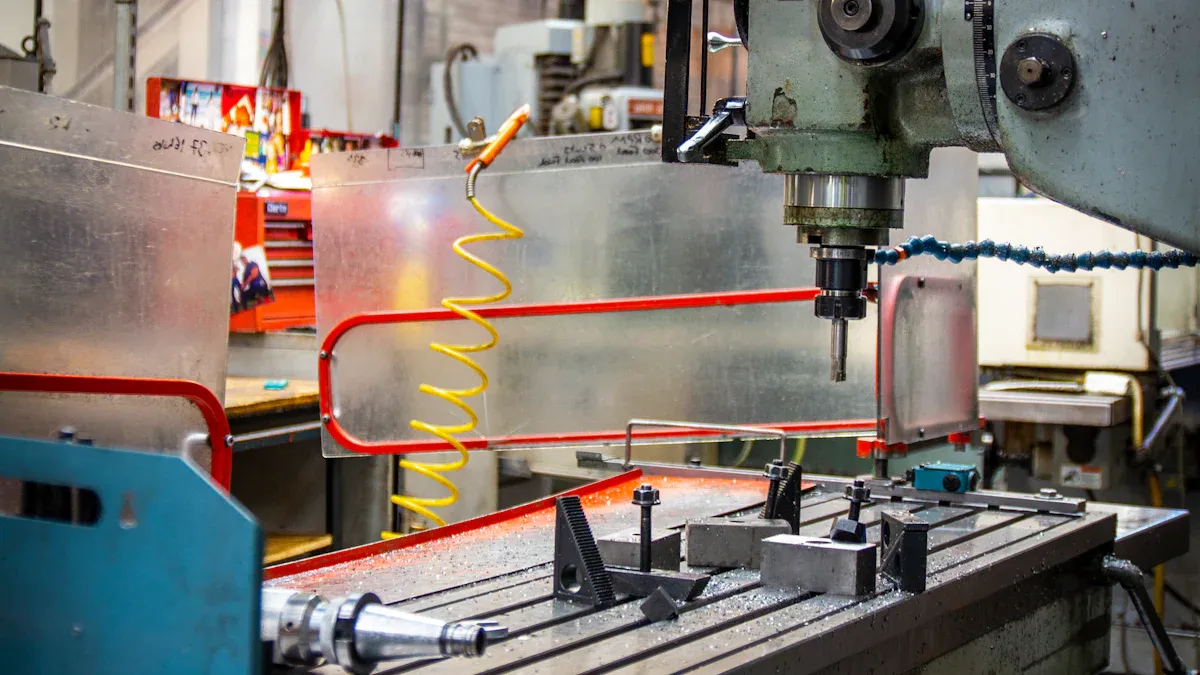
CNC machining plays a critical role in modern robotics, enabling you to create custom robot parts with exceptional precision. It handles advanced materials like carbon fiber reinforced polymers and superalloys, which are essential for durable and lightweight designs. CNC systems achieve tolerances as tight as +/- 0.0002 inches, ensuring high-performance components. With real-time monitoring and predictive maintenance powered by IoT, CNC machining enhances productivity and reliability in robotic applications.
Key Takeaways
CNC machining makes custom robot parts with great accuracy. It can achieve tolerances as small as +/- 0.0002 inches.
Strong materials like carbon fiber and titanium make robot parts tough and light.
CNC machines work automatically, making them faster and safer. They run nonstop and lower mistakes made by people.
CNC Machining and Its Role in Custom Robot Parts
Defining CNC Machining
CNC machining, or Computer Numerical Control machining, is a manufacturing process where pre-programmed software controls the movement of tools and machinery. This technology allows you to create precise parts by cutting, drilling, or milling materials like metals, plastics, and composites. Key components of CNC machines include cutting tools, workpiece holders, spindles, and axes. For example, the cutting tool shapes the material, while the spindle rotates it for efficient machining. CAD/CAM software plays a crucial role in programming these machines, enabling you to design and simulate processes with high accuracy.
Component/Process | Description |
|---|---|
Cutting Tool | The primary tool that shapes the material, varying by type and application. |
Workpiece Holder | Secures the material during machining, ensuring stability and precision. |
Spindle | Holds and rotates the cutting tool, influencing machining quality and efficiency. |
Axes | Define the movement capabilities of the CNC machine, affecting the complexity of machined shapes. |
Importance of CNC Robotics and Automation
CNC robotics and automation have revolutionized manufacturing by enhancing efficiency and precision. These systems operate continuously without breaks, significantly increasing productivity. Unlike traditional methods, CNC machines produce components faster, reducing lead times. The integration of AI and machine learning allows CNC systems to optimize tool paths and adjust for errors in real-time. Robotic systems equipped with IoT sensors collect data to improve workflows and predict maintenance needs. By automating hazardous tasks, CNC robotics also ensures workplace safety and compliance with regulations.
Applications in Custom Robot Parts
CNC machining is essential for creating custom robot parts with high precision. You can manufacture components like robotic arms, end effectors, and custom jigs using this technology. Robotic arms, for instance, are core components in industrial robots, performing tasks like assembly and welding. End effectors, such as grippers, add versatility to robotic systems. Custom jigs and fixtures hold workpieces in place during operations, ensuring accuracy. CNC machining’s ability to handle advanced materials makes it ideal for producing durable and lightweight parts for robotics.
Challenges of Machining Advanced Materials
Hardness and Durability
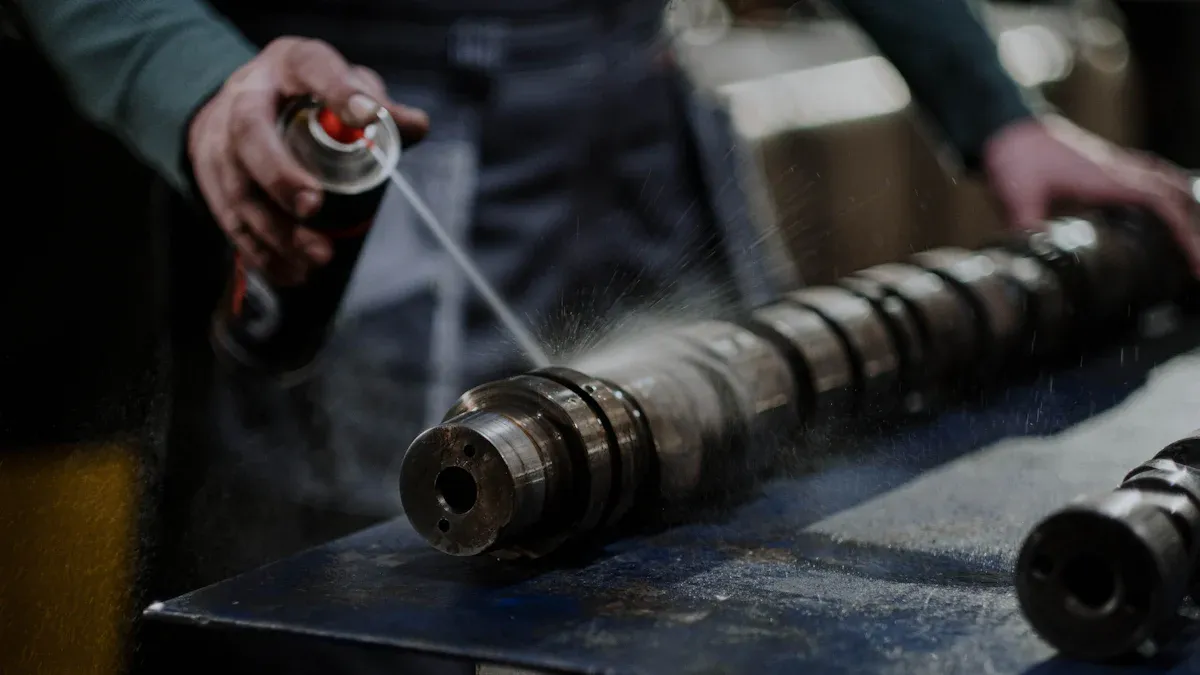
When machining high-quality parts for robots, you often encounter materials with exceptional hardness and durability, such as titanium or carbon composites. These materials resist deformation, making them ideal for lightweight components. However, their hardness increases tool wear, reducing tool life and raising operational costs. Abrasive materials like carbon composites also require aggressive cutting parameters to avoid surface defects or delamination. To overcome these challenges, you must use rigid tool holding systems to prevent chatter and ensure precise cuts. Selecting the right cutting tools and techniques tailored to the material's properties is essential for achieving high-quality results.
Thermal Stability and Heat Dissipation
Thermal stability plays a critical role in cnc machining. Heat generated during machining can affect accuracy and repeatability, especially when working with advanced materials. For instance, thermal growth in machine components can lead to dimensional inaccuracies. Environmental factors, such as fluctuating ambient temperatures, further complicate the process. To manage these issues, you can rely on automated systems that adapt to thermal changes. Machines designed with predictable thermal growth also help maintain consistent performance. Effective cooling systems and proper environmental controls ensure that your robot parts meet the required specifications.
Machinability and Tool Wear
Machining advanced materials often leads to significant tool wear, impacting the quality of high-quality parts. Dull tools can produce poor surface finishes, requiring rework or even scrapping parts. This not only increases costs but also affects production timelines. Recognizing signs of tool wear, such as increased cutting force or vibrations, helps you address the issue early. Using appropriate coolants to manage heat and remove chips during machining can extend tool life. Additionally, selecting tools specifically designed for the material ensures efficient machining and reduces wear, allowing you to produce durable and lightweight components for robots.
High-Precision CNC Operations for Advanced Materials
Tool Selection and Coating Technologies
Choosing the right tools and coatings is essential for high-precision cnc machining. Advanced materials like titanium alloys and composites demand tools that can withstand extreme conditions. Coatings enhance tool performance by improving hardness, reducing wear, and increasing thermal stability. For example, titanium aluminum nitride (TiAlN) coatings excel in high-speed dry cutting, while diamond coatings are ideal for machining non-ferrous materials like ceramics and graphite. The table below highlights some effective coatings and their applications:
Coating Type | Key Properties | Applications |
|---|---|---|
Titanium Aluminum Nitride (TiAlN/AlTiN) | Higher hardness, oxidation temperature, thermal stability | High-speed dry cutting of cast iron, stainless steel, high-temperature alloys |
Aluminum Titanium Nitride (AlTiN) | Excellent mechanical and thermal properties, reduced wear | Wear-resistant applications, ideal for high-speed machining |
Chromium Nitride (CrN) | High hardness, thermal stability, resistance to wear and corrosion | Cutting titanium alloys, aluminum, and other soft materials |
Diamond Coating | Optimal performance for non-ferrous materials, high hardness | Machining ceramics, graphite, metal matrix composites, high silicon aluminum alloys |
Cubic Boron Nitride (c-BN) | Second only to diamond in hardness, excellent chemical and thermal stability | Machining hard cast iron, hardened steel, high-temperature alloys, and hard metals |
Selecting the right coating ensures your tools last longer and deliver consistent results, even when machining tough materials.
Cooling Systems and Lubrication Techniques
Efficient cooling and lubrication are critical for high-precision cnc operations. Heat generated during machining can damage tools and compromise part quality. Advanced cooling systems like cryogenic cooling use liquid nitrogen or carbon dioxide to absorb heat effectively. This method improves tool life and surface quality but may increase flank wear with certain tools. Minimum quantity lubrication (MQL) forms a thin lubricating film, reducing friction and tool wear. However, it struggles with chip evacuation and cooling capacity. The table below compares these techniques:
Technique | Benefits | Drawbacks |
|---|---|---|
Minimum Quantity Lubrication (MQL) | Forms a lubricating film that reduces friction and tool wear. | Poor chip evacuation and low cooling capacity can lead to higher surface roughness. |
Cryogenic Cooling (LN2, CO2) | Absorbs heat effectively, environmentally friendly, improves tool life and surface quality. | Less efficient than flood systems, can increase flank wear with certain tools. |
Biodegradable Esters | Reduces tool wear and eliminates fluid disposal needs. | Increases fire hazard and problematic chip evacuation. |
By selecting the right cooling and lubrication techniques, you can enhance machining efficiency and maintain the integrity of custom cnc machined parts.
Precision Software and Process Optimization
Precision software plays a vital role in optimizing high-precision cnc machining. It calculates feed rates to maximize cutter performance and ensures consistent results. Real-time monitoring allows you to adjust machining parameters based on material conditions, reducing errors and improving efficiency. Additionally, data analysis from monitoring systems helps you make informed decisions, boosting overall equipment efficiency (OEE). These tools enable you to achieve superior precision while minimizing waste and downtime. By leveraging advanced cnc machining services with precision software, you can produce parts that meet exacting standards.
Benefits of CNC Machining for Custom Robot Parts
Precision and Accuracy in Robotics
CNC machining delivers unmatched precision, making it indispensable for advanced robotics. You can achieve tolerances as tight as +/- 0.0002 inches, ensuring that every component meets exact specifications. This level of accuracy is vital for robotic systems that demand consistent performance. For example, robotic arms rely on precise dimensions to maintain smooth and reliable movements. CNC machining also excels in achieving superior surface finishes, with roughness values as low as Ra 0.8 µm. This is particularly important for parts that require low friction, such as joints and end effectors. By using CNC machining, you ensure that your custom robot parts meet the highest quality standards.
Scalability from Prototyping to Production
CNC machining offers seamless scalability, allowing you to transition from prototyping to full-scale production effortlessly. CNC systems can be reprogrammed quickly, enabling you to adapt to changing production needs. This flexibility is ideal for custom orders or iterative design processes. Whether you need a single prototype or mass production, CNC machining ensures consistent quality across all stages. It also supports the creation of complex geometries and allows you to select materials tailored to specific robotic applications. With CNC machining, you can efficiently produce custom solutions for advanced robotics without compromising on precision or quality.
Material Versatility and Design Flexibility
CNC machining provides exceptional material versatility, accommodating metals, plastics, and composites. This allows you to choose materials like steel or aluminum for structural components or lightweight polymers for specialized parts. The ability to work with diverse materials ensures that your custom robot parts meet specific performance requirements. CNC machining also supports intricate designs, enabling you to create components with complex geometries. This flexibility is crucial for robotics, where seamless movement and robust assemblies are essential. By leveraging CNC machining, you can achieve both material versatility and design customization, ensuring optimal performance for your robotic systems.
CNC machining plays a pivotal role in advancing robotics by addressing challenges like hardness and machinability with innovative solutions. You benefit from enhanced precision, automation, and flexibility, ensuring consistent quality and productivity. As CNC evolves with AI and additive manufacturing, it will redefine machining capabilities, enabling smarter processes and hybrid designs for advanced robotics.
FAQ
What makes CNC machining suitable for advanced robotics?
CNC machining ensures precision and consistency. It handles complex designs and advanced materials, making it ideal for creating durable, high-performance robotic components.
How does automation improve CNC machining processes?
Automation enhances efficiency by reducing human error. It enables continuous operation, optimizes workflows, and transforms CNC systems into a fully automated robotic workhorse.
Can CNC machining handle all types of materials?
Yes, CNC machining works with metals, plastics, and composites. Its versatility allows you to choose materials that meet specific robotic application requirements.
See Also
Achieving Precision in Parts Manufacturing Through CNC Machining
Exploring Material Needs for CNC Precision Machining Success
CNC Machining Essentials: Tolerances, Prototyping, and Materials
The Impact of CNC Machining on Precision Manufacturing Advances
About US
Follow Us
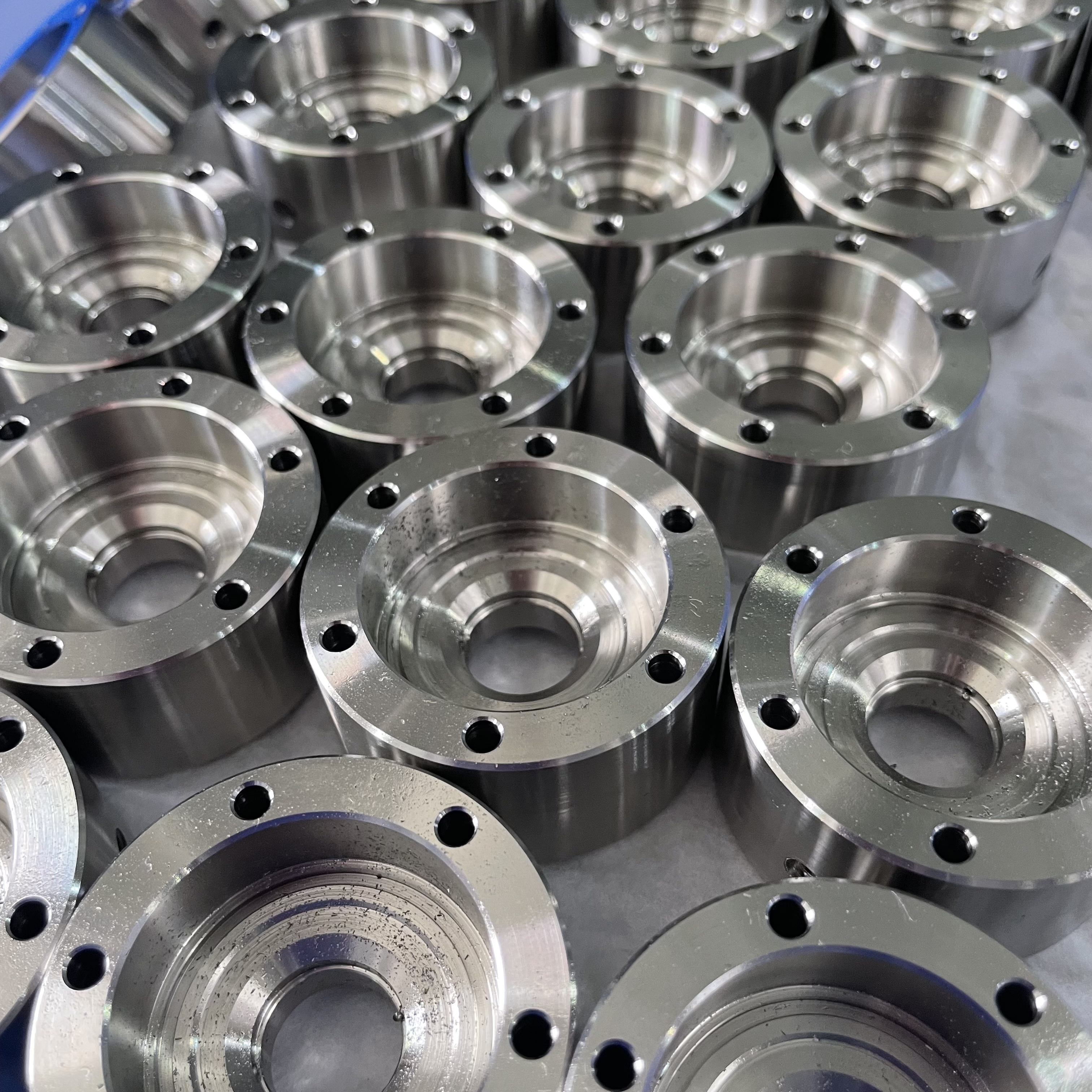
Your prototype holds unparalleled significance, and we deeply value its uniqueness. Collaborating with you during the preparation phase for running your prototype or parts is a commitment we gladly embrace. Whether it's a single part or a complex assembly, we are dedicated to selecting the optimal tools and pathways to bring your envisioned product to life.
At Precision Fab CNC Machining, we specialize in producing parts for prototypes, short runs, and high-volume production. Our prototyping machine capabilities extend across metal, plastic, and wood machining, with welding fabrication services available to complement and finalize your prototype if required.
Address
Address: Room320 10F, Building A,Nanshan international building, Dayawan District, Huizhou, Guangdong, 516001 China
Contacts
billy@timaycnc.com