Why CNC Machining is Perfect for Rapid Prototyping of Custom Robot Parts

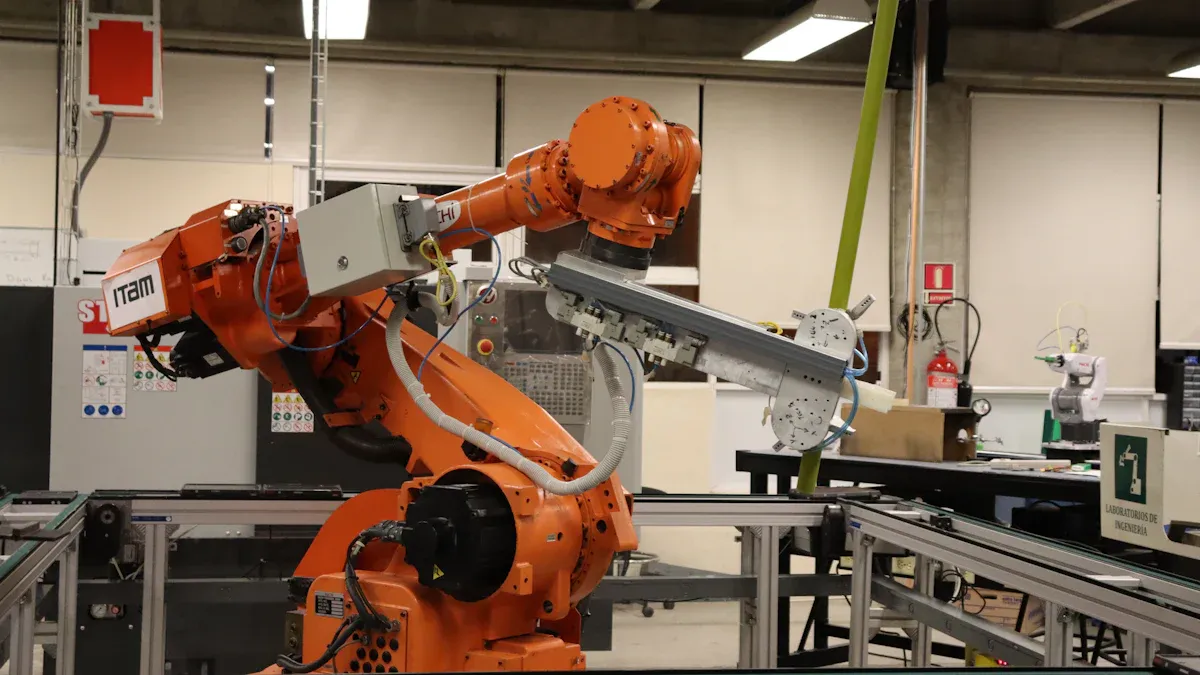
You need precision and speed when creating custom robot parts. CNC machining delivers both, making it ideal for prototyping. The CNC machining market is projected to reach $23 billion by 2026, reflecting its growing adoption. Its computerized control ensures exceptional accuracy, reducing errors and enabling faster iterations for robotics development.
Key Takeaways
CNC machining is very accurate, with errors as small as ±0.0002 inches. This is important for making custom robot parts.
It quickly turns designs into prototypes, helping test and improve robot parts faster.
CNC machining works with many materials, so you can pick the best ones for strength, weight, or flexibility in your robot designs.
CNC Machining and Its Role in Prototyping
What is CNC Machining?
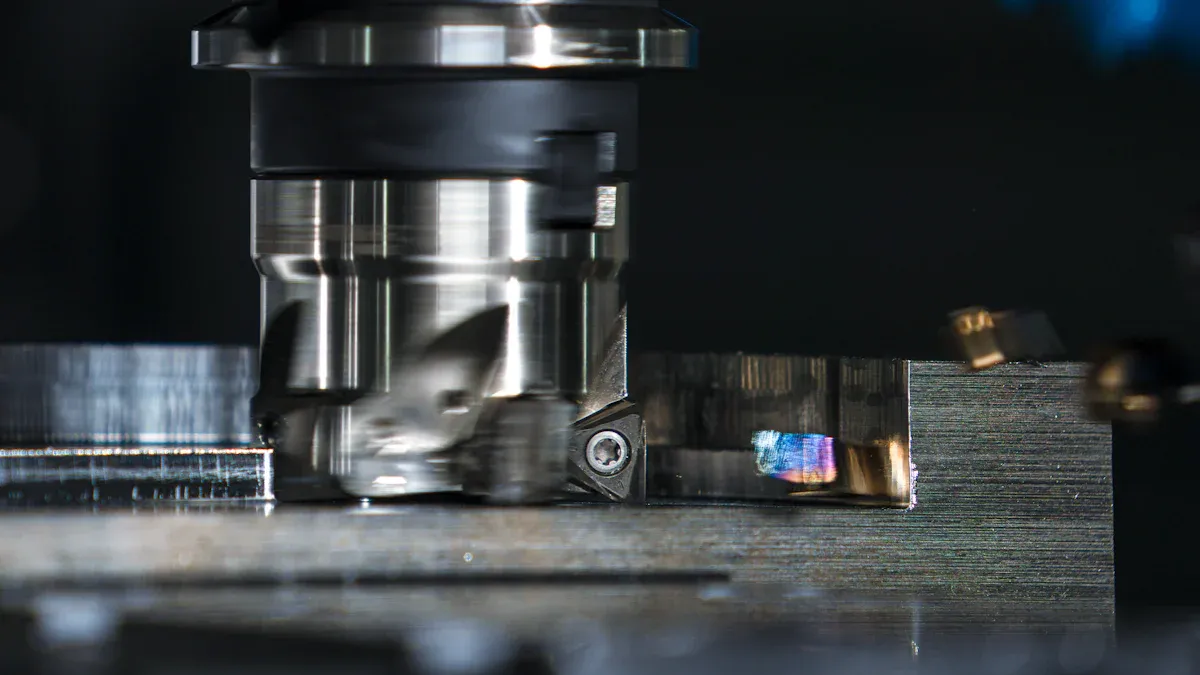
CNC machining is a manufacturing process that uses computer-controlled machines to create precise parts. It involves three main components: the machine tool, the computer system, and programming instructions. The process begins with a digital model created using CAD software. This model is then converted into machine-readable instructions, guiding the cutting tool to shape the material with exceptional accuracy.
The CNC machining workflow includes several steps: designing the CAD model, converting it to CAM, setting up the machine, executing operations, inspecting quality, and post-processing.
CNC machining stands out for its precision, automation, and versatility. It operates through pre-programmed instructions, ensuring consistent results and reducing human error. This makes it ideal for creating complex robotic parts with tight tolerances.
How CNC Machining Enables Rapid Prototyping
CNC machining accelerates prototyping by streamlining the production process. Drafting a detailed CAD model is the first step, allowing you to refine designs before machining begins. Once finalized, the CAD model is imported into CAM software to generate instructions for the CNC machine. This automated process ensures rapid and accurate production of prototypes.
CNC machining allows for quick tool changes and uninterrupted operation, enhancing speed.
It achieves near-flawless accuracy, ensuring prototypes meet exact specifications.
The process supports a wide range of materials, offering unmatched material versatility for robotics.
The Importance of CNC Machining for Custom Robot Parts
CNC machining is essential for creating custom robot parts due to its precision and adaptability. It ensures parts fit together perfectly, which is critical for robotic functionality. The process also supports rapid iteration, enabling you to refine designs quickly. Whether you need plastic or metal components, CNC machining delivers high-quality results tailored to your needs.
It provides tolerances as tight as +/- 0.0002 inches, ensuring precise movements.
Custom machining converts CAD drawings into functional robotic parts.
CNC rapid prototyping guarantees uniformity, even in mass production.
CNC machining for rapid prototyping offers the speed, precision, and versatility required to meet the unique demands of robotics.
Key Benefits of CNC Machining for Custom Robot Parts
Precision and Accuracy in Prototyping
CNC machining excels in delivering unmatched precision and accuracy, making it ideal for prototyping custom robotic components. You can achieve tolerances as tight as ±0.0002 inches, ensuring that every part meets exact specifications. This level of precision is critical for robotic parts, where even the smallest deviation can impact performance.
CNC machines eliminate human error through automation, enhancing accuracy.
They maintain measurements within ±0.001 inches, which is essential for industries like robotics, aerospace, and medical.
Tight tolerances ensure smooth and repeatable movements in robotic components.
When creating custom robotic parts, CNC machining ensures that each prototype adheres to your design requirements, providing consistent quality and functionality.
Fast Turnaround from Design to Prototype
CNC machining offers fast turnaround times, allowing you to move quickly from design to prototype. Once your CAD model is ready, the CNC machine can seamlessly transition to producing a physical part. This speed is a significant advantage for rapid prototyping services.
CNC machines produce highly accurate prototypes in a fraction of the time compared to other methods.
The process supports quick tool changes and uninterrupted operation, reducing delays.
You can refine and test designs faster, accelerating the development cycle.
This efficiency makes CNC machining for rapid prototyping a go-to solution for engineers working on custom robotic parts.
Material Versatility for Robotics Needs
CNC machining provides exceptional material versatility, enabling you to choose the best material for your custom robotic components. Whether you need metals, plastics, or composites, CNC machines can handle them all.
Metals like aluminum and titanium offer strength and durability for robotic parts.
Plastics provide lightweight options for components requiring flexibility.
CNC machining accommodates a wide range of materials, unlike other prototyping methods.
This versatility ensures that your robotic parts meet specific performance and design requirements, whether for strength, weight, or surface finish.
Scalability from Prototyping to Full Production
CNC machining simplifies the transition from prototyping to full production. Once you finalize your prototype, the same CNC machine can produce identical parts with consistent quality.
CNC machines ensure repeatability, maintaining tight tolerances across multiple parts.
Automation reduces human error, guaranteeing reliable results.
The process supports both low-volume and high-volume production, making it ideal for scaling.
By using CNC machining, you can confidently scale your custom machining for robot parts without compromising on quality or precision.
Applications of CNC Machining in Robotics
Prototyping Robotic Arms and Joints
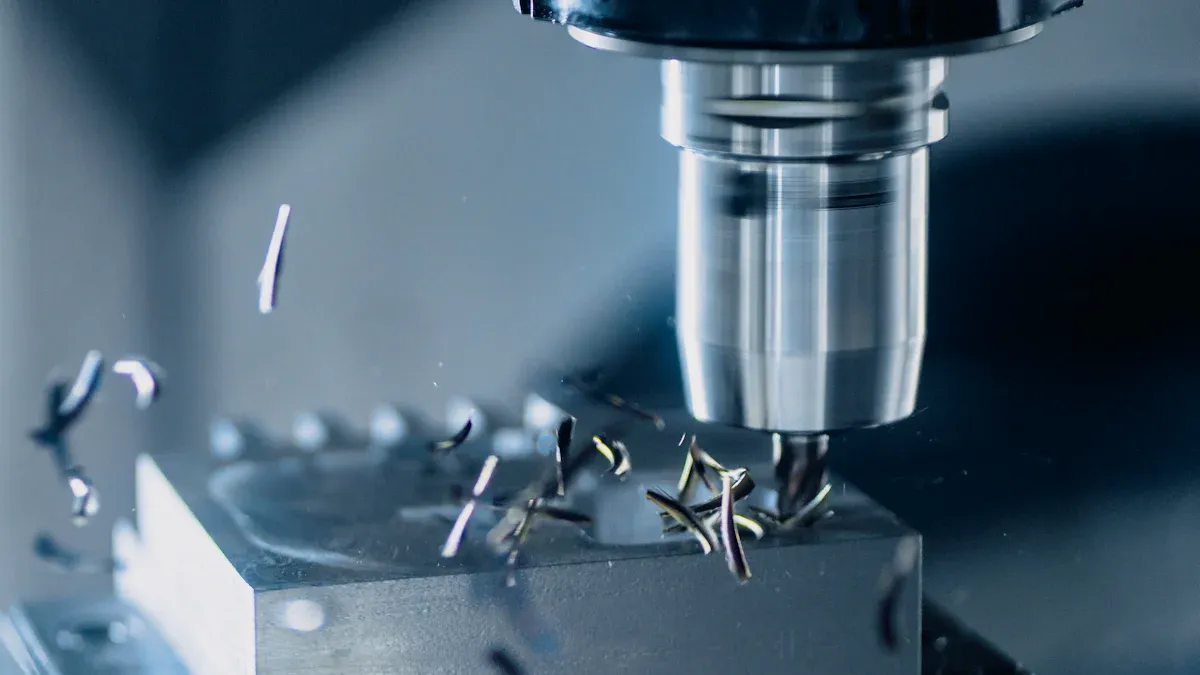
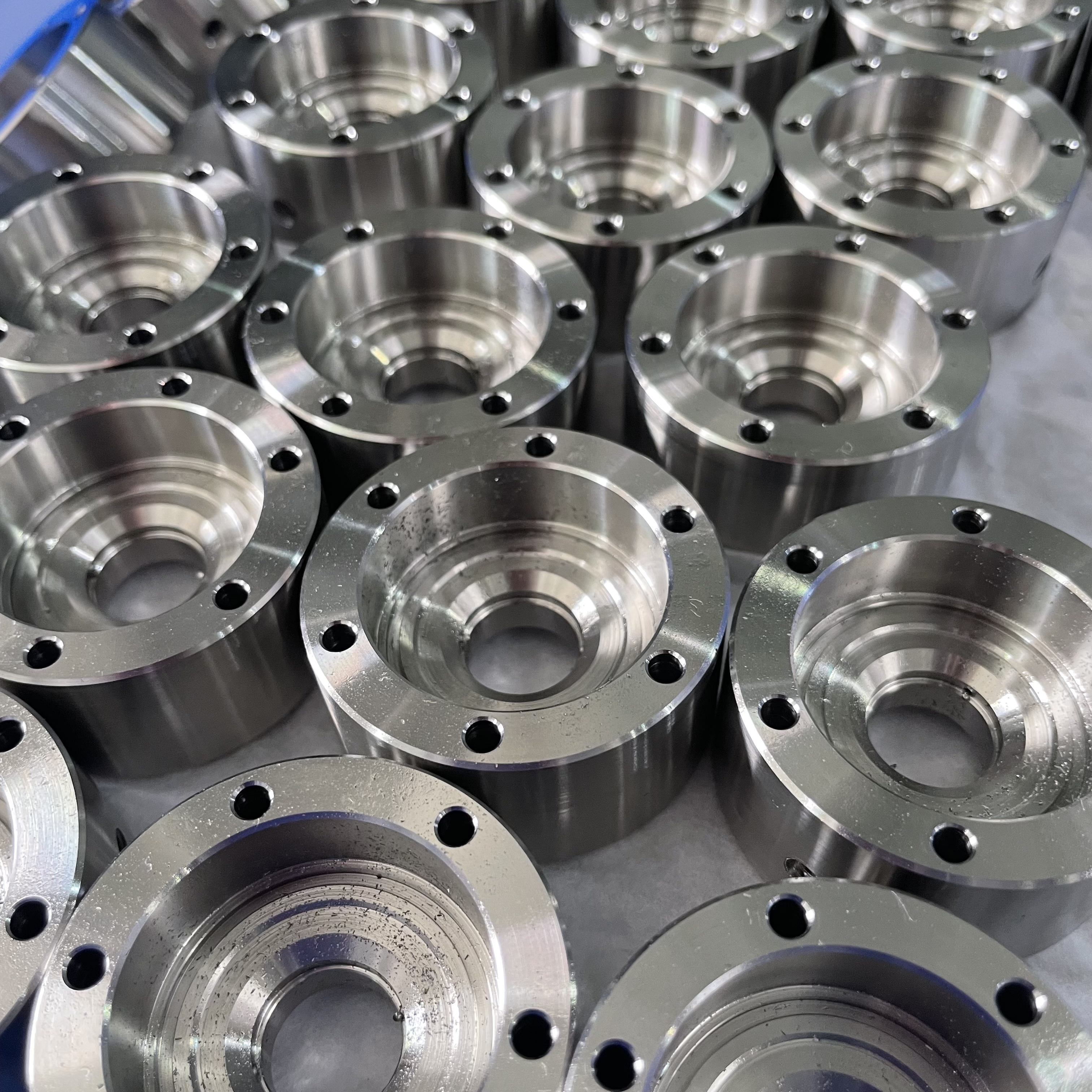
CNC machining plays a vital role in prototyping robotic arms and joints. You can create components like shoulder, elbow, and wrist joints with exceptional precision. Other essential parts, such as gears, bearings, and housing components, are also crafted using this method. CNC machining ensures these parts meet tight tolerances, often as precise as ±0.0002 inches, which is critical for smooth and repeatable movements in robotic systems.
Examples of robotic systems that benefit from CNC machining include:
SCARA robots designed for high-speed assembly tasks.
Delta robots with base-mounted joints for lightweight applications.
Gantry robots with linear actuators for precise positioning.
The versatility of CNC machining allows you to use materials like aluminum or titanium for strength and durability. This ensures your robotic arms and joints can handle significant stress while maintaining accurate movements.
Custom End Effectors and Grippers
End effectors and grippers are essential for robots to interact with their environment. CNC machining enables you to design and produce custom components tailored to specific tasks. These parts often require complex geometries and tight tolerances to handle objects efficiently and safely.
For example, you might need a gripper capable of picking up fragile items without causing damage. CNC machining allows you to prototype and test these designs quickly, ensuring they meet your requirements. The precision of CNC machining ensures that each component fits perfectly, enhancing the functionality of your robotic system.
Housings and Enclosures for Controllers
CNC machining is ideal for creating durable housings and enclosures for robotics controllers. These enclosures protect delicate internal electronics from damage while ensuring a perfect fit for all components. Examples of CNC-machined enclosures include:
Enclosure Type | Features |
|---|---|
Durable and precise, suitable for CNC control equipment. | |
Acrylic CNC Controller Enclosure | Lightweight, includes emergency switches for safety. |
Rack Mount Controller Enclosure | Cost-effective, integrates with additional units for complex systems. |
CNC Shield Controller Enclosure | Smooth surface, engineered for extended usage with heat-sink elements. |
Panel Controller Enclosure | Programmable case with long-lasting battery support. |
CNC Motor Controller Enclosure | Rugged design for industrial use, resistant to breakage. |
CNC machining ensures these enclosures meet exact specifications, enhancing the longevity and reliability of your robotics controllers. The process also supports rapid prototyping services, allowing you to test and refine designs efficiently.
CNC Machining vs. Other Prototyping Methods
CNC Machining vs. 3D Printing
When comparing CNC machining to 3D printing for prototyping, each method has unique strengths. CNC machining offers unmatched dimensional accuracy, which is essential for custom robot parts requiring precise measurements. It also produces prototypes with superior mechanical properties in all directions, making it ideal for functional testing.
CNC machining achieves tolerances as tight as one-ten-thousandth of an inch, far surpassing 3D printing's capabilities.
It ensures greater strength and durability, closely mimicking the desired material properties.
3D printing, however, excels in creating complex geometries with fewer design restrictions, making it suitable for intricate designs.
For robotics, CNC machining often outperforms 3D printing when strength, durability, and manufacturing precision are critical.
CNC Machining vs. Injection Molding
CNC machining and injection molding differ significantly in their applications for prototyping. CNC machining eliminates the need for molds, reducing setup costs and time. This makes it more suitable for rapid prototyping services. Injection molding, on the other hand, is better suited for mass production due to its ability to produce large quantities of identical parts.
Method | Advantages | Limitations |
|---|---|---|
CNC Machining | No molds needed, faster setup | Higher costs compared to 3D printing |
Injection Molding | Ideal for mass production | Expensive molds make it less cost-effective for prototyping |
CNC machining is particularly advantageous for prototypes requiring high strength, tight tolerances, or quick design changes. It also supports materials like PEEK and PEI, which are challenging for injection molding.
Choosing CNC Machining for Custom Robot Parts
CNC machining stands out as the best choice for custom machining for robot parts. It offers high precision, material versatility, and scalability from design to prototype. You can quickly refine designs and produce functional prototypes with tight tolerances. This makes CNC machining for rapid prototyping an essential tool for robotics development.
Factors like production volume, cost constraints, and design complexity should guide your decision. CNC machining excels in custom or low-volume manufacturing, ensuring consistent quality and fast turnaround. For engineers and developers, it provides a reliable solution for creating high-quality robotic parts.
CNC machining has revolutionized rapid prototyping for robotics. Its precision and speed allow you to create accurate prototypes while enabling quick testing and refinement. The integration of CNC machines with robotic arms enhances industrial automation, making it indispensable for robotics development. By balancing application needs and machinability, you can achieve efficient and reliable results.
FAQ
What makes CNC machining better than other prototyping methods?
CNC machining offers unmatched precision, material versatility, and scalability. It produces durable prototypes quickly, making it ideal for robotics where accuracy and strength are critical.
Can CNC machining handle complex robotic designs?
Yes, CNC machining excels at creating intricate designs. Its computer-controlled process ensures precise cuts, even for complex geometries, enabling you to prototype advanced robotic components effectively.
How does CNC machining ensure high-quality prototypes?
CNC machining uses automated tools and tight tolerances to produce consistent results. This ensures your prototypes meet exact specifications and function as intended in robotic applications.
See Also
Achieving Precision in CNC Machining for Parts Production
Overcoming Obstacles to Improve CNC Prototyping Precision
How Small Parts CNC Influences Custom R/C Hobby Items
Streamlined CNC Machining Solutions for Accurate Manufacturing
Understanding the Essentials of CNC Programming for Precision Parts
About US
Follow Us
Your prototype holds unparalleled significance, and we deeply value its uniqueness. Collaborating with you during the preparation phase for running your prototype or parts is a commitment we gladly embrace. Whether it's a single part or a complex assembly, we are dedicated to selecting the optimal tools and pathways to bring your envisioned product to life.
At Precision Fab CNC Machining, we specialize in producing parts for prototypes, short runs, and high-volume production. Our prototyping machine capabilities extend across metal, plastic, and wood machining, with welding fabrication services available to complement and finalize your prototype if required.
Address
Address: Room320 10F, Building A,Nanshan international building, Dayawan District, Huizhou, Guangdong, 516001 China
Contacts
billy@timaycnc.com