Why CNC Machining is Ideal for Complex Geometries

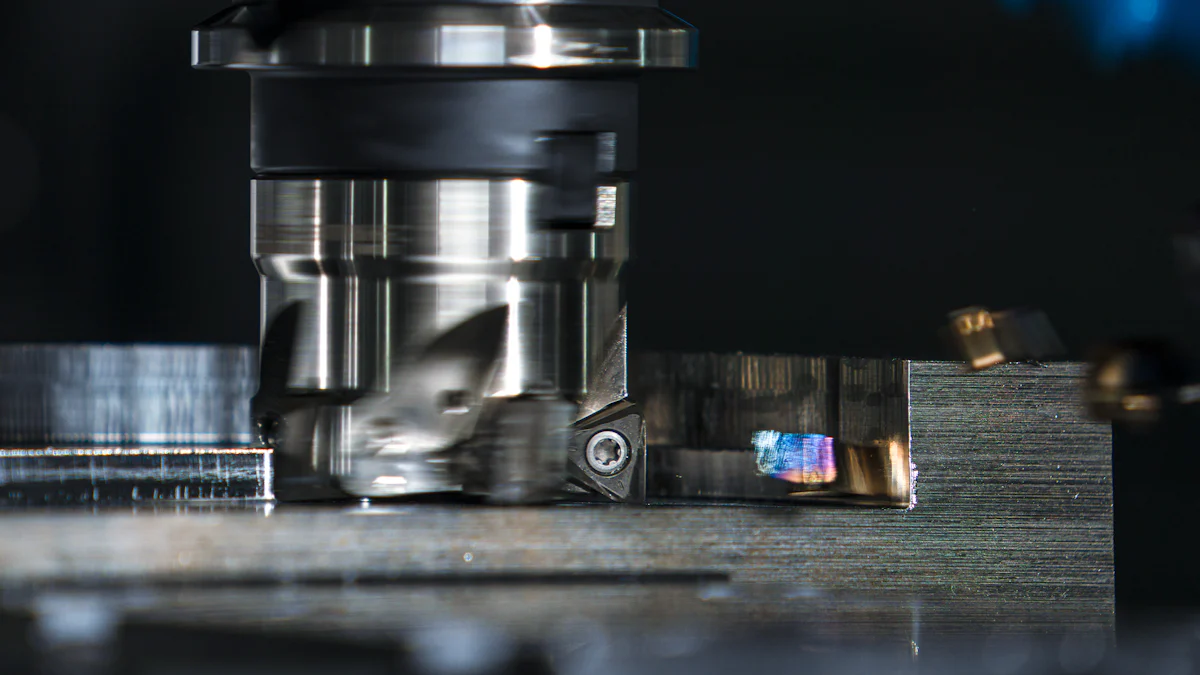
CNC machining offers unmatched precision and efficiency, making it the go-to solution for intricate designs. You can rely on it to create complex geometries that traditional methods struggle to achieve. Industries like aerospace, medical, and electronics depend on precision CNC machining to produce high-quality, complex parts. Its ability to handle diverse materials and deliver consistent results ensures reliability across applications. Whether crafting surgical tools or engine components, CNC machining services provide the versatility and accuracy needed for even the most demanding projects.
Key Takeaways
CNC machining is very precise, perfect for making tricky shapes.
It uses multi-axis tools to create detailed designs faster and better.
CNC machines work with many materials like metal, plastic, and more.
Special software like CAD/CAM helps make designs accurate and easy.
Companies using CNC machines save money, time, and make great products.
Understanding Complex Geometries
What Are Complex Geometries
In manufacturing, complex geometries refer to parts with intricate three-dimensional designs. These designs often include features like undercuts, hollow spaces, or internal structures that are difficult to access. You might notice that these geometries resemble organic shapes, making them challenging to produce with traditional methods. For example, conventional tools like straight cutters struggle to reach certain areas, limiting the possibilities for creating such designs.
Modern manufacturing techniques, such as CNC machining, have revolutionized how you can approach these challenges. Unlike traditional methods, CNC machining services allow you to achieve high precision and accuracy when working with complex parts. This capability ensures that even the most intricate designs can be brought to life with ease.
Challenges in Manufacturing Complex Geometries
Precision and Accuracy Requirements
When manufacturing complex parts, precision and accuracy are critical. You need to ensure that every detail of the design is replicated perfectly. Even the smallest deviation can compromise the functionality of the part. For example, in industries like aerospace or medical, a minor error in a component could lead to significant performance issues.
Traditional manufacturing methods often fall short in meeting these precision requirements. Processes like casting or manual machining require simplifications in the design, which can result in less accurate parts. CNC machining, on the other hand, excels in delivering the accuracy needed for intricate designs. Its advanced capabilities allow you to maintain tight tolerances, ensuring consistent results across multiple parts.
Limitations of Traditional Manufacturing Methods
Traditional methods face several limitations when dealing with complex geometries. For instance, casting and manual machining rely on straightforward tools and processes, which restrict their ability to create intricate shapes. These methods often require design simplifications, reducing the overall complexity of the part.
In contrast, CNC machining offers greater freedom in design. It uses advanced multi-axis systems to reach areas that traditional tools cannot access. Additionally, CNC machining services integrate software like CAD/CAM, enabling you to simulate and refine designs before production. This approach minimizes errors and ensures that the final product meets your exact specifications.
Aspect | Traditional Manufacturing | CNC Machining |
|---|---|---|
Design Constraints | Simplification required | Greater freedom |
Precision for Complex Geometries | Often insufficient | High precision achievable |
By leveraging CNC machining, you can overcome the challenges posed by traditional methods and achieve superior results for your complex parts.
Key Features of CNC Machining for Complex Geometries
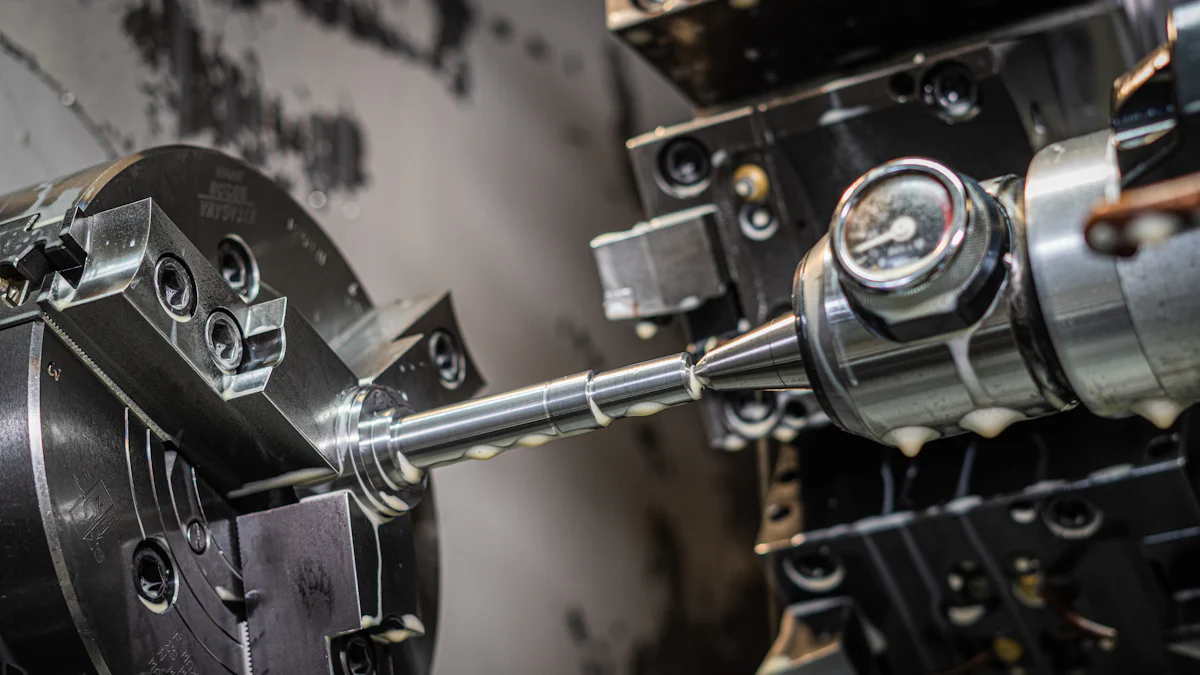
Multi-axis Capabilities
3-axis, 4-axis, and 5-axis Machining
Multi-axis machining is a game-changer for creating complex parts. With 3-axis machining, you can move the cutting tool along the X, Y, and Z axes. This setup works well for simpler designs. However, when dealing with intricate designs, 4-axis and 5-axis CNC machining take precision to the next level.
5-axis CNC introduces two additional rotational axes, allowing tools to approach materials from multiple angles. This capability enables you to fabricate curved surfaces, undercuts, and other challenging features. Unlike 3-axis machines, 5-axis CNC can perform all milling operations in one setup. This reduces production time and operational costs while ensuring greater accuracy. Additionally, shorter cutting tools used in 5-axis machining minimize vibrations, resulting in smoother surface finishes and fewer post-processing requirements.
Enhanced Flexibility for Intricate Designs
Multi-axis CNC machining offers unmatched flexibility for intricate designs. The simultaneous movement along different axes allows you to create precise 3D shapes and contours. You can achieve deeper cuts and complex geometries without removing the workpiece, which enhances efficiency. This flexibility makes multi-axis machining ideal for producing CNC milled parts and CNC turned parts with high precision.
Material Versatility
Compatibility with Metals, Plastics, and Composites
CNC machining services excel in working with a wide range of materials. Whether you need durable steel, lightweight plastics, or high-strength composites, CNC machining adapts to your requirements. For example:
Material | Properties | Applications |
|---|---|---|
Steel | Strength, corrosion resistance, wear resistance | Precision parts requiring durability |
Plastics | Lightweight, chemical resistance, machinable into intricate designs | Consumer products, medical devices |
Titanium | High strength-to-weight ratio, excellent corrosion resistance | Aerospace, medical applications |
Composites | Exceptional strength and stiffness, lightweight | Aerospace applications |
Adapting to Diverse Industry Needs
CNC machining meets the specific demands of various industries. In aerospace, it produces airfoils and landing gear with tight tolerances. The medical field relies on CNC machining for implants and surgical tools. Even the petrochemical industry benefits from precise-fitting parts that prevent operational issues. This adaptability ensures that CNC machining services deliver reliable results for complex parts across industries.
Advanced Software Integration
CAD/CAM Software for Design Precision
CAD/CAM software plays a crucial role in precision CNC machining. With CAD tools, you can create detailed 3D models of complex parts. These tools allow you to design intricate curves, angles, and contours with ease. Features like parametric modeling let you modify dimensions quickly, ensuring your designs meet exact specifications. This level of precision would be difficult to achieve with traditional methods.
Simulation and Error Reduction
Simulation software enhances the CNC machining process by reducing errors. You can test programs in a virtual environment to detect potential collisions or programming mistakes. This improves safety and prevents costly tool breakage. Simulations also optimize toolpaths, increasing accuracy and productivity. By identifying issues before production, you save time and resources while ensuring high-quality results.
Benefits of CNC Machining for Complex Geometries
High Precision and Accuracy
Consistent Results Across Multiple Parts
CNC machining ensures consistent results when producing complex parts. Advanced computer-controlled operations allow you to replicate designs with incredible accuracy. This process eliminates human error, ensuring each part matches the original model. For example, CNC machines achieve tolerances as tight as ±0.001 inches, which is essential for industries like aerospace and medical devices.
Using 4-axis and 5-axis CNC machines enhances this consistency. These machines move cutting tools along multiple axes, enabling you to create intricate designs with tight tolerances. Micromachining techniques further improve precision by using small cutting tools and motion control. This approach is ideal for high-precision applications requiring microscopic details.
Tolerances for Microscopic Details
CNC machining excels in maintaining tight tolerances for complex geometries. It achieves precision within thousandths of an inch, a level unmatched by manual methods. Specialized tooling and fixturing reduce vibrations during machining, ensuring accuracy for even the smallest features. This capability makes CNC machining services indispensable for producing CNC milled parts and CNC turned parts with high precision.
Reduced Setup and Production Time
Automation and Efficiency
Automation in CNC machining streamlines production. Automatic tool changers (ATCs) and tool presetters reduce setup time, allowing you to complete more jobs on the same equipment. Adaptive tool control systems optimize cutting settings, minimizing cycle times and improving efficiency. These features enhance production speed while maintaining quality.
Faster Prototyping and Iteration
CNC machining simplifies prototyping by automating the process. You can quickly produce prototypes and make adjustments during early development stages. This rapid iteration saves time and ensures your designs meet exact specifications. Automated tool path selection further reduces lead times, enabling faster delivery compared to manual methods.
Superior Surface Finishes
Smooth and Polished Results
CNC machining techniques deliver a better surface finish for complex parts. Processes like grinding, polishing, and superfinishing remove defects and create smooth surfaces. These methods ensure your parts meet both functional and aesthetic requirements.
Reduced Post-Processing Requirements
High-precision machining minimizes the need for post-processing. Techniques like honing and lapping achieve tight tolerances and superior finishes during production. This reduces additional work, saving you time and resources. CNC machining services provide polished results directly from the machine, making it an efficient choice for intricate designs.
Applications of CNC Machining for Complex Geometries
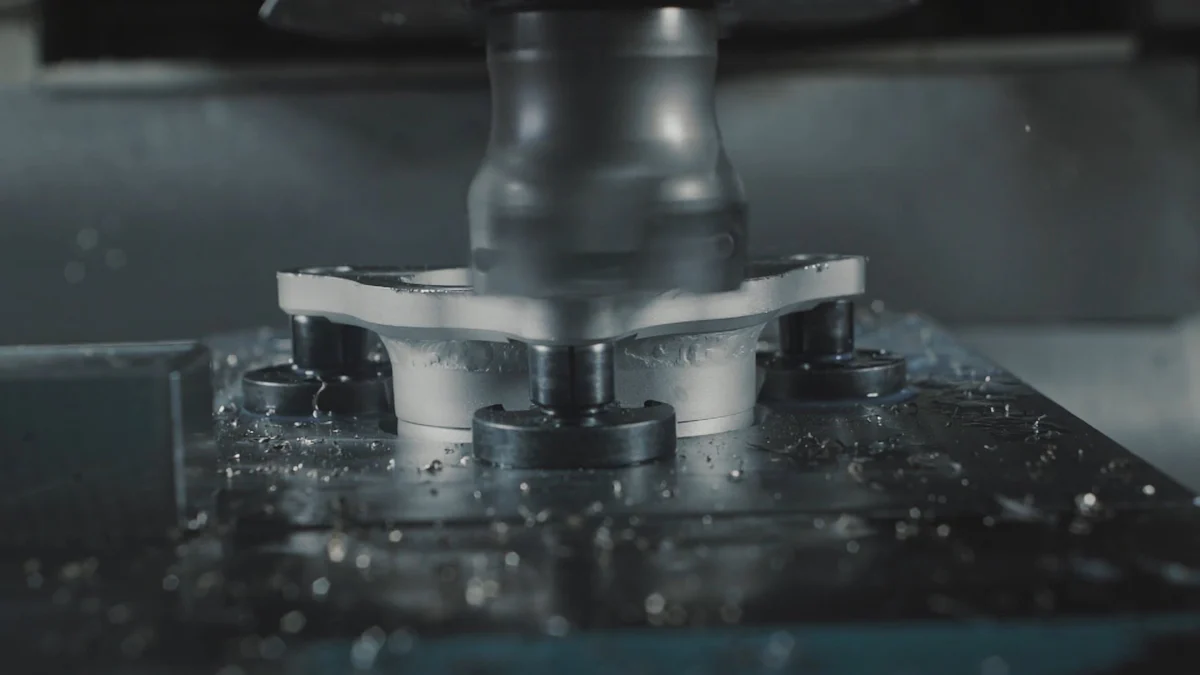
Aerospace Industry
Lightweight and Intricate Components
In aerospace, lightweight components with intricate designs are essential for performance and efficiency. CNC machining enables you to produce complex parts like:
Internal structures for stabilizers.
Aerodynamic surfaces for stability and control.
Turbine blades with precise geometries.
Engine mounts and pylons.
Cockpit components like seat tracks and brackets.
These parts must maintain mechanical strength under extreme conditions. CNC machining services allow you to use high-performance plastics for interior components, reducing weight without compromising durability. This capability ensures that aerospace designs meet strict performance standards.
High-Performance Materials
CNC machining handles high-performance materials required in aerospace applications with ease. You can work with:
Aluminum alloys for lightweight strength.
Titanium and superalloys for heat and corrosion resistance.
High-performance polymers like PEEK for engine parts.
Composite materials such as carbon fiber for structural integrity.
These materials are critical for creating CNC milled parts and CNC turned parts that withstand the demands of modern aircraft.
Medical Industry
Custom Implants and Prosthetics
CNC machining excels in producing custom implants and prosthetics tailored to individual patients. You can achieve high precision and repeatability, ensuring each component meets strict tolerances. The flexibility to use biocompatible materials allows you to address diverse medical needs. This process also reduces production time, enabling faster delivery of life-changing devices.
Precision Surgical Tools
Surgical tools require exceptional accuracy and consistency. CNC machining ensures compliance with stringent healthcare standards by delivering tolerances measured in microns. This precision guarantees that tools perform reliably during critical procedures. The adaptability of CNC machining to various materials further enhances its suitability for medical applications.
Automotive Industry
Engine Components and Prototypes
CNC machining plays a vital role in developing engine components and prototypes. You can quickly produce parts that meet exact specifications, allowing engineers to test their form, fit, and function under real-world conditions. This rapid iteration helps optimize engine performance and identify design flaws early in the process.
Customization for High-Performance Vehicles
The automotive industry relies on CNC machining for customization. You can create bespoke components without significant additional costs. This technology supports innovation in car design by enabling modifications without expensive tooling changes. CNC machining ensures high precision, making it ideal for producing specialized parts for high-performance vehicles.
Electronics and Robotics
Miniaturized Components for Electronics
CNC machining plays a vital role in producing miniaturized components for electronics. These parts often feature intricate designs that require exceptional precision. You can rely on CNC machining to create components with tight tolerances and smooth finishes, ensuring they meet the high standards of the electronics industry.
Some examples of miniaturized components include:
Heat sinks for efficient thermal management.
Electrical insulation to prevent short circuits.
Amplifier housings for compact audio systems.
Radiofrequency interference shielding for sensitive devices.
These components are essential for modern electronics, where size and performance are critical. CNC machining allows you to work with materials like aluminum, copper, and specialized plastics, ensuring durability and functionality. Its ability to handle complex geometries ensures that even the smallest parts perform reliably in demanding applications.
Precision Parts for Robotic Systems
Robotic systems demand precision and reliability. CNC machining provides the accuracy needed to produce parts with tolerances as tight as +/- 0.0002 inches. This level of precision ensures that robotic components fit together seamlessly, enabling smooth and efficient operation.
You can also benefit from the versatility of CNC machining when creating robotic parts. It supports a wide range of materials, including lightweight metals and composites. These materials are crucial for building strong yet lightweight components, which improve the performance and energy efficiency of robotic systems.
Another advantage of CNC machining is its ability to achieve surface roughness as low as Ra 0.8 µm. This smooth finish reduces friction between moving parts, enhancing the durability and functionality of robotic systems. Whether you need gears, joints, or structural frames, CNC machining ensures that every part meets the exact specifications required for complex robotic designs.
CNC machining empowers you to create both miniaturized electronic components and precision robotic parts with unmatched accuracy. Its ability to handle complex designs and diverse materials makes it indispensable for advancing technology in these fields.
CNC machining stands out as the ultimate solution for producing complex geometries. Its computer-controlled operations ensure unmatched precision, even for intricate features like undercuts and multi-angled surfaces. Advanced multi-axis systems allow you to create detailed parts, such as turbine blades, in a single setup. This efficiency reduces errors and production time. CNC machining also adapts to various materials, enabling innovation across industries. By leveraging its precision, versatility, and scalability, you can achieve high-quality results while minimizing costs. Businesses that adopt CNC machining gain a competitive edge in manufacturing complex designs.
FAQ
What makes CNC machining better than traditional methods for complex geometries?
CNC machining offers unmatched precision and flexibility. It uses computer-controlled tools to create intricate designs that traditional methods cannot achieve. Multi-axis capabilities and advanced software integration allow you to produce parts with tight tolerances and superior surface finishes, making it ideal for complex geometries.
Can CNC machining handle all types of materials?
Yes, CNC machining works with metals, plastics, and composites. You can use it for materials like aluminum, titanium, and high-performance polymers. This versatility ensures you can meet the specific needs of industries like aerospace, medical, and automotive.
How does CNC machining ensure high precision?
CNC machining uses computer-controlled operations to maintain tight tolerances. Advanced software like CAD/CAM optimizes toolpaths and reduces errors. Multi-axis systems allow you to create intricate designs with consistent accuracy, ensuring every part matches your specifications.
Is CNC machining cost-effective for small production runs?
Yes, CNC machining is cost-effective for small runs. Automation reduces setup time and labor costs. You can quickly produce prototypes or custom parts without expensive tooling changes, making it an efficient choice for low-volume production.
What industries benefit the most from CNC machining?
Industries like aerospace, medical, automotive, and electronics benefit greatly. You can use CNC machining to create lightweight aerospace components, custom medical implants, high-performance engine parts, and miniaturized electronic components. Its precision and versatility make it indispensable across these fields.
💡 Tip: If you're unsure whether CNC machining suits your project, consult a professional to evaluate your design and material needs.
See Also
Navigating Machining Challenges: NC Milling And CNC Engraving
The Impact of CNC Machining on Precision Manufacturing
Streamlined CNC Machining Solutions for Precision Production
Investigating CNC Machining Options for Precision Production
About US
Follow Us
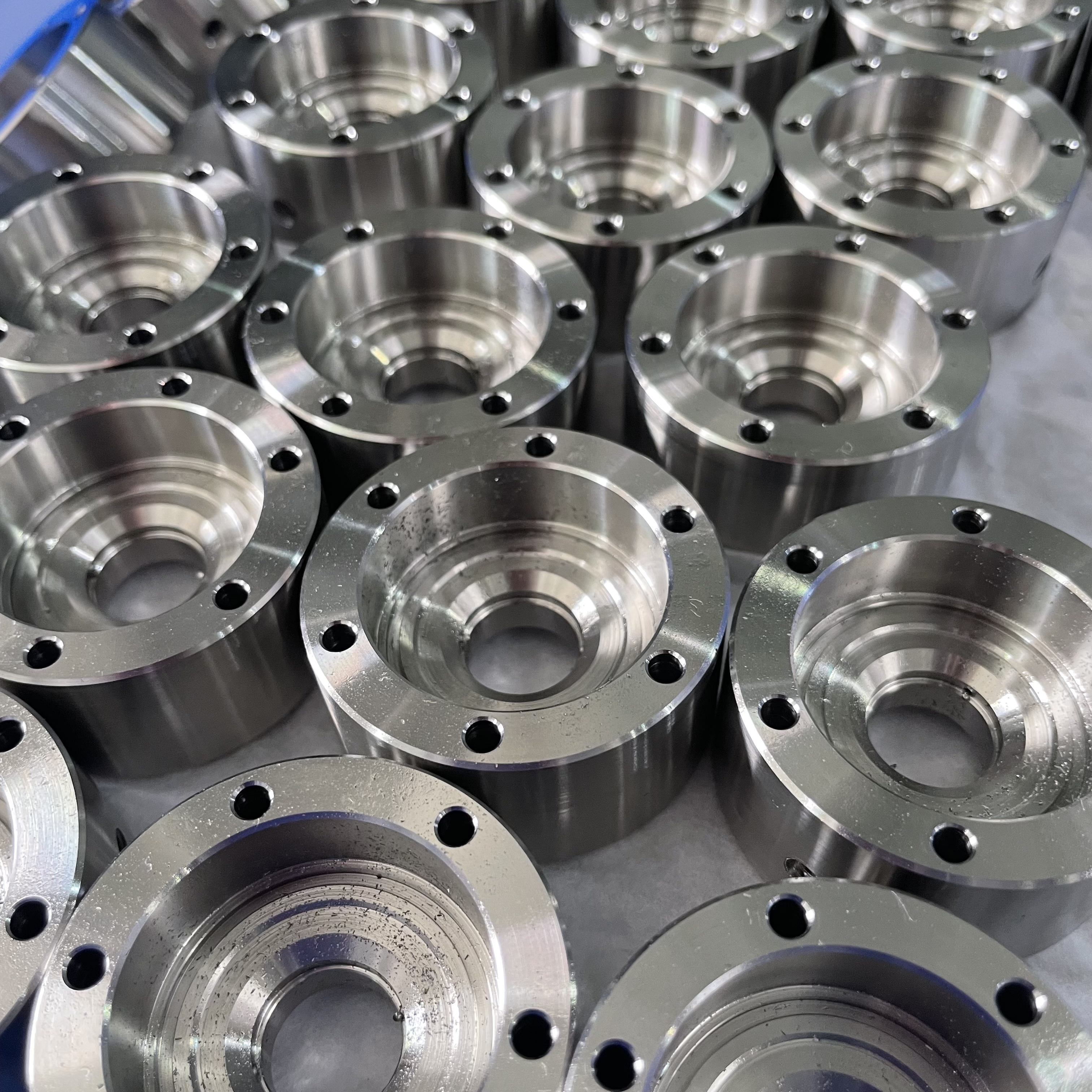
Your prototype holds unparalleled significance, and we deeply value its uniqueness. Collaborating with you during the preparation phase for running your prototype or parts is a commitment we gladly embrace. Whether it's a single part or a complex assembly, we are dedicated to selecting the optimal tools and pathways to bring your envisioned product to life.
At Precision Fab CNC Machining, we specialize in producing parts for prototypes, short runs, and high-volume production. Our prototyping machine capabilities extend across metal, plastic, and wood machining, with welding fabrication services available to complement and finalize your prototype if required.
Address
Address: Room320 10F, Building A,Nanshan international building, Dayawan District, Huizhou, Guangdong, 516001 China
Contacts
billy@timaycnc.com