How CNC Machines Produce High-Precision Parts

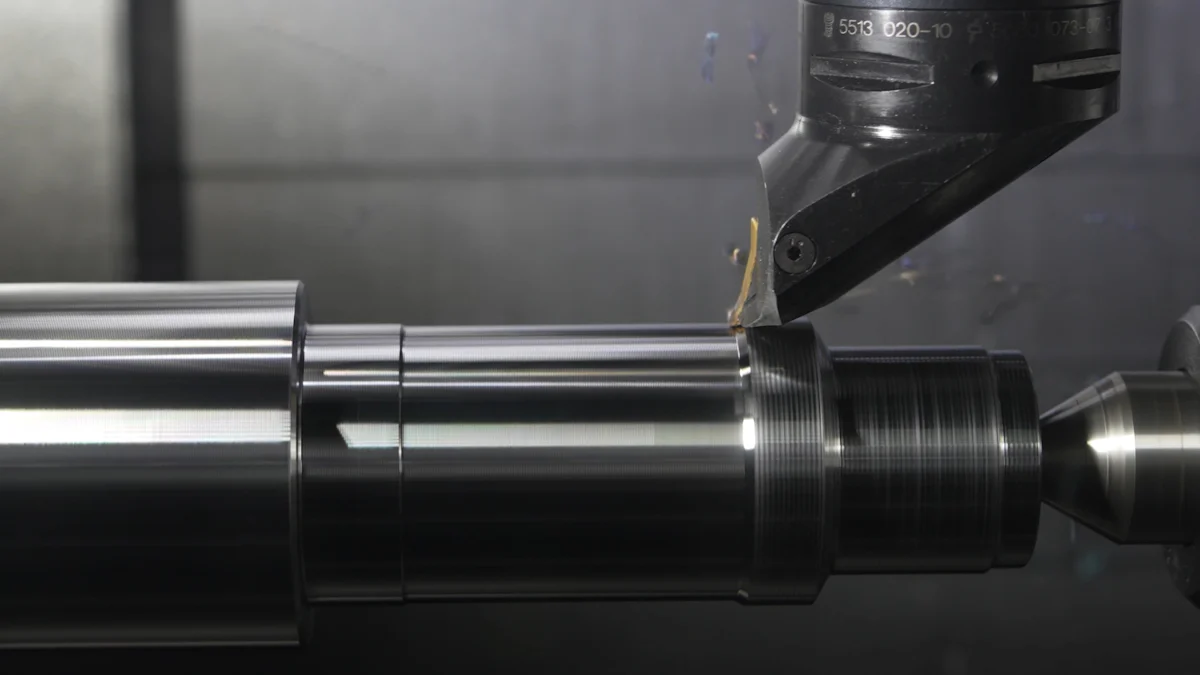
CNC machining, or computer numerical control, revolutionizes manufacturing by delivering unmatched precision. These computer-controlled machines execute an automated cutting process with incredible accuracy. Industries like aerospace, defense, and pharmaceuticals depend on this technology to meet strict requirements.
Aerospace and defense often require tolerances as tight as ± 0.002 inches.
Pharmaceuticals demand even tighter tolerances, sometimes reaching ± 0.001 inches.
This level of precision ensures components perform flawlessly in critical applications. CNC machining achieves this through advanced automation and cutting-edge tools, making it indispensable for modern manufacturing.
Key Takeaways
CNC machines are very precise, with accuracy up to ±0.001 inches. This is important for industries like airplanes and healthcare.
Regular checks and care for CNC machines keep them accurate and lasting longer.
Good tools and materials help make strong and exact CNC parts.
Special methods like EDM and laser cutting let CNC machines make detailed designs with high accuracy.
Using good CNC programs and checks makes sure every part is exact and dependable.
What Is CNC Machining and Why Is It Important?
Definition of CNC Machining
CNC machining, or computer numerical control, is a manufacturing process where pre-programmed software controls the movement of tools and machinery. This technology allows you to create parts with exceptional precision by automating tasks like cutting, drilling, and milling. Unlike manual machining, CNC machining eliminates human error, ensuring consistent results.
The history of CNC machining highlights its evolution into an essential tool for modern manufacturing:
In the 1940s, John T. Parsons introduced the concept of numerical control.
By 1952, the first CNC machine demonstrated automated production.
The 1960s saw the addition of computer control, enhancing its capabilities.
In the 1980s, CAD/CAM integration revolutionized the manufacturing process.
Today, CNC machining is a cornerstone of industries that demand accuracy and efficiency.
The Role of CNC Machines in Precision Manufacturing
CNC machines play a critical role in producing high-precision parts. They excel in creating components with tight tolerances, often as small as ±0.001 inches. This level of accuracy is vital for industries like aerospace, automotive, and medical devices.
Key features set CNC machining apart from other methods:
It works with a wide range of materials, including metals and plastics.
It produces parts of various sizes, from tiny components to large structures.
It operates faster than methods like 3D printing, especially for mass production.
It requires expert supervision for adjustments, ensuring quality.
These capabilities make CNC machining indispensable for precision manufacturing.
Industries That Rely on High-Precision CNC Machined Parts
Many industries depend on high-precision CNC machined parts for their operations. For example:
Industry | Examples of CNC Machined Parts |
|---|---|
Automotive | Engine blocks, transmission gears, suspension components |
Aerospace | Turbine blades, landing gear parts, engine mounts |
Electronics | Printed circuit boards, heat sinks, connectors |
Medical | Surgical instruments, implants, prosthetics |
Energy | Turbine components, pump bodies, heat exchangers |
You’ll also find CNC machining used for creating pins, rods, valves, pistons, and cylinders. These parts are essential for applications in communications, transportation, and electronics.
CNC machining service providers ensure these industries receive reliable, high-quality components. Whether you need custom parts or mass production, a CNC machining manufacturer can meet your requirements with precision.
Key Processes in High Precision CNC Machining
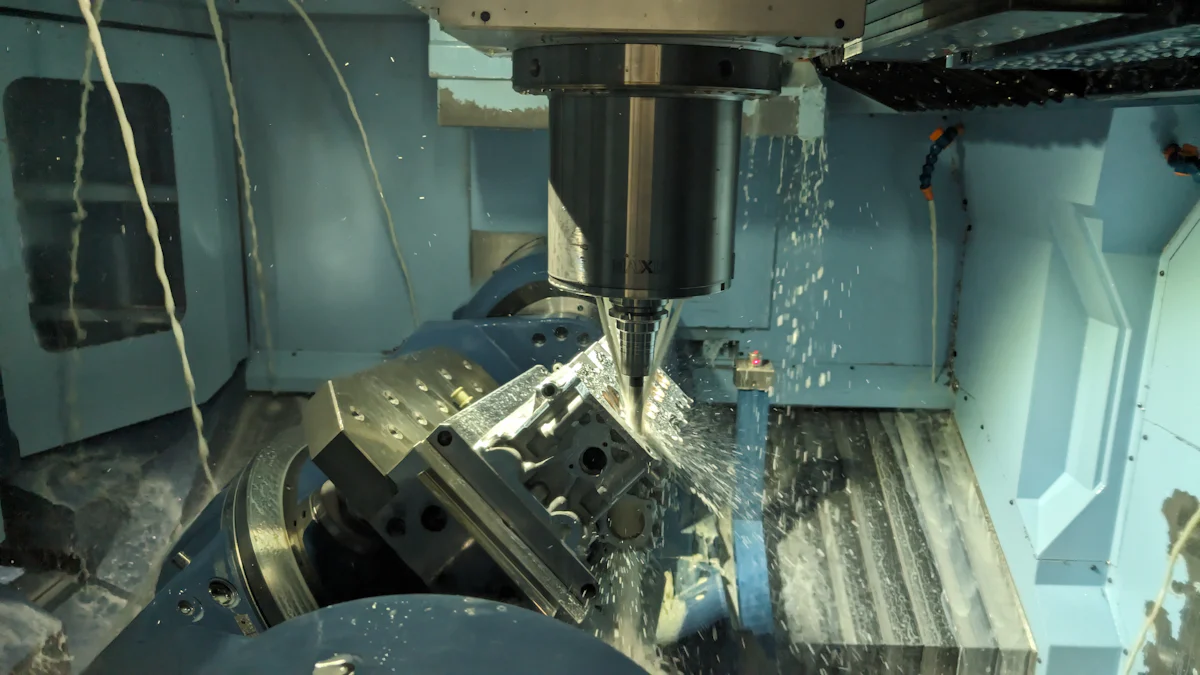
CNC Turning
CNC turning is a process where the workpiece rotates while a stationary cutting tool removes material. This method is ideal for creating cylindrical or conical shapes, such as shafts, bushings, and custom metal parts. You’ll find CNC turning particularly effective for producing rotationally symmetric components. It excels in high-speed operations, making it suitable for mass production.
This process works best with materials like metals and plastics that can maintain their structural integrity during rotation. Industries such as automotive, aerospace, and oil and gas rely on CNC turning for its efficiency and precision. For example, it’s commonly used to manufacture engine components and hydraulic cylinders.
CNC Milling
CNC milling uses stationary cutting tools to shape a moving workpiece. This process allows you to create intricate designs and non-symmetrical shapes. It’s highly versatile, accommodating a wide range of materials, including metals, plastics, and composites. CNC milling is often used in industries like aerospace, medical devices, and electronics, where complex geometries are required.
This method is cost-effective for small to medium production runs. It’s perfect for applications requiring advanced machining techniques, such as creating turbine blades or medical implants. The ability to produce detailed parts with tight tolerances makes CNC milling a cornerstone of the CNC machining process.
Feature | CNC Milling | CNC Turning |
|---|---|---|
Direction | Stationary cutters with moving workpieces | Rotates the workpiece against a stationary tool |
Shapes | Intricate shapes, non-rotationally symmetric | Rotational symmetry, cylindrical or conical shapes |
Material Choice | Wide array of materials including metals, plastics | Suited for rotationally symmetric materials |
Production Volume | Cost-effective for smaller to medium-sized runs | Excels at mass production due to high speeds |
Applications | Aerospace, Automotive, Medical Devices, Electronics | Automotive, Medical, Aerospace, Oil and Gas |
CNC Grinding
CNC grinding is a finishing process that enhances the surface quality of parts. It uses an abrasive wheel to remove small amounts of material, achieving a smooth and precise finish. This process is essential for applications requiring tight tolerances and high surface quality.
You’ll often see CNC grinding used in industries like aerospace and medical manufacturing. It’s ideal for producing components like bearings, gears, and surgical instruments. The precision of CNC grinding ensures that parts meet exact specifications, making it a critical step in precision CNC machining.
By combining CNC turning, milling, and grinding, a CNC machining manufacturer can deliver high-quality, custom metal parts tailored to your needs. These processes form the backbone of advanced machining techniques, ensuring accuracy and efficiency in every project.
Specialized Processes in Precision CNC Machining
Electrical Discharge Machining (EDM)
Electrical Discharge Machining (EDM) is a high-precision machining process that uses electrical sparks to shape materials. This method works by creating controlled electrical discharges between an electrode and the workpiece. The discharges generate intense heat, which vaporizes small amounts of material. EDM is ideal for working with hard metals or materials that are difficult to machine using traditional methods.
You can use EDM to create intricate shapes, fine details, and tight tolerances. It’s especially useful for producing molds, dies, and custom metal parts. This process doesn’t require direct contact between the tool and the material, which eliminates mechanical stress. As a result, EDM ensures exceptional accuracy and surface quality. Industries like aerospace, automotive, and medical manufacturing rely on EDM for its ability to handle complex designs.
Laser Cutting
Laser cutting is another advanced machining technique that delivers precision and efficiency. This cnc machining process uses a focused laser beam to cut through materials. The laser melts, burns, or vaporizes the material, leaving a clean and accurate edge. You can use laser cutting for metals, plastics, wood, and even glass.
This method excels in creating detailed patterns, sharp edges, and smooth finishes. It’s perfect for applications requiring intricate designs, such as electronic components, decorative panels, and medical devices. Laser cutting also minimizes material waste, making it a cost-effective option for many industries. Its speed and precision make it a valuable tool for both prototyping and mass production.
By incorporating EDM and laser cutting into your manufacturing workflow, you can achieve unparalleled precision. These specialized processes complement traditional methods, ensuring the highest quality for your projects.
Factors That Ensure High Precision in CNC Machining
The Importance of Tight Tolerances
Tight tolerances are critical in high precision cnc machining. They ensure that parts fit together seamlessly and function as intended. For example, high-precision CNC machining can achieve tolerances as tight as ±0.0025 mm, far surpassing the ±0.127 mm tolerance of standard CNC machining. These tighter tolerances are essential for industries like aerospace and medical manufacturing, where even the smallest deviation can lead to failure.
Type of Machining | Tolerance Level |
|---|---|
High-Precision CNC | ±0.0025 mm |
Standard CNC Machining | ±0.127 mm |
High-Precision Machining | ±0.0254 mm |
When you work with a precision machining process, you can trust that the components will meet exact specifications. This level of accuracy ensures reliability and consistency, which are vital for producing custom metal parts used in critical applications.
High-Quality Tools and Materials in Precision CNC Machining
The tools and materials you choose directly impact the precision and durability of the cnc machining process. High-quality, sharp tools maintain consistent cutting forces, which improves accuracy. They also reduce machining time and enhance the surface finish of your parts.
Using the right materials minimizes risks like tool breakage, wear, and vibration. For instance, durable materials paired with proper tools prevent issues such as chatter or deflection during machining. This combination ensures that your precision cnc machining process delivers reliable results every time.
By investing in superior tools and materials, you can achieve better performance and extend the lifespan of your equipment. This approach not only enhances precision but also reduces long-term costs.
The Role of CNC Programming in Achieving Accuracy
CNC programming plays a vital role in ensuring accuracy and repeatability in manufacturing. Proper programming allows you to control every aspect of the cnc machining process, from tool paths to cutting speeds. Best practices include regular machine calibration and maintaining measurement traceability. These steps ensure that your measurements align with international standards, boosting confidence in your results.
Environmental factors also affect accuracy. Consistent temperature and humidity levels prevent machine components from expanding or contracting, which could otherwise compromise precision. Additionally, advanced feedback systems reduce reliance on mechanical components, further enhancing accuracy.
To achieve the best results, you should document calibration procedures and use certified reference materials. These practices ensure that your custom metal parts meet the highest standards of precision and quality.
Machine Calibration and Maintenance for High Precision
Maintaining the accuracy of CNC machines requires regular calibration and upkeep. Without these measures, even the most advanced equipment can lose precision over time. You can prevent this by following a structured maintenance plan and ensuring your machines stay in peak condition.
Calibration plays a critical role in sustaining high precision cnc machining. A consistent schedule helps extend the lifespan of your equipment and ensures reliable performance. Ideally, you should calibrate your CNC tools every three to six months. Machines in high-volume production environments may need more frequent calibration. Environmental factors like temperature and humidity can also impact calibration stability. For optimal results, always follow the manufacturer’s recommendations and review historical calibration data to determine the best frequency for your operations.
Regular maintenance complements calibration by addressing wear and tear. Cleaning machine components, lubricating moving parts, and inspecting tools for damage are essential steps. These practices reduce the risk of breakdowns and improve machining accuracy. Neglecting maintenance can lead to costly repairs and production delays, so it’s important to stay proactive.
Critical applications demand even higher standards. For industries like aerospace or medical manufacturing, precision is non-negotiable. In these cases, you may need to calibrate and maintain your machines more frequently to meet stringent requirements. By prioritizing these tasks, you ensure your CNC machines deliver consistent, high-quality results.
A well-maintained CNC machine not only enhances precision but also boosts productivity. When you invest time in calibration and maintenance, you protect your equipment and ensure it performs at its best for years to come.
Quality Control in High Precision CNC Machining
Inspection Methods for High Precision CNC Machined Parts
Inspection ensures that every part meets the required specifications. You can use several methods to verify the precision of CNC machined parts:
Final Inspection: Coordinate Measuring Machines (CMM) confirm that parts meet quality standards by measuring complex geometries with high precision.
Assembly and Fit-Up Inspection: This method checks how well parts fit together after assembly, ensuring geometric tolerances are accurate.
Statistical Process Control (SPC): SPC software monitors machining processes, detects deviations, and maintains consistent quality.
Dimensional and Tolerance Measurement Tools: Tools like calipers and micrometers measure external and internal dimensions with high accuracy.
Surface Finish Inspection: Techniques like visual inspection and Eddy Current Testing assess surface quality.
Hardness Testers: Tools such as Brinell and Vickers testers evaluate material hardness.
Non-Destructive Testing (NDT): Ultrasonic testing and X-ray inspection detect internal flaws without damaging the part.
These methods ensure that every component meets the highest standards of precision and quality.
The Role of Metrology in Ensuring Accuracy
Metrology plays a vital role in maintaining accuracy during precision CNC machining. Calibrated tools, such as laser measurement devices and digital readouts, ensure that measurements are precise and close to the target values. Measurement system analysis (MSA) evaluates the bias, stability, and linearity of your tools. This process identifies sources of error and ensures that parts meet required tolerances.
By using metrology, you can trust that your measurements are reliable and consistent. This approach guarantees that every part produced aligns with the intended design.
Common Quality Control Tools and Techniques
You can rely on several tools and techniques to maintain quality in CNC machining:
Calipers and Micrometers: These tools measure external and internal dimensions with high precision.
Coordinate Measuring Machine (CMM): CMMs are essential for measuring complex geometries accurately.
Surface Roughness Testers: Tools like profilometers assess surface texture, which is crucial for functionality and aesthetics.
Non-Destructive Testing (NDT): Ultrasonic testing and X-ray inspection ensure internal integrity without damaging parts.
Statistical Process Control (SPC) Software: SPC software monitors process stability and identifies trends to maintain consistent quality.
By incorporating these tools and techniques into your workflow, you can ensure that every part meets the highest standards of precision and reliability.
The Impact of Precision CNC Machining on Modern Industries
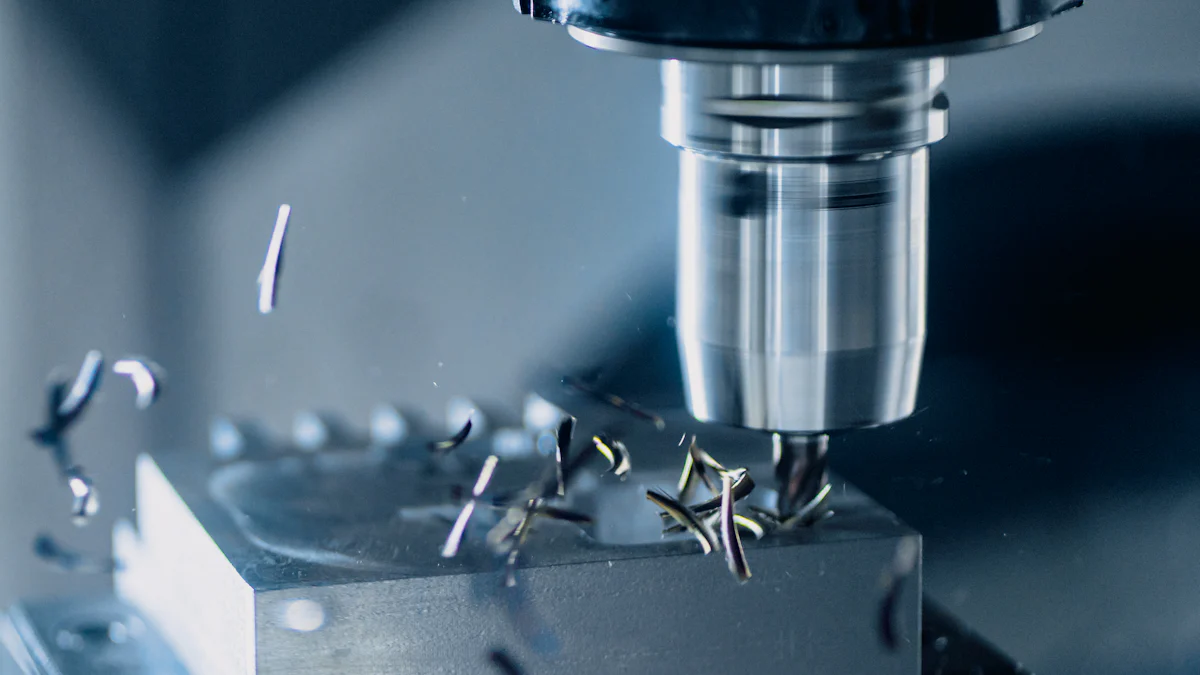
Advancements in Aerospace and Automotive Manufacturing
Precision CNC machining has transformed aerospace and automotive manufacturing. You now see faster production speeds and reduced costs due to streamlined processes. Automation and robotics have enhanced efficiency by enabling automated tool changes and material handling. This reduces human error and ensures consistent quality.
The integration of IoT allows real-time data sharing and predictive maintenance. This minimizes downtime and improves overall productivity. Advanced materials like superalloys and composites have also revolutionized these industries. These materials create lightweight yet durable components, which improve fuel efficiency and performance. For example, CNC machining produces turbine blades and engine mounts that meet the strict demands of aerospace applications.
Applications in Medical Device Production
Precision CNC machining plays a vital role in medical device production. It ensures the creation of highly accurate and reliable components. You can see its impact in prosthetics and implants, where it produces patient-specific designs. These implants fit perfectly, improving surgical outcomes.
Dental prosthodontics also benefits from this technology. CNC machining fabricates crowns, bridges, and implants that mimic the natural structure of teeth. This precision enhances both functionality and aesthetics. The ability to produce intricate designs with tight tolerances makes CNC machining indispensable in the medical field.
The Future of High Precision CNC Machining in Engineering
The future of high precision CNC machining looks promising. Increased automation will make processes faster and more efficient. Industry 4.0 technologies, such as AI and machine learning, will optimize production by predicting issues before they occur.
You can expect more multipurpose CNC machines that handle diverse tasks. This will reduce operating costs and improve mass production efficiency. The integration of CAD and CAM will further enhance precision and design capabilities. High-mix, low-volume manufacturing will also rise, allowing you to produce custom parts without sacrificing efficiency.
These advancements will shape the future of engineering, ensuring CNC machining remains a cornerstone of modern manufacturing.
CNC machining combines advanced technology, controlled processes, and rigorous quality control to deliver high-precision parts. Its ability to meet demanding specifications has revolutionized industries like aerospace, automotive, and medical manufacturing. For example, aerospace relies on CNC machining for components like turbine blades, where tolerances as tight as 0.00004 inches ensure safety and performance. In the medical field, it enables the creation of customized implants tailored to individual patients, advancing personalized healthcare.
Key factors like machine stability, tooling quality, and secure workholding ensure consistent precision. As technology evolves, CNC machining will continue to shape modern engineering and manufacturing.
FAQ
What materials can you use in CNC machining?
You can machine a wide range of materials, including metals like aluminum, steel, and titanium, as well as plastics, composites, and even wood. The material choice depends on your project’s requirements, such as strength, durability, or heat resistance.
How accurate are CNC machines?
CNC machines can achieve tolerances as tight as ±0.0025 mm. This level of accuracy ensures that your parts meet exact specifications, making CNC machining ideal for industries like aerospace, medical, and automotive manufacturing.
Can CNC machines handle custom designs?
Yes, CNC machines excel at producing custom designs. By using CAD software, you can create intricate shapes and unique geometries. The machine follows your design precisely, ensuring your parts match your specifications.
How does CNC machining compare to 3D printing?
CNC machining offers faster production speeds and works with a broader range of materials. It’s better for creating durable, high-precision parts. 3D printing, however, is ideal for prototyping and complex internal structures.
Is CNC machining cost-effective for small projects?
Yes, CNC machining can be cost-effective for small projects, especially when precision is critical. While setup costs may be higher, the accuracy and quality of the parts often justify the investment.
See Also
The Impact of CNC Machining on Precision Manufacturing Excellence
Achieving Precision in Parts Manufacturing Through CNC Machining
A Comprehensive Guide to CNC Precision Parts Production
Streamlined CNC Machining Solutions for Precision Manufacturing Needs
About US
Follow Us
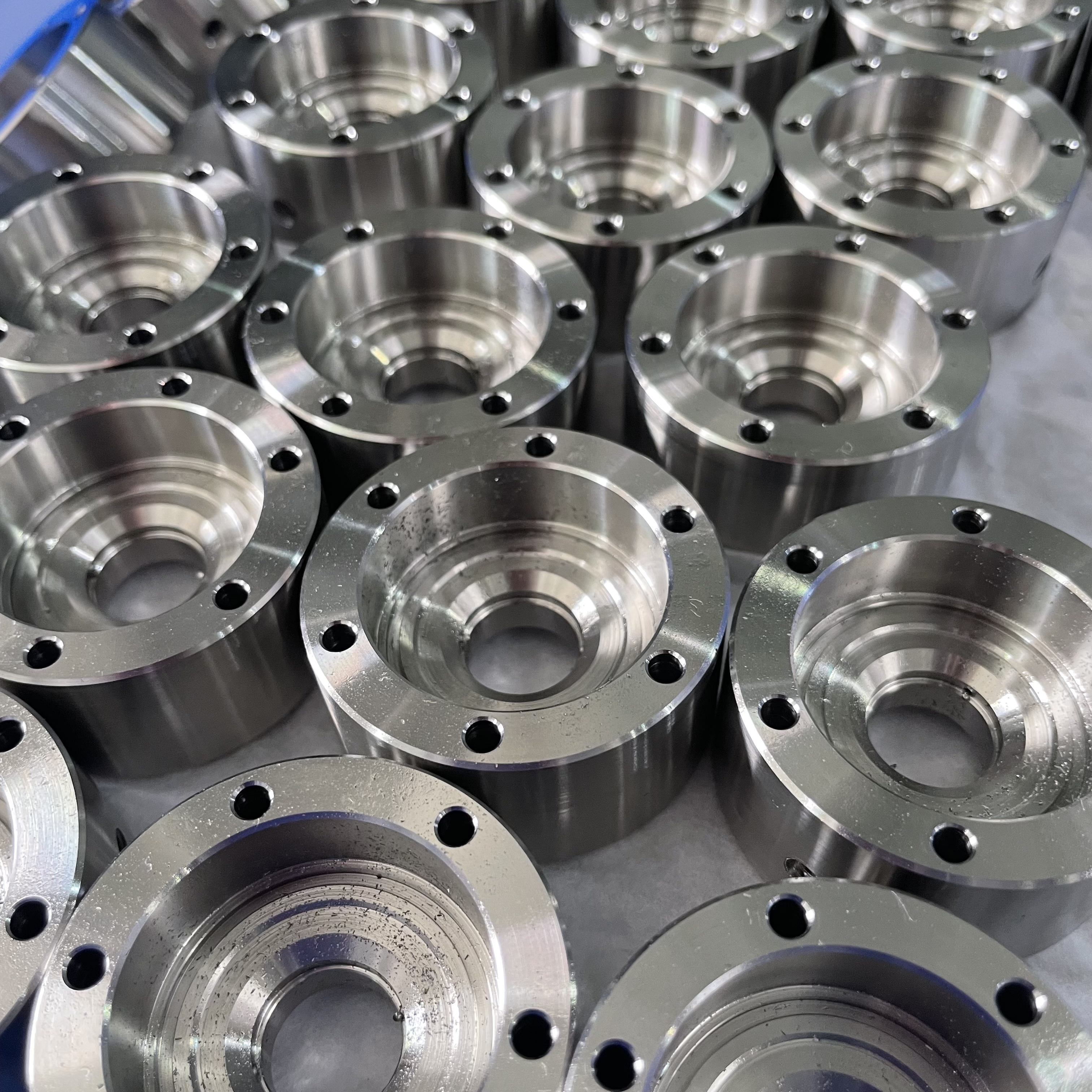
Your prototype holds unparalleled significance, and we deeply value its uniqueness. Collaborating with you during the preparation phase for running your prototype or parts is a commitment we gladly embrace. Whether it's a single part or a complex assembly, we are dedicated to selecting the optimal tools and pathways to bring your envisioned product to life.
At Precision Fab CNC Machining, we specialize in producing parts for prototypes, short runs, and high-volume production. Our prototyping machine capabilities extend across metal, plastic, and wood machining, with welding fabrication services available to complement and finalize your prototype if required.
Address
Address: Room320 10F, Building A,Nanshan international building, Dayawan District, Huizhou, Guangdong, 516001 China
Contacts
billy@timaycnc.com