The Importance of CNC in Creating Precision Parts for High-Performance Flashlights

CNC machining plays a vital role in crafting high-performance flashlights. It ensures precision by creating intricate aluminum casings that are lightweight, durable, and corrosion-resistant. Processes like CNC turning and milling shape and refine components with unmatched accuracy. This technology reduces errors, enhances efficiency, and supports innovative designs, making it indispensable for flashlight manufacturing.
Key Takeaways
CNC machines make flashlight parts accurate and the same every time. This lowers mistakes and improves quality.
CNC automation boosts work speed and safety. It runs nonstop and helps make quick test models.
Picking good materials, like aluminum or copper, makes flashlight parts stronger and work better.
CNC Machining and Its Role in Precision Parts Manufacturing
What is CNC machining?
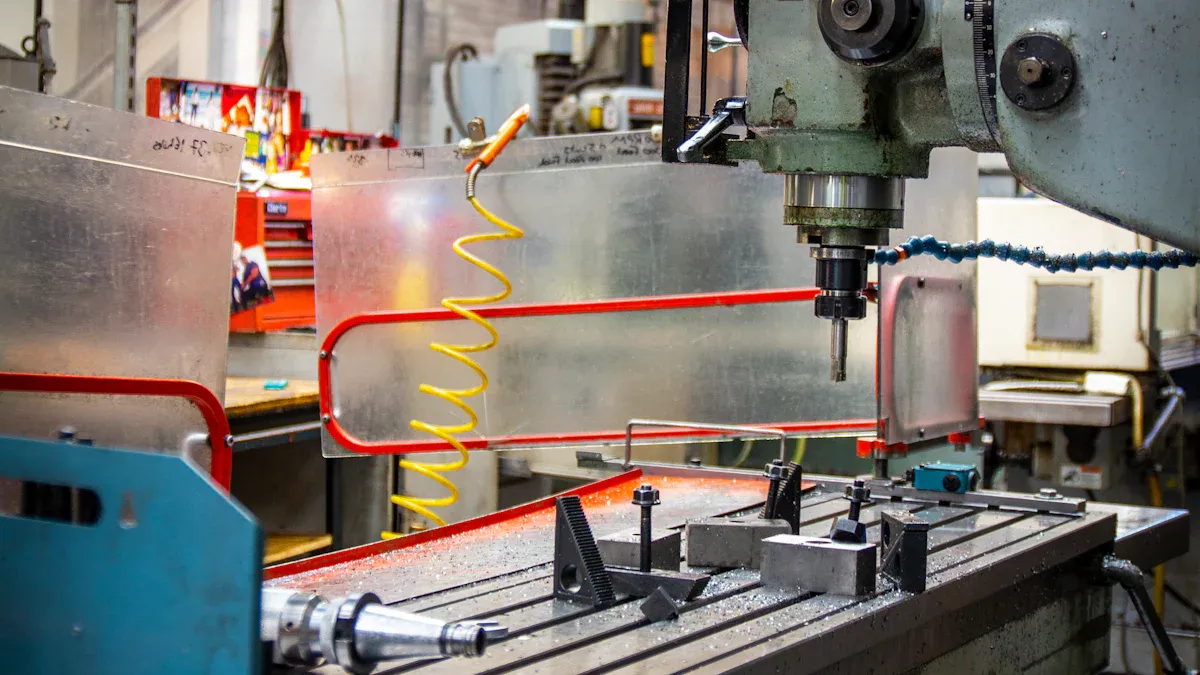
CNC machining is a manufacturing process that uses computerized controls to operate machine tools. It allows you to create parts with exceptional precision and efficiency. The process begins with a digital model designed using CAD (Computer-Aided Design) software. This model is then converted into a CNC program using CAM (Computer-Aided Manufacturing) software. Once programmed, CNC machines perform operations like cutting, drilling, milling, and turning with minimal human intervention.
Here’s how the process works:
You start by designing the part using CAD software.
The design is translated into G-code through CAM software.
The CNC machine is set up with the necessary tools and calibrated.
The machine executes the programmed instructions to shape the material.
The finished part undergoes inspection to ensure it meets specifications.
This precision machining process ensures high-quality results, making it ideal for industries like flashlight manufacturing.
How CNC ensures precision and consistency
CNC machining achieves a level of precision that traditional methods cannot match. It can produce parts with tolerances as tight as ±0.005 mm, ensuring every component meets exact specifications. The use of digital templates eliminates human error, allowing you to create identical parts repeatedly. For example, CNC milled parts and CNC turned parts maintain uniformity across production runs, ensuring consistent quality.
Technological advancements further enhance precision. Multi-axis machining enables the creation of complex shapes in a single setup, reducing errors. Automation and AI optimize machining processes, predict tool wear, and improve efficiency. These innovations make CNC machines indispensable for producing high-performance flashlight components.
The importance of automation in precision machining
Automation plays a critical role in CNC precision machining. It allows CNC machines to operate continuously, increasing productivity and reducing downtime. Automated systems also minimize manual data entry, which reduces errors and ensures consistent output. This leads to higher-quality parts and fewer defects.
Automation improves safety and efficiency by reducing the need for workers to interact with dangerous machinery. It also enables rapid prototyping, allowing you to test designs quickly and bring products to market faster. Over time, automation lowers operating costs and makes CNC machining services more cost-effective. By combining safety, efficiency, and increased productivity, automation ensures the reliability of CNC machining processes.
Benefits of CNC Precision Machining for Flashlight Components
Accuracy and repeatability for critical flashlight parts
CNC precision machining ensures that every flashlight component meets exact specifications. This is especially important for parts like reflectors and heat sinks, where intricate designs and precise details are essential. CNC machines use pre-programmed software to control their tools, allowing you to produce high-quality parts with exceptional accuracy. The process eliminates human error, ensuring consistent results across production runs.
You can also benefit from the flexibility of CNC technology. Whether you need a small batch or large-scale production, CNC machines can handle both without requiring significant adjustments. This adaptability makes it easier to create custom CNC parts tailored to specific flashlight designs. Additionally, CNC milled parts and CNC turned parts maintain high tolerance levels, ensuring reliability and performance in critical applications.
Material compatibility for enhanced durability
CNC machining supports a wide range of materials, each offering unique advantages for flashlight components. For example, aluminum is lightweight, corrosion-resistant, and easy to machine. It is commonly used for flashlight casings and heat sinks due to its durability and excellent heat dissipation. Copper, on the other hand, provides superior thermal conductivity, making it ideal for components that require efficient heat management.
Material | Advantages | Disadvantages |
|---|---|---|
Aluminum | Lightweight, corrosion-resistant, good wear resistance | Low hardness, easy to deform |
Copper | Excellent heat dissipation, durable | Heavy, prone to oxidation |
Titanium | High strength, corrosion-resistant | Expensive, difficult to machine |
Stainless Steel | No surface treatment needed, durable | Heavy, poor heat conduction |
By choosing the right material, you can enhance the durability and functionality of your flashlight components. CNC machining services make it possible to work with these materials efficiently, ensuring high-quality parts that meet your needs.
Cost-efficiency and waste reduction in production
CNC machining offers significant cost advantages by optimizing material usage and reducing waste. The precision of CNC machines minimizes errors, ensuring that each part is made correctly the first time. This reduces the need for rework and saves valuable resources. Additionally, leftover materials can often be recycled, promoting sustainability and lowering production costs.
CNC machining operates with high precision, reducing material waste.
The process is energy-efficient, lowering energy consumption and associated costs.
Recycling leftover materials supports a circular economy and minimizes landfill waste.
By leveraging CNC milling and CNC turning, you can achieve increased productivity while maintaining higher standards of finished products. This commitment to operational excellence not only reduces error rates but also ensures safety and efficiency in your manufacturing processes.
Applications of CNC in High-Performance Flashlight Manufacturing

Key components made with CNC (e.g., reflectors, heat sinks, casings)
CNC machines play a pivotal role in crafting essential flashlight components. These include the aluminum alloy head, battery tube, focal scale ridge, and tail cap. Each part undergoes precise machining processes such as CNC milling, turning, and drilling to achieve flawless designs. For example, CNC machining carves the initial shape from a solid block of aluminum, while CNC turning shapes the cylindrical contours. Tapping ensures threaded holes for seamless component attachment.
Component | Description |
|---|---|
Aluminum Alloy Head | The top part of the flashlight that houses the lens and light source. |
Battery Tube | The cylindrical section that holds the batteries. |
Focal Scale Ridge | A design feature that enhances grip and aesthetics. |
Tail Cap | The end piece that often includes the switch for turning the flashlight on/off. |
These components are vital for proper lighting and durability. CNC precision machining ensures each part meets exact specifications, contributing to the overall performance of the flashlight.
Ensuring quality and performance through precision machining
CNC precision machining guarantees the quality and reliability of flashlight components. Advanced CNC machines produce intricate designs with high accuracy, ensuring proper lighting and functionality. Quality inspection reports verify the precision of each part, while strict standards maintain consistency. For example, aluminum casings benefit from CNC machining due to their lightweight and corrosion-resistant properties.
You can rely on CNC machining services to create complex parts like heat sinks, which are essential for thermal management. These components feature optimized surface areas for efficient heat dissipation, ensuring the flashlight performs well under high-power conditions. By using CNC milled parts and CNC turned parts, manufacturers achieve superior performance and durability.
Customization and innovation enabled by CNC technology
CNC machining opens the door to customization and innovation in flashlight design. You can create custom CNC parts tailored to specific applications, such as adjustable focus or enhanced brightness. CNC machines allow for intricate designs, including focal scale ridges and anodized finishes for scratch resistance.
Feature | Description |
|---|---|
Material | Aluminum, known for being lightweight, durable, and corrosion-resistant. |
Design Capability | Intricate designs enabled by CNC machining techniques. |
Surface Treatment | Anodized finish for scratch resistance and aesthetic variety. |
CNC machining services also enable the selection of various colors and finishes, enhancing both functionality and aesthetics. This level of customization ensures proper lighting and a high-quality finish, making CNC machining indispensable for high-performance flashlight manufacturing.
CNC machining remains vital for manufacturing high-performance flashlights. Its ability to produce intricate designs with tight tolerances ensures precision and durability. Future trends, such as micromachining and Industry 4.0 technologies, will enhance efficiency and customization. CNC machines continue to shape the flashlight industry by delivering reliable, innovative, and eco-friendly solutions.
FAQ
What makes CNC machining essential for precision parts manufacturing?
CNC machining ensures unmatched accuracy and consistency. It eliminates human error, enabling you to produce complex designs with tight tolerances for high-performance flashlight components.
Can CNC machines handle different materials for flashlight components?
Yes, CNC machines work with various materials like aluminum, copper, and titanium. This versatility ensures durability and functionality in precision parts manufacturing for flashlights.
How does CNC machining reduce waste in precision parts manufacturing?
CNC machining optimizes material usage by minimizing errors. It reduces rework and recycles leftover materials, making precision parts manufacturing more cost-efficient and sustainable.
See Also
Exploring CNC Machining Techniques for Flashlight Parts
Achieving Excellence in CNC Machining for Precision Components
Recognizing the Significance of Precision CNC Machining in Production
Excelling in CNC Milling for High-Precision Component Creation
Streamlined CNC Machining Solutions for Accurate Manufacturing
About US
Follow Us
Your prototype holds unparalleled significance, and we deeply value its uniqueness. Collaborating with you during the preparation phase for running your prototype or parts is a commitment we gladly embrace. Whether it's a single part or a complex assembly, we are dedicated to selecting the optimal tools and pathways to bring your envisioned product to life.
At Precision Fab CNC Machining, we specialize in producing parts for prototypes, short runs, and high-volume production. Our prototyping machine capabilities extend across metal, plastic, and wood machining, with welding fabrication services available to complement and finalize your prototype if required.
Address
Address: Room320 10F, Building A,Nanshan international building, Dayawan District, Huizhou, Guangdong, 516001 China
Contacts
billy@timaycnc.com