The Role of CNC Machining in Product Development

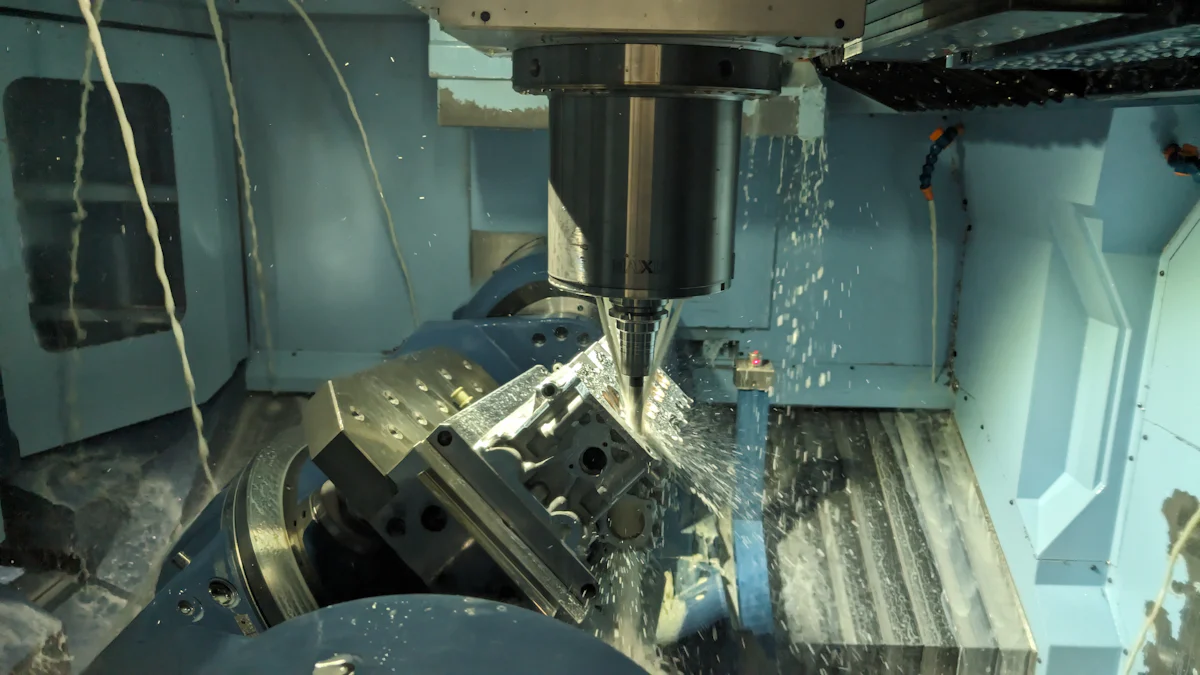
CNC machining has revolutionized how you approach product development. This technology uses computer-controlled tools to create parts with unmatched precision and consistency. Industries like automotive, medical, and aerospace rely on CNC to meet their high standards. The global CNC machine market is expected to reach $128.86 billion by 2026, driven by its ability to reduce costs and improve efficiency. CNC machining minimizes human error, ensuring flawless execution of complex designs. Its precision and speed allow you to innovate faster while maintaining tight tolerances essential for modern manufacturing.
Key Takeaways
CNC machining is very precise, making parts accurate to ±0.001 inches. This helps keep quality high and reduces mistakes.
It speeds up product creation by allowing quick prototyping. You can make and test designs fast, saving time and money while improving products.
CNC machining allows custom designs and small-batch production. This makes it great for special markets and lets you change designs easily for customers.
It is cost-effective because it lowers the need for pricey tools. It also reduces waste, making it useful for both testing and making products.
Future updates like AI and eco-friendly methods will improve CNC machining. These changes will make it faster and better for the environment.
Key Benefits of CNC Machining in Product Development
Precision and Accuracy in Manufacturing
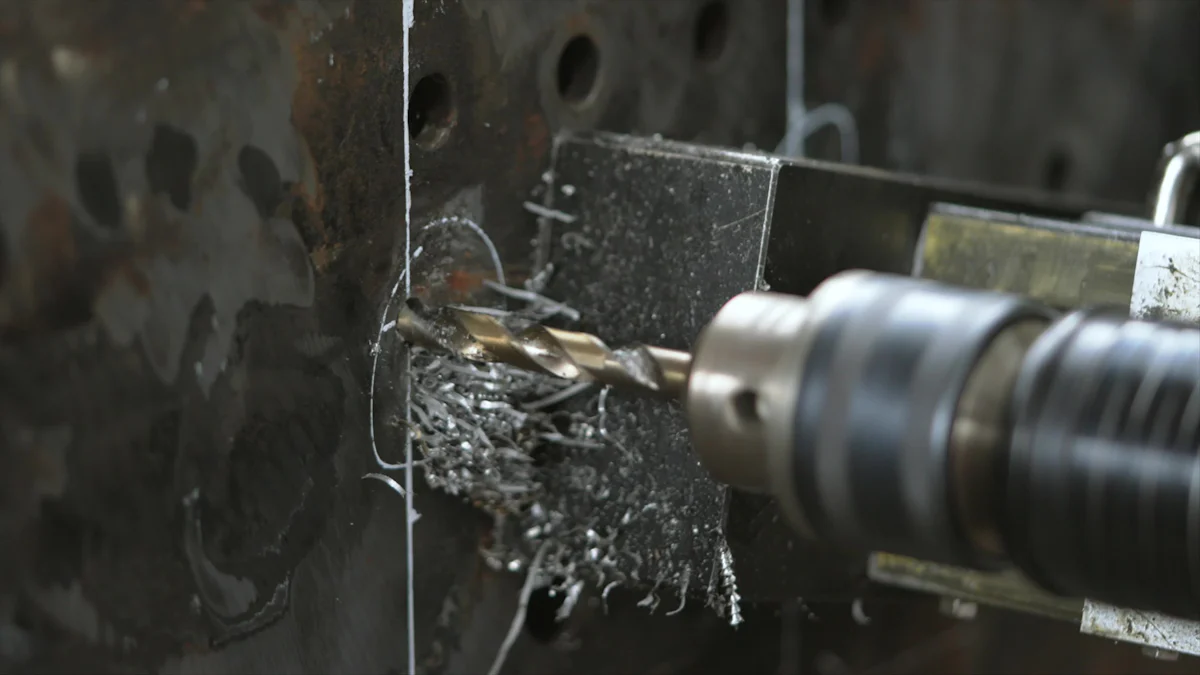
CNC machining ensures exceptional precision and accuracy in manufacturing. Computer-controlled tools follow exact instructions, producing parts with tight tolerances as small as ±0.001 inches. This level of precision minimizes human error and guarantees consistent quality across all parts. Whether you need intricate details or complex geometries, CNC machines deliver flawless results every time.
Unlike traditional methods, CNC machining maintains repeatability. It reproduces identical parts regardless of operator skill, ensuring uniformity in size, shape, and tolerance. For example, if you’re creating components for aerospace or medical devices, this consistency becomes critical for safety and performance. The ability to achieve such high accuracy makes CNC machining a cornerstone of modern engineering and product design.
Feature | CNC Machining | Traditional Methods |
|---|---|---|
Tight Tolerances | ±0.001 inches | Varies, generally looser |
Repeatability | High, identical parts | Lower, potential variations |
Efficiency and Speed in the New Product Development Process
CNC machining accelerates the new product development process by combining speed with precision. It enables rapid prototyping, allowing you to create prototypes that closely resemble final products. This helps you identify design flaws early, saving time and resources. For instance, CNC machining can produce parts in hours or days, enabling quick iterations and faster refinement of designs.
The automation in CNC machining reduces downtime and ensures continuous operation. This efficiency shortens the product development cycle and gets your product to market faster. By using CNC, you can enhance product reliability and quality while staying ahead of competitors.
Flexibility for Customization and Iteration
CNC machining offers unmatched flexibility for customization and iteration. You can quickly modify designs and re-machine parts when needed. This makes it ideal for industries like medical technology, where patient-specific implants or prosthetics require precise customization.
The ability to work with materials similar to those used in final production adds value during prototyping. For example, automotive manufacturers can switch between designs or accommodate customer requests for changes without significant delays. CNC machining supports iterative design processes, enabling you to refine components rapidly and efficiently.
CNC machining empowers you to innovate by providing the tools needed for customization, speed, and precision.
Cost-Effectiveness in Prototyping and Production
CNC machining offers significant cost advantages in both prototyping and production. Unlike traditional methods, it eliminates the need for expensive fixed tooling or molds. This reduction in upfront costs makes it an ideal choice for creating a prototype during the early stages of product development. You can test and refine your designs without worrying about high initial investments.
The precision of CNC machining also minimizes costly mistakes. By reducing errors, you avoid the need for rework, which saves both time and money. Additionally, CNC machines require minimal human intervention after programming. This automation lowers labor costs, further enhancing cost efficiency.
For small production runs, CNC machining proves to be a highly economical solution. It eliminates the need for physical tools like molds or dies, saving initial setup costs. You can produce high-quality, custom parts in small quantities without incurring the high expenses associated with mass production. This approach also supports a just-in-time manufacturing strategy, reducing storage costs for raw materials and finished goods.
Another advantage lies in the subtractive nature of CNC machining. By removing material only where necessary, it minimizes waste. This efficient use of materials contributes to overall cost savings, especially when working with expensive resources like titanium or aluminum.
CNC machining also offers lower costs per unit for larger production runs compared to methods like 3D printing. Its ability to scale efficiently makes it a versatile option for both prototyping and production. Whether you’re refining a product design or manufacturing small batches, CNC machining ensures you achieve cost-effective results without compromising quality.
CNC machining combines precision, automation, and material efficiency to deliver unmatched cost savings. It empowers you to innovate while staying within budget, making it an essential tool in modern engineering and new product development.
Applications of CNC Machining in the New Product Development Process
Prototype CNC Machining for Testing and Iteration
Prototype CNC machining plays a vital role in the early stages of product development. It allows you to create prototypes that closely resemble final products, enabling you to test and refine designs with precision. This process delivers high-quality functional prototypes, ensuring that your designs meet both visual and functional requirements. By using CNC machining, you can produce prototypes in the same materials and processes as the final product, which is essential for effective testing.
CNC machining enables rigorous testing by producing parts identical to final components.
You can quickly transform digital designs into physical prototypes, accelerating the product development cycle.
The consistency and accuracy of CNC machining allow you to validate innovative designs with confidence.
For example, a prototype CNC machining shop can help you identify design flaws early, saving time and resources. This iterative approach ensures that your product design evolves efficiently, meeting the demands of modern engineering.
Manufacturing Complex Geometries with Ease
CNC machining excels at creating intricate designs and complex geometries that other manufacturing techniques struggle to achieve. Advanced methods like CNC milling and turning allow you to produce parts with tight tolerances and multi-material compositions. Multi-axis capabilities enable the creation of shapes that would otherwise be impossible.
CNC machines execute designs with high precision, ensuring intricate details are captured.
Multi-axis machining allows for the production of large, complex parts.
CAD/CAM software simplifies the creation of 3D models, converting them into machine-readable code.
Proper fixturing and staged machining further enhance the ability to handle complex designs. Whether you need turbine blades for aerospace or intricate medical components, CNC machining ensures reliable results. Its versatility makes it indispensable in industries requiring precision and innovation.
Customization and Small-Batch Production for Niche Markets
CNC machining supports customization and small-batch production, making it ideal for niche markets. You can produce high-quality, custom parts without the high costs of mass production. This flexibility allows you to adapt quickly to market demands or customer requests.
CNC machining offers cost-effective solutions for small batches, reducing inventory expenses.
You can create intricate designs with tight tolerances, meeting specialized industry needs.
Rapid prototyping and customization give you a competitive edge in dynamic markets.
For instance, in medical technology, CNC machining enables the creation of patient-specific implants and prosthetics. Aerospace and oil industries also benefit from custom components designed to withstand extreme conditions. By leveraging CNC machining, you can deliver tailored solutions that meet the highest standards of quality and reliability.
CNC machining empowers you to innovate, customize, and adapt efficiently, ensuring success in the new product development process.
The CNC Machining Process in Product Development
Designing with CAD Software for Precision
Designing with CAD software is the first step in ensuring precision in CNC machining. This software allows you to create intricate digital designs that physical drawings cannot achieve. It reduces errors by enabling you to visualize and refine complex designs before production begins.
To start, you create a 2D drawing or 3D model in CAD software. Once the design is complete, you transfer it to CAM software, where you select the CNC machine and cutter. Next, you generate a manufacturing sequence and toolpath. Running a simulation verifies the operation plan and ensures the design is error-free. Finally, you generate and save the G-code file, which the CNC machine uses to execute the design.
Tip: Simulating the toolpath before machining helps you avoid costly mistakes and ensures smooth production.
CAD software enhances precision by allowing you to work with tight tolerances and intricate details. This capability is essential for industries like aerospace and medical technology, where accuracy is critical.
Programming CNC Machines for Automated Production
Programming CNC machines is vital for achieving automated production. Proper programming ensures efficiency, consistency, and safety throughout the machining process. You begin by documenting tool assemblies, offsets, and setups. Using robust CAM software, you create and simulate toolpaths to detect potential issues before machining.
Automation eliminates manual labor, reducing human error and increasing production speed. CNC machines operate continuously, producing identical parts with tight tolerances. This consistency minimizes defects and ensures high-quality outputs. Additionally, remote monitoring allows you to oversee production in real time, further enhancing efficiency.
Note: Standardizing programming practices and maintaining machines regularly can significantly improve production reliability.
Material Selection and Preparation for Optimal Results
Material selection plays a crucial role in the quality of CNC machined products. Metals like aluminum and stainless steel are popular for their strength and durability. Plastics such as polycarbonate and ABS are lightweight and corrosion-resistant, making them ideal for specific applications.
When selecting materials, consider the part’s required characteristics, such as strength, wear resistance, and environmental tolerance. Preparing the material involves cleaning and securing it to ensure stability during machining. Proper preparation reduces waste and enhances the precision of the final product.
Tip: Choose materials that align with your product design and machining requirements to achieve the best results.
By carefully designing, programming, and selecting materials, you can optimize the CNC machining process for both prototyping and production. This approach ensures high-quality outputs that meet the demands of modern engineering and product development.
Machining and Finishing for High-Quality Outputs
Machining and finishing are critical steps in achieving high-quality outputs in CNC machining. These processes ensure that the final product meets the required specifications and delivers exceptional performance. By focusing on these stages, you can enhance the precision, durability, and aesthetic appeal of your components.
During machining, CNC machines like CNC milling or turning remove material from a workpiece to create the desired shape. This step requires careful planning and execution to achieve tight tolerances and intricate details. For example, if you are working on a prototype, machining ensures that the part matches your product design exactly. This accuracy is essential for industries like aerospace and medical engineering, where even minor deviations can lead to failures.
Finishing takes the process a step further by refining the surface of the machined part. Techniques like polishing, deburring, and coating improve the appearance and functionality of the component. A smooth surface reduces friction, enhances wear resistance, and ensures compatibility with other parts. For instance, in a prototype CNC machining shop, finishing ensures that the prototype not only functions well but also looks professional.
You can also use finishing to add protective layers to your parts. Coatings like anodizing or powder coating shield the material from corrosion and environmental damage. This step is especially important in the new product development process, where durability and reliability are key factors.
By combining precise machining with effective finishing, you can produce components that meet the highest standards of quality. These processes play a vital role in both prototyping and production, ensuring that your product development efforts result in success.
Tip: Always evaluate the finishing requirements during the machining phase to save time and resources later.
Challenges and Solutions in CNC Machining
Addressing High Initial Costs with Scalable Solutions
High initial costs often pose a challenge when adopting CNC machining. Advanced CNC machines and software require significant investment. Ongoing expenses, such as software licensing and updates, add to the financial burden. These costs can be particularly challenging for small to medium-sized enterprises.
To address this, you can explore scalable solutions. Outsourcing CNC machining is an effective way to optimize production efficiency while maintaining quality. Leasing machines instead of purchasing them outright reduces capital expenditure. Financial support opportunities, such as grants or loans for technological upgrades, can also ease the financial strain. By adopting these strategies, you can make CNC machining more accessible and cost-effective for your business.
Overcoming Material Limitations with Advanced Tooling
Certain materials, like titanium or superalloys, present challenges in CNC machining. These materials are difficult to machine and can reduce tool life or slow machining speed. However, advancements in tooling have made it easier to work with such materials.
You can select cutting tools specifically designed for challenging materials. Optimizing machining strategies, such as slowing the feed rate or using specialized coolants, further improves results. These techniques enhance tool performance and ensure precision, even with demanding materials. By leveraging advanced tooling, you can expand the range of materials used in your product development process.
Bridging Skill Gaps Through Training and Automation
Skill gaps in CNC machining can hinder efficiency and innovation. Many operators lack experience with CNC machines, CAD, CAM software, or programming. Training programs provide hands-on experience, helping trainees master these essential skills. Practical training prepares individuals for precision-demanding industries, making them valuable assets.
Automation also plays a key role in addressing skill gaps. CNC machines operate with minimal human intervention, reducing the need for highly skilled operators. Remote monitoring and automated processes ensure consistent quality and efficiency. By combining training with automation, you can overcome skill shortages and enhance your CNC machining capabilities.
Tip: Invest in both training and automation to future-proof your operations and stay competitive in new product development.
Leveraging Technological Advancements to Mitigate Challenges
Technological advancements have transformed how you approach cnc machining. These innovations help you overcome challenges like high costs, material limitations, and skill gaps. By adopting cutting-edge tools and techniques, you can enhance efficiency and precision in your operations.
One major advancement is the integration of artificial intelligence (AI) in cnc machining. AI-powered systems analyze data in real time, optimizing tool paths and reducing waste. This technology ensures consistent quality, even for complex designs. For example, AI can predict tool wear, allowing you to replace tools before they fail. This reduces downtime and improves productivity.
Another breakthrough is the use of advanced simulation software. These programs let you test machining processes virtually before production begins. You can identify potential issues, refine designs, and save resources. This approach is especially useful in new product development, where accuracy and speed are critical.
Automation also plays a key role in modern cnc machining. Automated systems handle repetitive tasks, freeing you to focus on innovation. Robots and automated loaders improve efficiency by operating continuously without breaks. This reduces labor costs and ensures faster turnaround times.
Material science advancements have expanded the range of materials you can use. High-performance coatings and specialized cutting tools make it easier to machine tough materials like titanium. These tools extend tool life and maintain precision, even under challenging conditions.
By leveraging these advancements, you can address common challenges in cnc machining. These technologies not only improve efficiency but also help you stay competitive in product development.
Tip: Stay updated on the latest cnc innovations to maximize your machining capabilities and streamline your processes.
Future Trends in CNC Machining for Product Development
Integration of AI and Machine Learning in CNC Processes
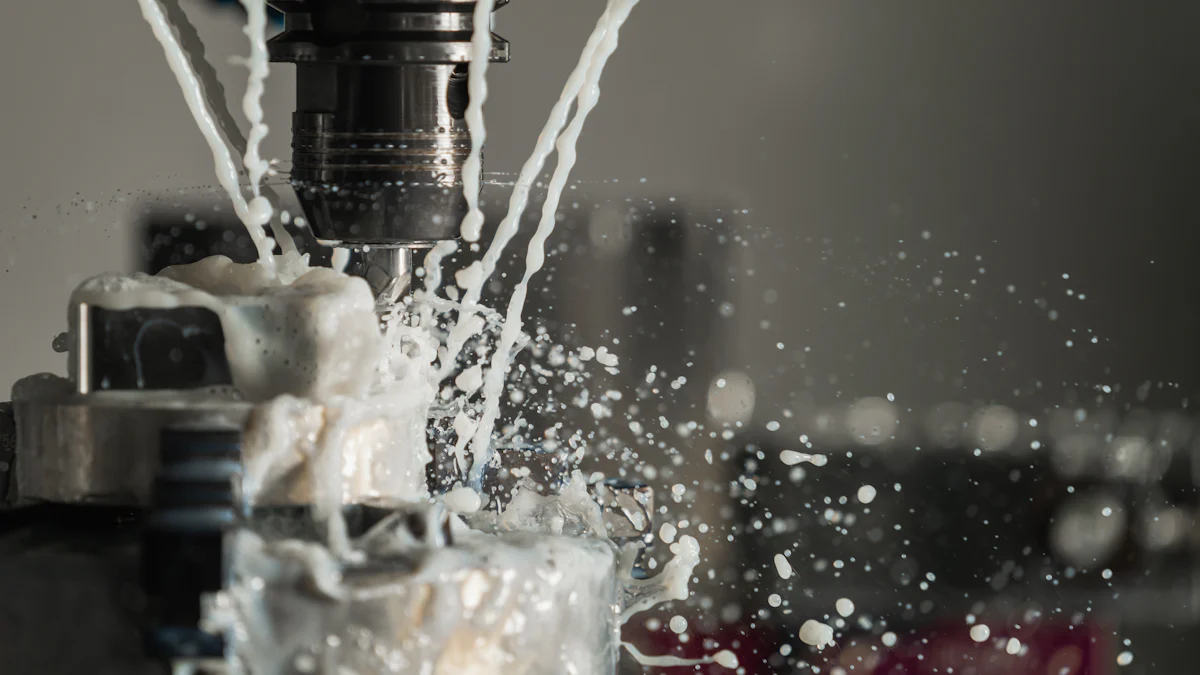
AI and machine learning are transforming CNC machining by enhancing efficiency, precision, and automation. These technologies allow machines to predict outcomes and adjust strategies autonomously. This leads to better production efficiency and higher-quality outputs. For example, AI-powered systems can analyze data in real time, optimizing tool paths and reducing material waste. This capability ensures consistent results, even for complex designs.
AI also promotes safer work environments by taking over dangerous tasks. Robots powered by AI handle repetitive or hazardous operations, minimizing risks for human workers. Additionally, continuous production becomes possible with AI-driven automation, increasing output and reducing delivery times. Industries like aerospace and medical benefit greatly from these advancements, as they require high precision and material utilization. By integrating AI into your CNC processes, you can achieve sustainable practices, improve productivity, and enhance product quality.
Increased Automation and the Rise of Smart Factories
Smart factories are revolutionizing CNC machining by combining AI and IoT technologies. These factories enable CNC machines to autonomously adjust machining strategies, improving efficiency and precision. For instance, IoT sensors monitor machine performance in real time, allowing you to address issues before they disrupt production. This proactive approach reduces downtime and ensures smooth operations.
Automation in smart factories also supports sustainable manufacturing. By optimizing energy use and reducing waste, these systems align with eco-friendly practices. Industries like automotive and aerospace benefit from the increased material utilization and precision offered by smart factories. As a result, you can meet the demands of new product development while maintaining high standards of quality and sustainability.
Advancements in Materials and Sustainable Practices
Sustainable materials are becoming a priority in CNC machining. Recycled metals like aluminum and steel offer excellent options for reducing environmental impact. Advanced high-temperature alloys also contribute to sustainability by lowering waste during machining. Biodegradable plastics are gaining traction for their versatility and eco-friendliness.
Eco-friendly coatings further enhance sustainability by minimizing harmful chemicals. These coatings protect parts while aligning with green manufacturing practices. Advanced composites made from natural fibers provide another sustainable option, reducing the carbon footprint of your products. By adopting these materials, you can support environmentally conscious product development and meet the growing demand for sustainable solutions.
Tip: Explore biodegradable plastics and recycled metals to align your CNC machining processes with sustainable practices.
The Role of CNC Machining in Eco-Friendly Manufacturing
CNC machining plays a significant role in promoting eco-friendly manufacturing practices. It optimizes material usage, reducing waste during production. By removing only the necessary material, CNC ensures efficient use of resources. This approach minimizes leftover scraps, especially when working with expensive metals like titanium or aluminum. You can also incorporate recycled materials into the process, supporting the circular economy and reducing environmental impact.
Energy efficiency is another advantage of CNC machining. Toolpath optimization and high-speed machining techniques lower energy consumption per part. These methods allow you to produce components faster while using less power. Facilities can further reduce their carbon footprint by integrating renewable energy sources like solar panels or wind turbines into their operations.
Water conservation is another area where CNC machining excels. Dry machining techniques eliminate the need for coolants, saving water. When coolants are necessary, closed-loop systems recycle them, significantly reducing water demand. This makes CNC machining an excellent choice for sustainable manufacturing processes.
You can also explore eco-friendly materials and coatings. CNC machining supports the use of biodegradable plastics and sustainable metals, aligning with green manufacturing goals. Eco-friendly coatings reduce the reliance on harmful chemicals, ensuring safer production practices. These materials and techniques help you create products that meet both functional and environmental standards.
By adopting CNC machining, you contribute to a cleaner and more sustainable future. Its ability to reduce waste, conserve energy, and utilize eco-friendly materials makes it an essential tool in modern product development. As industries move toward greener practices, CNC machining provides the precision and efficiency needed to meet these demands.
Tip: Consider integrating renewable energy sources and sustainable materials into your CNC machining processes to further enhance eco-friendly manufacturing.
CNC machining plays a vital role in driving innovation and efficiency in product development. It empowers you to create precise, high-quality components while meeting the demands of modern manufacturing. Its flexibility allows you to adapt quickly to design changes and produce customized solutions. By leveraging cnc, you can streamline processes and achieve consistent results.
Future advancements in cnc machining, such as AI integration and sustainable practices, promise to revolutionize the industry further. These innovations will help you stay competitive and meet evolving market needs. Embracing these technologies ensures that your product development efforts remain efficient and forward-thinking.
FAQ
What is CNC machining, and how does it work?
CNC machining uses computer-controlled tools to cut, shape, or drill materials into precise parts. You program the machine with a digital design, and it follows the instructions to create components with high accuracy and consistency.
Can CNC machining handle all types of materials?
CNC machining works with a wide range of materials, including metals like aluminum and titanium, plastics like ABS, and composites. You should choose materials based on your product’s strength, durability, and environmental needs.
How does CNC machining compare to 3D printing?
CNC machining removes material to create parts, while 3D printing adds material layer by layer. CNC offers better precision and works well for strong, durable parts. 3D printing excels at creating complex shapes but may lack the strength CNC provides.
Is CNC machining cost-effective for small production runs?
Yes, CNC machining eliminates the need for expensive molds or tooling. You can produce small batches or custom parts efficiently. This makes it a great choice for prototypes or niche markets where flexibility and quality matter.
How does CNC machining support sustainable manufacturing?
CNC machining reduces waste by removing only necessary material. You can use recycled metals or biodegradable plastics to lower environmental impact. Energy-efficient machines and dry machining techniques also help conserve resources during production.
See Also
Discovering CNC Machining Solutions for Accurate Production
Recognizing the Significance of Precision CNC Machining Techniques
Excelling in CNC Machining for Accurate Component Production
CNC Technology in Manufacturing: Exploring Innovations and Uses
About US
Follow Us
Your prototype holds unparalleled significance, and we deeply value its uniqueness. Collaborating with you during the preparation phase for running your prototype or parts is a commitment we gladly embrace. Whether it's a single part or a complex assembly, we are dedicated to selecting the optimal tools and pathways to bring your envisioned product to life.
At Precision Fab CNC Machining, we specialize in producing parts for prototypes, short runs, and high-volume production. Our prototyping machine capabilities extend across metal, plastic, and wood machining, with welding fabrication services available to complement and finalize your prototype if required.
Address
Address: Room320 10F, Building A,Nanshan international building, Dayawan District, Huizhou, Guangdong, 516001 China
Contacts
billy@timaycnc.com