Three Ways CNC Machining Reduces Scrap Metal Waste

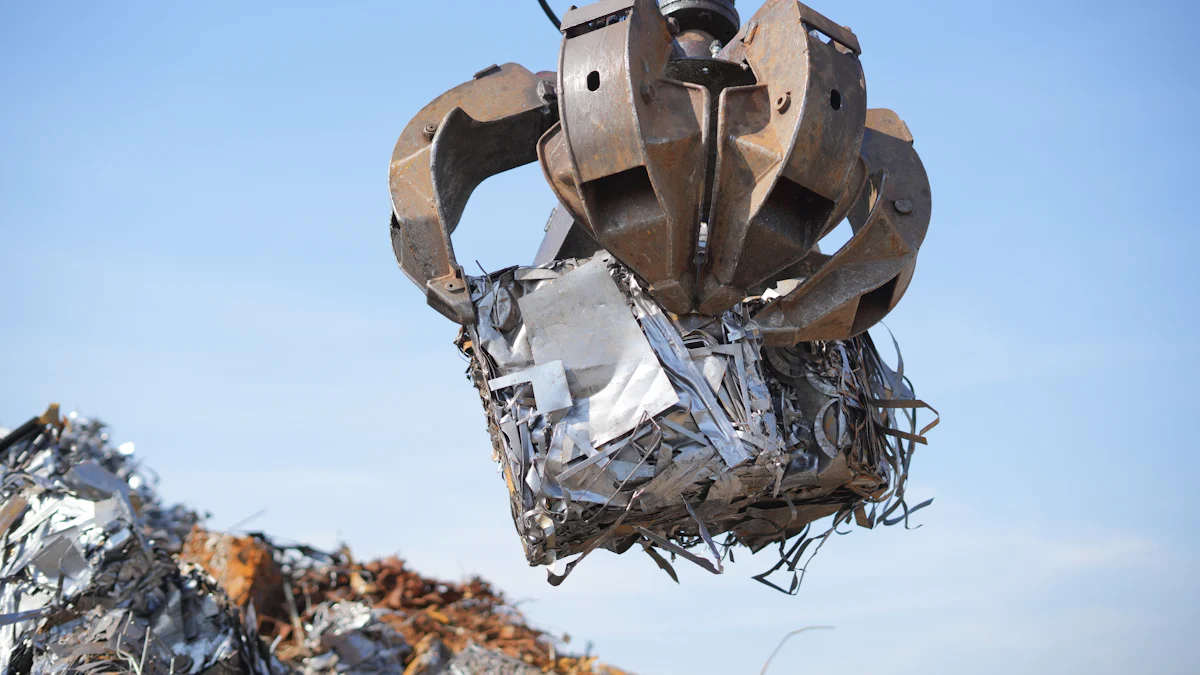
CNC machining plays a vital role in sustainable manufacturing by significantly reducing waste. Unlike traditional methods, CNC uses advanced computer-aided design (CAD) software to achieve precise cuts and minimize errors. This precision ensures fewer defective parts and less material waste. Between 2013 and 2022, scrap metal waste in manufacturing decreased by 27%, showcasing the impact of sustainable practices. CNC also supports a circular economy by enabling efficient recycling and reuse of materials. By adopting CNC machining, you contribute to sustainability while improving efficiency and reducing costs in your operations.
Key Takeaways
CNC machines use smart tools to make exact cuts, cutting waste by 35%.
CAD/CAM software helps design layouts to use materials better and leave less scrap.
Making parts only when needed with CNC stops extra production and saves resources.
CNC automation lowers mistakes made by people, keeping quality steady and waste low.
Recycling and reusing materials from CNC work helps the planet and reduces harm.
Optimized Material Usage in CNC Machining
Precision Cutting for Minimal Waste
Achieving near-perfect cuts with CNC technology.
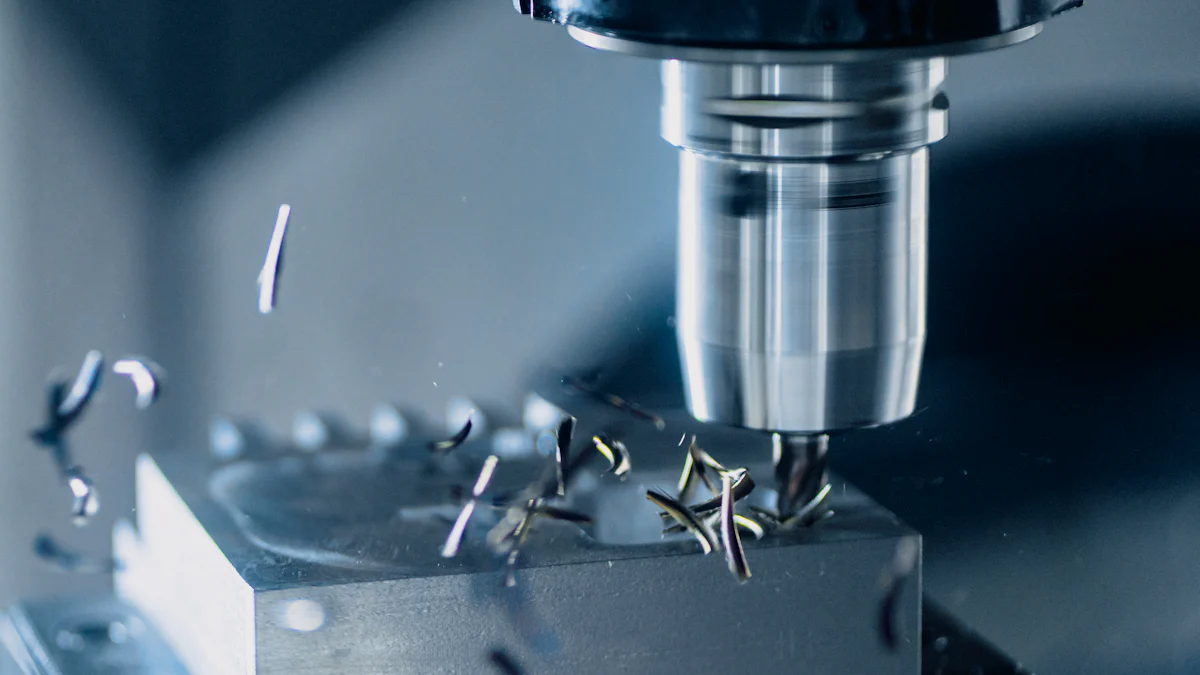
CNC machining excels in precision cutting, which significantly reduces material waste. Advanced CNC tools achieve near-perfect cuts by following exact specifications from CAD designs. This precision minimizes leftover scraps, ensuring efficient use of raw materials. For example, CNC machines can cut stainless steel, aluminum, and carbon steel with remarkable accuracy, reducing waste by up to 35%, 25%, and 30%, respectively.
Benefit Type | Reduction Percentage |
|---|---|
Material Waste Reduction | 15-30% |
Cost Savings | 20-40% |
Stainless Steel Waste Reduction | Up to 35% |
Aluminum Waste Reduction | Up to 25% |
Carbon Steel Waste Reduction | 20-30% |
Industry examples of reduced material waste through precision.
Many industries have adopted CNC machining to minimize material waste. Aerospace companies like Boeing and Airbus use laser cutting to create lightweight, durable parts with minimal scrap. Automotive manufacturers such as Tesla and BMW rely on CNC for precise component production, improving material efficiency. In renewable energy, solar panel makers use CNC to cut thin silicon wafers, reducing waste while enhancing performance.
Industry | Description |
|---|---|
Aerospace | Companies like Boeing and Airbus use laser cutting to produce lightweight, durable parts with minimal waste. |
Automotive | Tesla and BMW utilize laser cutting for components, reducing material waste and improving efficiency. |
Renewable Energy | Solar panel manufacturers create thin silicon wafers with laser cutting, minimizing waste and enhancing efficiency. |
Advanced Material Planning with CAD/CAM
How software optimizes material layouts to reduce waste.
CAD/CAM software plays a crucial role in minimizing material waste. It allows you to design layouts that maximize material efficiency. Engineers use these tools to visualize and simulate machining processes, identifying potential issues before production. This approach avoids unnecessary material removal and ensures designs are optimized for manufacturability. By considering factors like material availability and recyclability, CAD/CAM software helps you achieve sustainable manufacturing goals.
Simulation tools for trial-free production.
Simulation tools integrated into CNC systems offer several advantages for trial-free production:
Improved safety by verifying programs in a virtual environment.
Collision detection to prevent tool breakage.
Cost savings through reduced machine downtime and repairs.
Safe and interactive training for operators.
Increased precision by optimizing toolpaths.
Enhanced productivity with seamless program execution.
Customization and On-Demand Production
Avoiding overproduction with small-batch manufacturing.
On-demand production with CNC machining helps you avoid overproduction. Products are made to order, reducing inventory waste and leftover scraps. This approach ensures efficient resource use and supports sustainable practices. Customization in small-batch manufacturing also minimizes the risk of producing unused items, further contributing to waste reduction.
Case studies of companies leveraging CNC for waste reduction.
Several companies have successfully implemented on-demand production to reduce waste. For instance, a furniture manufacturer used CNC machining to produce custom designs in small batches, eliminating excess inventory. Similarly, a medical device company adopted CNC for personalized implants, ensuring precise production with minimal material waste.
Process Efficiency to Reduce CNC Machining Waste
Automation and Error Reduction
Minimizing human error through CNC automation.
Automation in CNC machining plays a critical role in reducing human error and material waste. By relying on automated systems, you can achieve high accuracy and consistency in your operations. These systems eliminate the risks associated with manual data entry, especially when working with complex designs or large datasets. CNC machines also reduce the need for handheld tools, ensuring precise cuts that align perfectly with design specifications. This precision minimizes mistakes, leading to less material waste and improved efficiency.
Examples of industries benefiting from reduced scrap.
Many industries benefit from CNC automation to reduce scrap. In the electronics sector, manufacturers use CNC to produce intricate circuit boards with minimal errors. The aerospace industry relies on automated CNC systems to create complex components with exact specifications, reducing defective parts. Similarly, the medical field uses CNC to manufacture precision instruments and implants, ensuring high-quality results with minimal waste.
Consistency in High-Precision Manufacturing
Ensuring uniformity across production runs.
CNC machining ensures uniformity across production runs, which is essential for reducing defective parts. By maintaining strict standards, you can produce components that meet precise specifications every time. Automated inspection technologies further enhance this process by verifying that each part adheres to quality requirements. This consistency minimizes the likelihood of defects, saving materials and resources.
Benefits of consistent quality in reducing defective parts.
High-precision manufacturing offers several benefits. Consistent quality reduces the need for rework, which saves time and materials. It also enhances customer satisfaction by delivering reliable products. For example, in the automotive industry, consistent CNC machining ensures that every engine component fits perfectly, reducing assembly errors and material waste.
Streamlined Setup and Reduced Downtime
How CNC machines optimize setup processes to save materials.
CNC machines optimize setup processes to maximize machine efficiency and minimize waste. By using CAD software, you can program machines with precision, reducing errors during production. Nesting optimization software organizes multiple parts on a single sheet, ensuring efficient material usage. Advanced machining strategies, such as adaptive toolpaths, further enhance efficiency by reducing unnecessary material removal.
Industries achieving efficiency through reduced downtime.
Several industries achieve efficiency by reducing downtime with CNC machining. Furniture manufacturers use CNC to streamline production, cutting multiple components from a single sheet with minimal waste. In the renewable energy sector, CNC machines produce wind turbine components with high precision, reducing setup time and material usage. These practices support sustainable manufacturing by conserving resources and minimizing waste.
Recycling and Reuse in CNC Machining
Repurposing Scrap Metal for a Circular Economy
Collecting and reusing leftover materials from CNC processes.
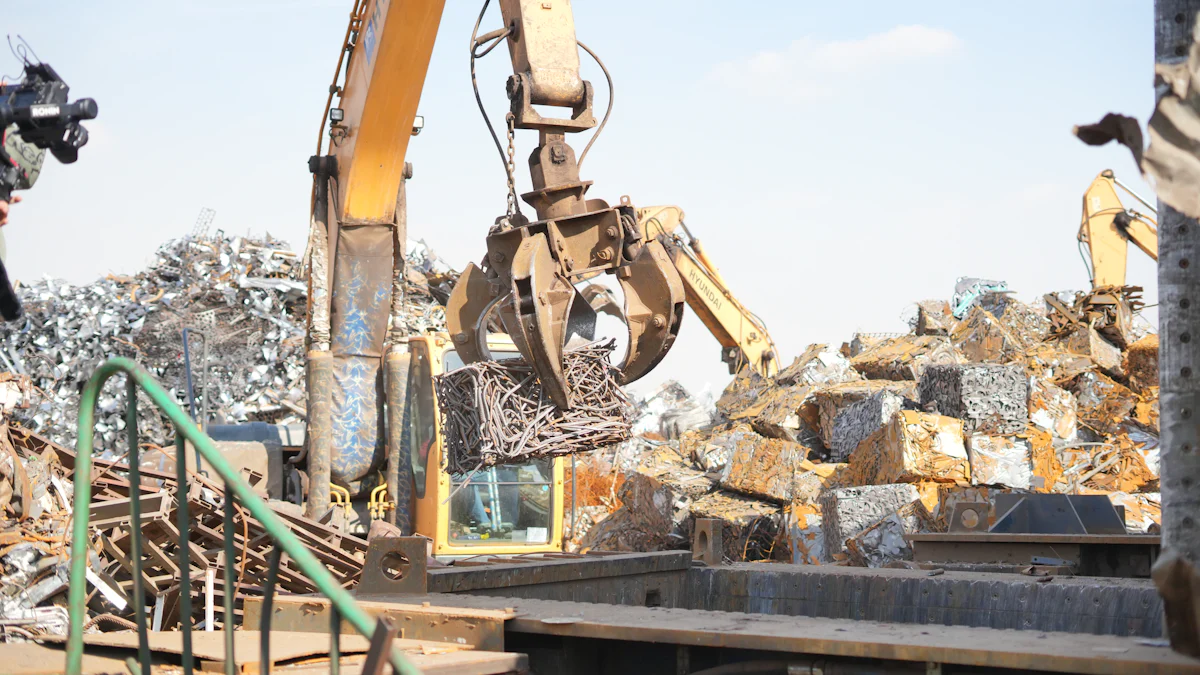
CNC machining generates by-products like metal shavings and cuttings, which can be repurposed to support a circular economy. Efficient waste management systems, such as conveyors and vacuums, collect these materials for recycling. By re-using materials like alloy steel, aluminum alloy, and titanium alloy, you can recover valuable resources and reduce environmental impact. This approach not only saves on raw material costs but also aligns with sustainable practices by minimizing material waste and scrap.
Examples of industries repurposing scrap for new products.
Many industries have embraced recycling to create new products. Construction companies use scrap iron and aluminum for building materials. In transportation, manufacturers incorporate recycled metals into vehicles and aircraft. Packaging industries rely on recycled aluminum and steel for food containers. Even home furnishings, such as appliances and fixtures, often include recycled components. These examples highlight how re-using materials contributes to sustainability and promotes circularity across sectors.
Integration with Recycling Programs
Collaborating with recycling initiatives to close the loop.
You can enhance sustainability by collaborating with recycling programs. CNC machining companies often partner with recycling experts to manage waste effectively. They implement closed-loop systems that repurpose metal shavings and cuttings while recycling wastewater and coolant. These efforts ensure that material waste and scrap are minimized, supporting circularity in manufacturing processes.
Benefits of closed-loop manufacturing systems.
Closed-loop systems offer several advantages. Recycling wastewater reduces freshwater intake, conserving water resources. Advanced filtration methods improve the quality of treated wastewater, allowing it to be reused in machining processes. These systems also lower the environmental impact of industrial discharge, making them an essential part of sustainable manufacturing.
Sustainable Material Choices in CNC Applications
Using recyclable materials to reduce environmental impact.
Choosing recyclable materials in CNC machining reduces environmental harm. Metals like stainless steel, aluminum, and brass are highly recyclable and widely used in eco-friendly manufacturing. By prioritizing these materials, you can lower material waste and scrap while promoting sustainability.
Examples of eco-friendly materials in CNC machining.
Several eco-friendly materials are gaining popularity in CNC applications:
Recycled aluminum requires less energy to produce and supports circularity.
Bamboo composites offer a renewable and durable alternative.
Bioplastics, such as PLA, are biodegradable and derived from natural sources.
Recycled plastics reduce pollution compared to virgin plastics.
Low-carbon steel minimizes CO2 emissions during production.
These materials demonstrate how CNC machining can align with sustainable practices and reduce its environmental footprint.
CNC machining offers a powerful solution for reducing waste and promoting sustainable practices in manufacturing. By optimizing material usage, you can minimize excess material through precise control and advanced planning. Process efficiency ensures consistent quality and reduces defective parts, saving resources. Recycling and reuse initiatives further align with the principles of a circular economy, conserving natural resources and lowering environmental impact. These sustainable practices not only enhance operational efficiency but also support global efforts toward eco-friendly manufacturing. As industries adopt these methods, CNC machining will remain a cornerstone of sustainable manufacturing.
FAQ
What is CNC machining, and how does it reduce waste?
CNC machining uses computer-controlled tools to cut and shape materials with precision. It reduces waste by optimizing material usage, minimizing errors, and enabling recycling. This process ensures efficient resource use, making it a sustainable choice for manufacturing.
Can CNC machining work with eco-friendly materials?
Yes, CNC machining supports eco-friendly materials like recycled aluminum, bamboo composites, and bioplastics. These materials reduce environmental impact while maintaining high-quality production. By choosing recyclable options, you can align your manufacturing processes with sustainability goals.
How does automation in CNC machining improve efficiency?
Automation eliminates human error and ensures consistent quality. CNC machines follow programmed instructions, reducing mistakes and defective parts. This precision saves materials and boosts productivity, making your operations more efficient and cost-effective.
Is CNC machining suitable for small-batch production?
Absolutely! CNC machining excels in small-batch production. It allows you to create customized products on demand, avoiding overproduction and excess inventory. This approach minimizes waste and supports sustainable manufacturing practices.
What industries benefit most from CNC machining?
Industries like aerospace, automotive, electronics, and renewable energy benefit greatly. CNC machining ensures precision, reduces material waste, and enhances efficiency. These advantages make it a valuable tool for sectors requiring high-quality, sustainable production.
Tip: Explore CNC machining for your business to reduce waste, save costs, and support eco-friendly practices!
See Also
How CNC Precision Parts Affect Overall Manufacturing Expenses
Understanding CNC Machining: Metal Cutting and Precision Techniques
Streamlined CNC Machining Solutions for Accurate Manufacturing
Overcoming Obstacles: Boosting CNC Prototyping Precision and Speed
Proven Strategies for Flawless CNC Machining of Aluminum Components
About US
Follow Us
Your prototype holds unparalleled significance, and we deeply value its uniqueness. Collaborating with you during the preparation phase for running your prototype or parts is a commitment we gladly embrace. Whether it's a single part or a complex assembly, we are dedicated to selecting the optimal tools and pathways to bring your envisioned product to life.
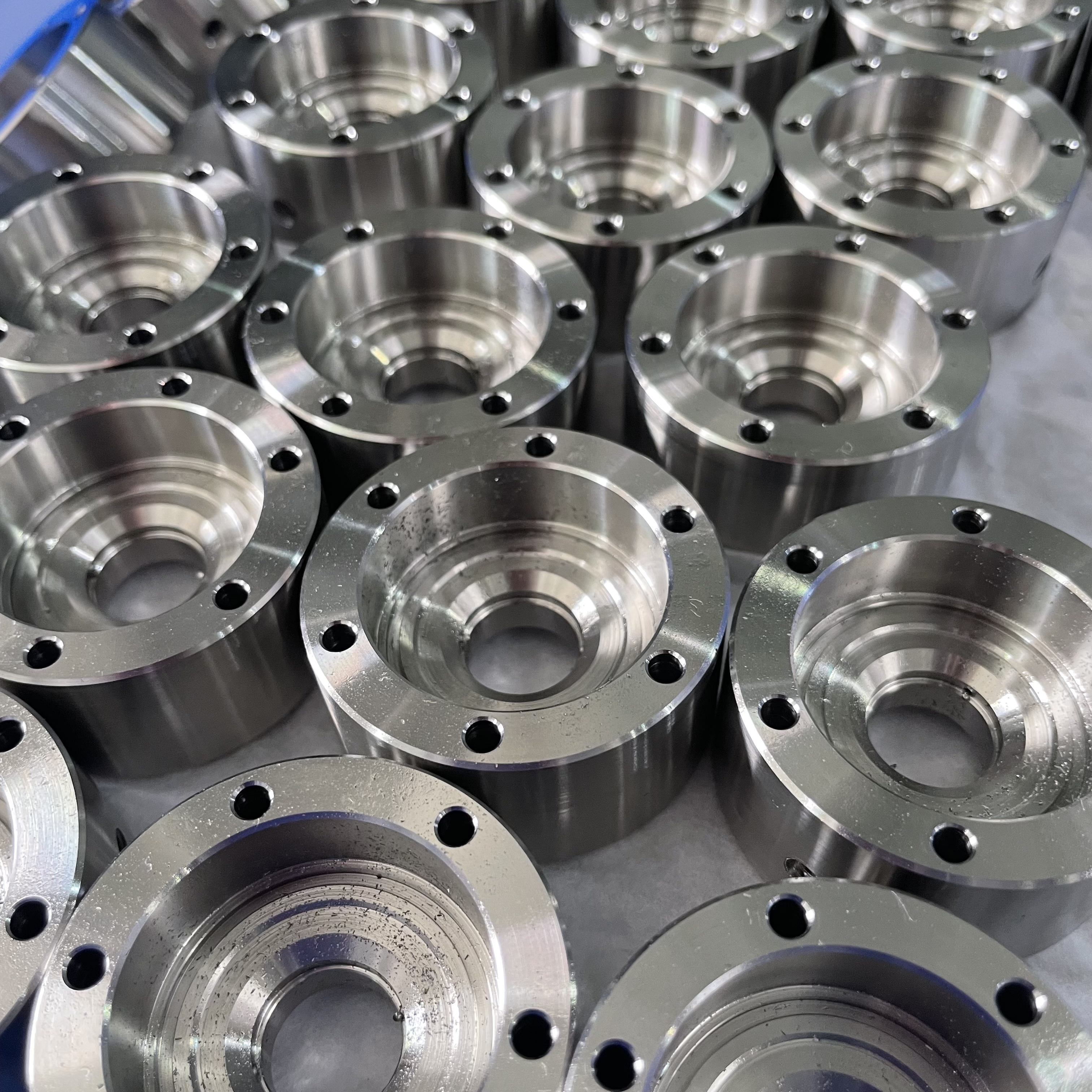
At Precision Fab CNC Machining, we specialize in producing parts for prototypes, short runs, and high-volume production. Our prototyping machine capabilities extend across metal, plastic, and wood machining, with welding fabrication services available to complement and finalize your prototype if required.
Address
Address: Room320 10F, Building A,Nanshan international building, Dayawan District, Huizhou, Guangdong, 516001 China
Contacts
billy@timaycnc.com