How CNC Enhances Surface Finish for Different Materials

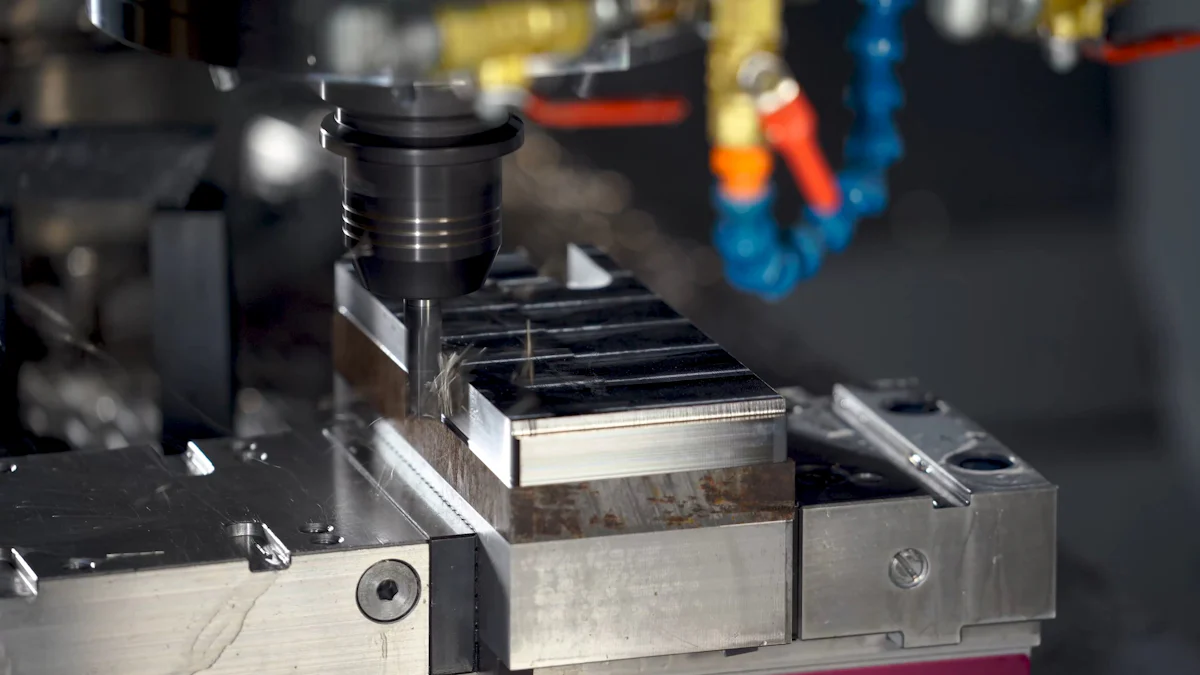
CNC machining plays a vital role in achieving precise and consistent surface finish, which directly impacts the performance and durability of machined parts. A smooth surface reduces friction, enhances wear resistance, and improves sealing capabilities. It also ensures dimensional accuracy and boosts corrosion resistance. Industries like automotive and consumer electronics demand high-quality finishes, such as 0.8 μm Ra, to balance functionality and aesthetics. By controlling surface finish, you can enhance the mechanical properties of components, ensuring they meet strict specifications and perform reliably in demanding applications.
Key Takeaways
CNC machines make surfaces smoother, improving how parts work and last.
Smooth surfaces lower friction, resist wear, and stop rust better.
Adjusting settings like speed and feed rate is very important.
Keeping tools sharp and machines tuned avoids scratches and rough spots.
Polishing and sanding can help, but good machining is still key.
Understanding Surface Finish in CNC Machining
What Is Surface Finish?
Surface finish refers to the texture and quality of a part's surface after machining. It includes the smoothness, waviness, and any irregularities present. In CNC machining, surface finish is measured using specific parameters and tools. These measurements help you evaluate the quality of the machined surface and ensure it meets design requirements.
Measurement Method | Description |
|---|---|
Visual Inspection | Subjective method to quickly identify major surface flaws. |
Surface Roughness Testers | Devices that measure micro-irregularities, providing a quantitative roughness value. |
Profilometers | Instruments that trace a stylus over the surface to generate a detailed profile for analysis. |
Ra (Roughness Average) | Average surface roughness, measured in microinches (µin) or micrometers (µm). |
Rz (Average Maximum Height) | Measures average peak-to-valley height of surface irregularities over a specified length. |
RMS (Root Mean Square) | Similar to Ra but calculated differently, offering a different perspective on surface roughness. |
Other parameters, such as Rq (root mean square roughness), Rv, and Rp, provide additional insights into surface characteristics. You can measure these using contact methods like micrometers or non-contact methods like laser scanning.
Why Surface Finish Matters in CNC Machining
Surface finish plays a critical role in the performance and lifespan of CNC-machined components. A smoother finish reduces friction between moving parts, extending their lifespan. It also enhances resistance to corrosion and environmental factors, ensuring durability. Finer finishes distribute stress more evenly, improving fatigue strength and reducing the risk of failure. For example:
Smoother surfaces reduce friction, which minimizes wear and tear.
Enhanced finishes protect against corrosion, prolonging service life.
Uniform finishes improve stress distribution, preventing premature failure.
By achieving the right surface finish, you can ensure that parts perform reliably in demanding applications.
Factors That Influence Surface Finish
Several factors affect the surface finish in CNC machining. These include machining parameters, tool conditions, and material properties. Understanding these factors helps you optimize the process for better results.
Cutting forces: Larger forces can deflect the tool, leading to poor finishes.
Cutting speed: Higher speeds often improve finish but may worsen it in some cases.
Feed rate: Lower feed rates produce smoother surfaces.
Depth of cut: Lower radial depth improves finish, while higher axial depth does the same.
Tool geometry: Positive rake angles and larger lead angles enhance finish.
Tool wear: Worn tools increase surface roughness.
Cutting fluids: These reduce friction and improve finish.
Material properties also play a role. Harder materials increase vibration and friction, resulting in rougher surfaces. Thermal expansion can cause uneven cutting, while work hardening affects surface quality due to shear stress. By controlling these variables, you can achieve consistent and high-quality surface finishes.
CNC Machining Processes for Superior Surface Finish
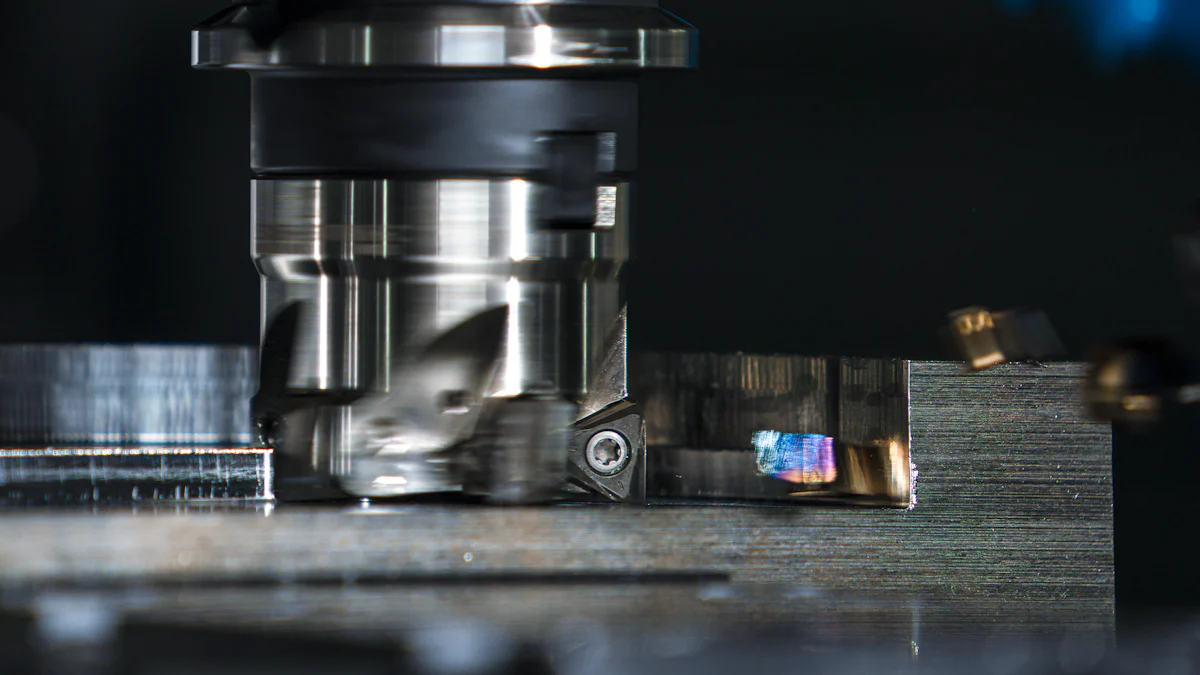
CNC Turning for Smooth Surfaces
CNC turning is one of the most effective methods for achieving a polished surface finish. In this process, the workpiece rotates continuously while the cutting tool removes material. This rotation ensures a consistent and smooth machined surface finish, unlike other methods that may leave tool marks. You can improve the surface quality by using a larger tool nose radius and reducing the feed rate. Higher cutting speeds also enhance the finish when managed correctly.
Several factors influence the outcome in CNC turning. Tool wear, depth of cut, and vibrations can affect the surface finish. Material inconsistencies and machine motion errors may also introduce irregularities. To minimize vibration and chatter, ensure proper machine calibration and use sharp tools. CNC turning is ideal for cylindrical parts, offering a reliable way to achieve fine surface roughness.
CNC Milling for Complex Geometries
CNC milling excels at creating intricate designs while maintaining surface quality. This process uses advanced machines with multiple axes, ranging from 3 to 12, to handle complex geometries. You can achieve tight tolerances, often around +/- 0.004”, ensuring precision and a high-quality surface finish. Carbide and ceramic-coated cutting tools help maintain surface integrity, even when machining challenging materials.
However, milling can result in less uniform surfaces compared to turning. Variations in feed rates, setup errors, and vibrations may cause spatial inconsistencies. To improve the finish, optimize cutting parameters like feed rate and spindle speed. Using CNC finishing tools designed for milling can also enhance the final result. Milling is a versatile option for parts requiring both complexity and a refined surface.
CNC Drilling and Its Impact on Surface Quality
CNC drilling combines cutting and rubbing actions to create holes in a workpiece. While it is primarily a roughing process, you can still achieve a decent surface finish by controlling the feed rate and using appropriate tools. Material properties also play a significant role in determining the final surface quality. For example, softer materials may deform, while harder ones can cause tool wear.
Drilling often requires additional surface finishing processes, such as polishing or reaming, to achieve finer finishes. The process is less precise than turning or milling, but it remains essential for creating accurate holes. To improve the machined surface finish, use sharp drills and apply coolants to reduce heat and friction. Proper tool maintenance ensures consistent results.
Material-Specific Considerations
Metals (e.g., aluminum, steel, titanium)
When machining metals, you must account for their hardness and brittleness. Harder metals, like titanium, require smaller stepovers to reduce tool load and achieve a smoother surface finish. Softer metals, such as aluminum, allow for larger stepovers, which speeds up machining without significantly compromising the machined surface finish. Tool geometry also plays a critical role. For example, flat-end tools work well for flat surfaces, while ball-end tools are better for curved geometries. Using sharp tools and proper cutting parameters minimizes vibration and chatter, ensuring a consistent surface finish. Coolants are essential for metals to dissipate heat and prevent tool wear, which can degrade the surface quality.
Plastics (e.g., ABS, polycarbonate)
Plastics are more prone to deformation due to heat generated during machining. To maintain a high-quality surface finish, you should use smaller stepovers and lower cutting speeds. This approach reduces heat buildup and prevents material degradation. Plastics like ABS and polycarbonate benefit from sharp tools with polished edges, which minimize surface roughness. Coolants are less critical for plastics but can still help reduce friction. Post-machining surface finishing processes, such as sanding or polishing, often enhance the final appearance and functionality of plastic parts.
Composites (e.g., carbon fiber, fiberglass)
Composites present unique challenges due to their layered structure. Brittle composites, like carbon fiber, require smaller stepovers to avoid chipping or cracking. Fiberglass, being more ductile, allows for slightly larger stepovers while maintaining an acceptable surface finish. You should use specialized CNC finishing tools designed for composites to achieve optimal results. These tools often feature coatings that reduce wear and improve cutting efficiency. Proper dust extraction systems are also crucial when machining composites to maintain a clean workspace and prevent damage to the material.
Material Type | Considerations for Surface Finish |
|---|---|
Plastics and Composites | Smaller stepover reduces heat generation, preventing deformation or degradation. |
Metals and Ceramics | Larger stepover can be used; however, hardness and brittleness vary among metals, affecting machining parameters. |
Harder Materials | Smaller stepover minimizes load on cutting tools, achieving smoother finishes. |
Softer Materials | Larger stepover speeds up machining without significantly compromising surface finish. |
Brittle Materials | Smaller stepover reduces risk of chipping and cracking by lowering cutting forces. |
Ductile Materials | Larger stepover can be used for efficiency without losing acceptable surface finish. |
Tool Diameter | Larger tools support larger stepovers; smaller tools require smaller stepovers for finer finishes. |
Tool Geometry | Different geometries (flat, ball, bull nose) affect stepover choices based on the part's complexity and surface type. |
By tailoring your approach to the specific material, you can achieve a superior CNC machining surface finish. Understanding the properties of metals, plastics, and composites ensures you select the right tools, cutting parameters, and surface finishing processes for each application.
Tools, Cutting Parameters, and Strategies for CNC Machining Surface Finish
Importance of Tool Selection
Tool Material and Coatings
Selecting the right tool material and coating is essential for achieving a superior surface finish. Different materials require specific tools to meet surface finish requirements. For example, carbide tools are ideal for harder materials, while high-speed steel (HSS) tools work well for softer materials. Coatings like titanium nitride (TiN) or diamond-like carbon (DLC) enhance tool performance by reducing friction and wear. These coatings also improve surface roughness by ensuring cleaner cuts. Using coated tools helps you achieve consistent results, especially when machining challenging materials.
Tool Geometry and Sharpness
Tool geometry and sharpness directly influence surface finish. Tools with larger rake angles and sharper edges produce smoother surfaces by minimizing cutting forces. A larger relief angle increases clearance but may lead to higher friction and tool wear. Sharper tools create cleaner cuts but wear out faster when machining harder materials. Regularly inspecting and replacing worn tools ensures you maintain the desired machined surface finish. Choosing the best CNC finishing tool for your application minimizes vibration and chatter, resulting in a polished surface.
Optimizing Cutting Parameters
Feed Rate and Spindle Speed
Feed rate and spindle speed are critical cutting parameters that affect surface finish. Lower feed rates, such as 0.01-0.05 mm/rev, are ideal for finishing operations, while higher rates suit roughing tasks. Adjusting spindle speed can improve surface quality by reducing cutting forces. However, excessive speed may cause tool wear or vibrations. Finding the optimal balance between feed rate and spindle speed helps you optimize cutting parameters and achieve a high-quality surface finish.
Depth of Cut and Step-Over
Depth of cut and step-over settings also play a significant role in surface finish. A lower radial depth of cut improves surface quality, while a higher axial depth enhances it. Smaller stepovers, typically 5-25% of the tool diameter, are used for critical surface finishes. Larger stepovers, around 40-60%, increase efficiency but result in rougher surfaces. Adjusting these parameters based on the material and surface finish requirements ensures consistent results.
Advanced Machining Strategies
High-Speed Machining
High-speed machining (HSM) offers excellent surface finishes, especially for aerospace and medical applications. This method reduces heat and friction, minimizing tool wear and improving surface quality. HSM is ideal for machining complex geometries with minimal operator intervention. By using this strategy, you can achieve advanced surface treatments and meet stringent surface finish requirements.
Climb vs. Conventional Milling
The choice between climb and conventional milling impacts surface finish. Climb milling produces a better finish by reducing chip recutting and requiring less power. Conventional milling, on the other hand, is better suited for rough surfaces but results in faster tool wear. Understanding these differences helps you select the right approach for your machining needs.
Post-Processing Techniques and Coolants for Enhanced Surface Finish
Common Post-Processing Methods
Polishing and Buffing
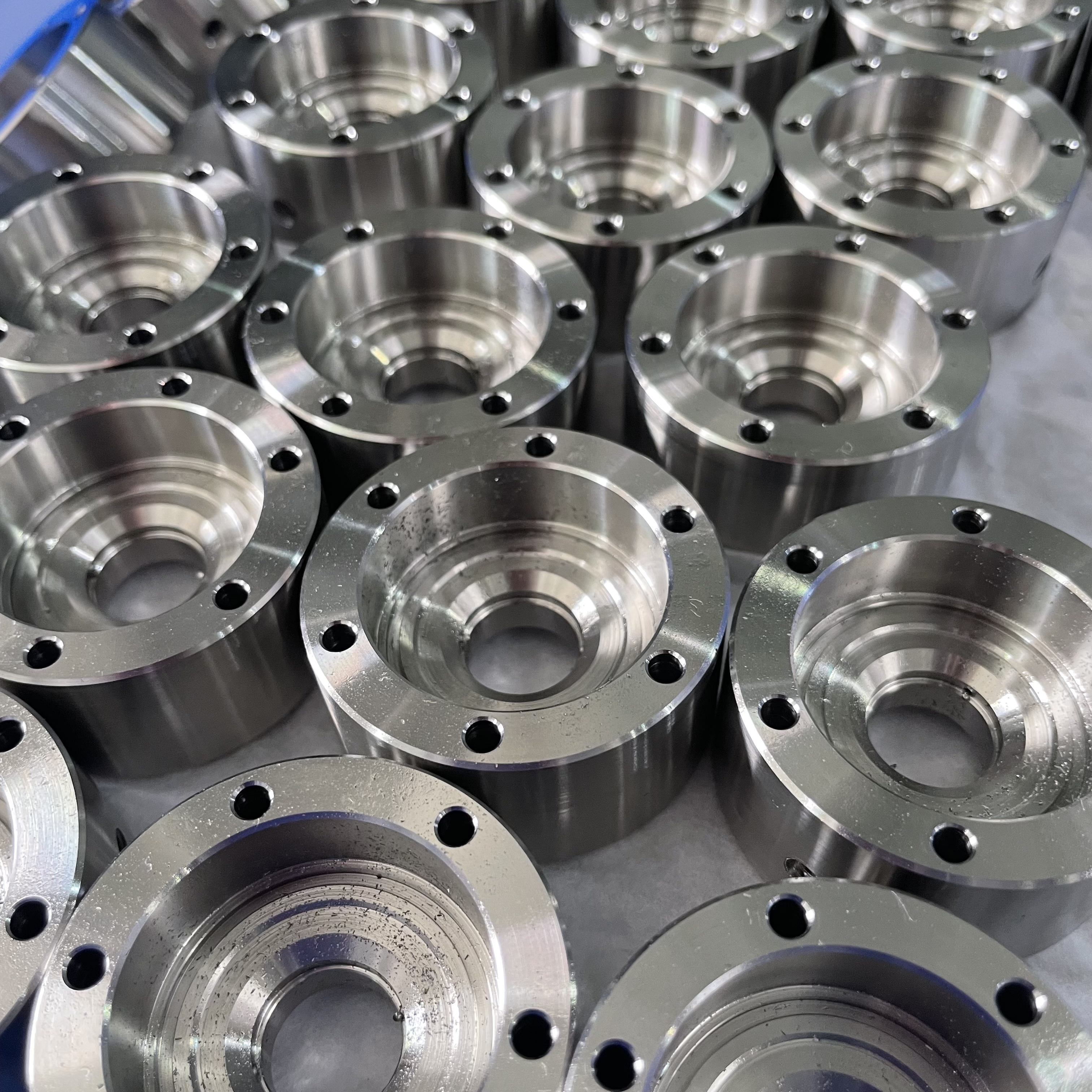
Polishing and buffing are essential surface finishing processes for achieving high-quality surface finishes. Polishing removes scratches and imperfections using abrasive materials, leaving the surface smooth and shiny. Buffing takes this a step further by creating a mirror-like finish. You can achieve this by applying fine abrasives to a high-speed rotating wheel made of soft materials like cloth or felt. These techniques are ideal for minimizing imperfections and enhancing the aesthetic appeal of CNC-machined components.
Sanding and Grinding
Sanding and grinding are versatile methods for improving surface finish. Sanding uses abrasive sheets or belts to smooth surfaces, while grinding employs abrasive wheels for precision and accuracy. Grinding works well for hard materials, delivering a smooth and consistent finish. Both methods are effective for preparing parts for further treatments or achieving a refined surface.
Electropolishing for Smoother Surfaces
Electropolishing is an electrochemical process that smoothens metal surfaces by removing a thin layer of material. This method enhances corrosion resistance and cleanliness, making it ideal for stainless steel and other metals. You can use electropolishing to achieve a uniform and polished surface, especially for components requiring high precision and durability.
Other effective post-processing methods include:
Bead blasting for a smooth, shiny surface.
Anodizing to add a corrosion-resistant layer to metals like aluminum.
Tumbling and vibratory finishing for batch processing of large quantities.
Role of Coolants and Lubricants
Types of Coolants and Their Applications
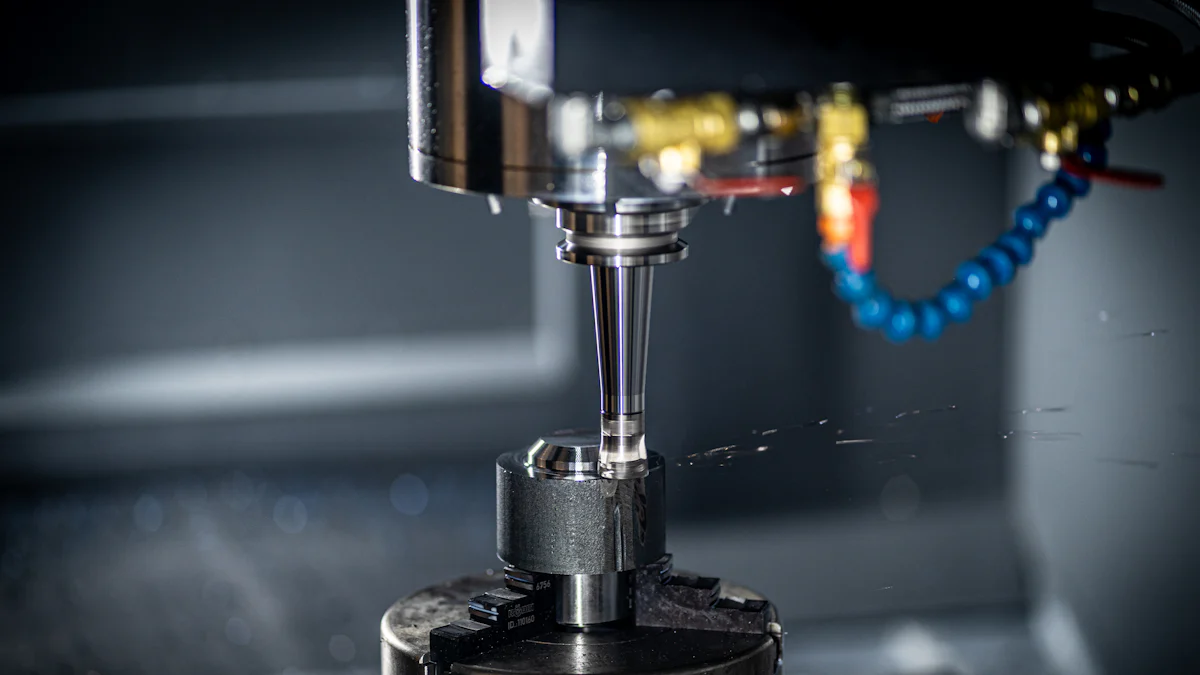
Coolants and lubricants play a vital role in CNC machining by improving surface finish and extending tool life. Different materials require specific coolants:
Aluminum benefits from water-based synthetic coolants to prevent adhesion.
Steel requires semi-synthetics or cutting oils for lubrication.
Brass and copper need synthetic coolants to avoid tarnishing.
Titanium machining demands semi-synthetics or cutting oils for effective cooling.
Coolants dissipate heat, remove chips, and reduce friction, ensuring a smooth surface finish.
Best Practices for Coolant Usage
To optimize surface finish, you should select the right coolant for the material and maintain it regularly. Contaminated coolants can degrade performance and cause corrosion. Testing and treating water used in coolants ensures their effectiveness. Techniques like flooding or minimum quantity lubrication (MQL) can further enhance cooling efficiency. Proper coolant usage prevents thermal damage, minimizes imperfections, and ensures consistent results in CNC machining.
Troubleshooting and Optimizing CNC Machining Surface Finish
Common Surface Finish Issues
Tool Marks and Chatter
Tool marks and chatter are common problems that reduce surface finish quality. Tool wear often causes these issues, as worn tools create inconsistent contact with the material. This leads to micro-grooves and visible imperfections. Incorrect toolholding or improper tool geometry can also result in chatter. Vibrations during machining, caused by unstable workpieces or poorly anchored machines, further degrade the surface finish. Identifying these root causes helps you address the problem effectively.
Burrs and Rough Edges
Burrs and rough edges often occur during CNC machining due to material properties and cutting methods. Laser cutting can produce burrs from oxidation, while CNC routing may cause breakout burrs depending on the material and cutting parameters. Using dull tools exacerbates the issue, creating more pronounced burrs. To minimize these imperfections, you should use sharp tools, separate roughing and finishing tools, and ensure proper drilling depth to avoid burrs at the bottom of holes.
Tips for Resolving Surface Finish Problems
Regular Tool Maintenance
Maintaining your tools regularly is essential for achieving consistent surface finishes. Worn tools increase vibration, leading to chatter marks and rough surfaces. Flank wear creates micro-grooves, further degrading the finish. By inspecting and replacing tools frequently, you can reduce wear and maintain optimal cutting performance.
Adjusting Cutting Parameters
Optimizing cutting parameters improves surface finish significantly. Lowering feed rates and adjusting spindle speeds can reduce cutting forces and vibrations. Smaller stepovers and appropriate depths of cut also enhance surface quality. Monitoring cutting fluid levels ensures proper lubrication and cooling, which further improves the finish.
Ensuring Proper Machine Calibration
Proper machine calibration ensures consistent and accurate performance. Calibrated machines minimize deviations, improving surface quality and reducing errors. Regular calibration also extends machine lifespan and lowers production costs by reducing scrap. This practice enhances product quality and ensures compliance with industry standards, leading to better customer satisfaction.
CNC machining offers unmatched precision for achieving superior surface finishes across diverse materials. By selecting the right tools and cutting parameters, you can enhance durability and functionality while addressing challenges like wear and corrosion. Techniques like climb milling and high-speed machining improve results, while monitoring coolant levels and tool conditions ensures consistency. Surface finishing removes imperfections and enhances aesthetics, making it vital for quality. Regular maintenance and calibration of machines help you resolve issues like tool marks or burrs, ensuring long-term success in optimizing surface quality.
FAQ
1. What is the best way to improve surface finish in CNC machining?
You can improve surface finish by using sharp tools, optimizing cutting parameters, and applying coolants. Lower feed rates and smaller stepovers help achieve smoother surfaces. Regular tool maintenance and machine calibration also ensure consistent results.
2. How do cutting parameters affect surface quality?
Cutting parameters like feed rate, spindle speed, and depth of cut directly impact surface finish. Lower feed rates and smaller depths of cut reduce tool marks and vibrations. Adjusting these settings based on material properties ensures a polished surface.
3. Why does tool wear degrade surface finish?
Worn tools create uneven cuts and increase vibrations, leading to rough surfaces. Regularly inspecting and replacing tools prevents these issues. Sharp tools maintain consistent contact with the material, ensuring a smoother finish.
4. Which materials are easiest to machine for a fine surface finish?
Softer materials like aluminum and ABS are easier to machine for smooth finishes. These materials generate less heat and vibration during machining. Using the right tools and cutting parameters further enhances their surface quality.
5. Can post-processing always fix poor surface finishes?
Post-processing methods like polishing and sanding can improve surface quality, but they cannot fully fix severe machining errors. Achieving a good surface finish during machining reduces the need for extensive post-processing.
Tip: Focus on optimizing machining parameters to minimize post-processing time and costs.
See Also
Expert Insights on Surface Treatment for CNC Precision Parts
Improving Manufacturing of Precision Parts Through Surface Finishing
Exploring Material Needs for CNC Precision Machining Processes
Optimizing Quality in CNC Machining with Advanced Technology
About US
Follow Us
Your prototype holds unparalleled significance, and we deeply value its uniqueness. Collaborating with you during the preparation phase for running your prototype or parts is a commitment we gladly embrace. Whether it's a single part or a complex assembly, we are dedicated to selecting the optimal tools and pathways to bring your envisioned product to life.
At Precision Fab CNC Machining, we specialize in producing parts for prototypes, short runs, and high-volume production. Our prototyping machine capabilities extend across metal, plastic, and wood machining, with welding fabrication services available to complement and finalize your prototype if required.
Address
Address: Room320 10F, Building A,Nanshan international building, Dayawan District, Huizhou, Guangdong, 516001 China
Contacts
billy@timaycnc.com