CNC Materials for Defense and Military Equipment

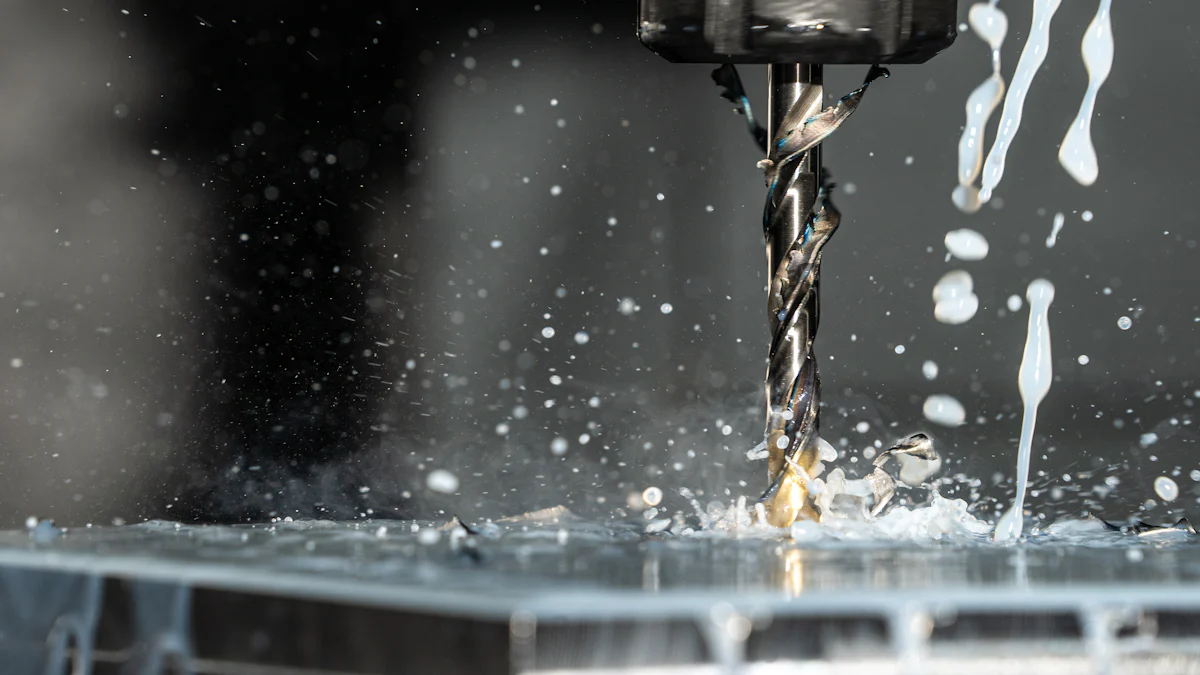
Military and defense equipment must meet stringent performance standards to ensure reliability in critical operations. CNC machining plays a pivotal role in achieving these standards by enabling the production of durable and high-performing components. Its ability to create intricate designs ensures that military tools function effectively in extreme environments. The technology supports rapid prototyping, allowing for the customization and testing of components tailored to specific defense needs. By minimizing human error and adhering to strict quality standards, CNC machining enhances the precision and consistency required for military-grade equipment. This approach ensures that every part performs reliably under demanding conditions.
Key Takeaways
CNC machining helps military tools meet high standards, improving reliability.
Strong materials like titanium and aluminum are perfect for defense use.
CNC machines make detailed designs so parts work well in tough conditions.
CNC machining reduces waste and supports recycling in defense production.
New trends include advanced materials and eco-friendly methods for better performance.
Key Properties of Military-Grade CNC Materials
Durability and Strength
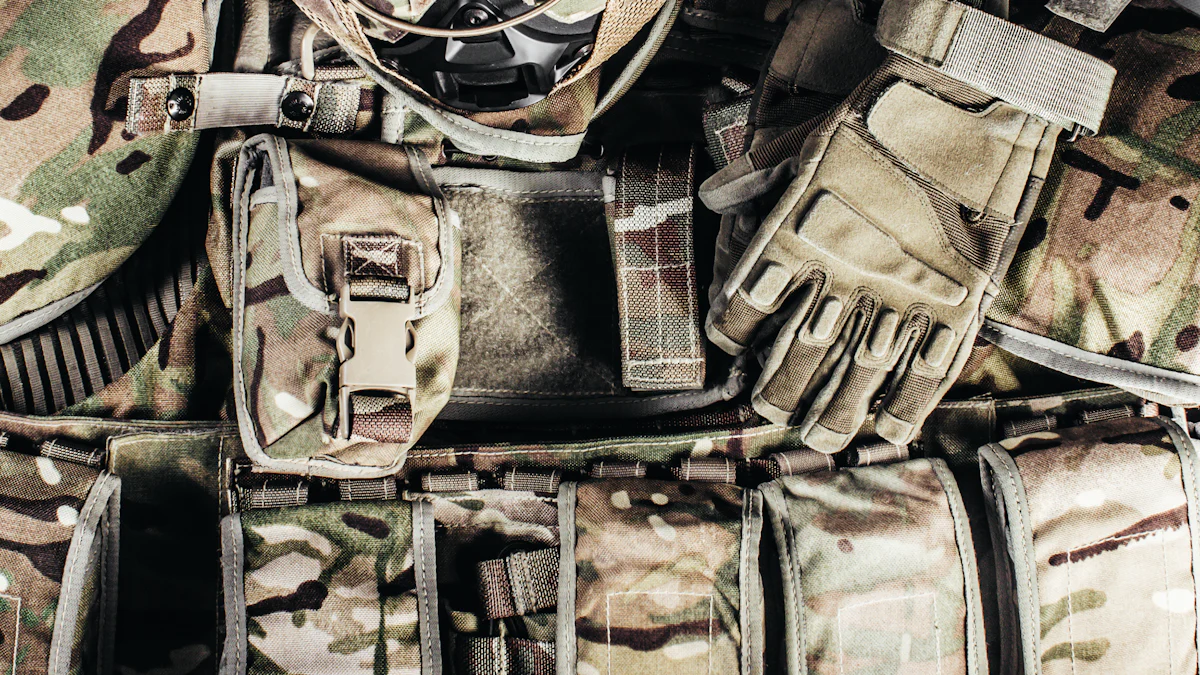
Military-grade CNC materials are engineered to endure the most demanding conditions. Their exceptional strength ensures that components can withstand heavy stress and wear without compromising performance. Titanium, for instance, offers a high strength-to-weight ratio and corrosion resistance, making it ideal for military aircraft and marine equipment. Hardened steel, known for its ability to endure extreme stress, is frequently used in tank components and military vehicles. Aluminum, with its lightweight and corrosion-resistant properties, is a staple in aerospace and missile technology. Advanced composites combine high strength with low weight, making them suitable for structural components in military vehicles.
Material | Strength Characteristics | Applications |
|---|---|---|
Titanium | High strength-to-weight ratio, corrosion resistance | Military aircraft, marine equipment, weapons systems |
Hardened Steel | Endures heavy stress and wear | Tank components, military vehicles |
Aluminum | Lightweight, corrosion-resistant | Aerospace, missile technology |
Advanced Composites | High strength, low weight | Military vehicles, structural components |
Military-grade materials surpass commercial-grade alternatives in strength and durability. They are specifically designed to endure extreme conditions, such as high temperatures and heavy stress, ensuring reliability in critical applications.
Precision and Accuracy
Precision is a cornerstone of CNC machining in defense applications. Military hardware demands components with tight tolerances and intricate designs to ensure operational effectiveness. CNC machining achieves this level of precision through automation and advanced technology. The multi-axis capability of CNC machines allows for the creation of complex geometries while maintaining dimensional accuracy. Stainless steel and specialized alloys are often used to craft these components, ensuring they meet the rigorous standards required for military use.
CNC machining enhances the reliability of military hardware by producing precise components.
Automated processes minimize errors, ensuring consistency and accuracy.
Faster production speeds reduce lead times, boosting overall efficiency.
CNC military machining is the first choice for many defense projects. Military aircraft require precise engine and structural components machining to fly reliably and safely.
Resistance to Extreme Conditions
Military-grade CNC materials are designed to perform under the harshest environmental conditions. They must resist high temperatures, corrosion, and heavy stress to maintain functionality. Materials like aluminum, steel, and titanium are commonly used due to their ability to withstand these challenges. Testing methods, such as tensile, fatigue, and impact tests, ensure that these materials meet industry standards for durability and safety.
Industry | Testing Methods | Purpose |
|---|---|---|
Aerospace | Tensile, Fatigue, Impact | Evaluate safety and durability of materials. |
Automotive | Compression, Flexural, Impact | Validate durability and safety of vehicle materials. |
Medical Devices | Tensile, Fatigue | Ensure safety and compliance with regulations. |
Construction | Compression, Tensile | Test strength and durability for structural integrity. |
CNC machining plays a vital role in preparing materials for these extreme conditions. Its precision and adaptability ensure that components meet the stringent requirements of military applications.
Common CNC Materials in Defense Applications
Titanium
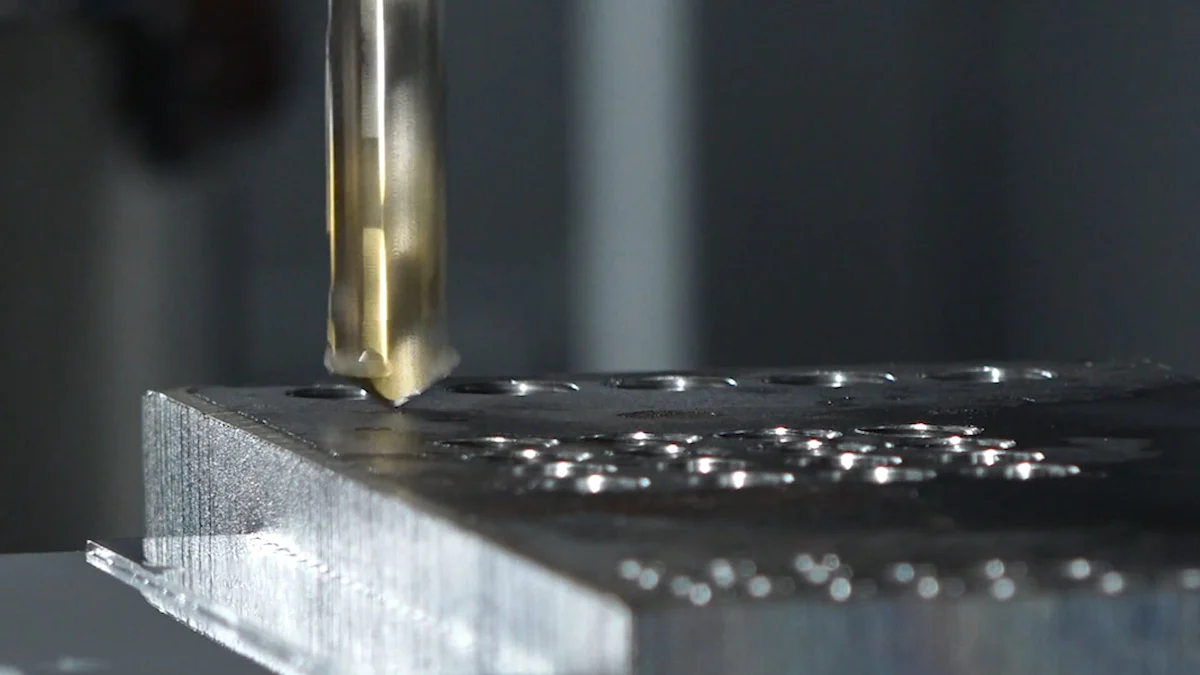
Titanium is a cornerstone material in defense applications due to its exceptional properties. Its low density, approximately 60% that of steel, provides an outstanding strength-to-weight ratio. This makes it ideal for applications where both strength and reduced weight are critical. Titanium also boasts a high melting point of around 1,668 degrees Celsius, ensuring structural integrity under extreme heat. Additionally, its natural corrosion resistance, derived from a protective titanium oxide layer, makes it invaluable in marine environments.
Military equipment often incorporates titanium in critical components. For example:
The Lockheed SR-71 Blackbird uses titanium alloys for 93% of its weight.
The Lockheed Martin F-22 Raptor and F-35 Lightning II rely on titanium for 42% and one-third of their weight, respectively.
Submarine systems, such as exhaust stack liners, ball valves, and cooling systems, also utilize titanium for its durability and resistance to seawater corrosion.
These properties make titanium a preferred choice for CNC Machining in defense, enabling the production of lightweight yet robust components for aircraft, submarines, and other military systems.
Aluminum
Aluminum's lightweight nature and versatility make it a staple in defense applications. Its reduced weight enhances speed, maneuverability, and payload capacity in military vehicles. Aluminum also resists corrosion, ensuring durability in harsh environments.
Benefit | Description |
|---|---|
Enhanced Speed | Aluminum's lightweight nature allows military vehicles to achieve higher speeds. |
Improved Maneuverability | The reduced weight contributes to better maneuverability in various terrains. |
Increased Payload Capacity | Lightweight materials enable vehicles to carry more equipment and supplies. |
Corrosion Resistance | Aluminum's resistance to corrosion ensures durability in harsh environments. |
Structural Integrity | Provides a strong frame that withstands rough conditions without losing agility. |
Aluminum is widely used in aerospace applications, including missile technology and aircraft frames. Its combination of strength, corrosion resistance, and lightweight properties ensures reliable performance in demanding conditions.
Steel Alloys
Steel alloys are indispensable in military applications due to their balance of strength and flexibility. Engineers have developed treatments that create a gradient of grain sizes within steel, enhancing both hardness and ductility. This innovation allows steel to withstand high-impact forces while maintaining structural integrity.
Steel Grade | Applications | Key Properties |
|---|---|---|
MIL-A-46100 | Used to stop hyper-velocity projectiles and shield against sniper fire. | High hardness, available up to 2 inches thick. |
MIL-A-12560 | Used in combat vehicles, testing ammunition, and protection against explosives. | Excellent shock absorption, meets specific standards. |
MIL-A-46177 | Used for armor, liners, or small vehicle applications. | Thinner grade, max thickness of 0.249 inches. |
Steel alloys are commonly used in tank armor, combat vehicles, and protective shields. Their ability to absorb shock and resist ballistic penetration makes them essential for safeguarding personnel and equipment in combat scenarios.
Advanced Composites
Advanced composites have revolutionized the defense industry by offering unmatched performance and versatility. These materials, composed of fibers embedded in a resin matrix, provide a unique combination of strength, durability, and lightweight properties. Compared to traditional materials like steel and aluminum, advanced composites reduce weight by up to 75%, significantly enhancing the efficiency and maneuverability of military equipment. Their resistance to fatigue and corrosion ensures long-term reliability, even in the harshest environments.
Advantage | Description |
|---|---|
Weight Savings | Composites enable high payload and fuel efficiency, making military vehicles lighter and more efficient. |
Infinite Fatigue Life | Composites have a much longer fatigue life compared to traditional materials like steel and aluminum. |
Corrosion Resistance | Composites do not rust, providing durability in challenging environments. |
Anisotropic Strength Properties | Composites can be layered in different orientations to handle multi-directional forces effectively. |
The design flexibility of advanced composites allows engineers to create complex shapes at lower costs. This capability supports the development of innovative military systems, such as lightweight drones, radar panels, and missile containers. Additionally, composites absorb shock and energy better than metals, offering enhanced protection against blasts and gunfire.
In modern military applications, carbon fiber composites are widely used in aircraft, drones, body armor, and helmets. These materials improve mobility and protection while reducing the overall weight of equipment. Other examples include PEEK, a competitor to titanium in military vehicles, and carbon fiber nylon, which rivals aluminum in similar applications. Ballistic-resistant composites like NP522 and NP523 are employed for protective gear, while composite armor upgrades smaller vehicles.
Composite Material | Application in Military Equipment |
|---|---|
PEEK | Competitor for titanium in military vehicles |
Carbon fiber nylon | Competitor for aluminum in military vehicles |
NP522 and NP523 | Ballistic-resistant composites for protection |
Composite armor | Used in smaller vehicles for upgrades |
Ceramics | Upgraded Canadian M-113s in the 1990s |
Ad-hoc composite armor | Used in Komatsu D355A bulldozer |
Naval armor | Customized for personnel protection in vessels |
The adoption of advanced composites in military equipment demonstrates their critical role in enhancing performance, safety, and sustainability. Their ability to combine lightweight properties with exceptional strength makes them indispensable in modern defense strategies.
Role of CNC Machining in Material Performance
Precision Manufacturing
CNC machining plays a critical role in achieving the precision required for military-grade materials. Its ability to meet tight tolerances ensures the functionality and durability of defense equipment. Components produced through CNC machining comply with stringent quality standards, making them reliable for high-stakes applications.
CNC machining achieves sub-micron tolerances, essential for military tools and systems.
Multi-axis capabilities allow the creation of intricate parts for advanced weaponry and communication devices.
The technology ensures repeatability, which is vital for mass production and quality control.
Military aircraft, for example, rely on CNC machining to produce precise engine and structural components. These parts must perform flawlessly under extreme conditions, ensuring safety and operational reliability. The accuracy provided by CNC machining directly impacts the performance of weapons, missiles, and other critical systems.
Cost-Efficiency
CNC machining enhances cost-efficiency in defense manufacturing by optimizing material usage and minimizing waste. Its precise shaping process reduces scrap, ensuring that metals, plastics, and composites are used effectively. This approach not only lowers production costs but also supports environmental goals.
Efficient manufacturing processes reduce waste and production costs.
Automation minimizes errors, decreasing the need for rework.
Faster production cycles shorten lead times without compromising quality.
The long-term benefits of CNC machining include consistent precision and reliability. Manufacturers can produce high-quality components quickly, meeting the demands of military applications while maintaining cost-effectiveness. By reducing material waste and error rates, CNC machining ensures durable and affordable solutions for defense needs.
Sustainability
Sustainability has become a priority in defense manufacturing, and CNC machining contributes significantly to this goal. Advanced machines use energy-efficient operations, reducing the carbon footprint of production. Systems also collect and recycle waste materials, promoting circular production practices.
Precision material use minimizes scrap and maximizes efficiency.
Closed-loop coolant systems recycle water, lowering environmental impact.
Lightweight component designs reduce fuel consumption in military vehicles.
Innovative practices, such as dry machining and the use of biodegradable materials, further enhance sustainability. CNC machining supports the production of durable, high-performance components while adhering to eco-friendly standards. This balance between performance and environmental responsibility makes it an indispensable technology in modern defense manufacturing.
Future Trends in CNC Materials for Military Applications
Advanced Composites and Alloys
Advancements in composites and alloys are transforming military equipment by enhancing performance and durability. Composites, for instance, offer significant weight savings, which improve fuel efficiency and maneuverability in military vehicles. Their infinite fatigue life and corrosion resistance ensure reliability in harsh environments. Engineers can also design composites with anisotropic strength properties, enabling them to handle multi-directional forces effectively.
Recent innovations include helmets made from fibers stronger than steel yet flexible enough to absorb energy during impacts. Lightweight composites are now used in military vehicles, improving protection against gunfire and shock absorption during IED blasts. In aviation, high-quality composites reduce aircraft part weight by over 40%, enhancing fuel efficiency and performance. These materials are also being explored for weaponry, where they minimize recoil and increase durability.
Advanced alloys, such as nanocomposite ceramics, are equally impactful. These materials enhance the sturdiness and speed of military equipment. They are critical for developing hypersonic weapons and high-energy lasers, which demand superior strength and thermal response.
Sustainable Practices
Sustainability is becoming a priority in military-grade CNC applications. Emerging biodegradable materials aim to replace petroleum-based plastics, reducing carbon emissions and environmental impact. AI-powered energy optimization in CNC machining adjusts parameters in real time, maximizing energy efficiency and minimizing waste.
Hybrid manufacturing, which combines CNC machining with 3D printing, allows for precise material usage, reducing waste and improving production speed. Closed-loop systems further enhance sustainability by recycling coolant and reclaiming byproducts, creating cleaner manufacturing processes. These innovations align with the growing demand for eco-friendly practices in defense manufacturing.
Additive Manufacturing Integration
The integration of additive manufacturing with CNC machining is revolutionizing military production. This combination enables the creation of complex parts with precise tolerances, ensuring functionality and reliability in defense systems. It also enhances flexibility, allowing for rapid production and customization to meet the dynamic needs of military operations.
Additive manufacturing reduces material waste by building components layer by layer, complementing CNC machining's precision. Together, these technologies produce high-quality components that comply with strict military standards. This integration supports the development of advanced systems, such as lightweight drones and high-performance weaponry, while maintaining cost-efficiency.
CNC materials play a pivotal role in enhancing the performance and reliability of military equipment. Their unique properties, such as titanium's strength-to-weight ratio, aluminum's lightweight versatility, and advanced composites' durability, ensure optimal functionality in critical applications. CNC machining enables precision manufacturing, supporting the production of weaponry, aircraft components, and naval systems with unmatched accuracy. It also contributes to sustainability by minimizing waste, recycling byproducts, and reducing energy consumption.
Future advancements in CNC machining and materials will continue to revolutionize military technology. Innovations like hybrid manufacturing and AI-driven energy optimization will enhance efficiency while promoting eco-friendly practices. By combining precision, sustainability, and adaptability, CNC machining remains indispensable in advancing defense capabilities.
FAQ
What makes CNC machining essential for military applications?
CNC machining ensures precision, durability, and reliability in military components. Its ability to meet tight tolerances and produce intricate designs supports the creation of high-performance equipment. This technology also minimizes errors, enabling consistent quality for critical applications like aircraft, vehicles, and weaponry.
Why is titanium widely used in defense manufacturing?
Titanium offers an unmatched strength-to-weight ratio, corrosion resistance, and high-temperature tolerance. These properties make it ideal for aircraft, submarines, and weapon systems. Its lightweight nature enhances fuel efficiency and maneuverability, while its durability ensures long-term reliability in extreme environments.
How does CNC machining contribute to sustainability in defense?
CNC machining reduces material waste through precise cutting and shaping. Energy-efficient machines and closed-loop systems recycle resources like coolant and byproducts. These practices lower environmental impact while maintaining high-quality production standards, aligning with modern sustainability goals in defense manufacturing.
What are advanced composites, and why are they important?
Advanced composites combine fibers and resin to create lightweight yet strong materials. They resist corrosion and fatigue, offering durability in harsh conditions. Their design flexibility supports innovative military systems like drones, body armor, and missile containers, improving performance and protection.
How does additive manufacturing complement CNC machining?
Additive manufacturing builds components layer by layer, reducing material waste. When integrated with CNC machining, it enhances precision and flexibility. This combination enables the production of complex parts with tight tolerances, supporting rapid prototyping and customization for dynamic military needs.
See Also
Grasping Material Needs for CNC Precision Machining
How CNC Precision Parts Affect Manufacturing Expenses
Investigating CNC Machining Solutions for Accurate Production
Revealing CNC Machining Accuracy Within Aerospace Sector
CNC Precision Parts Processing Impact on Manufacturing Industry
About US
Follow Us
Your prototype holds unparalleled significance, and we deeply value its uniqueness. Collaborating with you during the preparation phase for running your prototype or parts is a commitment we gladly embrace. Whether it's a single part or a complex assembly, we are dedicated to selecting the optimal tools and pathways to bring your envisioned product to life.
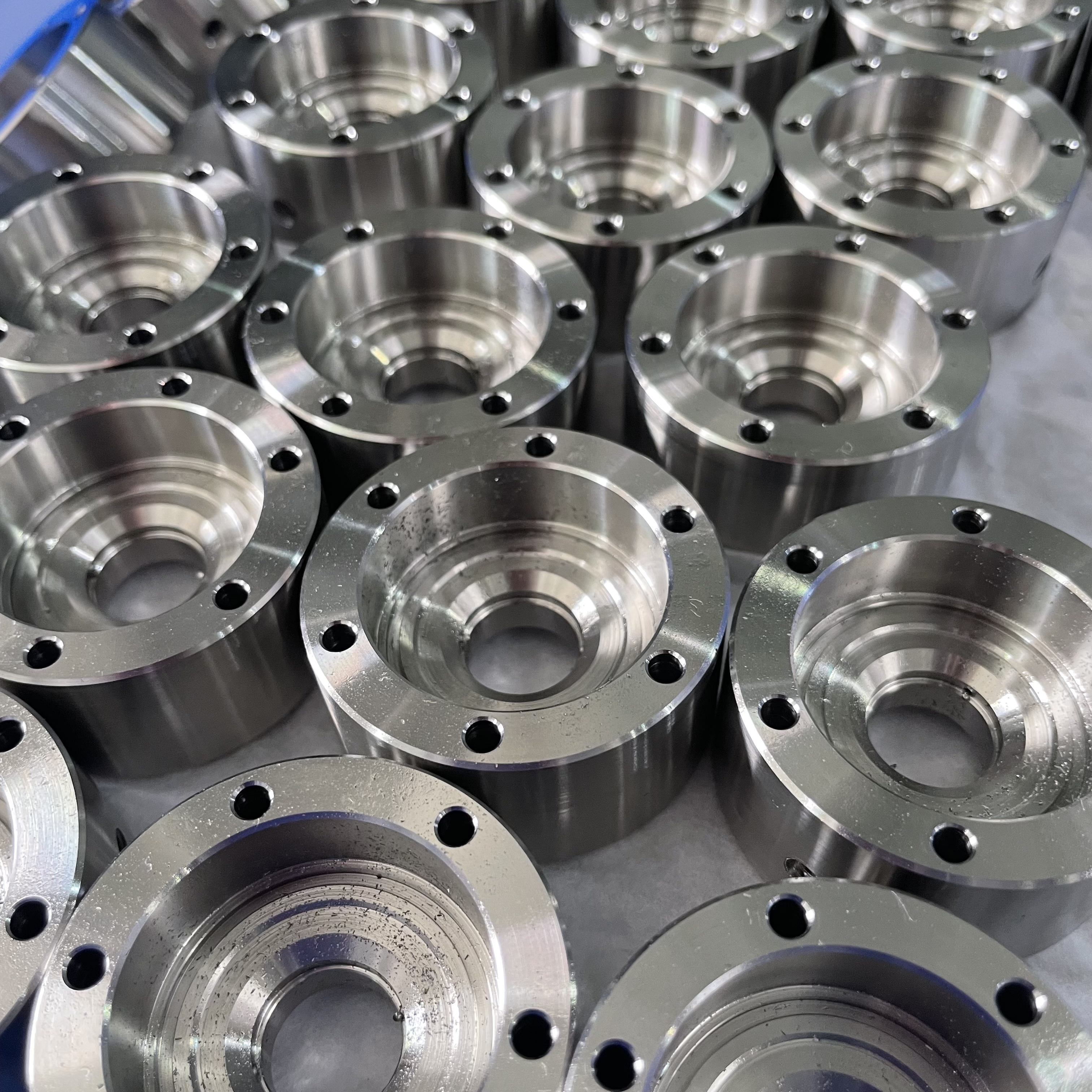
At Precision Fab CNC Machining, we specialize in producing parts for prototypes, short runs, and high-volume production. Our prototyping machine capabilities extend across metal, plastic, and wood machining, with welding fabrication services available to complement and finalize your prototype if required.
Address
Address: Room320 10F, Building A,Nanshan international building, Dayawan District, Huizhou, Guangdong, 516001 China
Contacts
billy@timaycnc.com