How CNC Milling Machines Achieve Complex Geometries

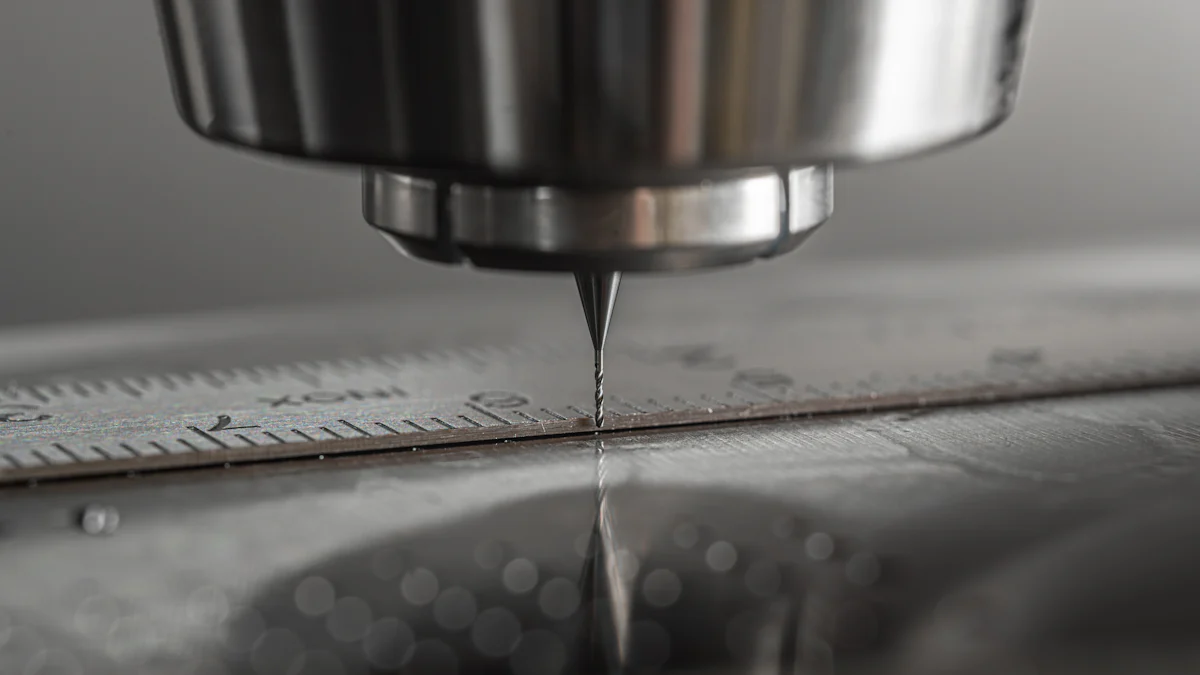
CNC milling machines bring precision and efficiency to modern manufacturing. They use advanced automation to create intricate designs with tolerances tighter than a human hair. With real-time adjustments and adaptive machining, you can achieve near-perfect dimensions. These machines revolutionize production by reducing errors, boosting speed, and delivering consistent results for complex geometries.
Key Takeaways
CNC milling machines use smart technology to make detailed designs. They work fast and reduce mistakes during production.
Picking the right materials and tools is very important. It affects how good and quick the machining process is.
Multi-axis CNC machines can make detailed shapes and curves. They help reach tricky spots without moving the piece around.
Understanding Complex Geometries in CNC Machining
Defining Complex Geometries
When you think about complex geometries in CNC machining, imagine parts with intricate details and precise measurements. These designs often include features like curved surfaces, undercuts, or internal cavities that are tough to create. For example, turbine blades in aerospace, custom medical implants, and other intricate shapes require advanced machining techniques.
Several factors define complexity in CNC milling. Part size and weight play a role, as do non-standard features like thin walls or tight tolerances. Surface curvature and finishing techniques also add to the challenge. Essentially, the more detailed and precise the design, the more complex it becomes.
Challenges in Producing Complex CNC Parts
Creating complex designs isn’t easy. You might face issues like incorrect tool paths, which can lead to tool collisions and costly repairs. Feed and speed miscalculations can also affect the durability and finish of your parts. Outdated software or simple data entry errors can cause significant discrepancies between the design and the final product.
Balancing speed and accuracy is another hurdle. Rushing production can compromise quality, especially when dealing with intricate geometries. Advanced fixturing and setup are critical for stability, but they require time and expertise. Consistency across multiple parts is also tricky due to tool wear and material variations.
Importance of Precision in CNC Milling
Precision is everything when it comes to intricate geometries. Tight tolerances ensure parts fit together seamlessly, improving durability and performance. High-quality CNC machining relies on advanced tools and software to achieve this level of accuracy. For example, complex surface geometry or internal features demand high precision to meet design specifications.
Modern CNC milling machines use automation to maintain consistency and reduce errors. This is especially important for industries like aerospace or medical, where even minor deviations can have serious consequences. By focusing on precision, you can produce parts that meet the highest standards of quality and reliability.
Features of CNC Milling Machines for Complex Geometries
Multi-Axis CNC Machining Technology
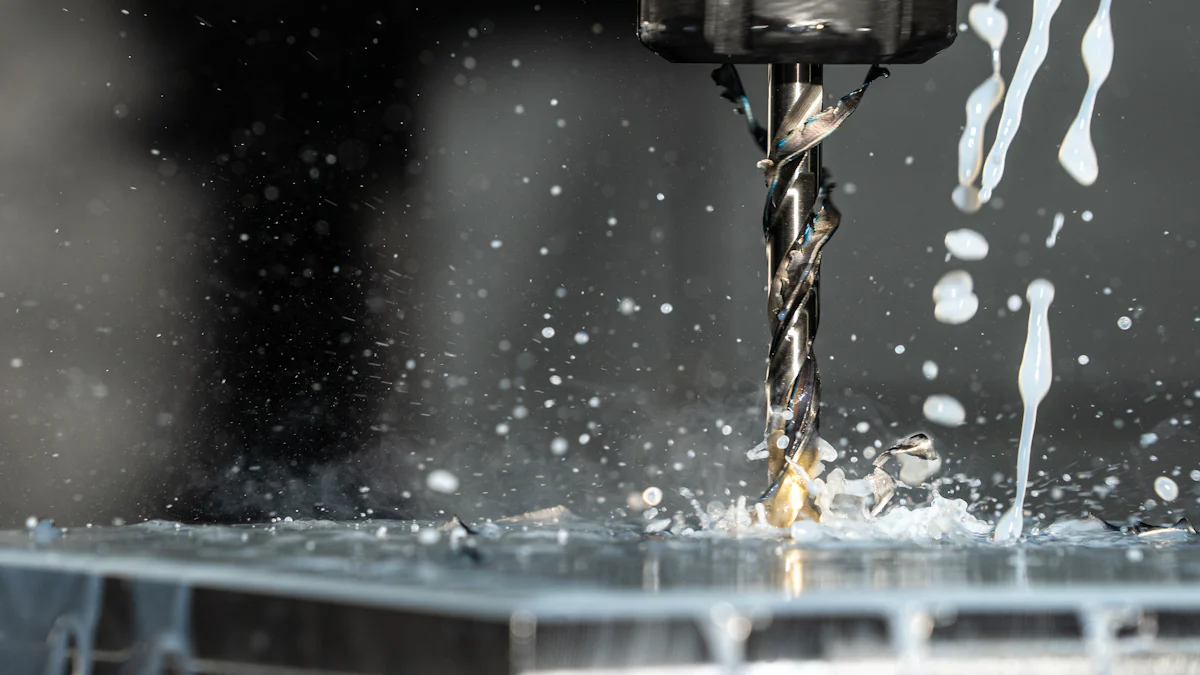
When it comes to creating intricate geometries, multi-axis CNC machining technology is a game-changer. Unlike traditional 3-axis machines that move along X, Y, and Z axes, 5-axis CNC machining introduces rotational movements, allowing you to machine complex shapes with ease. This advanced capability lets you access hard-to-reach areas, like undercuts, without needing to reposition the workpiece manually.
Here’s why multi-axis operations stand out:
They produce precise 3D shapes, contours, and profiles that are nearly impossible with older methods.
You get smoother surface finishes thanks to continuous movement, which reduces machining marks.
Shorter cutting tools minimize vibrations, improving both surface quality and tool life.
With reduced setup time and the ability to handle intricate designs in one go, multi-axis capabilities save you time and ensure high precision for even the most challenging parts.
Precision Tooling for Intricate Designs
The right tools make all the difference in CNC milling. Precision tooling, like form milling and end milling, is essential for crafting intricate designs. Form milling uses specialized tools with pre-shaped profiles to create complex contours, making it perfect for molds and dies. On the other hand, end milling is your go-to for features like pockets and slots, commonly found in complex geometries.
These tools work seamlessly with high-quality CNC machining to deliver exceptional results. By choosing precise tooling, you can achieve the level of detail and accuracy needed for advanced applications.
Advanced Software for Optimized Programming
Sophisticated software is the backbone of modern CNC machining technology. Advanced CAD/CAM software, such as Fusion 360 and Siemens NX, optimizes tool paths and machining strategies. These tools simulate the entire process virtually, helping you spot errors before production begins.
With advanced CAM software, you can program 5-axis CNC machining to handle intricate geometries and internal cavities effortlessly. The result? Fewer setup changes, enhanced safety, and consistent quality. Automation through software ensures you stay efficient while meeting the demands of complex designs.
Techniques for Creating Complex CNC Parts
Tool Path Optimization in CNC Milling
Optimizing tool paths is one of the most effective ways to achieve precision and efficiency in CNC milling. You’ll want to choose the right tools for the job. For instance, end mills are great for cutting slots and profiles, while ball nose cutters excel at creating smooth 3D contours. Thread mills offer flexibility for threading tasks. Using adaptive clearing techniques ensures consistent tool engagement, which reduces wear and improves accuracy.
To save time and enhance quality, avoid overlapping cuts. This minimizes unnecessary tool movements and extends the life of your machine. Adaptive tool pathing adjusts the cutting strategy based on the material and geometry, making it easier to handle intricate designs. Multi-axis machining also simplifies complex cuts by reducing the number of steps required. These strategies not only improve surface finishes but also open up optimization opportunities for creating complex CNC machined parts.
Material Selection for Complex Geometries
The material you choose plays a huge role in the success of CNC machining, especially for parts with internal cavities or intricate designs. Aluminum is lightweight and easy to machine, making it perfect for automotive and aerospace applications. Steel offers strength and durability, ideal for heavy-duty components. Brass is corrosion-resistant and works well for precision parts.
Material properties must align with the part’s function. For example, aluminum allows for quicker production, while steel requires slower speeds due to its hardness. Plastics provide flexibility but may lack the strength of metals. Choosing the right material ensures high precision and efficiency during machining.
Fixturing and Workholding for Stability
Stability is critical when machining complex CNC parts. You need fixtures that can handle high machining forces without flexing. Steel or reinforced composites are excellent choices for rigidity. Modular fixtures with locating pins and guide slots ensure repeatable positioning, which is essential for high-quality CNC machining.
Use effective clamping techniques to apply uniform pressure across the workpiece. Pneumatic or hydraulic clamps work best for this.
Control vibrations with damping materials to improve precision during high-speed milling.
Ensure your fixtures allow for quick adjustments to save time during production.
By focusing on stability, you can achieve consistent results, even for parts with challenging internal cavities.
Applications of CNC Milling for Complex Geometries
Aerospace and Automotive Components
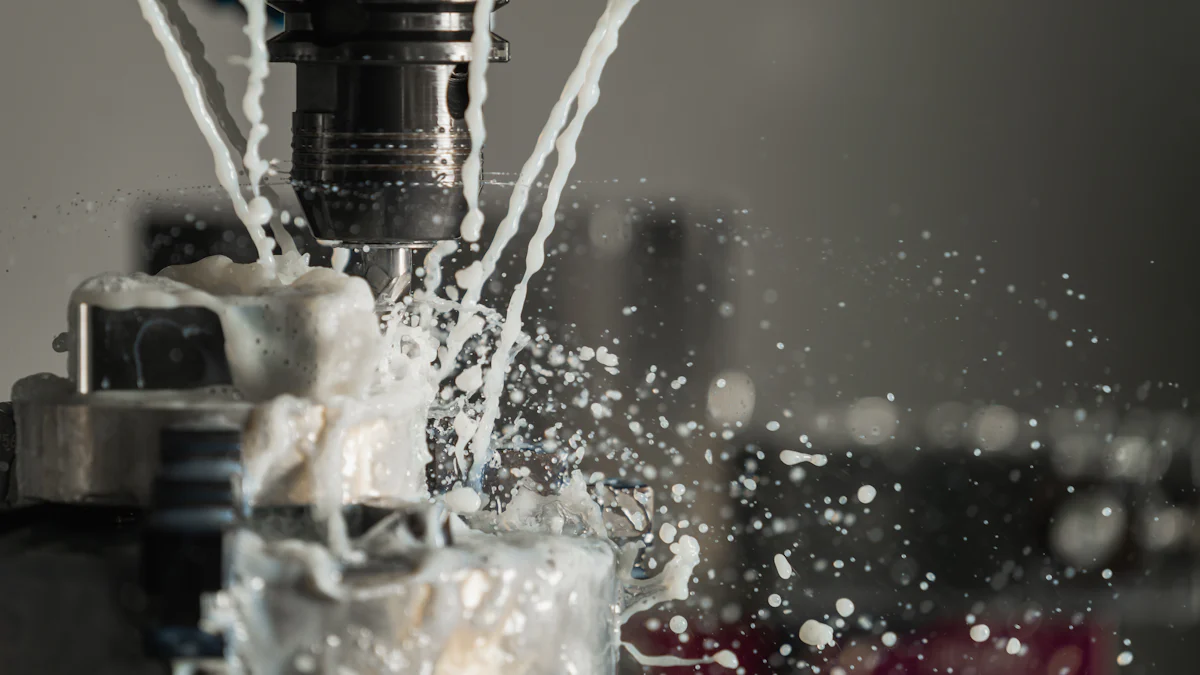
CNC milling plays a vital role in producing parts for aerospace and automotive industries. You’ll find it used for creating intricate designs that demand high precision and durability. For example:
Tail Section Components: Internal structures for stabilizers, elevators, and rudders.
Engine and Powertrain Components: Turbine blades, engine mounts, and pylons.
Interior Components: Seat tracks, support brackets, clamps, and mounts.
Doors and Hatches: Landing gear doors and access panels.
These industries rely on CNC milling services to meet strict safety and performance standards. The ability to handle complex geometries ensures that every part fits perfectly and functions reliably, even under extreme conditions.
Medical Devices and Implants
When it comes to medical devices, precision is non-negotiable. CNC machining ensures tight tolerances, reducing the risk of device malfunctions and enhancing patient safety. It’s especially useful for creating small, intricate designs like surgical tools and implants. Here’s how it helps:
Customization allows you to design implants tailored to individual patients, improving fit and reducing surgical time.
CNC milling handles medical-grade materials like titanium and stainless steel, ensuring durability and biocompatibility.
Rapid prototyping speeds up the development of new devices, helping you bring innovations to market faster.
With CNC milling services, you can produce high-quality medical devices that meet stringent regulatory standards while improving patient outcomes.
Prototyping and Custom CNC Parts
CNC milling is a go-to solution for prototyping and custom parts across various industries. It lets you test designs and validate functionality before full-scale production. In the automotive sector, you can create prototypes for engine parts or transmission systems. Aerospace applications include turbine blades and structural frames, where high precision is critical. In the medical field, CNC milled parts like surgical instruments undergo rigorous usability tests to ensure reliability.
This versatility makes CNC milling services indispensable for industries that demand intricate designs and high precision. Whether you’re developing a new product or customizing an existing one, CNC machining delivers the accuracy and efficiency you need.
CNC milling machines combine advanced features like multi-axis technology and automation to handle complex geometries with ease. You benefit from their precision and efficiency, whether you're crafting aerospace parts or medical devices. Cutting-edge tools, like adaptive algorithms and energy-efficient motors, enhance performance while reducing costs. These innovations make CNC machining indispensable in modern manufacturing.
FAQ
What makes CNC milling better for complex geometries?
CNC milling combines multi-axis movement, precision tools, and advanced software. These features let you create intricate designs with unmatched accuracy and efficiency. 🛠️✨
Can CNC machines handle all materials?
Yes, CNC machines work with metals, plastics, and composites. However, you’ll need to choose the right material for your design and machining requirements.
How do I ensure precision in CNC milling?
Use high-quality tools, optimize tool paths, and secure the workpiece with proper fixturing. Advanced software also helps you maintain tight tolerances.
💡 Tip: Always simulate your design in CAD/CAM software to avoid costly mistakes during production.
See Also
Navigating Machining Challenges: Optimal Use of NC Milling and CNC Engraving
Is CNC Milling a Viable Alternative to CNC Engraving for Precision?
Exploring Key Techniques in CNC Precision Machining Processes
Achieving Precision Parts Production Through Expert CNC Milling
The Impact of CNC Machining Technology on Precision Manufacturing
About US
Follow Us
Your prototype holds unparalleled significance, and we deeply value its uniqueness. Collaborating with you during the preparation phase for running your prototype or parts is a commitment we gladly embrace. Whether it's a single part or a complex assembly, we are dedicated to selecting the optimal tools and pathways to bring your envisioned product to life.
At Precision Fab CNC Machining, we specialize in producing parts for prototypes, short runs, and high-volume production. Our prototyping machine capabilities extend across metal, plastic, and wood machining, with welding fabrication services available to complement and finalize your prototype if required.
Address
Address: Room320 10F, Building A,Nanshan international building, Dayawan District, Huizhou, Guangdong, 516001 China
Contacts
billy@timaycnc.com