The Cost-Effectiveness of CNC Precision Manufacturing for Bulk Production

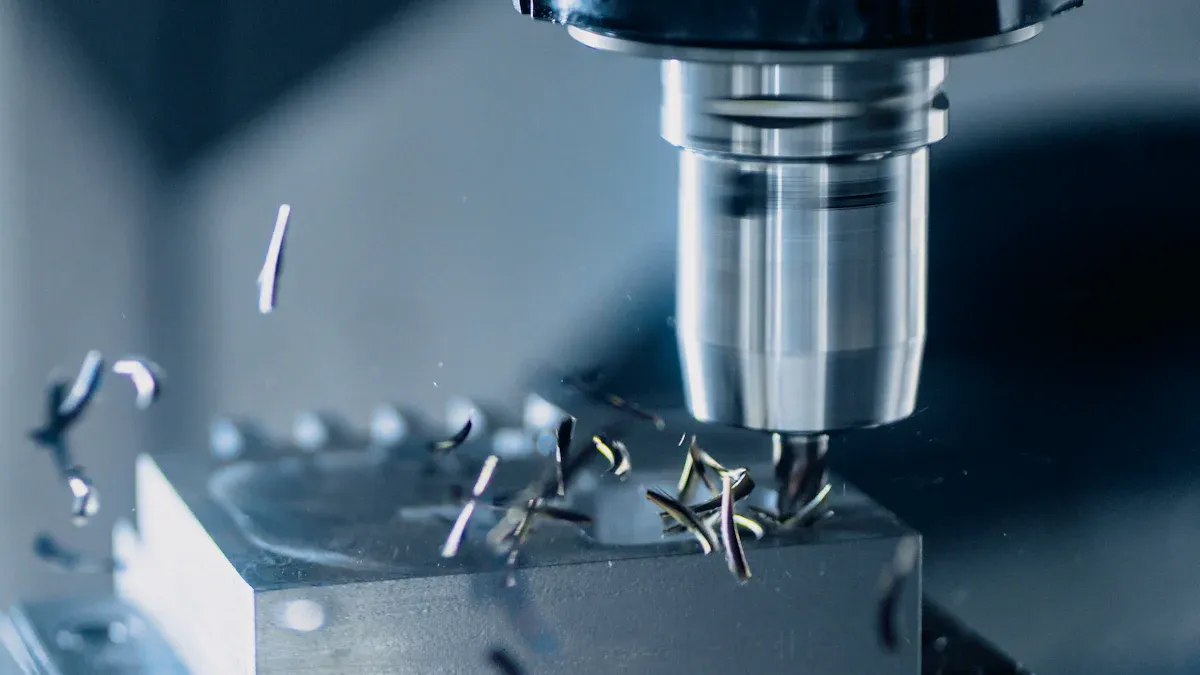
CNC Precision Machining Application offers unmatched cost-effectiveness for bulk production. You benefit from reduced labor costs through automation and lower material waste due to optimized cutting paths. This method ensures consistent quality by minimizing human error. Despite misconceptions about its suitability for low volumes, CNC Precision Machining Application delivers long-term savings through improved efficiency and precision.
Key Takeaways
CNC machines lower labor costs by using automation for faster work.
Less material waste in CNC machining saves money, especially with costly materials.
CNC machining gives steady quality and accuracy, perfect for cars and planes.
Overview of CNC Precision Machining Application
What Is CNC Machining?
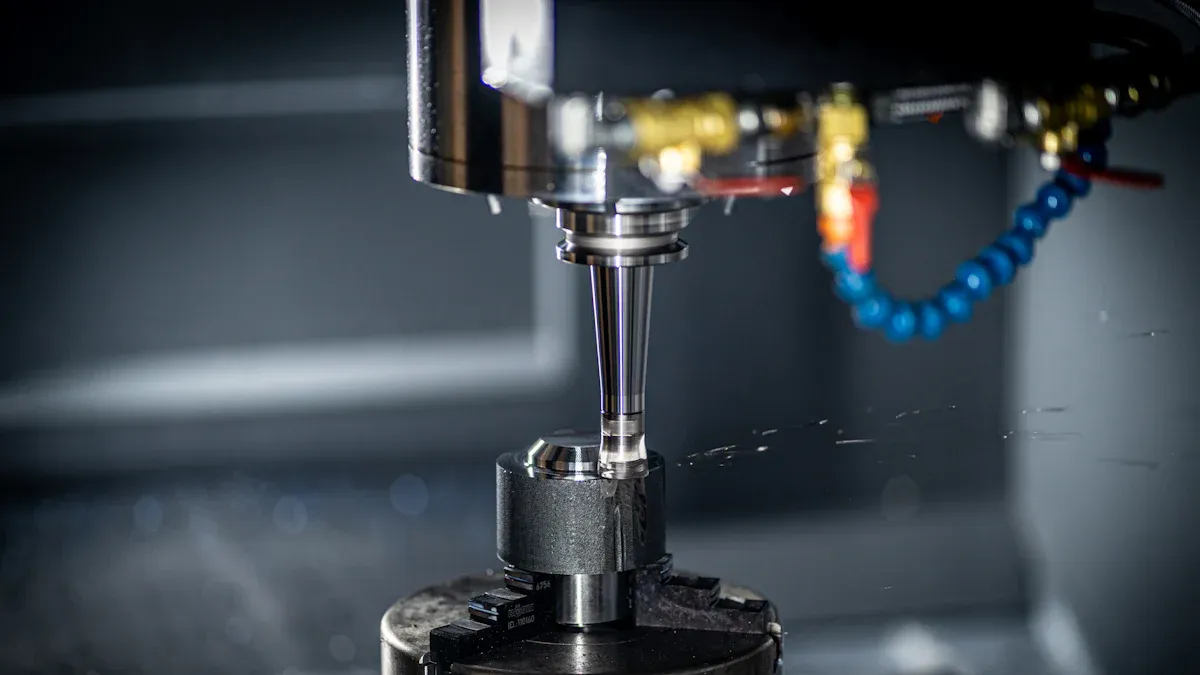
CNC machining stands for Computer Numerical Control machining, a subtractive manufacturing process that transforms raw materials into precise components. It relies on computer-controlled machines to execute operations like turning, milling, and drilling. These machines follow instructions from CAD (Computer-Aided Design) models, ensuring accuracy and repeatability. Key components of CNC systems include the control unit, drive motors, and feedback systems, all working together to deliver high-quality results. This technology supports a wide range of materials, including metals, plastics, wood, and composites, making it versatile for various industries such as aerospace, medical, and defense.
How CNC Machining Works for Bulk Production
CNC machining is ideal for bulk production due to its efficiency and scalability. The process begins with creating a CAD model, which is converted into machine-readable G-code. Raw materials are prepared and secured on the machine platform. High-speed tools perform roughing passes to remove large amounts of material, followed by finishing passes for precision and smoothness. Steps like deburring and dimensional inspection ensure quality standards are met. CNC machining maintains consistent quality across large production runs, thanks to its automated nature and tight tolerances. Industries like automotive, petrochemical, and consumer electronics benefit from its ability to produce high volumes without compromising precision.
Importance of Precision in Manufacturing
Precision is critical in manufacturing because it ensures components meet exact specifications for form, fit, and function. CNC machining achieves this by eliminating human error and maintaining tight tolerances, often as precise as +/- 0.0005 inches. This level of accuracy is essential for industries like aerospace, medical devices, and defense, where even minor deviations can lead to significant issues. Unlike traditional methods that relied on manual tools, CNC machining uses computer control to deliver unmatched repeatability. It also reduces lead times for large production runs, making it a reliable choice for high-quality manufacturing.
Factors Driving Cost-Effectiveness in CNC Machining
Reduced Material Waste
CNC machining optimizes material usage, significantly reducing waste during the manufacturing process. By following precise CAD models, CNC machines cut materials with high precision, ensuring minimal excess. This efficiency not only lowers material costs but also supports sustainable manufacturing practices. Unlike traditional methods, where manual errors can lead to material wastage, CNC machining ensures every cut aligns with the design specifications. For bulk production, this reduction in waste translates to substantial cost savings, especially when dealing with expensive materials like titanium or carbon fiber.
Labor Savings Through Automation
Automation in CNC machining minimizes the need for manual labor, leading to significant cost implications. You benefit from reduced labor costs as CNC machines handle complex tasks without requiring constant supervision. Automation also eliminates human error, ensuring high precision and accuracy in every component. Additional advantages include improved production efficiency through shorter setup times and faster cycle times. These factors collectively enhance the volume of production while maintaining consistent quality, making CNC machining a cost-effective solution for large-scale manufacturing.
Automation reduces reliance on manual labor.
It enhances production efficiency by optimizing setup and cycle times.
Human error is eliminated, ensuring higher precision and accuracy.
Economies of Scale in Bulk Production
CNC machining offers clear cost implications when scaling up production. Larger orders allow you to spread setup and tooling costs across more units, reducing the per-unit price. For small production runs, fixed setup costs can make each part more expensive. However, as the volume of production increases, economies of scale come into play, significantly lowering the cost per part. This makes CNC machining particularly advantageous for industries requiring high-volume manufacturing, such as automotive and consumer electronics.
Larger orders reduce per-unit costs by distributing setup expenses.
High-volume production benefits from economies of scale.
Small production runs face higher per-unit costs due to fixed setup charges.
Consistent Quality and Fewer Defects
CNC machining ensures consistent quality across all production runs, reducing defect rates compared to traditional methods. The computerized control system replicates CAD designs with an accuracy range of 0.0002 to 0.0005 inches, delivering high precision. This repeatability is crucial for batch production, where maintaining uniformity is essential. Unlike traditional manufacturing, which relies on operator skill and can result in variations, CNC machining minimizes errors by automating the process. Faster production cycles and reduced lead times further enhance production efficiency, making CNC machining a reliable choice for bulk manufacturing.
CNC machines replicate designs with unmatched precision.
Automation reduces errors and ensures repeatability.
Faster cycles and shorter lead times improve production efficiency.
Comparative Analysis of CNC Machining Costs
CNC vs. Traditional Machining
CNC machining offers significant cost advantages over traditional machining, especially for bulk production. Traditional machining relies heavily on manual labor, which increases costs as production volumes rise. In contrast, CNC machining automates the process, reducing labor expenses and ensuring consistent quality. While CNC machining has higher initial setup costs due to programming and equipment, these costs are offset when producing 1,000 to 10,000 units or more.
For large-scale manufacturing, CNC machining costs decrease due to economies of scale. Fixed expenses like setup and tooling are distributed across more units, lowering the cost per part. Traditional machining, however, struggles to achieve similar efficiency because manual operations limit scalability.
CNC machining excels in producing precise, reliable components in large quantities.
Economies of scale make CNC machining cost-efficient for bulk production.
Traditional machining incurs higher labor costs for larger runs.
CNC vs. 3D Printing for Bulk Production
When comparing CNC machining to 3D printing, the cost-effectiveness and scalability of each method vary significantly. CNC machining is ideal for mass production due to its ability to leverage economies of scale. As production volumes increase, the cost per unit decreases. In contrast, 3D printing maintains a constant per-part cost, making it better suited for low-volume or custom parts.
Method | Cost Effectiveness for Bulk Production | Scalability |
|---|---|---|
CNC Machining | More cost-effective due to economies of scale | Ideal for mass production with high precision |
3D Printing | Better for low-volume or custom parts | Limited scalability, constant per-part cost |
CNC machining also delivers higher precision and material versatility, making it the preferred choice for industries like automotive and aerospace.
CNC vs. Injection Molding for High Volumes
For extremely high production volumes, injection molding can sometimes outperform CNC machining in terms of cost per unit. However, CNC machining remains more versatile and cost-effective for medium to high volumes. Injection molding requires expensive molds, which can make it impractical for smaller production runs. CNC machining avoids this limitation by eliminating the need for molds, allowing you to produce parts directly from raw materials.
CNC machining also offers faster setup times and greater flexibility in design changes. While injection molding excels in producing identical parts at scale, CNC machining provides the precision and adaptability needed for complex geometries and tight tolerances.
CNC machining avoids the high upfront costs of molds.
It offers greater flexibility for design modifications.
Injection molding is better suited for extremely high-volume production.
Real-World CNC Precision Machining Applications
Automotive Manufacturing
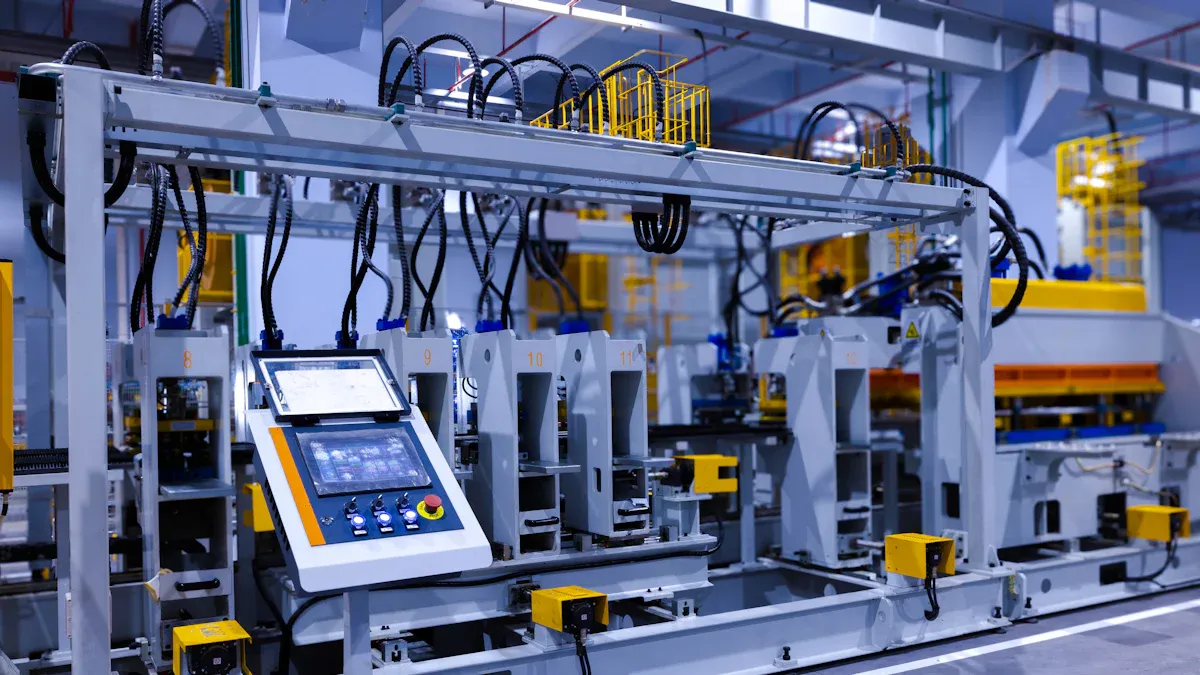
CNC machining plays a pivotal role in automotive manufacturing by delivering precision and efficiency. You can rely on CNC to produce intricate components like engine blocks and cylinder heads from aluminum alloys. It also enables the creation of lightweight yet strong parts using materials like titanium and carbon fiber composites. For lighting systems, CNC machining processes PMMA to craft durable headlights and interior lights. Additionally, it supports the production of suspension components, exhaust parts, and valve retainers.
This technology also facilitates quick prototyping, allowing you to test and refine designs efficiently. Customization becomes seamless with CNC, enabling bespoke car interiors, including unique steering wheels and dashboard panels. By leveraging CNC machining, you achieve faster production cycles and consistent quality, ensuring cost benefits for bulk production.
Aerospace and Defense
In aerospace and defense, CNC machining ensures high precision and repeatability, which are critical for safety and reliability. You can use CNC to manufacture structural aircraft components like fuselage sections, wing spars, and paneling. It also produces fittings and fixtures that enhance passenger comfort and safety. For defense applications, CNC machining creates components such as barrels, engine parts, and armor plating.
This technology excels in handling advanced materials like titanium and superalloys, which offer strength and durability. CNC machining’s ability to produce complex geometries optimizes weight and efficiency, making it indispensable for these industries. Faster production and reduced lead times further enhance its cost benefits, ensuring you meet stringent deadlines without compromising quality.
Medical Device Production
CNC machining revolutionizes medical device production by offering unmatched precision and flexibility. You can produce identical components with tight tolerances, ensuring reliability and patient safety. The ability to work with biocompatible materials allows you to create implants, surgical tools, and diagnostic equipment tailored to individual needs.
This technology also accelerates the development cycle by reducing production time and minimizing errors. Its compatibility with CAD/CAM systems streamlines the design process, enabling faster production of high-quality medical devices. By adopting CNC machining, you gain cost benefits while maintaining the highest standards of healthcare manufacturing.
Consumer Electronics Manufacturing
CNC machining supports the manufacturing of consumer electronics by delivering high precision and scalability. You can produce intricate components for devices like smartphones, laptops, and wearables. Rapid prototyping allows you to test and optimize designs quickly, ensuring faster production cycles and reduced lead times.
This technology adapts to your business growth by scaling production without requiring significant changes to machine setups. By leveraging CNC machining, you achieve consistent quality and cost benefits, enabling faster market entry for your electronic products.
Strategies to Enhance Cost-Effectiveness in CNC Machining
Optimize Designs for CNC Manufacturing
Optimizing your designs for CNC machining can significantly improve efficiency and reduce costs. Simplifying part designs minimizes machining time and material waste. For example:
Increase corner radii to reduce tool wear and improve surface finish.
Avoid deep cavities to ease chip extraction and lower setup costs.
Maintain uniform wall thickness to prevent vibrations and ensure accuracy.
Use standard drill bits for holes under 20mm to achieve precise diameters.
Limit thread depths to 1.5 times the nominal diameter for effective pull-out force.
By implementing these practices, you streamline production and enhance the effectiveness of your CNC processes.
Tip: Standardizing features and avoiding complex geometries can further reduce custom tooling needs, saving both time and material costs.
Leverage Bulk Orders for Economies of Scale
Leveraging economies of scale is one of the most effective cost reduction strategies in CNC machining. Larger orders allow you to distribute setup costs across more units, significantly lowering the per-unit price. For example, producing 10,000 parts instead of 1,000 reduces the impact of fixed costs like tooling and programming.
Bulk production also improves efficiency by enabling continuous machine operation, reducing downtime. This approach is particularly beneficial for industries like automotive and consumer electronics, where high-volume manufacturing is essential.
Note: Partnering with a manufacturer experienced in advanced manufacturing technologies ensures you maximize the benefits of scaling up production.
Select Cost-Effective Materials
Choosing the right materials can greatly influence your material costs and overall efficiency. Aluminum is a popular choice due to its affordability, excellent machinability, and strength-to-weight ratio. Steel alloys offer durability and are ideal for structural applications. For decorative or functional components, brass provides good machinability at a reasonable cost.
Plastics like ABS and POM are economical alternatives to metals, especially for prototypes or non-high-stress applications. These materials are lightweight, easy to machine, and suitable for various industries. Selecting materials that meet functional requirements without overspending ensures cost-effectiveness in your CNC projects.
Partner with Skilled CNC Manufacturers
Collaborating with skilled CNC manufacturers enhances efficiency and ensures high-quality results. Look for manufacturers with a strong track record and strict quality assurance protocols. Experienced machinists can optimize production processes, reducing waste and setup costs.
A customer-centric approach is another key factor. Manufacturers who prioritize your vision and provide informative resources help you achieve your goals more effectively. By partnering with experts in CNC machining, you gain access to innovation and advanced manufacturing technologies, ensuring long-term success.
CNC machining offers unmatched cost-effectiveness for bulk production. You benefit from reduced costs through automation, minimized material waste, and enhanced quality. Industries like automotive and aerospace rely on CNC for its precision and flexibility. By optimizing designs and leveraging advancements like IoT integration, you can maximize efficiency and reduce production costs significantly.
FAQ
What industries benefit the most from CNC machining?
CNC machining supports industries like automotive, aerospace, medical devices, and consumer electronics. Its precision, scalability, and material versatility make it ideal for high-volume, high-quality production.
How does CNC machining reduce costs for bulk production?
You save costs through automation, reduced material waste, and economies of scale. CNC machining minimizes errors and ensures consistent quality, lowering expenses over traditional manufacturing methods.
Can CNC machining handle complex designs?
Yes, CNC machining excels at producing intricate geometries. Advanced software and multi-axis machines allow you to create detailed components with tight tolerances and high precision.
Tip: Collaborate with skilled manufacturers to optimize complex designs for CNC machining and reduce production costs.
See Also
Streamlined CNC Machining Solutions for Accurate Production
Perfecting CNC Machining Techniques for Accurate Components
Recognizing the Significance of Precise CNC Machining Methods
Investigating CNC Machining Options for Accurate Manufacturing
CNC Precision Component Production: Impacting Manufacturing Expenses
About US
Follow Us
Your prototype holds unparalleled significance, and we deeply value its uniqueness. Collaborating with you during the preparation phase for running your prototype or parts is a commitment we gladly embrace. Whether it's a single part or a complex assembly, we are dedicated to selecting the optimal tools and pathways to bring your envisioned product to life.
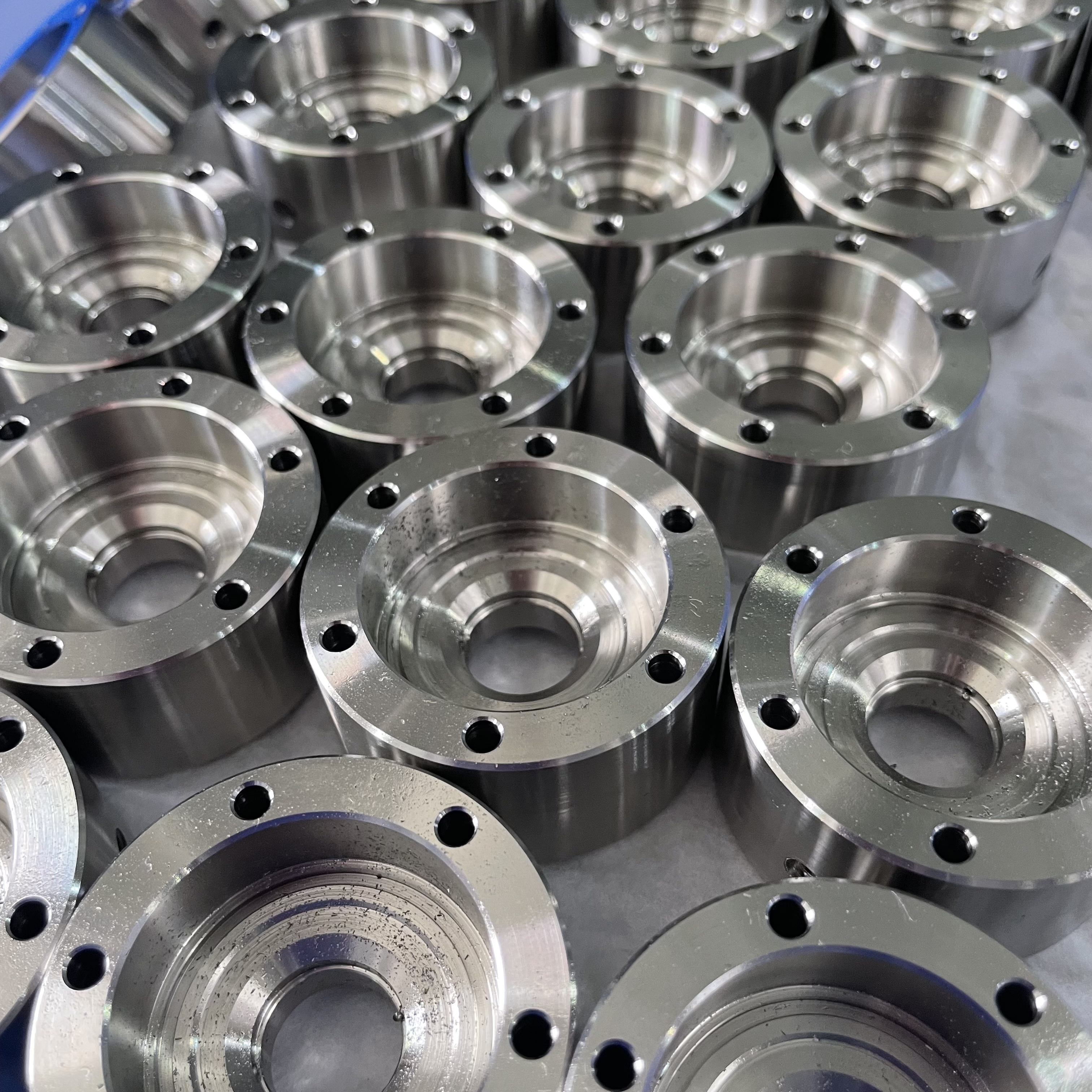
At Precision Fab CNC Machining, we specialize in producing parts for prototypes, short runs, and high-volume production. Our prototyping machine capabilities extend across metal, plastic, and wood machining, with welding fabrication services available to complement and finalize your prototype if required.
Address
Address: Room320 10F, Building A,Nanshan international building, Dayawan District, Huizhou, Guangdong, 516001 China
Contacts
billy@timaycnc.com