CNC Precision Machining Application in Robotics and Automation

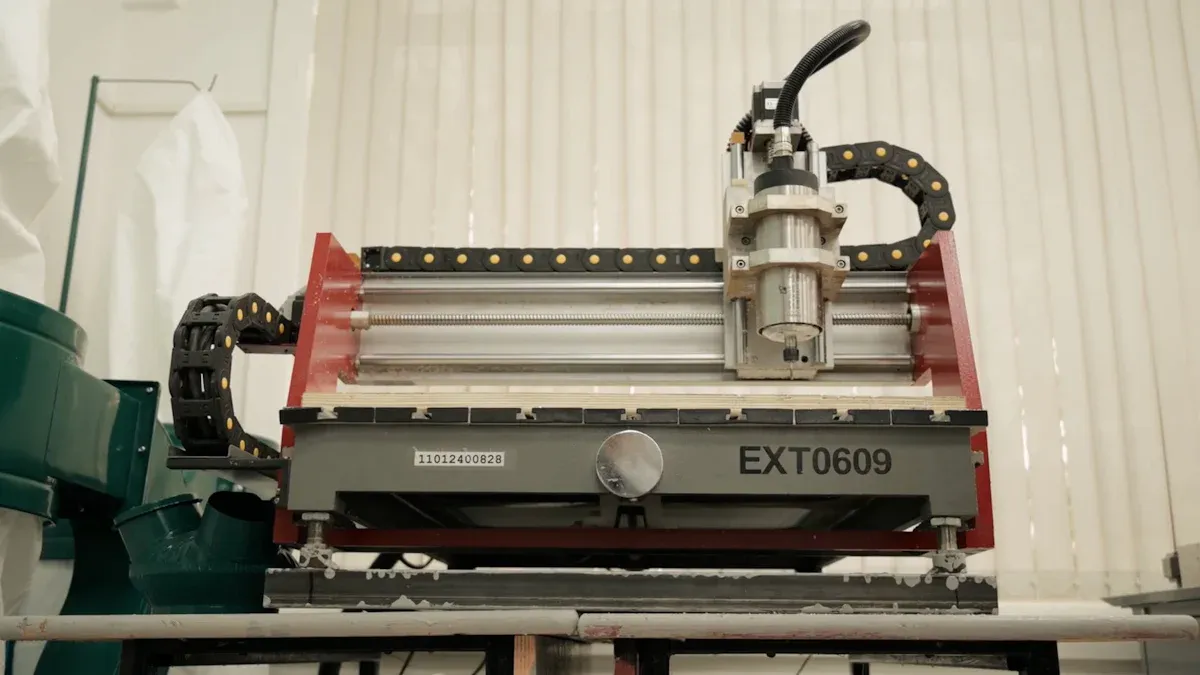
CNC precision machining application plays a vital role in robotics and automation by delivering unmatched accuracy and efficiency. You can rely on CNC to create durable components from materials like steel and aluminum. For example, robotic end effectors crafted through CNC meet exact specifications, ensuring flawless performance. The industry’s growth, projected to reach USD 123.63 billion by 2032, reflects its increasing adoption. Automated tool calibration and error compensation further enhance precision, while continuous operation boosts productivity. These capabilities make CNC precision machining application indispensable in modern automated systems.
Key Takeaways
CNC machines make very accurate robot parts, with errors as small as +/- 0.0002 inches. This makes robots work better and last longer.
Using CNC with robots improves speed and size of production. It can work all day and night and quickly adapt to changes. This saves materials and makes more products.
Buying CNC robots costs a lot at first but saves money later. It lowers worker costs and uses fewer materials. It also improves how much and how well things are made.
CNC Precision Machining in Robotics and Automation
Defining CNC Precision Machining
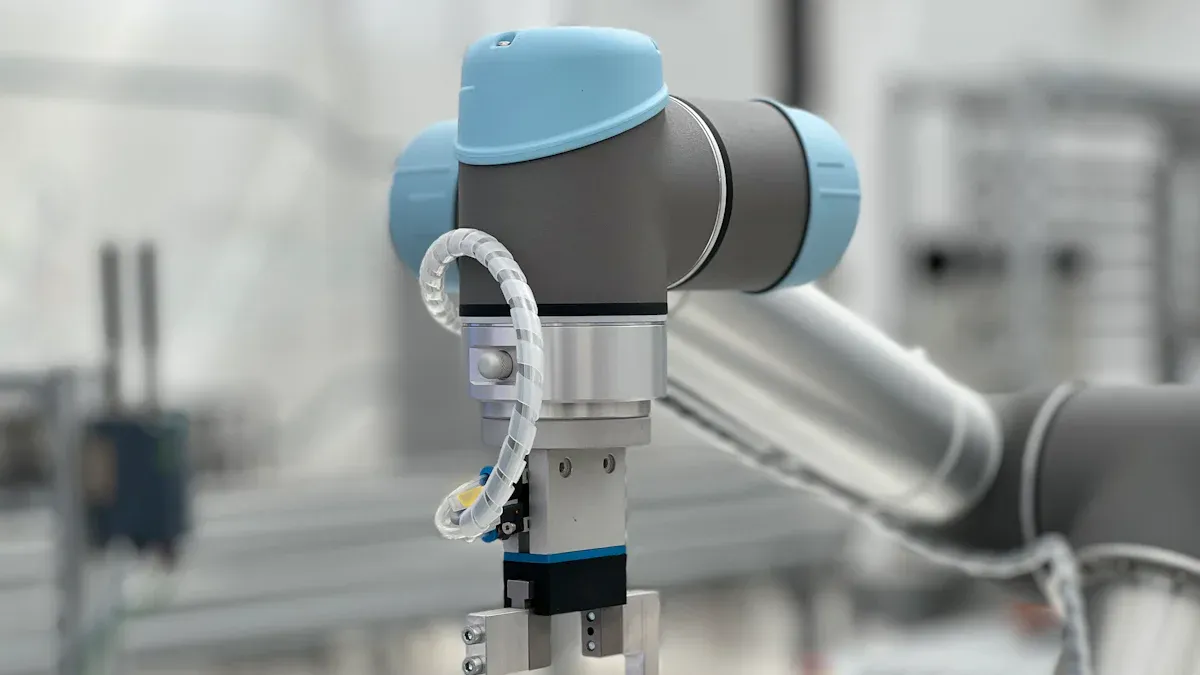
CNC precision machining application forms the backbone of modern robotics and automation. It involves using computer-controlled tools to manufacture components with extreme accuracy. You can rely on CNC to work with materials like steel, aluminum, and specialized plastics, ensuring durability and precision. For robotics, CNC machining creates critical parts like end effectors, which require exact specifications to function flawlessly. Additionally, custom jigs and fixtures, essential for holding workpieces during robotic operations, are fabricated with CNC for adaptability. This process also supports the production of sensors and controllers, offering a cleaner and more efficient alternative to traditional methods.
Integration of CNC with Robotics and Automation
Integrating CNC systems with robotics and automation requires a structured approach. First, you need to assess your manufacturing needs to determine the right CNC robotics and automation setup. Next, selecting compatible equipment ensures smooth operations. Comprehensive staff training is crucial for maximizing the potential of CNC systems. Once integrated, thorough testing helps identify and resolve any issues. Finally, a proactive maintenance plan ensures long-term reliability. This integration enhances efficiency and scalability, making CNC robotics and automation indispensable for modern industries.
Key Processes in CNC Manufacturing Robotics
CNC manufacturing robotics involves several key processes that optimize production. Tasks like assembly and machine tending improve workflow consistency. High-precision milling ensures accuracy over large distances, while quality inspections verify the integrity of machined parts. Polishing and finishing add the final touches to components, enhancing their usability. Material handling, drilling, and welding operations further streamline production. These processes demonstrate how CNC robotics and automation elevate manufacturing standards, ensuring precision and efficiency in every step.
Benefits of CNC Robotics and Automation
Precision and Accuracy in Robotic Components
CNC machining ensures robotic systems achieve unparalleled precision and accuracy. You can rely on CNC to produce high-quality parts with tolerances as tight as +/- 0.0002 inches. This level of dimensional accuracy guarantees smooth and precise movements in robotic components. For example, robotic end effectors require exact specifications to function reliably. CNC technology also supports precision manufacturing, ensuring consistent quality across all components.
Benefit | Description |
|---|---|
Dimensional Accuracy | CNC machining can produce parts with tolerances up to +/- 0.0002 inches, ensuring precise movements in robotic components. |
Precision Manufacturing | Achieving tolerances as tight as +/- 0.0002 inches is crucial for producing components with exact specifications, ensuring consistent quality. |
Operational Reliability | CNC machining provides the necessary precision to ensure that robotic effectors operate effectively and reliably. |
This precision not only enhances the performance of robotic systems but also ensures high-quality output in manufacturing automation.
Efficiency and Scalability in Automated Systems
CNC machining transforms manufacturing by enhancing efficiency and scalability. Automated systems operate 24/7 with minimal supervision, enabling continuous production. You can adapt CNC processes to varying production needs, allowing for quick design modifications and volume adjustments. Robotic loaders streamline workflows, ensuring deadlines are met without compromising quality.
CNC machining adapts to varying production needs, allowing for design modifications and volume adjustments without delays.
Automation enables 24/7 operation with minimal supervision, facilitating continuous production.
Robotic loaders and automated systems ensure deadlines are met while maintaining quality.
By streamlining production processes, CNC technology reduces material waste and increases production output. This flexibility makes it a cornerstone for transforming manufacturing and achieving high-quality output.
Cost-Effectiveness in Robotic Manufacturing
Although CNC robotics may involve high initial costs, the long-term savings are significant. You can reduce labor costs by automating repetitive tasks. CNC precision minimizes scrap and rework, lowering material waste. Continuous operation increases output, boosting revenues over time.
CNC robotics also eliminate the need for large inventories, further reducing costs. By enhancing productivity and quality, CNC technology ensures a strong return on investment. These cost-saving advantages make CNC robotics essential for transforming manufacturing and producing high-quality parts efficiently.
Technological Advancements in CNC Precision Machining
AI Integration in CNC Robotics
AI is transforming CNC robotics by enhancing efficiency and consistency in manufacturing. You can rely on AI and machine learning to optimize tool paths, predict wear and tear, and adjust for errors in real-time. These technologies automate repetitive tasks, reducing human error and maintaining production constancy. For example, AI co-pilots in computer-aided manufacturing (CAM) programs, like Autodesk Fusion 360’s Generative Design, explore design alternatives based on constraints. Similarly, CloudNC’s CAM Assist uses AI algorithms to optimize CNC programming. These advancements ensure high accuracy and improved precision in every CNC machining process.
IoT and Smart CNC Automation
IoT technology is revolutionizing CNC systems by enabling real-time monitoring and data collection. You can track operational temperatures, vibration patterns, and other metrics to make immediate adjustments. This leads to improved precision and higher productivity. IoT systems also predict machine part failures by analyzing data trends, minimizing unexpected downtime. With machine learning algorithms, prediction accuracy improves over time. These smart manufacturing capabilities streamline automated manufacturing technologies, ensuring optimal operation speeds and efficient resource management.
Digital Twin Technology in CNC Processes
Digital twin technology creates virtual replicas of physical systems, allowing you to simulate and optimize operations without disrupting production. This parallel execution of engineering processes reduces manufacturing time and enhances efficiency. By identifying potential issues early, digital twins help lower costs and improve product quality. This innovation supports high precision machining and ensures high accuracy in advanced robotics applications.
Real-World Applications of CNC Precision Machining
Automotive: Robotic Component Manufacturing
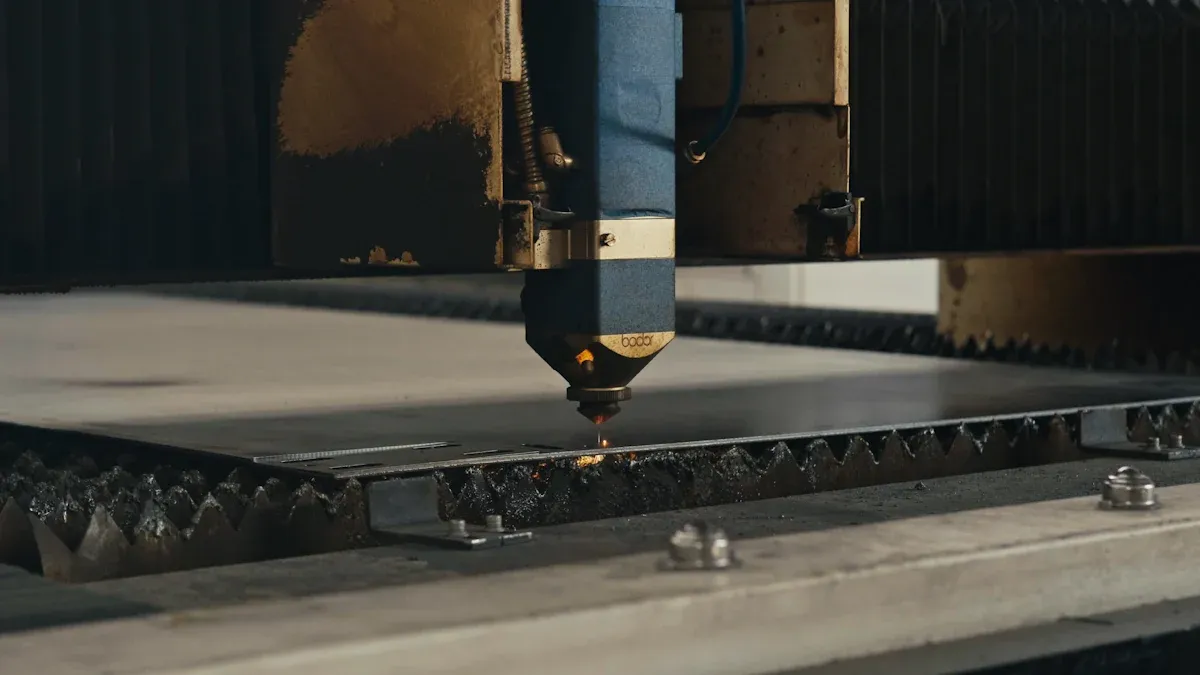
CNC precision machining plays a critical role in automotive manufacturing, especially in creating components for robots used in production lines. You can see its impact in the production of starter motors, crankshafts, and gearboxes. These parts require precise material removal to ensure durability and functionality. CNC also enables the creation of lightweight chassis components, which form the structural foundation of vehicles.
Starter Motors: CNC machining ensures reliability by meeting exacting specifications.
Crankshafts: Precision machining guarantees balance and durability.
Gearboxes: Intricate machining ensures smooth gear meshing with minimal wear.
CNC technology also supports automated material handling in automotive factories. Robots equipped with CNC-machined parts streamline assembly and inspection, enhancing efficiency. This application demonstrates how CNC precision machining transforms automated processes in the automotive sector.
Aerospace: High-Precision Automation Parts
In aerospace, CNC machining ensures the production of high-precision parts essential for safety and performance. You rely on this technology to manufacture turbine blades, landing gear parts, and other critical components. The process achieves tight tolerances, often within microns, to meet stringent industry standards like AS9100.
Key Aspect | Description |
|---|---|
Tolerances | Components must meet micron-level precision for reliability. |
Automation | Sophisticated systems ensure repeatability and consistency. |
Verification | Coordinated measuring machines validate all geometries for compliance. |
CNC machining also supports the creation of complex geometries using multi-axis systems. This capability is vital for producing intricate parts required in advanced aerospace applications. By integrating CNC with robots, manufacturers achieve unmatched precision and efficiency in automated processes.
Healthcare: Custom Robotic Tools
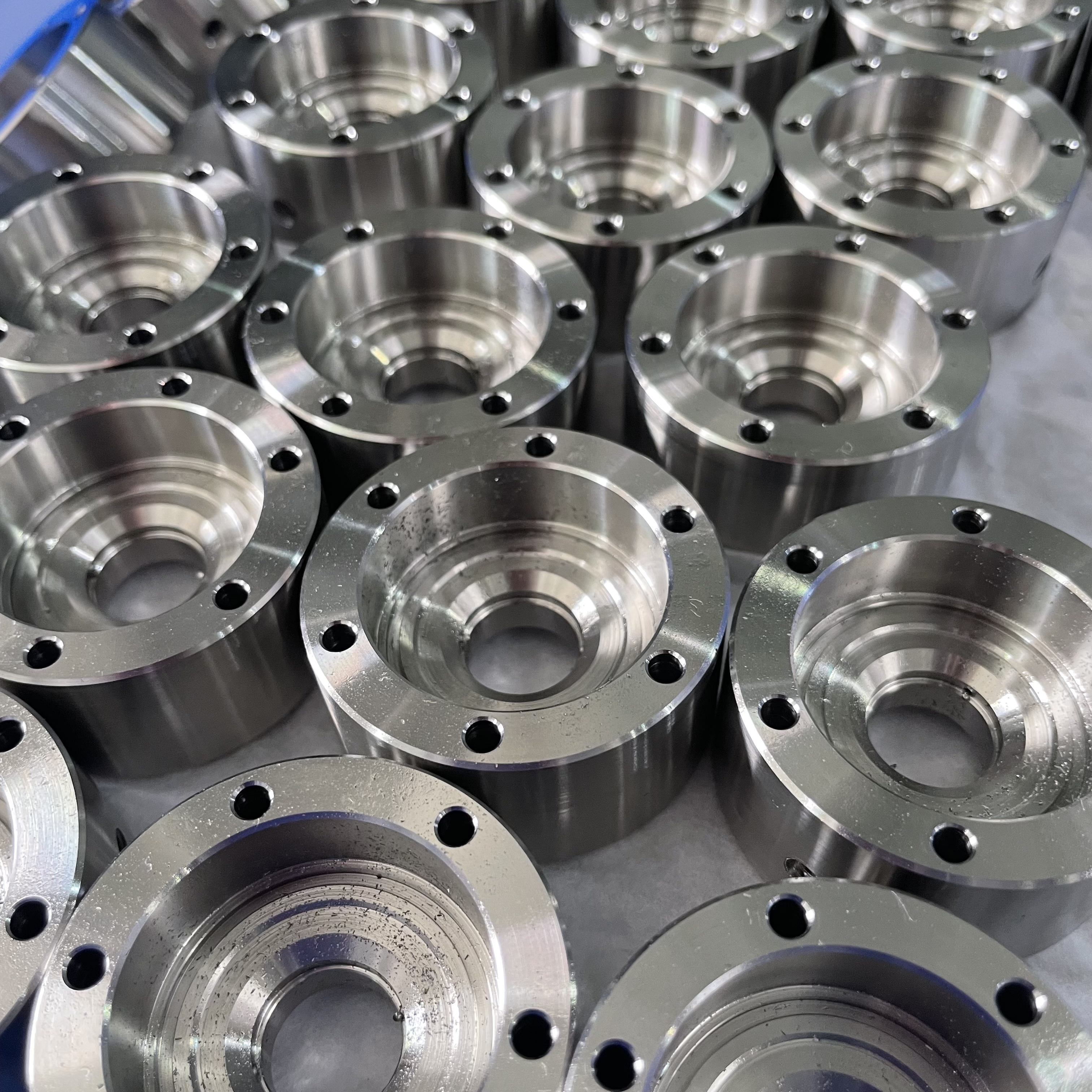
CNC precision machining revolutionizes healthcare by enabling the creation of custom robotic tools. These tools, used in robotic-assisted surgeries, require high-tolerance components to ensure precision and sterility. CNC machining excels in processing biocompatible materials like titanium and stainless steel, ensuring patient safety.
Precision machining ensures components meet strict accuracy and reliability standards.
Custom implants and prosthetics improve patient comfort and recovery times.
Multi-axis CNC systems produce complex geometries tailored to individual needs.
You benefit from CNC’s ability to replicate parts with exact precision, which directly impacts patient outcomes. This application highlights how CNC machining supports the development of advanced robotic tools, enhancing the effectiveness of automated material handling in healthcare.
Challenges and Solutions in CNC Robotics and Automation
Addressing High Initial Costs
High initial costs often deter businesses from adopting CNC robotics systems. These expenses include purchasing equipment, integrating systems, and training staff. For small and medium enterprises, this can strain budgets.
Challenge | Description |
|---|---|
High Initial Cost | The upfront investment for CNC robotic systems can be substantial, affecting budget allocations, especially for small to medium enterprises. |
Complexity in Setup, Integration, and Programming | Integrating and programming CNC robots requires technical expertise, which can be a barrier for companies without in-house specialists. |
Maintenance Requirements | Regular maintenance is necessary to keep CNC robots operating efficiently, which can incur additional costs and downtime. |
You can reduce these costs by simplifying part designs to minimize machining time. Evaluate machines based on their lifetime costs and maximize usage across shifts. This approach lowers the hourly machine rate, making the investment more manageable.
Bridging Skill Gaps in CNC Operations
The growing demand for skilled machinists highlights a significant challenge in CNC operations. Many experienced workers are retiring, leaving a gap in expertise. Younger generations often avoid manufacturing careers due to outdated perceptions.
To address this, vocational training programs now include CNC machining in their curricula. On-the-job training paired with mentorship accelerates learning. You can also use augmented reality and gamified learning to make training more engaging. Certifications validate skills and enhance career opportunities, ensuring a steady supply of qualified operators.
Industry certifications validate skills after completing training programs.
They provide employers confidence in hiring qualified candidates.
Certification enhances career opportunities and industry recognition.
Ensuring Safety in Automated Systems
Safety remains a critical concern in CNC robotics and industrial automation. Hazards include mechanical injuries, electrical shocks, and flying debris. Poor ergonomics can also lead to musculoskeletal issues.
Hazard Type | Description |
|---|---|
Mechanical Hazards | Moving parts can injure operators' hands and limbs. |
Electrical Hazards | Risks of electrical shocks or fires from machinery. |
Flying Debris | High-speed operations can produce chips that may injure eyes. |
Ergonomic Hazards | Poor posture and heavy lifting can lead to musculoskeletal issues. |
You can mitigate these risks by conducting regular inspections and ensuring operators wear personal protective equipment (PPE). Implementing safety protocols like emergency stops and interlocked barriers further enhances safety. Training operators on safety procedures ensures they follow best practices when working with collaborative robots and CNC systems.
CNC precision machining has revolutionized robotics and automation by delivering exceptional accuracy and efficiency.
It ensures dimensional precision, boosts production rates, and minimizes downtime.
Automating repetitive tasks reduces costs and material waste while maintaining consistent quality.
Looking ahead, advancements in AI and automation will enhance precision further. Sustainable materials and IoT integration will drive smarter, eco-friendly manufacturing processes. These innovations position CNC as a cornerstone for future industrial transformation.
FAQ
What is CNC, and why is it important in robotics?
CNC stands for Computer Numerical Control. It automates machining processes, ensuring precision and consistency in robotic components. This technology enhances efficiency and reduces human error.
How does CNC support human-robot collaboration?
CNC enables the creation of precise robotic parts, ensuring seamless interaction between humans and robots. This improves safety and efficiency in shared workspaces.
Can CNC machining handle complex designs?
Yes, CNC machining excels at producing intricate designs. Multi-axis systems allow you to create complex geometries with high accuracy and repeatability.
See Also
Achieving Precision in Parts Manufacturing Through CNC Machining
Discovering CNC Machining Solutions for Accurate Manufacturing
Streamlined CNC Machining Services for High-Precision Production
Grasping Key Processes in CNC Precision Machining Techniques
About US
Follow Us
Your prototype holds unparalleled significance, and we deeply value its uniqueness. Collaborating with you during the preparation phase for running your prototype or parts is a commitment we gladly embrace. Whether it's a single part or a complex assembly, we are dedicated to selecting the optimal tools and pathways to bring your envisioned product to life.
At Precision Fab CNC Machining, we specialize in producing parts for prototypes, short runs, and high-volume production. Our prototyping machine capabilities extend across metal, plastic, and wood machining, with welding fabrication services available to complement and finalize your prototype if required.
Address
Address: Room320 10F, Building A,Nanshan international building, Dayawan District, Huizhou, Guangdong, 516001 China
Contacts
billy@timaycnc.com