Why CNC Precision Machining Is Ideal for Small-Batch and High-Volume Production

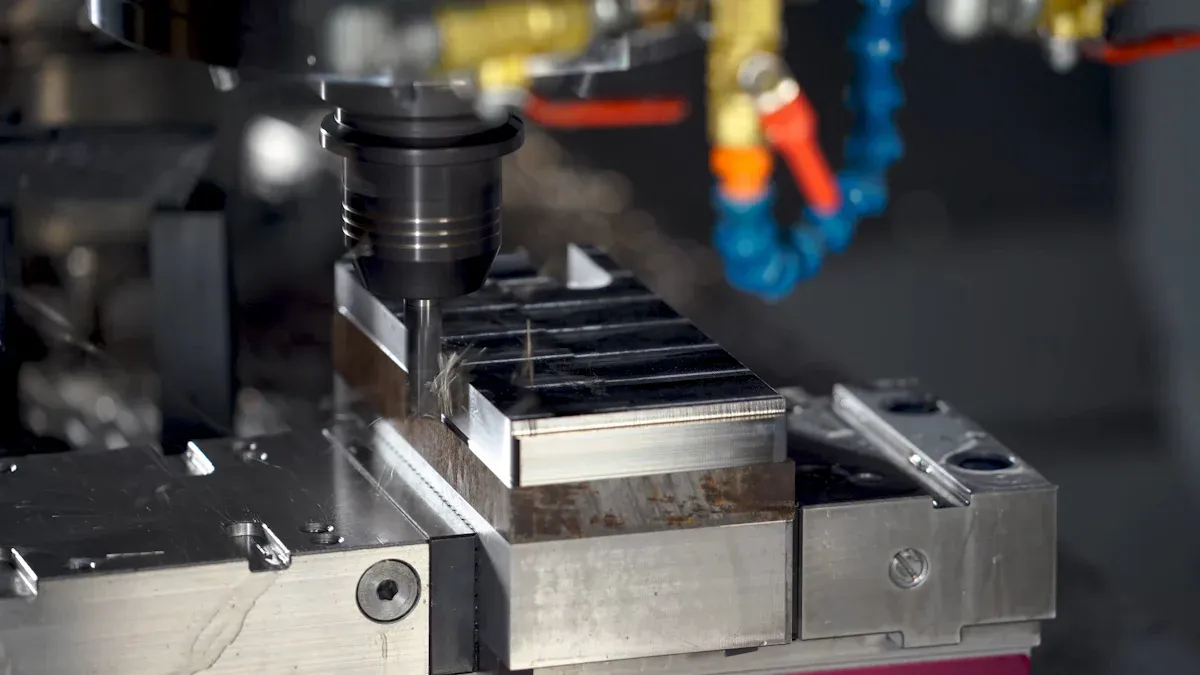
CNC machining offers unmatched precision and adaptability, making it essential for modern manufacturing. You can rely on it for rapid prototyping, reduced inventory costs, and faster time-to-market. Industries like aerospace, medical, and consumer goods benefit from its ability to produce high-quality CNC Precision Parts with consistent results, whether for small batches or large-scale production.
Key Takeaways
CNC machining is very accurate and reliable, perfect for fields like airplanes and healthcare tools.
It saves money for small or big jobs by lowering setup costs and using less material.
CNC machining helps make prototypes fast, so designs can change quickly and storage costs stay low.
Advantages of CNC Machining for Diverse Production Needs
High Precision and Consistency
CNC machining delivers unmatched high precision and consistency, making it a cornerstone of modern manufacturing. You can rely on CNC machines to produce parts with exact measurements, which is essential for industries like aerospace and medical devices. This level of precision is achieved through several advanced features:
Proper Calibration: Regular calibration ensures accurate movements and reduces errors.
High-Quality Materials: Using premium materials minimizes imperfections and enhances precision.
Advanced Tooling and Equipment: State-of-the-art machines and tools allow for the creation of complex parts with tight tolerances.
Tight Tolerances and Quality Control: Rigorous quality checks ensure uniformity and reliability.
CAM Software and Skilled Monitoring: Automation through CAM software, combined with expert oversight, maintains accuracy throughout production.
For example, CNC machining is widely used in telecommunications to create high-precision components like connectors and antenna parts. Its ability to deliver consistent quality across production runs makes it indispensable for industries requiring exact specifications.
Cost-Effectiveness for All Scales
CNC machining offers cost-effective solutions for both small and large-scale production. For small batches, it eliminates the need for physical tooling, reducing initial setup costs. This flexibility allows you to save money while achieving fast turnaround times.
Manufacturing Method | Setup Cost | Production Speed | Material Waste | Labor Cost | Ideal Use Case |
|---|---|---|---|---|---|
CNC Machining | Low | Fast | Minimal | Moderate | High-precision parts, small to medium runs |
Traditional Machining | High | Slow | High | High | Low-precision, low-volume parts |
In high-volume production, CNC machines minimize setup time through programmed toolpaths and operate at higher speeds. This reduces per-unit costs and ensures consistent quality, lowering material waste and labor expenses. While CNC machining may involve higher upfront costs, its long-term savings make it a smart investment.
Versatility in Materials and Designs
CNC machining supports a wide range of materials and designs, giving you the flexibility to meet diverse production needs. Common materials include metals like aluminum, known for its lightweight and corrosion resistance, and stainless steel, valued for its strength in medical applications. Plastics such as ABS and nylon are also popular due to their durability and impact resistance.
Material Type | Properties | Applications |
|---|---|---|
Metals | Steel, aluminum, titanium, brass, copper, stainless steel | Structural components, automotive parts, aerospace applications |
Plastics | ABS, nylon, polycarbonate, polypropylene, acrylic | Consumer products, medical devices, automotive parts |
Foam | Carving foam, rigid foam | Prototyping, lightweight structures |
CNC machining also excels in creating intricate designs and complex geometries. Whether you need prototypes or final products, CNC machines can handle the challenge. However, keep in mind that size limitations and machine shop capabilities may affect material and design options.
CNC Machining for Small Batch Production
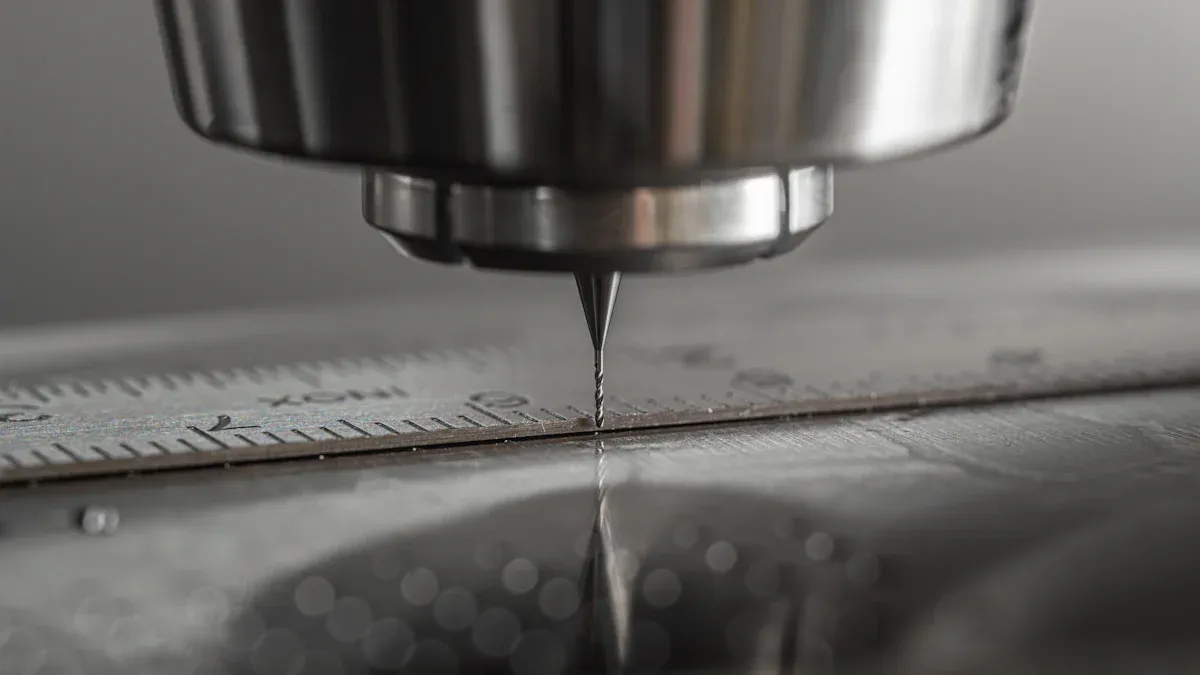
Flexibility for Rapid Prototyping
CNC machining excels in rapid prototyping, making it a valuable tool for small-batch production. You can quickly test multiple designs and make adjustments without significant delays. This flexibility allows businesses to accelerate product development cycles and stay competitive in fast-paced markets.
Small-batch CNC machining enables the creation of highly accurate prototypes in a short time frame.
Rapid CNC machining supports innovative design practices by allowing quick iterations.
The ability to transition directly from CAD models to finished products minimizes manual intervention.
For example, projects like "CNC-RP" demonstrate how CNC machining can streamline the prototyping process. In the medical field, CNC machining has been used to create custom bone fragments for orthopedic surgery, showcasing its precision and adaptability.
Reduced Inventory Costs
CNC machining helps you reduce inventory costs by producing only what is necessary when it is needed. This just-in-time production approach minimizes storage expenses and waste.
Manufacturers can avoid excess inventory, saving money and freeing up space.
Small-batch production ensures you only stock what is required, reducing the risk of unused parts.
Real-world examples highlight these benefits. A car manufacturer uses CNC machining to produce small batches of parts for testing new designs, minimizing financial risks. Similarly, medical device manufacturers create custom implants tailored to individual patients, reducing inventory while enhancing treatment outcomes.
Company Type | Benefit Description |
|---|---|
Car Manufacturer | Produces small batches of parts to test new designs, minimizing financial risk and gathering customer feedback. |
Medical Device Manufacturer | Produces custom implants tailored to individual patients, enhancing treatment effectiveness. |
Customization and Quick Adaptations
CNC machining offers unmatched customization capabilities for small-batch products. You can efficiently adjust designs to meet specific customer requirements or market trends. This adaptability provides a competitive edge in industries where precision and customization are critical.
Small-batch CNC machining allows for quick design changes without significant downtime.
It supports the production of custom parts with tight tolerances, ensuring high precision and quality.
Industries like aerospace, healthcare, and consumer goods rely on CNC machining for tailored solutions.
For instance, CNC machining is widely used in furniture manufacturing to create intricate designs and custom frameworks. In the sporting goods industry, it enables the production of personalized equipment like custom golf clubs and bicycles.
CNC Machining for High-Volume Production
Scalability and Automation
CNC machining offers unmatched scalability, making it ideal for high-volume production. Once programmed, CNC machines can produce thousands of identical parts with minimal setup time. This capability ensures that you can meet large-scale manufacturing demands without compromising on quality or precision.
Feature | Description |
|---|---|
Increased Efficiency | CNC machines produce thousands of identical parts accurately and consistently, crucial for reliability. |
Reduced Setup Time | Once set up, CNC machines can produce thousands of parts with minimal additional setup time. |
Cost Savings | Continuous operation of CNC machines reduces per-unit costs, benefiting high-volume production. |
Enhanced Material Utilization | Precision machining minimizes waste, optimizing material use and reducing costs. |
Reliability | CNC machines maintain consistent quality over extended periods, essential for high-volume production. |
Adaptability | CNC machining can handle complex designs, accommodating unique requirements in high-volume orders. |
Automation further enhances scalability by reducing manual intervention. With advanced CAM software, you can automate tool changes, monitor processes, and ensure consistent results. This combination of scalability and automation makes CNC machining a cornerstone of modern manufacturing.
Consistent Quality in Large Runs
Maintaining consistent quality in high-volume production is critical. CNC machining achieves this through rigorous quality control measures at every stage of the process.
Pre-machining Inspections: Inspect raw materials and machine setups to ensure optimal conditions.
In-process Quality Checks: Use real-time data from sensors to monitor machining processes and detect deviations.
Post-machining Inspections: Conduct thorough inspections, including dimensional checks and advanced methods like Coordinate Measuring Machines (CMMs).
Additional practices, such as regular calibration and the use of high-quality materials, further enhance consistency. Advanced tooling and tight tolerances reduce variation, ensuring that every part meets your specifications. These measures make CNC machining a reliable choice for industries requiring high precision and uniformity.
Enhanced Efficiency and Reduced Labor Costs
CNC machining significantly improves efficiency while lowering labor costs. Automated processes reduce the need for manual intervention, allowing you to focus on other aspects of production. Efficient tooling strategies and lean manufacturing principles further optimize operations.
Embrace automation to streamline production and minimize human error.
Simplify part designs to reduce machining time and costs.
Use standardized components to eliminate the need for custom tooling.
Batch production leverages economies of scale, reducing the cost per unit.
By maximizing machine efficiency and adopting lean practices, you can achieve faster production cycles and lower operational costs. These benefits make CNC machining an indispensable tool for high-volume manufacturing.
Applications of CNC Precision Parts in Industries
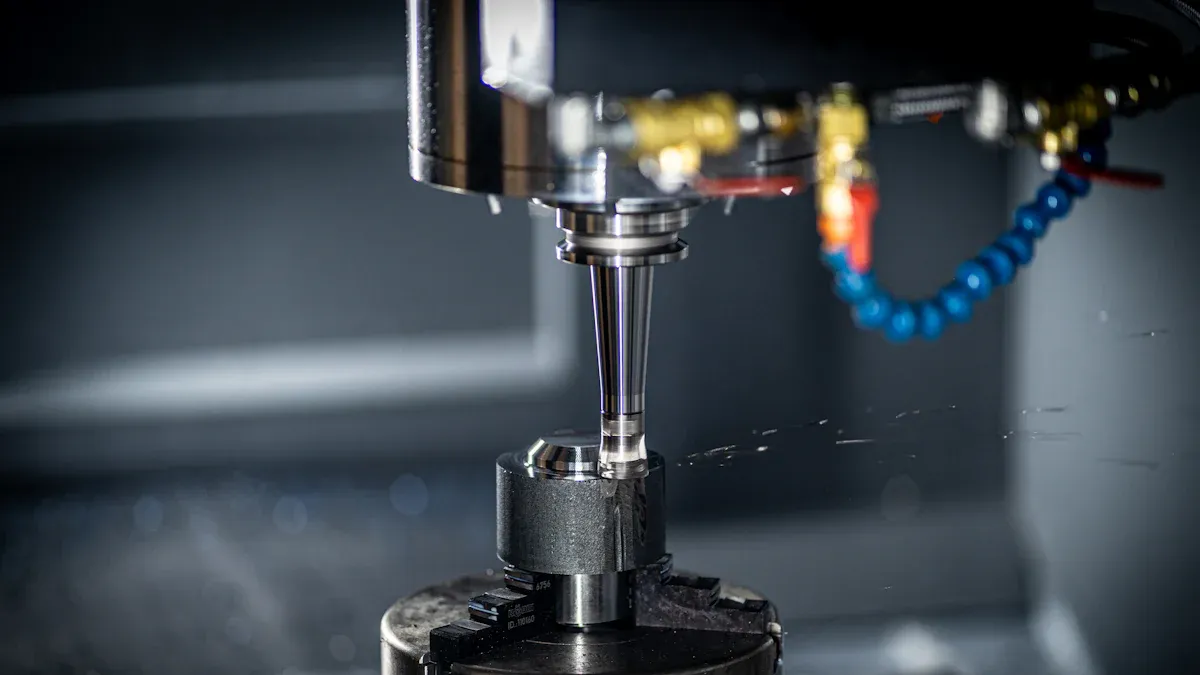
Aerospace and Automotive
CNC machining plays a vital role in the aerospace and automotive industries, where high precision and customization are essential. You can rely on CNC to produce intricate components that meet strict safety and performance standards. Common applications include:
Aerospace: Engine components, landing gear parts, exhaust nozzles, airframe structures, and cockpit parts.
Automotive: Engine parts like pistons and cylinder heads, gearbox cases, suspension components, and dashboards.
For example, CNC machining is used to manufacture jet engine parts, turbine blades, and transmissions. Its ability to deliver consistent quality ensures that these critical components perform reliably under extreme conditions.
Medical Devices and Healthcare
CNC machining is indispensable in the medical field, where precision and biocompatibility are crucial. You can use CNC to create orthopedic implants, such as hip and knee replacements, with complex geometries and tight tolerances. It also supports the production of:
Diagnostic equipment like MRI machines and blood analyzers.
Surgical instruments, including scalpels and forceps.
Cardiovascular devices like stents and heart valves.
The ability to work with materials like titanium and PEEK ensures that custom parts integrate safely with the human body. This makes CNC machining a cornerstone of modern healthcare manufacturing.
Electronics and Consumer Goods
CNC machining excels in producing electronic and consumer goods components with high precision. It supports the miniaturization of devices and ensures tight tolerances for intricate parts. Applications include:
Computers, smartphones, and televisions.
Kitchen appliances and toys.
Cell phone cases and heat sinks.
By processing a variety of materials, CNC machining allows you to create durable and functional products. Its versatility and efficiency make it a preferred choice for manufacturing in these industries.
Overcoming Challenges in CNC Machining
Managing Initial Setup Costs
Starting with CNC machining involves significant upfront expenses, but you can manage these costs effectively by adopting strategic approaches. Typical setup costs include:
CNC machinery investment: $50,000 to $200,000 per machine
Facility lease: $1,000 to $5,000 per month
Initial material inventory: $10,000 to $30,000
Tooling and fixtures: $5,000 to $20,000
CAD software: $1,000 to $5,000
To reduce these costs, simplify part designs to minimize machining steps and tooling needs. Use standardized components and select cost-effective materials that meet functional requirements. Matching machine capabilities to your production needs also prevents overspending. Batch production can further lower costs by leveraging economies of scale. Collaborating with suppliers early in the process helps identify additional cost-saving opportunities.
Tip: Consider advanced technologies like additive manufacturing to reduce waste and optimize material usage.
Ensuring Operator Expertise
Skilled operators are essential for maintaining CNC efficiency and quality assurance. Operators should possess practical skills like material selection, tooling knowledge, and CAD/CAM software proficiency. They also need strong problem-solving abilities and attention to detail.
Routine tasks, such as checking lubrication levels, greasing, and cleaning air filters, ensure optimal machine performance. Operators must also monitor cutting parameters and perform quality assurance checks to maintain consistent results. Providing regular training enhances their expertise and keeps them updated on the latest manufacturing techniques.
Maintenance for Continuous Operation
Regular maintenance ensures your CNC machines operate efficiently and avoid downtime. Create a custom maintenance schedule with daily, weekly, and monthly tasks. For example, daily tasks might include wiping down surfaces and emptying chip hoppers, while monthly tasks could involve cleaning radiators and replacing air filters.
Keep spare parts on hand to minimize delays during repairs. Use sensors to detect potential failures and wireless monitoring systems for real-time updates on machine conditions. Accurate records of machine activity and repairs help track usage and service frequency, ensuring long-term reliability.
Note: Routine maintenance not only reduces downtime but also extends tool life and improves product quality.
CNC machining provides a reliable solution for both small-batch and high-volume production. You can depend on its precision and adaptability to meet diverse manufacturing needs. By addressing challenges like setup costs and maintenance, you can maximize the benefits of CNC. This approach ensures superior results and long-term success in modern manufacturing.
FAQ
What industries benefit the most from CNC machining?
CNC machining supports industries like aerospace, automotive, medical devices, and electronics. Its precision and adaptability make it ideal for creating high-quality, complex components.
How does CNC machining reduce production costs?
It minimizes material waste, automates processes, and reduces labor needs. These factors lower per-unit costs, especially in high-volume production.
Can CNC machines handle custom designs?
Yes, CNC machines excel at creating custom parts. You can easily adjust designs using CAD software, ensuring precision and meeting unique requirements.
Tip: Always consult with your CNC service provider to optimize designs for better efficiency and cost savings.
See Also
Streamlined CNC Machining Solutions For Accurate Production
Recognizing The Significance Of Precision CNC Machining Techniques
Perfecting CNC Machining For High-Quality Component Production
The Impact Of CNC Machining Technology On Precision Production
Investigating CNC Machining Options For Precise Manufacturing Needs
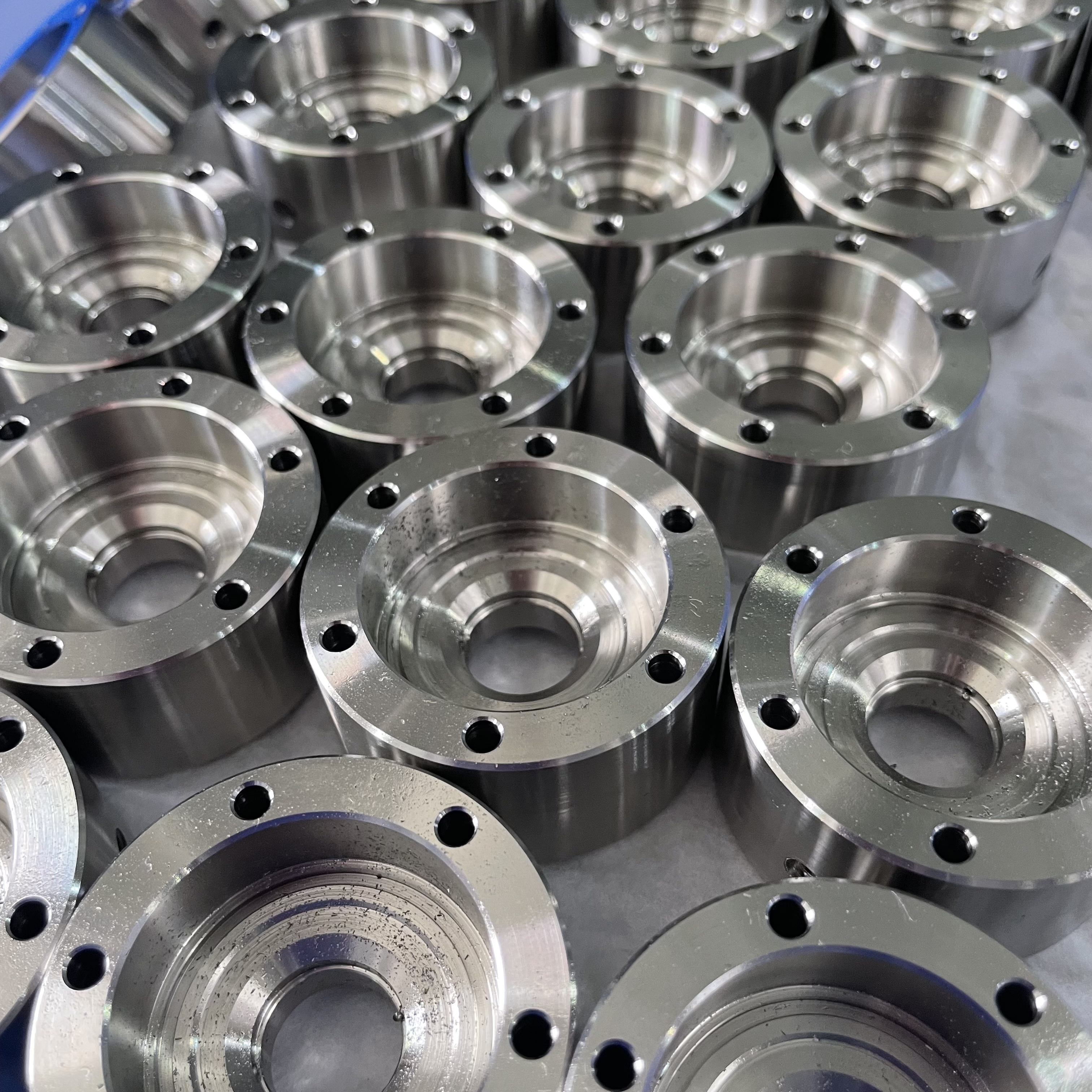
About US
Follow Us
Your prototype holds unparalleled significance, and we deeply value its uniqueness. Collaborating with you during the preparation phase for running your prototype or parts is a commitment we gladly embrace. Whether it's a single part or a complex assembly, we are dedicated to selecting the optimal tools and pathways to bring your envisioned product to life.
At Precision Fab CNC Machining, we specialize in producing parts for prototypes, short runs, and high-volume production. Our prototyping machine capabilities extend across metal, plastic, and wood machining, with welding fabrication services available to complement and finalize your prototype if required.
Address
Address: Room320 10F, Building A,Nanshan international building, Dayawan District, Huizhou, Guangdong, 516001 China
Contacts
billy@timaycnc.com