How CNC Prototyping Works with Advanced Materials Like Carbon Fiber and Composites

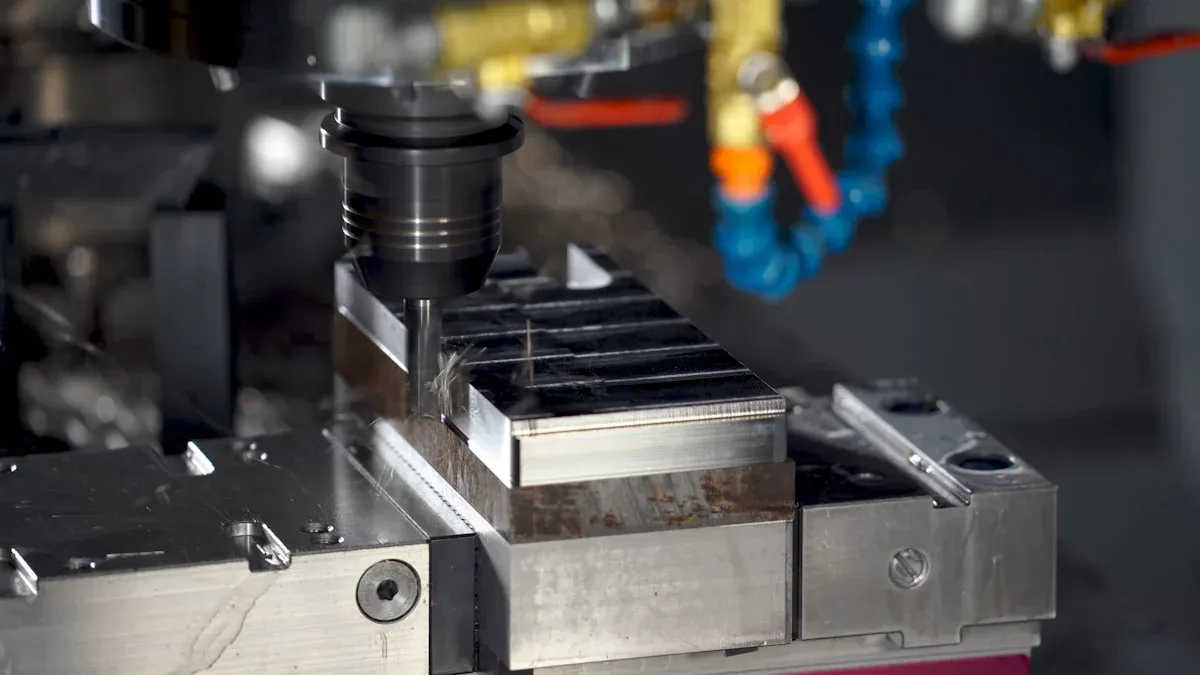
CNC prototyping allows you to shape advanced materials like carbon fiber and composites with unmatched precision. These materials offer unique properties that make them ideal for high-performance applications.
Property | Description |
|---|---|
Mechanical Strength | Carbon fibers provide stiffness and high tensile strength. |
Weight | Their strength-to-weight ratio suits weight-sensitive designs. |
Corrosion Resistance | They resist corrosion in harsh environments. |
Machinability | CNC ensures precise, complex shapes. |
Fatigue Resistance | They maintain durability under repeated stress. |
These attributes, combined with CNC's automation, enable efficient and accurate manufacturing.
Key Takeaways
CNC prototyping provides great accuracy for shaping tough materials like carbon fiber and composites. This makes it perfect for high-performance uses.
Carbon fiber is strong, lightweight, and resists rust. These features make it important in fields like airplanes and cars.
CNC machines can make detailed shapes, cut down waste, and work faster. This helps industries that need quick and precise prototypes.
Why Carbon Fiber and Composites Are Ideal for CNC Prototyping
Unique Properties of Carbon Fiber
Carbon fiber stands out due to its exceptional mechanical and thermal properties. It resists wear, corrosion, and chemicals, making it suitable for demanding environments. Its stiffness surpasses that of aluminum and steel, while its minimal thermal expansion ensures stability under temperature changes. Additionally, carbon fiber is electrically conductive, which adds versatility to its applications. However, it can crack under stress, requiring careful handling during CNC machining.
The strength-to-weight ratio of carbon fiber is remarkable. It offers 2 to 5 times the strength of aluminum at the same weight, while its density is nearly half. This combination makes it indispensable in industries like aerospace and motorsport, where reducing weight enhances performance. Its fatigue resistance ensures durability under repeated stress, making it a reliable choice for high-performance components.
Advantages of Composites Over Traditional Materials
Composites offer several advantages over traditional materials like steel or aluminum. They do not rust, ensuring longevity in outdoor applications. Their high dimensional stability allows them to maintain shape under varying environmental conditions. Thermoset composites provide nearly unlimited design flexibility, enabling the creation of intricate shapes and forms. Manufacturers can also customize composites with different densities and chemical formulations to meet specific performance requirements.
These features make composites ideal for CNC prototyping, as CNC machines can precisely shape them into complex geometries. The manufacturing flexibility of composites further enhances their appeal, especially in industries requiring lightweight and durable materials.
Applications of These Materials in High-Performance Industries
Carbon fiber and composites play a crucial role in high-performance industries. In aerospace, they are used in aircraft, launch vehicles, and spacecraft due to their strength and lightweight properties. The automotive sector relies on them for Formula 1 cars, high-end sports cars, and NASCAR vehicles to improve performance. Sports equipment like bicycles, tennis rackets, and hockey sticks also benefit from these materials' durability and reduced weight.
Emerging industries are increasingly adopting these advanced materials. The wind energy sector uses carbon fiber in turbine blades for resilience and tensile strength. The marine industry integrates composites into racing boats and production vessels for speed and efficiency. Even the medical field utilizes carbon fiber in prosthetics and imaging equipment, showcasing its versatility across diverse applications.
How CNC Prototyping Processes Advanced Materials

Precision and Automation in CNC Machining
CNC machining achieves remarkable precision by combining advanced technology with automation. Automation optimizes production processes, ensuring reliable machine performance and reducing errors. Modern CNC machines integrate IoT and AI technologies, enabling real-time monitoring and inspection. These systems dynamically adjust machining parameters, maintaining precision and improving efficiency.
When working with advanced materials like carbon fiber billets or composites, CNC technology ensures micron-level accuracy. Rigid machines, proper fixturing, and high-speed spindles (18,000 to 24,000 RPM) play a critical role. These features minimize distortion and enhance surface quality, making CNC prototyping ideal for industries like aerospace and automotive, where performance and precision are paramount.
Specialized Tools for Carbon Fiber and Composites
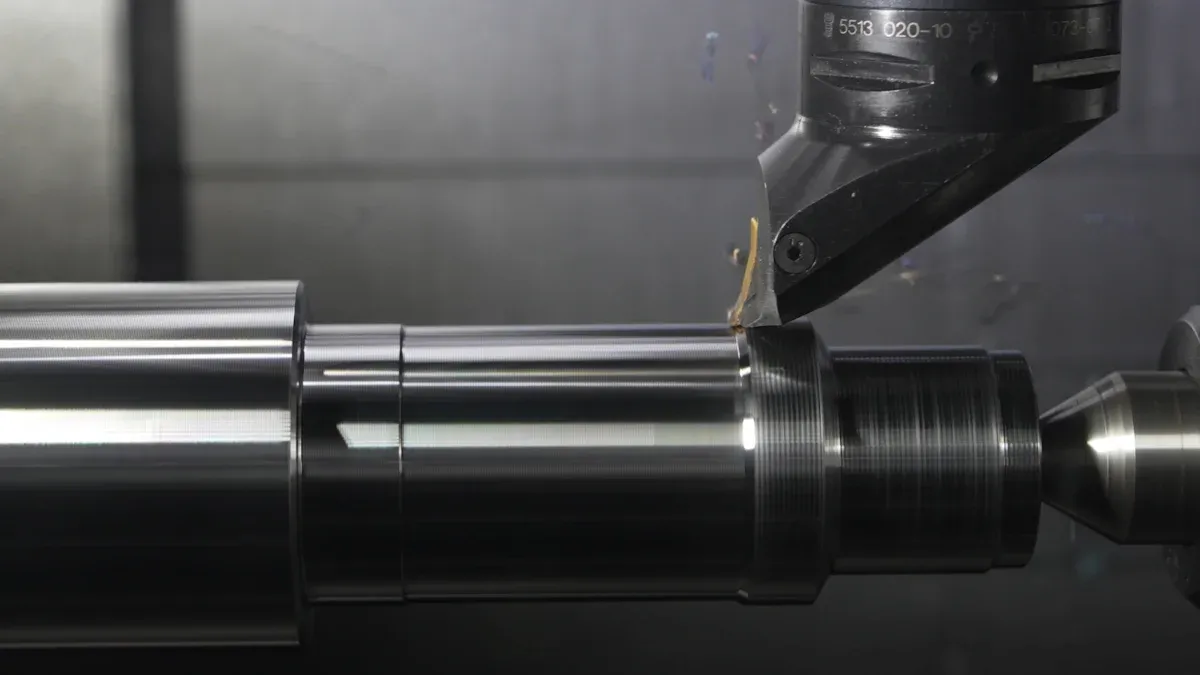
Machining carbon fiber blocks and composites requires specialized tools to handle their unique properties. Carbide or diamond-coated tools are essential for managing the hardness and abrasiveness of these materials. These tools prevent excessive heat generation, which can cause delamination or damage to the composite structure.
High-speed steel tools often fail quickly when machining composites. Instead, polycrystalline diamond (PCD) tools or diamond-coated alternatives provide superior wear resistance and longer tool life. These tools also ensure a high-quality surface finish, which is crucial for high-performance applications. Proper tool selection and cutting parameters, such as slower feed rates, help maintain dimensional accuracy and prevent defects.
Steps in the CNC Machining Process for Advanced Materials
CNC prototyping follows a structured process to transform raw materials into precise components:
Design the part using CAD software to create a 3D model or 2D drawing.
Select the appropriate raw material, such as carbon fiber billets or composites.
Develop the manufacturing program using CAM software to generate G-Code.
Secure the raw material in the CNC machine using proper fixturing.
Execute the machining process, where tools interact with the workpiece to shape it.
Implement quality control measures, including real-time monitoring and inspection.
Finish the component through cleaning, polishing, and final examination.
This step-by-step approach ensures high precision, manufacturing flexibility, and consistent performance, making CNC prototyping a reliable choice for rapid prototyping in high-performance industries.
Benefits and Challenges of CNC Prototyping with Advanced Materials
Key Benefits: Waste Reduction, Complex Geometries, and Efficiency
CNC prototyping offers several advantages when working with advanced materials like carbon fiber billets and composites. One major benefit is waste reduction. CNC machines use CAD software to program precise cuts, ensuring minimal material waste. Automation eliminates human error, producing consistent parts and reducing scrap. Real-time monitoring also detects defects early, preventing wasted materials on faulty components.
Another advantage is the ability to create complex geometries. CNC technology enables the production of intricate designs, such as aerospace components, medical devices, and automotive parts. These shapes would be difficult or impossible to achieve with traditional methods. This capability makes CNC prototyping essential for industries requiring high-performance components.
Efficiency is another key benefit. CNC machines operate at high speeds, producing parts quickly without compromising accuracy. This speed accelerates rapid prototyping, allowing you to test and refine designs faster. The combination of precision, speed, and reduced waste makes CNC prototyping a cost-effective solution for high-performance applications.
Challenges: Dust Management, Tooling, and Cost
Despite its benefits, CNC prototyping with advanced materials presents challenges. Dust management is critical when machining carbon fiber blocks and composites. The dust is harmful to health and can damage machinery due to its conductive nature. Abrasive materials like carbon fiber also cause rapid tool wear, increasing maintenance needs.
Tooling is another challenge. Advanced materials require specialized tools, such as diamond-coated or PCD tools, which are expensive. These tools must withstand the hardness and abrasiveness of composites while maintaining precision.
Cost is a significant factor. CNC prototyping involves high initial investments in machinery and skilled labor. The cost of raw materials, such as carbon fiber billets, adds to the expense. Complex designs and tight tolerances further increase machining time and costs.
Solutions to Overcome Challenges in CNC Machining
You can address these challenges with effective strategies. For dust management, water-based cutting fluids capture dust particles, reducing airborne pollution. Installing cartridge-style dust collectors and sealing machine enclosures also helps contain debris. Regular maintenance of tools and equipment ensures optimal performance and longevity.
To extend tool life, use high-quality cutting tools designed for composites. Techniques like spray mist or air cooling prevent heat buildup, reducing wear. High-speed spindles minimize chip load, improving efficiency and tool durability.
Advancements in CNC technology also mitigate challenges. Innovations like cryogenic machining and improved composite materials enhance machining performance. These solutions make CNC prototyping more accessible and effective for industries like aerospace and automotive.
CNC prototyping revolutionizes how you work with advanced materials like carbon fiber blocks and composites. Its precision engineering ensures unmatched performance in aerospace engineering and other industries. Innovations like cryogenic machining and sustainable practices enhance CNC machines' capabilities. As carbon fiber applications expand, CNC continues to drive efficiency and adaptability, unlocking new possibilities for high-performance designs.
FAQ
What makes CNC prototyping suitable for advanced materials like carbon fiber?
CNC prototyping ensures precision and efficiency. It handles the unique properties of carbon fiber, such as its strength and lightweight nature, while minimizing waste during the machining process.
How do you manage dust when machining carbon fiber?
You can use water-based cutting fluids or dust collectors. These methods capture harmful particles, protecting both your health and the machinery from damage caused by conductive dust.
Are specialized tools necessary for CNC machining composites?
Yes, specialized tools like diamond-coated or PCD tools are essential. They handle the hardness and abrasiveness of composites, ensuring durability and a high-quality surface finish.
See Also
Overcoming Obstacles: Improving CNC Prototyping Precision And Speed
Excelling In CNC Machining: Tolerances, Prototyping, And Materials
The Impact Of CNC Machining On Precision Manufacturing Advancements
Discovering Seven Major Advantages Of CNC Machining In Manufacturing
About US
Follow Us
Your prototype holds unparalleled significance, and we deeply value its uniqueness. Collaborating with you during the preparation phase for running your prototype or parts is a commitment we gladly embrace. Whether it's a single part or a complex assembly, we are dedicated to selecting the optimal tools and pathways to bring your envisioned product to life.
At Precision Fab CNC Machining, we specialize in producing parts for prototypes, short runs, and high-volume production. Our prototyping machine capabilities extend across metal, plastic, and wood machining, with welding fabrication services available to complement and finalize your prototype if required.
Address
Address: Room320 10F, Building A,Nanshan international building, Dayawan District, Huizhou, Guangdong, 516001 China
Contacts
billy@timaycnc.com