How CNC Improves Quality Control and Reduces Errors in Manufacturing


CNC machining transforms how you approach quality control in manufacturing. By automating processes, it eliminates variability caused by human error. CNC machines operate with exact specifications, achieving precision to fractions of a millimeter. This ensures consistent results, even for complex designs. Real-time monitoring and automated inspections allow you to detect and correct deviations instantly, reducing waste and defects. With tolerances as tight as ±0.001 inches, CNC quality control guarantees high-quality outcomes for industries like automotive and aerospace. These advancements make CNC machining services essential for achieving improvement in production efficiency and product quality.
Key Takeaways
CNC machines work automatically, lowering mistakes and making precise parts.
They check and fix problems right away, improving product quality.
CNC uses materials wisely, cutting waste and saving money.
Fields like aerospace and medical use CNC for safe, exact parts.
Using CAD/CAM software with CNC makes designs accurate and consistent.
Precision and Accuracy in CNC Manufacturing
Achieving Tight Tolerances
The role of CNC in micron-level precision
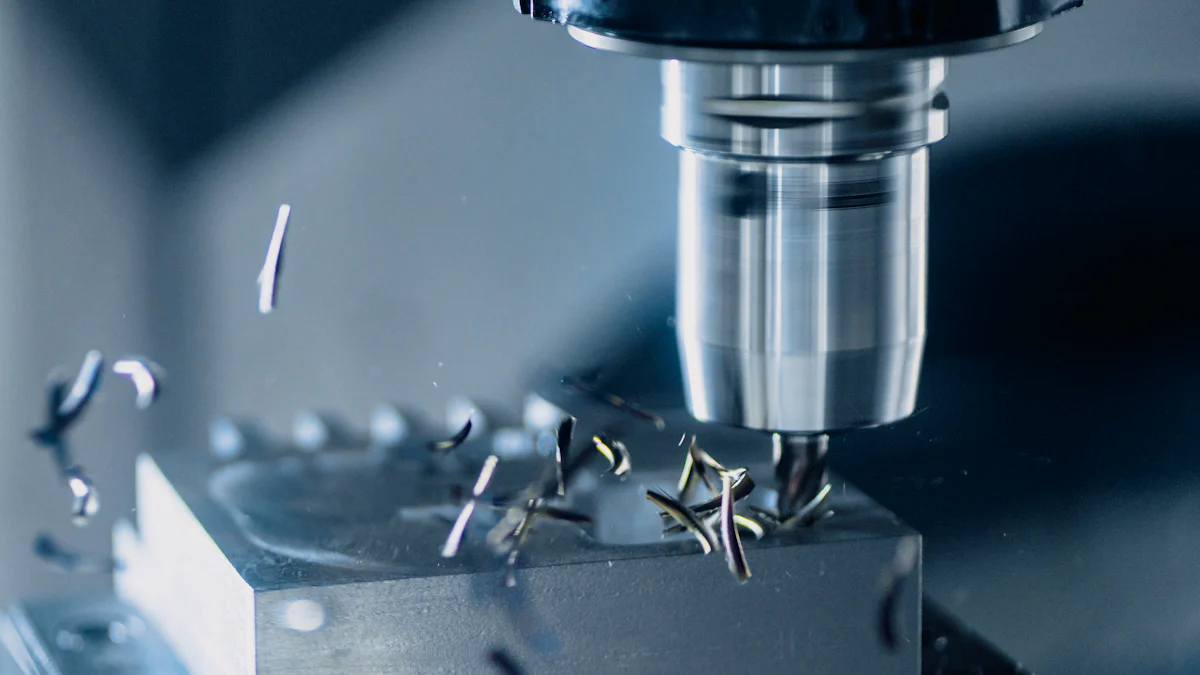
CNC manufacturing allows you to achieve unparalleled precision, often down to micron-level tolerances. This level of accuracy is critical in industries like aerospace and medical devices, where even the smallest deviation can compromise safety or functionality. CNC machines incorporate in-process measurement and quality assurance, ensuring that components are consistently reproduced with identical specifications. This capability eliminates the need for manual adjustments, reducing errors and enhancing the overall manufacturing process.
The measurable benefits of achieving tight tolerances include improved accuracy, faster turnaround times, and reduced variability. For example:
Benefit | Description |
|---|---|
Improved Accuracy | Achieving tight tolerances leads to the production of high-quality parts, reducing errors. |
Faster Turnaround Times | More precise machining reduces the need for rework, speeding up production cycles. |
Reduced Variability | Consistent tolerances minimize variations in product quality, enhancing reliability. |
Enhanced Quality Control | In-process measurement ensures components are reproduced identically, maintaining high standards. |
How CAD/CAM software enhances accuracy
Computer-aided manufacturing (CAM) software plays a vital role in improving the accuracy of CNC machining. By integrating CAD and CAM, you can minimize errors during the design translation process. Simulation capabilities allow you to identify potential issues, such as collisions or inefficiencies, before production begins. Advanced machining techniques, like multi-axis machining, enable the creation of intricate designs that would be impossible to achieve manually.
Feature | Impact on Accuracy |
|---|---|
Integration of CAD and CAM | Minimizes errors and discrepancies in design translation |
Simulation capabilities | Identifies potential issues before production |
Advanced machining techniques | Enables complex geometries and precise manufacturing |
Consistency in Production
Eliminating variability with CNC machining
CNC manufacturing ensures consistency by automating processes and reducing human intervention. Variations caused by tool wear, material properties, or machine calibration are addressed through advanced inspection techniques and regular equipment calibration. Statistical Process Control (SPC) further enhances consistency by monitoring and controlling production variables.
Challenge | Solution |
|---|---|
Variations in tool wear | Implementing Statistical Process Control (SPC) |
Variations in material properties | Regular Equipment Calibration |
Machine calibration issues | Advanced Inspection Techniques |
Examples of industries relying on CNC for precision
Many industries depend on CNC manufacturing for its precision and consistency. In aerospace, CNC machines produce critical aeronautical parts with tolerances as tight as ±0.0001 inches. The medical industry uses CNC to create custom implants, such as knee and hip replacements, where extreme precision ensures patient safety.
Industry | Description |
|---|---|
Aerospace | Requires high accuracy and repeatability, with tolerances within ±0.0001” for critical aeronautical parts. |
Medical | Custom implants like knee and hip replacements need extreme precision to ensure patient safety. |
Automation and Error Reduction with CNC Machines
Reducing Human Error
Automated programming and its impact on error rates
CNC machines rely on automated programming to reduce human error in manufacturing. By using CAD and CAM software, you can create precise designs and translate them directly into machine instructions. This eliminates the need for manual calculations or adjustments, which often lead to mistakes. Automated programming ensures that every step of the process follows exact specifications, minimizing errors in tasks like cutting, drilling, or shaping.
Common types of human errors in traditional manufacturing include incorrect measurements, fatigue-induced mistakes, and design misinterpretations. CNC automation addresses these issues effectively:
CNC machines execute tasks with precision, reducing inconsistencies.
Automated systems eliminate errors caused by fatigue or distraction.
Real-time monitoring detects and corrects deviations immediately.
Error reporting systems help identify and resolve issues quickly.
By integrating these features, CNC manufacturing ensures a significant reduction of human error, leading to higher-quality products and fewer defects.
Minimizing manual intervention in CNC processes
CNC machines operate with minimal manual intervention, which further reduces the likelihood of errors. Once you program the machine, it performs repetitive tasks with unmatched accuracy. This eliminates variability caused by human involvement, such as inconsistent tool handling or improper setup. Quick setup processes also reduce errors from incorrect adjustments, ensuring smooth and efficient operations. Skilled operators trained in CNC machining services oversee the process, ensuring optimal performance and quality control.
Enhancing Repeatability
The role of G-code in consistent production
G-code serves as the backbone of CNC manufacturing, ensuring consistent production. This programming language provides precise instructions for machine movements, tool paths, and cutting speeds. By standardizing these parameters, you can achieve identical results across multiple production cycles. G-code also allows for easy adjustments, enabling you to refine processes without compromising consistency.
Key factors contributing to repeatability include machine construction, feedback systems, and regular calibration. For example, linear scales provide accurate location readouts, while consistent environmental conditions maintain machine performance. These elements work together to ensure that CNC machines deliver reliable and repeatable results.
Examples of repeatable processes in CNC manufacturing
Many industries benefit from the repeatability of CNC machining. In the defense sector, CNC machines produce communication equipment and tank parts with strict adherence to standards. The marine industry relies on CNC manufacturing for components requiring unique materials and shapes. These examples highlight how CNC machining enhances efficiency and consistency across diverse applications.
Real-Time Monitoring and Quality Control in Manufacturing
Advanced Sensors and Feedback Systems
How CNC machines detect and correct deviations
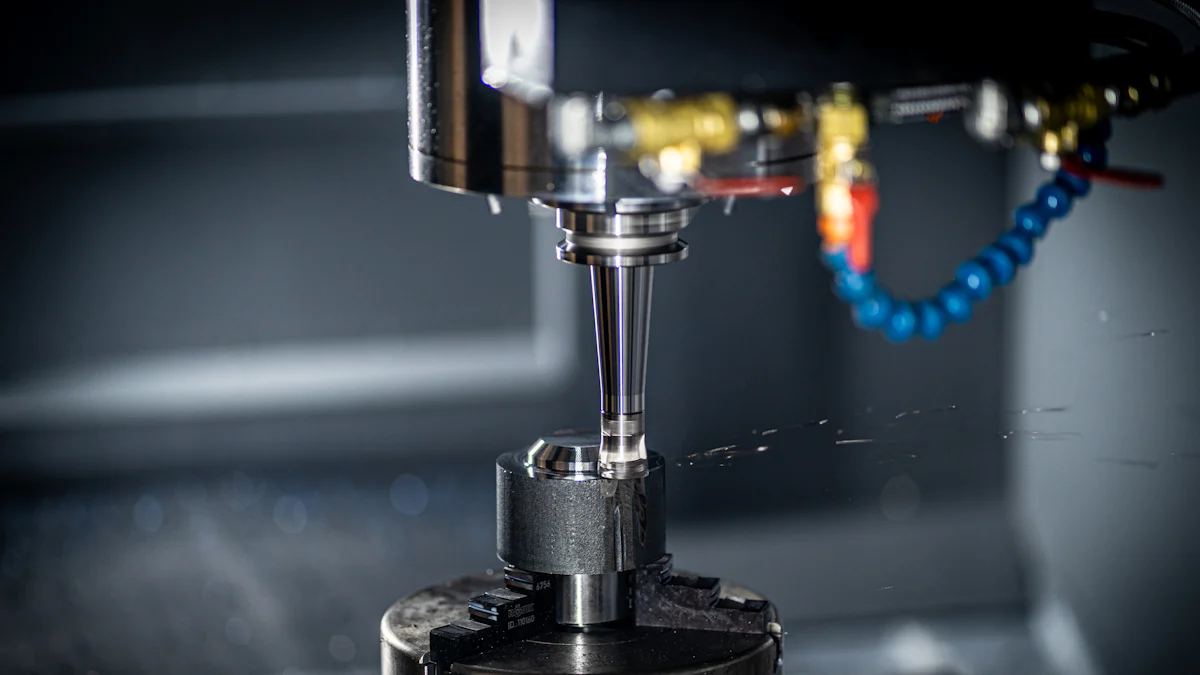
Modern CNC machines use advanced sensors and feedback systems to maintain exceptional accuracy during production. These systems monitor machining parameters like cutting speed, tool wear, and material properties in real time. When deviations occur, the sensors immediately alert the system, which adjusts the process to correct the issue. This ensures that every part meets the required specifications, reducing defects and improving consistency.
High-precision sensors allow CNC machines to achieve tolerances in the micron range. This level of precision minimizes the need for post-production finishing, saving time and costs. By detecting and correcting errors during machining, you can extend tool life and reduce material waste. These features make CNC quality control a cornerstone of modern manufacturing.
The role of IoT in real-time quality assurance
The Internet of Things (IoT) enhances quality control in manufacturing by connecting CNC machines to a centralized network. IoT-enabled systems collect and analyze data from multiple machines, providing insights into performance and potential issues. This connectivity allows you to optimize production processes and reduce downtime.
Implementing IoT in CNC manufacturing improves quality control procedures by reducing scrap rates and producing higher-quality products. This leads to lower costs and greater customer satisfaction.
IoT also enables real-time workflows, allowing you to automate adjustments based on accurate production data. By integrating IoT, you can unlock additional capacity and improve equipment utilization.
Integrated Quality Control Tools
On-machine probing for dimensional accuracy
On-machine probing systems play a vital role in CNC quality control. These tools measure workpiece dimensions directly on the machine, ensuring accuracy without removing the part for inspection. Probing reduces manual setup time and minimizes errors caused by incorrect positioning.
Using on-machine probing increases productivity by streamlining the inspection process. It also reduces scrap and tool damage, saving costs and improving defect mitigation. This technology ensures that your CNC manufacturing process maintains high standards of accuracy and consistency.
Software solutions for monitoring and reporting
Advanced software solutions enhance CNC quality control by providing real-time monitoring and detailed reporting. These tools allow you to track machine performance, identify bottlenecks, and make data-driven decisions.
Feature | Description |
|---|---|
Real-Time Dashboards | Offers immediate insights into job performance with color-coded indicators. |
Alerts and Notifications | Sends customizable alerts for delays or downtime, enabling quick responses. |
OEE Performance Reporting | Tracks overall equipment effectiveness to identify operational inefficiencies. |
Quality Tracking and Reporting | Allows operators to reject parts and record quality data digitally. |
Machine Utilization Reporting | Monitors machine usage trends to optimize capacity. |
These tools simplify reporting and improve quality control procedures. By automating inspections and tracking data, you can ensure consistent results and reduce defects in your CNC machining services.
Material Compatibility and Complex Designs in CNC Machining
Versatility with Diverse Materials
CNC's adaptability to metals, plastics, and composites
CNC machines excel at working with a wide range of materials, adapting to their unique properties to deliver precise results. Whether you need to machine lightweight aluminum or durable steel, CNC technology ensures optimal performance. For example, aluminum's excellent machinability allows for high cutting speeds and smooth finishes, while steel requires robust tooling and slower feed rates to maintain accuracy. CNC machining also handles challenging materials like titanium, which demands specialized tooling to prevent excessive wear.
Here’s how CNC adapts to different materials:
Material | Key Properties | CNC Adaptation |
|---|---|---|
Aluminum | Lightweight, high strength-to-weight ratio, excellent thermal conductivity | High cutting speeds and excellent surface finishes; requires proper coolant use to mitigate chip welding. |
Steel | Versatile, available in various grades, high strength | Requires robust tooling and slower feed rates; advanced coatings may be needed for stainless steel. |
Titanium | High strength-to-weight ratio, excellent corrosion resistance | Difficult to machine; requires special tooling and optimized cutting speeds to avoid excessive wear. |
Copper | High electrical conductivity, good machinability | Tends to gum up cutting tools; sharp tools and appropriate coolants are necessary. |
Plastics | Lightweight, cost-effective, excellent machinability | Designed for CNC machining; results in smooth finishes and reduced machining times. |
Examples of industries benefiting from material versatility
Many industries rely on CNC for its ability to handle diverse materials. Aerospace manufacturers use CNC to create lightweight yet strong components for aircraft. The medical field benefits from CNC's precision when crafting implants and surgical tools. Automotive companies depend on CNC for high-quality parts, while the electronics industry uses it to produce intricate components.
Aerospace
Automotive
Medical Devices
Electronics
Marine
Oil and Gas
Defense
Consumer Goods
Creating Intricate Geometries
How CNC enables complex shapes
CNC machining allows you to create intricate shapes that would be impossible with traditional methods. By using advanced programming and precise tooling, CNC machines can carve out complex geometries with ease. This capability is essential for industries like aerospace, where components often feature unique designs. Medical devices, automotive parts, and precision tooling also benefit from CNC's ability to produce detailed and accurate shapes.
Aerospace components
Medical devices
Automotive parts
Precision tooling
The role of multi-axis machining in design flexibility
Multi-axis CNC machines take design flexibility to the next level. These machines operate on multiple axes, enabling you to create deep cuts and complex geometries. For example, a 5-axis CNC machine can handle intricate designs in a single setup, reducing errors and improving efficiency. Multi-axis machining also enhances surface finishes and drilling precision, making it ideal for high-quality production.
Benefit | Description |
|---|---|
Precision | Multi-axis CNC machines operate with greater precision, allowing for accurately machined and smoother parts. |
Production Speed | The tangential arrangement of cutting tools increases the speed of material removal, improving cycle times significantly. |
Fewer Setups | All milling/turning operations can be handled in one setup, minimizing operational costs and reducing errors. |
Complex Geometries | Multi-axis machines can create deep cuts and complex shapes that are not achievable with 3-axis machines. |
Surface Finishes | Shorter cutting tools produce better surface finishes, reducing the need for additional touch-ups. |
Improved Drilling Capabilities | Multi-axis machines maintain precision during drilling applications, allowing for tighter and more complex angles. |
By leveraging multi-axis CNC machining, you can achieve unparalleled design flexibility and precision, ensuring your products meet the highest standards.
Cost and Waste Reduction Through CNC Technology
Optimizing Resource Utilization
How CNC minimizes material waste
CNC machining significantly reduces material waste by optimizing resource utilization. These machines precisely cut and shape materials, ensuring minimal excess. By recycling and reusing materials, CNC processes contribute to a circular economy. Closed-loop systems reintroduce waste materials into production, further reducing environmental impact.
You can also implement strategies like efficient material management and strategic tool selection. These approaches maximize material usage and extend tool life. Continuous monitoring identifies inefficiencies, enabling you to refine processes and minimize scrap.
Benefits of optimizing resource utilization include:
Reduced scrap material through precise machining.
Lower replacement costs due to enhanced tool longevity.
Improved efficiency by addressing inefficiencies in real time.
CNC technology not only saves resources but also supports sustainability by reducing waste sent to landfills.
Financial benefits of efficient machining
Efficient machining offers substantial financial advantages. By minimizing waste, you save on raw material costs. Enhanced tool performance reduces the frequency of replacements, cutting expenses further. CNC machining also lowers energy consumption, decreasing utility bills.
For small and medium-sized enterprises, these savings translate into higher profits and improved productivity. Efficient machining also enhances your reputation for quality and reliability, attracting more customers.
Reducing Defects and Rework
The impact of precision on defect rates
CNC machining's precision plays a vital role in reducing defects. Accurate cutting and shaping eliminate common issues like dimensional inaccuracies and surface irregularities. Regular maintenance and proper tool selection ensure consistent quality.
Defect Type | CNC Technology Solution |
|---|---|
Surface Finish Irregularities | High-quality cutting tools and coatings |
Dimensional Inaccuracies | Regular maintenance and optimized cutting parameters |
Tool Wear | Routine inspection and timely replacement |
By addressing these defects, CNC machining minimizes rework, saving time and resources. This precision also improves product quality, reducing quality control costs and enhancing customer satisfaction.
Examples of cost savings from reduced rework
Reducing rework leads to significant cost savings. For instance, fewer defective parts mean less material waste and lower labor costs. CNC machining ensures consistent results, eliminating the need for repeated adjustments.
Industries like aerospace and medical manufacturing benefit greatly from this precision. By producing high-quality components on the first attempt, you avoid costly delays and maintain customer trust.
Investing in CNC technology reduces defects, saves money, and boosts efficiency, making it an essential tool for modern manufacturing.
CNC machining transforms manufacturing by delivering unmatched precision and automation. You can achieve superior accuracy, ensuring tight tolerances and uniformity in every part. Automated inspections and real-time monitoring enhance quality assurance, allowing immediate adjustments to reduce errors. CNC systems also enable traceability, improving accountability and data-driven decision-making. With the ability to handle diverse materials and complex designs, CNC minimizes waste and rework, saving costs. By leveraging these capabilities, you can optimize efficiency, maintain consistency, and produce high-quality products that meet industry standards.
FAQ
What industries benefit the most from CNC machining?
CNC machining supports industries like aerospace, automotive, medical, and electronics. These sectors rely on its precision and ability to handle complex designs. You can also find CNC applications in marine, defense, and consumer goods manufacturing.
How does CNC machining reduce manufacturing costs?
CNC minimizes waste by optimizing material usage and reducing defects. You save money on raw materials, labor, and rework. Efficient machining also lowers energy consumption, cutting operational costs further.
Can CNC machines handle custom designs?
Yes, CNC machines excel at creating custom designs. Advanced programming and multi-axis capabilities allow you to produce intricate shapes and unique geometries with high precision. This makes CNC ideal for prototypes and specialized components.
What materials can CNC machines process?
CNC machines work with metals like aluminum, steel, and titanium, as well as plastics and composites. You can adapt CNC processes to suit the material's properties, ensuring accurate results for diverse applications.
How does real-time monitoring improve quality control?
Real-time monitoring detects deviations during production. Sensors and feedback systems adjust processes instantly, ensuring consistent quality. You can also use IoT-enabled systems to analyze data and optimize performance, reducing defects and downtime.
See Also
Why CNC Cutting Precision Matters in Engineering Excellence
Enhancing Quality Through Advanced CNC Machining Techniques
The Role of Precision CNC Machining in Modern Manufacturing
CNC Machining: Revolutionizing Precision in High-End Production
Exploring CNC Technology's Impact on Manufacturing Innovations
About US
Follow Us
Your prototype holds unparalleled significance, and we deeply value its uniqueness. Collaborating with you during the preparation phase for running your prototype or parts is a commitment we gladly embrace. Whether it's a single part or a complex assembly, we are dedicated to selecting the optimal tools and pathways to bring your envisioned product to life.
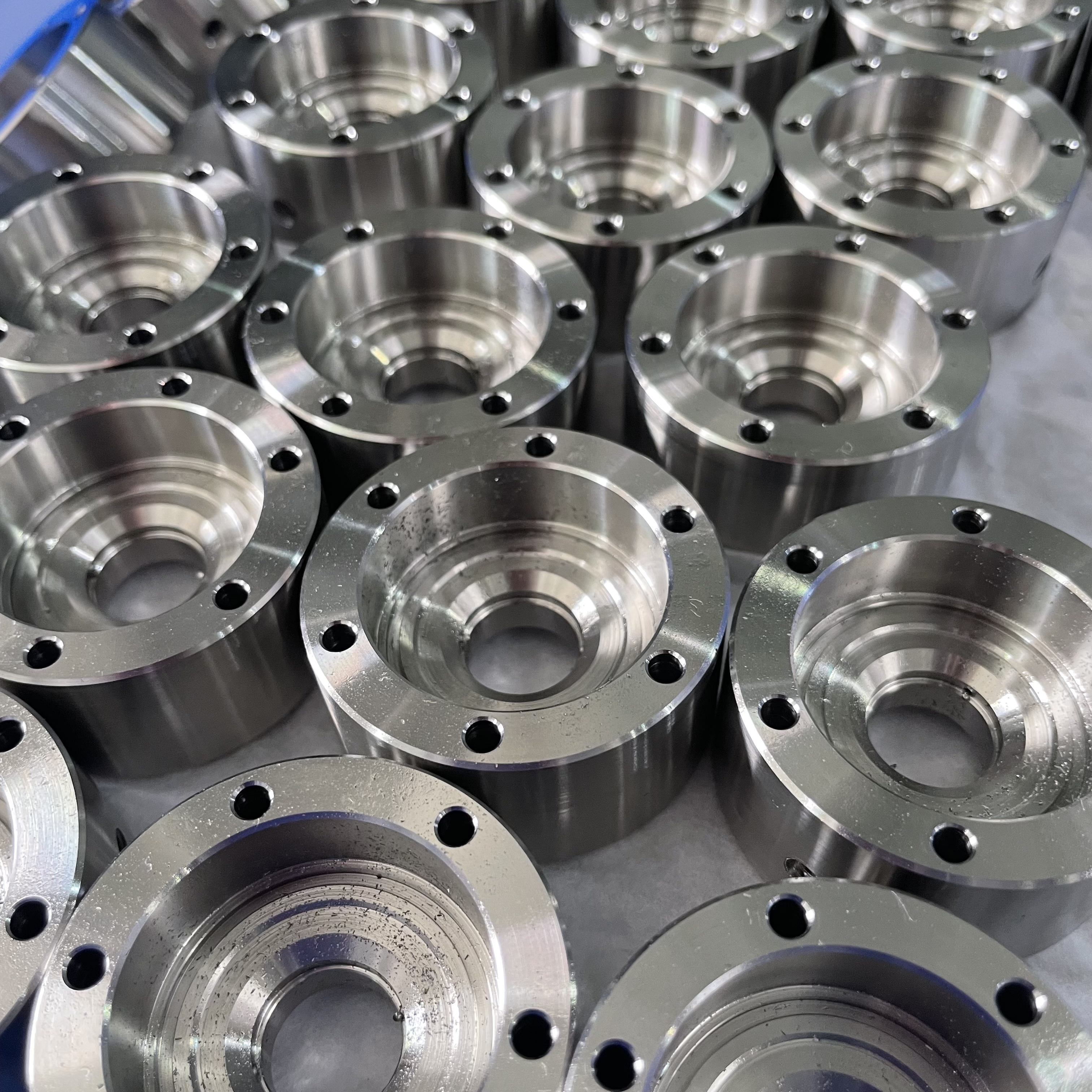
At Precision Fab CNC Machining, we specialize in producing parts for prototypes, short runs, and high-volume production. Our prototyping machine capabilities extend across metal, plastic, and wood machining, with welding fabrication services available to complement and finalize your prototype if required.
Address
Address: Room320 10F, Building A,Nanshan international building, Dayawan District, Huizhou, Guangdong, 516001 China
Contacts
billy@timaycnc.com