Cutting-Edge CNC Tools for Aluminum Machining Trends

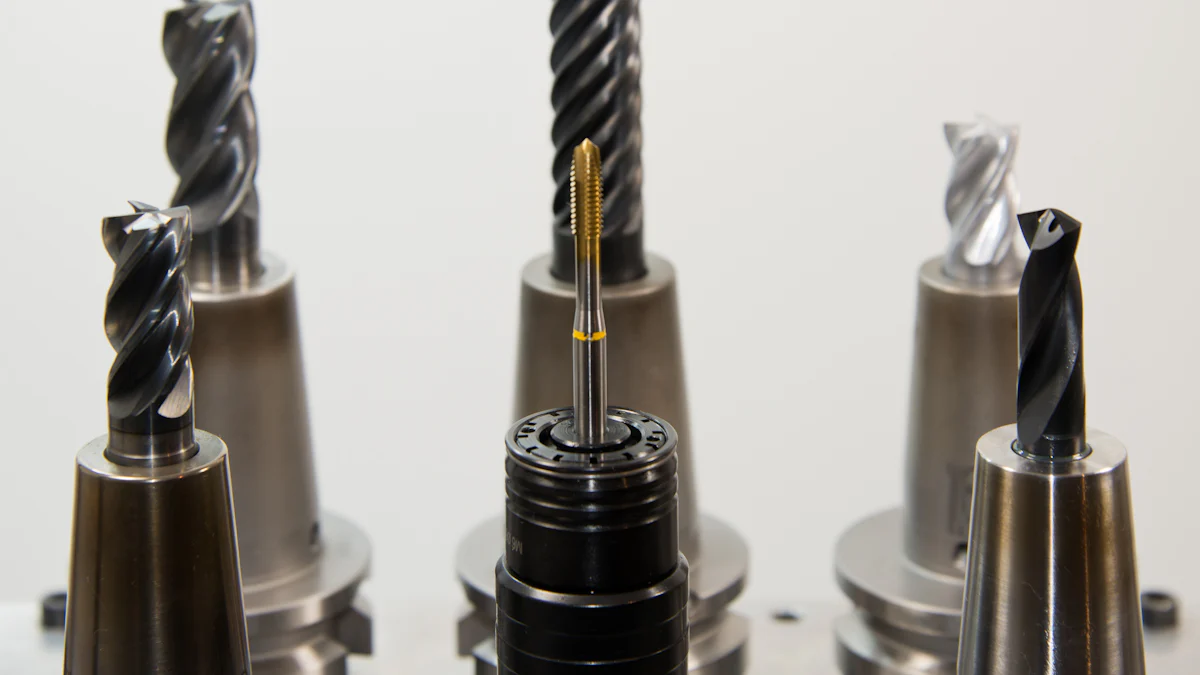
Aluminum fabrication has transformed with the rise of cutting-edge technologies in CNC machining. You now have access to tools that deliver unmatched precision and efficiency. High-Speed Machining (HSM) allows you to cut aluminum faster while reducing tool wear. Cryogenic machining keeps tools cool, preventing heat-related deformation. Advanced 5-axis systems let you create intricate shapes with fewer setups. These innovations make computer numerical control machining essential for industries like aerospace, where lightweight and accurate components are critical. Staying updated with these advancements ensures you remain competitive in this rapidly evolving field.
Key Takeaways
High-Speed Machining (HSM) makes aluminum cutting faster and easier. It reduces tool damage and saves time, helping industries like aerospace.
Multi-axis CNC machines can shape aluminum into detailed designs. They improve accuracy and need fewer setups.
IoT in CNC machines helps track work in real-time. It predicts problems early, reducing delays and improving production.
Diamond-coated tools last longer and cut better. They make smoother surfaces and save money by lasting a long time.
AI-powered CNC machines plan better cutting paths and fix mistakes. This keeps quality high and boosts productivity.
Current Trends in CNC Aluminum Fabrication
High-Speed Machining
Benefits of high RPMs for aluminum machining
High-speed machining (HSM) has revolutionized aluminum machining by delivering exceptional precision and efficiency. By operating at higher RPMs, you can achieve lower cutting temperatures, which helps maintain tool strength and extends tool life. This process also allows for thinner chips to be cut, reducing cutting forces and improving the surface finish of aluminum components. HSM strategies maintain constant cutting forces, ensuring precision even during demanding machining tasks.
Faster production with reduced cycle times
HSM significantly reduces cycle times, making it ideal for industries like aerospace where speed and accuracy are critical. Increased cutting speeds enable higher material removal rates, allowing you to shape aluminum alloys efficiently. This method also minimizes the need for post-processing by producing superior surface finishes. Reduced tool wear further enhances productivity, especially in high-volume aluminum machining operations.
Multi-Axis CNC Systems
Precision and complexity with 5-axis and 6-axis machining
Multi-axis CNC systems elevate aluminum fabrication by enabling intricate geometries and angles that traditional methods cannot achieve. These machines operate on three to five axes, allowing for simultaneous movement across multiple directions. This capability ensures micron-level accuracy, which is essential for industries requiring detailed precision work.
Feature | Benefit |
|---|---|
Intricate Geometries | Enables the creation of complex shapes that are unachievable by traditional methods. |
Reduced Setups | Minimizes the need for multiple setups, streamlining the machining process. |
Enhanced Accuracy | Increases precision by combining several operations into one, reducing handling errors. |
Closer Proximity of Tool | Allows for shorter cutting tools, reducing vibration and improving surface finish. |
Multi-Axis Movement | Facilitates simultaneous movement across multiple axes for intricate part production. |
Applications in creating intricate aluminum components
Multi-axis CNC systems are indispensable for producing intricate aluminum components. Processes like CNC broaching create internal shapes such as keyways and splines, while CNC Electrical Discharge Machining (EDM) removes material using electrical discharges. These methods are ideal for crafting complex profiles and fine details in aluminum alloys, making them invaluable for industries like aerospace and automotive.
IoT Integration in CNC Machines
Real-time monitoring for predictive maintenance
IoT integration in CNC machines enhances real-time monitoring, enabling predictive maintenance that reduces downtime. Smart sensors detect abnormal conditions and alert maintenance teams instantly, allowing you to address issues before failures occur. These sensors also gather data on parameters like temperature, vibration, and power consumption, helping you assess machine health and performance effectively.
Data-driven optimization for aluminum fabrication
IoT-enabled CNC machines optimize aluminum fabrication through enhanced connectivity and automation. Real-time data collection eliminates manual processes, allowing operators to focus on higher-value tasks. This data-driven approach improves equipment utilization, reduces cycle times, and increases productivity. By analyzing production data, you can make informed decisions to streamline operations and enhance efficiency.
Innovative CNC Tools and Technologies for Aluminum Fabrication
Diamond-Coated Tools
Superior durability and precision for aluminum cutting
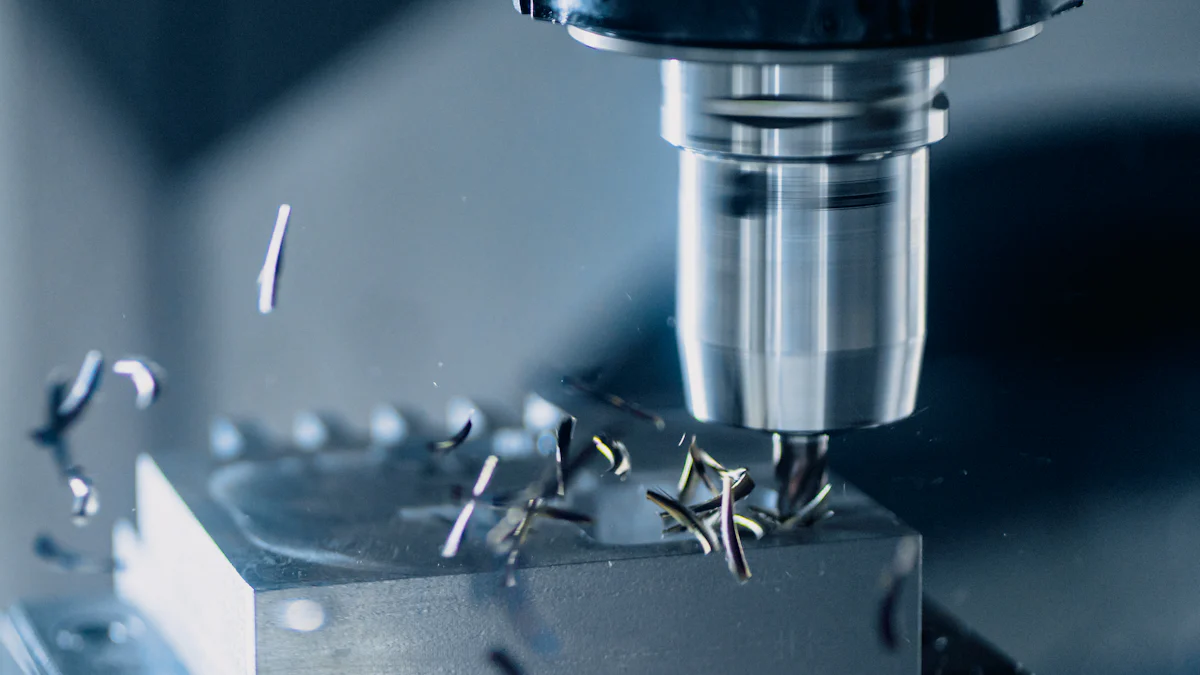
Diamond-coated cutting tools are a game-changer in aluminum machining. These tools offer unmatched hardness and wear resistance, making them ideal for cutting through aluminum alloys with precision. The diamond coating reduces friction during machining, which minimizes heat generation and prevents material adhesion. This results in smoother finishes and higher accuracy in your aluminum part production. Whether you're working on aerospace components or automotive parts, diamond-coated tools ensure consistent performance and superior results.
Cost savings through extended tool life
Investing in diamond-coated tools can significantly reduce your operational costs. These tools last much longer than traditional carbide tools, thanks to their exceptional durability. With fewer replacements needed, you save on both tool costs and downtime. Additionally, the extended lifespan of these cutting tools enhances productivity, especially in high-volume aluminum machining operations. Over time, this translates to substantial cost savings for your business.
AI-Driven CNC Systems
Adaptive machining for complex aluminum geometries
AI-driven CNC systems bring a new level of adaptability to aluminum machining. These systems use advanced algorithms to optimize cutting parameters and tool paths based on historical data. Self-learning capabilities allow the machine to improve its performance over time, enhancing productivity and reducing waste. Real-time adjustments prevent damage by detecting tool wear or abnormal vibrations. Predictive algorithms also streamline operations by reducing setup times and facilitating real-time quality control. With these features, you can tackle even the most intricate aluminum part production challenges with ease.
Error reduction with machine learning algorithms
Machine learning in AI-driven CNC systems minimizes errors and boosts efficiency. By automating repetitive tasks, AI reduces the likelihood of human error. It also processes large datasets to optimize tool paths and improve machining accuracy. These systems analyze repetitive patterns, enabling the production of high-quality parts with minimal defects. Over time, AI-powered machines adapt to new inputs, ensuring consistent precision in your aluminum machining projects.
Additive Manufacturing in CNC Machining
Hybrid CNC machines for subtractive and additive processes
Hybrid CNC machines combine the best of subtractive and additive manufacturing processes. These machines allow you to build up and repair damaged parts only where needed, reducing material costs. Switching between additive and subtractive operations without moving the workpiece saves significant time. Hybrid machines also enhance mechanical properties by combining different metals layer-by-layer. This makes them invaluable for industries like aerospace and medical, where strength and heat transfer are critical. For low-quantity production, hybrid CNC machining technology offers a simplified and responsive solution.
Prototyping and custom aluminum part production
Additive manufacturing has revolutionized prototyping and custom aluminum part production. Techniques like Direct Metal Laser Sintering (DMLS) enable the rapid creation of complex and lightweight aluminum parts without tooling. This approach is perfect for low-volume scenarios, such as prototyping or one-off custom parts. You can design features like internal channels and weight-saving lattice structures that traditional methods cannot achieve. Additive manufacturing also facilitates part consolidation, allowing you to produce multi-part assemblies as a single unit. This reduces both manufacturing time and material waste, making it an efficient choice for aluminum machining.
Impact of CNC Advancements on Industries
Aerospace Industry
Lightweight and durable aluminum components
CNC advancements have revolutionized aluminum machining in aerospace manufacturing. You can now produce lightweight components that enhance fuel efficiency and performance. CNC machining enables the creation of complex geometries that are both strong and lightweight, which traditional methods cannot achieve. Materials like aluminum, known for their corrosion resistance and high strength-to-weight ratio, are ideal for aircraft structures. These properties ensure that aerospace components remain durable while reducing overall weight.
CNC machining allows for:
Lightweight designs that improve fuel efficiency.
Robust components with intricate geometries.
Durable parts made from corrosion-resistant materials like aluminum.
Precision machining for safety-critical parts
Precision CNC machining plays a vital role in creating safety-critical aerospace components. CNC machines can hold tolerances as tight as +/- .0005”, ensuring high accuracy. The integration of automation and robotics allows for real-time data collection and process optimization. With 5-axis CNC machines, you can produce intricate parts in a single setup, reducing errors and improving efficiency. These advancements ensure that aerospace components meet stringent safety and performance standards.
Automotive Industry
High-speed production of aluminum engine components
CNC tools have transformed aluminum machining in the automotive sector. High-speed production processes allow you to manufacture engine components with exceptional precision. CNC turning ensures tight tolerances, which are essential for parts requiring strict dimensional accuracy. Tools like mills, taps, and drills help create critical components such as engine blocks from aluminum alloys. These advancements enhance efficiency and reliability in automotive manufacturing.
Benefits of CNC machining in automotive production:
Faster production times compared to traditional methods.
High precision for optimal engine performance.
Tight tolerances for critical components.
Customization for electric vehicles and prototypes
CNC technology supports the growing demand for customization in electric vehicles (EVs). You can quickly produce bespoke prototypes, enabling manufacturers to bring innovative designs to market faster. CNC machining also allows for the creation of interior and exterior trim components, such as dashboard panels and grille inserts. This flexibility ensures that EVs meet both functional and aesthetic requirements. As EV technology evolves, CNC advancements continue to accelerate innovation and reduce development cycles.
Construction and Architecture
Aluminum machining for modern building designs
CNC advancements have elevated aluminum machining in construction and architecture. You can now produce intricate designs that align with modern architectural trends. High-speed machining processes enhance productivity and accuracy, enabling the creation of complex aluminum components for building facades and structural elements. These advancements allow architects to push the boundaries of design while maintaining structural integrity.
Cost-effective production of structural components
CNC machining offers a cost-effective solution for producing structural aluminum components. Precision and efficiency reduce material waste, lowering overall construction costs. High-speed machining processes further enhance productivity, ensuring faster project completion. By leveraging CNC technology, you can achieve both economic and design goals in construction projects.
Future Trends in CNC Aluminum Fabrication
Sustainability in CNC Machining
Energy-efficient CNC machines for aluminum
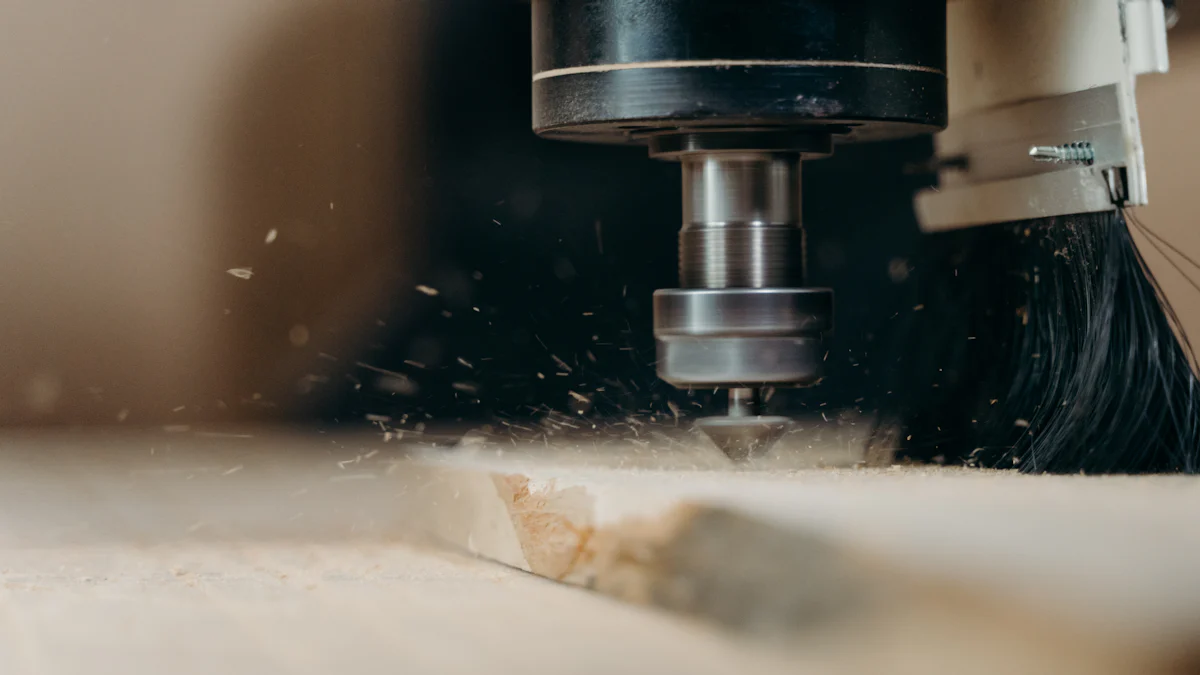
Sustainability is becoming a key focus in aluminum machining. Energy-efficient CNC machines are now equipped with advanced motors and intelligent power management systems. These features optimize energy use during machining processes. By adjusting cutting speeds and feeds, you can minimize power consumption without sacrificing performance. Additionally, many manufacturers are adopting renewable energy sources like solar and wind power to further reduce environmental impact.
Recycling and waste reduction in machining processes
Recycling programs are transforming waste management in machining. Chips and coolant from aluminum machining are now being recycled and reused, reducing material waste significantly. Water-based coolants are replacing oil-based ones, offering an environmentally friendly alternative. These practices not only lower costs but also improve your business's reputation among eco-conscious customers. By adopting these methods, you contribute to a greener future while maintaining efficiency in aluminum fabrication.
Quantum Computing in CNC Optimization
Solving complex machining challenges
Quantum computing is set to revolutionize CNC operations. This technology can solve complex optimization problems at speeds traditional computers cannot match. For example, it can enhance tool path planning, ensuring maximum material utilization and process efficiency. With quantum computing, you can tackle intricate machining challenges that were previously time-consuming or impossible to solve.
Faster and more accurate toolpath calculations
Quantum computing offers unmatched processing power for CNC applications. It enables real-time optimization of toolpaths, reducing machining time and improving accuracy. This advancement allows you to produce high-quality aluminum components faster. As quantum technology evolves, it will play a crucial role in shaping the future of aluminum machining.
Augmented Reality (AR) in CNC Operations
AR-assisted programming and machine setup
Augmented Reality (AR) is making CNC operations more intuitive. AR provides real-time, interactive visuals of machining processes, helping you program and set up machines with ease. This technology simplifies complex tasks, reducing the likelihood of errors. By visualizing the machining process beforehand, you can ensure precision and efficiency in aluminum fabrication.
Enhanced operator training and troubleshooting
AR is also transforming training and troubleshooting in CNC machining. Operators can use AR to learn machine functions interactively, speeding up the training process. When issues arise, AR offers step-by-step guidance, making troubleshooting faster and more effective. This enhanced customization of training and support ensures that your team remains skilled and confident in handling advanced CNC systems.
Advancements in CNC tools have transformed aluminum fabrication, making processes faster, more precise, and highly efficient. High-speed machining and diamond-coated tools improve productivity and surface quality. Additive manufacturing, combined with traditional CNC methods, enables the creation of complex geometries with ease. Artificial intelligence further enhances operations by optimizing tool paths and reducing errors.
Adopting cutting-edge CNC tools offers significant benefits. You achieve precision cutting, faster production, and smoother finishes while avoiding material deformation. Automation ensures consistency and flexibility, meeting the demands of industries like aerospace and automotive.
Staying informed about CNC innovations keeps you ahead in a competitive market. Investing in modern equipment and skilled labor fosters innovation and positions your business as a leader in aluminum fabrication.
FAQ
What is the best CNC tool for aluminum machining?
Diamond-coated tools are the best for aluminum. They offer superior durability, reduce friction, and prevent material adhesion. These tools ensure smoother finishes and longer tool life, making them ideal for high-precision applications like aerospace and automotive manufacturing.
How does IoT improve CNC machining?
IoT enhances CNC machining by enabling real-time monitoring and predictive maintenance. Smart sensors collect data on machine performance, helping you identify issues early. This reduces downtime, optimizes production, and improves overall efficiency in aluminum fabrication.
Can CNC machines handle complex aluminum designs?
Yes, multi-axis CNC systems can handle intricate designs. These machines operate on multiple axes, allowing you to create complex geometries with high precision. They are perfect for industries requiring detailed aluminum components, such as aerospace and architecture.
Is additive manufacturing cost-effective for aluminum parts?
Additive manufacturing is cost-effective for low-volume production and prototyping. It reduces material waste and eliminates the need for tooling. Hybrid CNC machines combine additive and subtractive processes, offering flexibility and efficiency for custom aluminum part production.
How does AI benefit CNC machining?
AI optimizes CNC machining by adapting cutting parameters and reducing errors. Machine learning algorithms analyze data to improve tool paths and machining accuracy. This technology enhances productivity, minimizes waste, and ensures consistent quality in aluminum fabrication.
See Also
Benefits of Utilizing Aluminum CNC Machining Solutions
CNC Machining Innovations Revolutionizing Precision Manufacturing
Upcoming CNC Machining Trends for Electronics in 2024
CNC Precision Machining Effects: Benefits and Future Insights
Streamlined CNC Machining Solutions for Precision Production
About US
Follow Us
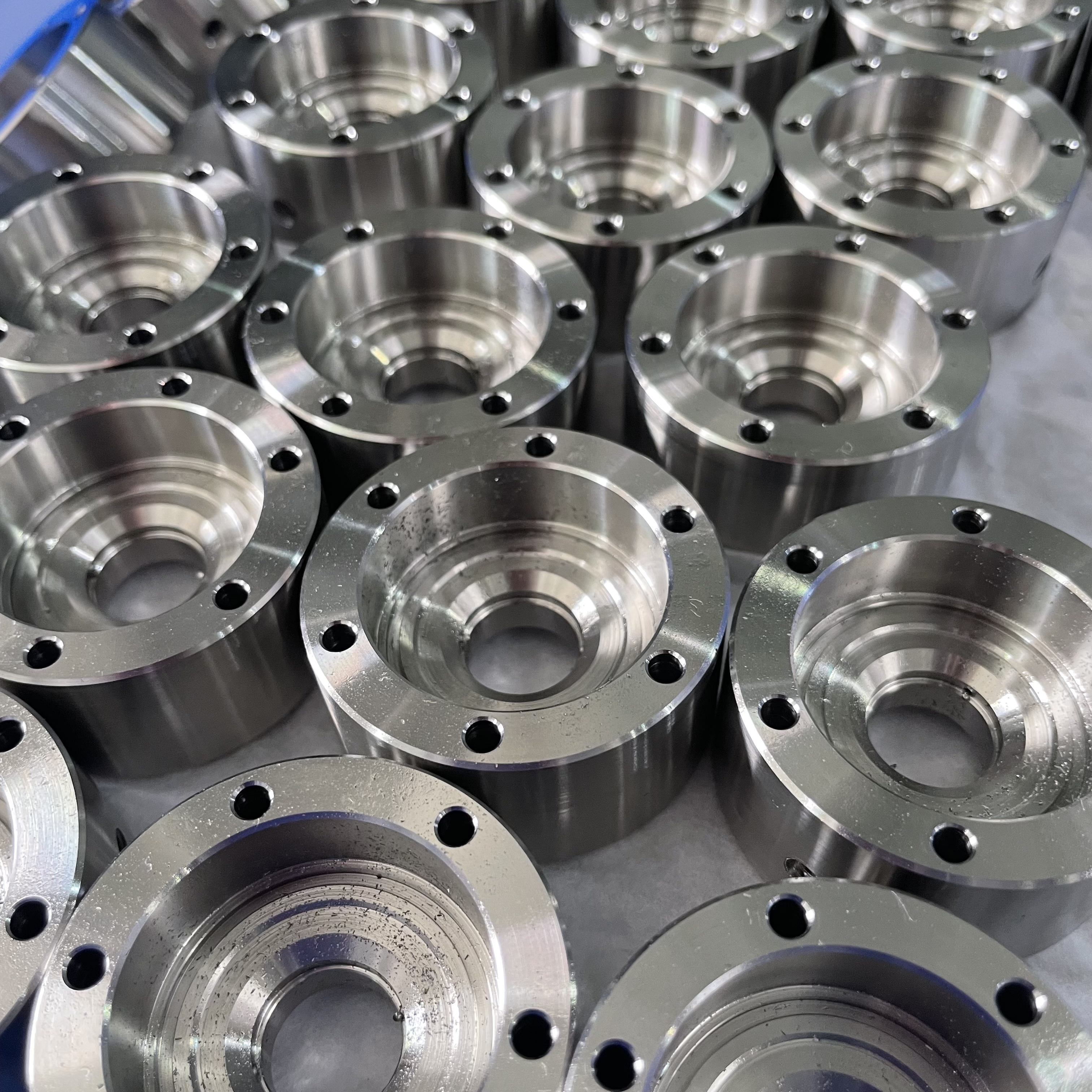
Your prototype holds unparalleled significance, and we deeply value its uniqueness. Collaborating with you during the preparation phase for running your prototype or parts is a commitment we gladly embrace. Whether it's a single part or a complex assembly, we are dedicated to selecting the optimal tools and pathways to bring your envisioned product to life.
At Precision Fab CNC Machining, we specialize in producing parts for prototypes, short runs, and high-volume production. Our prototyping machine capabilities extend across metal, plastic, and wood machining, with welding fabrication services available to complement and finalize your prototype if required.
Address
Address: Room320 10F, Building A,Nanshan international building, Dayawan District, Huizhou, Guangdong, 516001 China
Contacts
billy@timaycnc.com