The Cost Factors of CNC Machining


CNC machining cost depends on several key factors that influence the manufacturing process. Material selection plays a significant role, as different materials vary in price and machinability. Machine efficiency, including the type and size of CNC equipment, directly impacts operating costs. Design complexity, production volume, and labor costs also contribute to the overall cost of CNC machining. Additional considerations, such as tooling, surface finishes, and lead times, further affect pricing. By understanding these factors, you can make informed decisions to optimize the cost of CNC machining while maintaining quality.
Key Takeaways
The material you pick affects CNC machining costs a lot. Use cheaper materials like aluminum to save money.
Simple designs take less time to machine and cost less. Follow smart design rules to make things easier and cheaper.
Buying in large amounts lowers the price for each item. Spread fixed costs over more pieces to save more.
Taking care of machines stops breakdowns and saves on repairs. Do regular checkups to keep work going smoothly.
Working with a skilled manufacturer helps with quality and price. Find someone with experience and clear pricing to improve your project.
Material Costs in CNC Machining
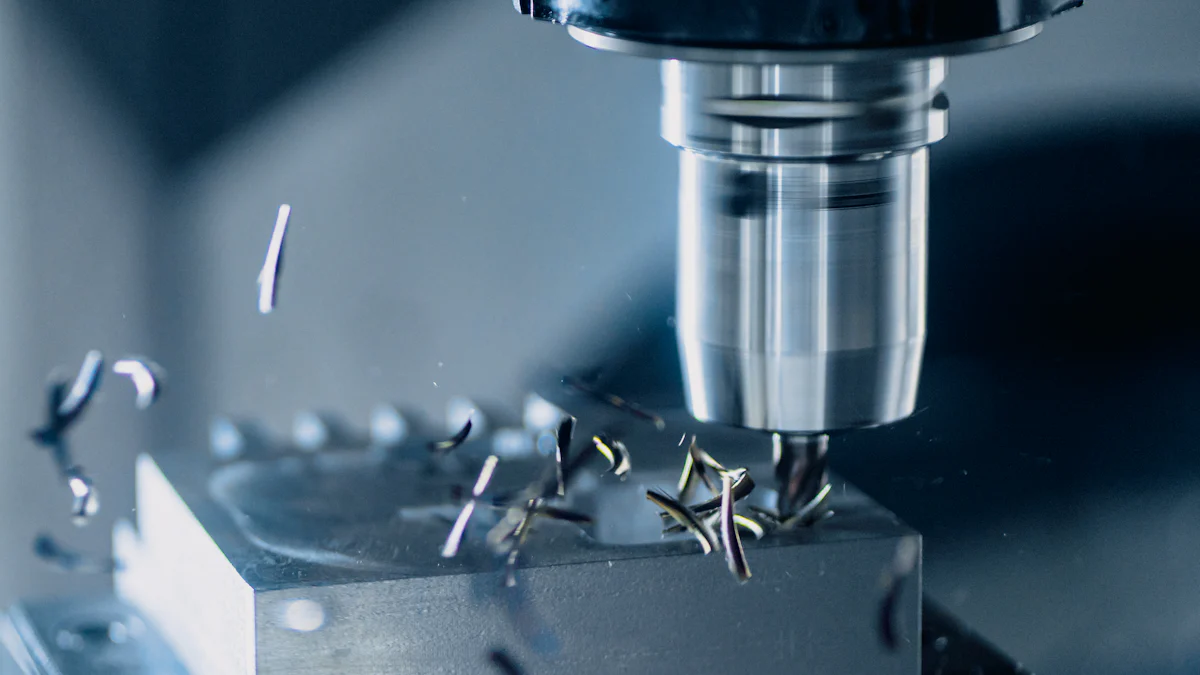
Material costs play a significant role in determining the overall cost of CNC machining. The type of material you choose, its properties, and how efficiently it is utilized all contribute to the final cost per part.
Types of Materials
Metals (e.g., aluminum, steel, titanium)
Metals are among the most commonly used materials in CNC machining. Aluminum is a cost-effective option due to its low raw material price and excellent machinability. Popular alloys include Aluminum 6061-T6 and 7075-T6. Stainless steel offers versatility and moderate costs, with types like 303 and 304 being widely used. Titanium, while more expensive, provides exceptional strength-to-weight ratio, making it ideal for specialized industries like aerospace.
Plastics (e.g., ABS, nylon, PEEK)
Plastics are another popular choice for CNC machining. ABS is affordable and easy to machine, making it suitable for prototypes. Nylon offers durability and flexibility, while PEEK is a high-performance plastic used in demanding applications. Plastics generally cost less than metals, but their suitability depends on your project requirements.
Material Properties and Pricing
Strength, durability, and machinability
The properties of a material significantly impact its cost. Strong and durable materials like titanium or stainless steel are more expensive than softer metals or plastics. Machinability also affects pricing. Materials that are harder to machine require more time and wear out tools faster, increasing operational expenses.
Availability and market demand
Material availability and market demand influence pricing. Common materials like aluminum and ABS are readily available, keeping their costs lower. In contrast, specialized materials like titanium or PEEK may have higher prices due to limited supply and niche demand.
Waste and Material Utilization
Impact of material waste on CNC machining costs
Material waste directly affects CNC machining costs. Excessive waste increases raw material expenses and disposal costs. Inefficient cutting paths or improper machine calibration can lead to higher waste levels, driving up the cost of CNC machining.
Strategies to minimize waste
You can reduce waste by adopting effective strategies. Recycle metal scraps to lower disposal costs. Implement adaptive cutting techniques to optimize cutting paths and minimize excess material. Calibrating machines for smaller cut widths also helps reduce waste. Additionally, reusing coolants and opting for reused materials can further improve material utilization.
Machine and Tooling Costs in CNC Machining
Machine and tooling costs are significant factors in determining the overall cost of CNC machining. The type of machine, tooling requirements, and maintenance practices all influence the efficiency and expense of the manufacturing process.
Machine Type and Capabilities
3-axis vs. 5-axis machines
The type of CNC machine you use directly impacts costs. A 3-axis machine is more affordable, with a cost range of $25,000 to $50,000. In contrast, 5-axis machines, which offer greater flexibility and precision, range from $80,000 to over $500,000. Hourly rates also differ. Operating a 3-axis machine costs about $40 per hour, while 5-axis machines range between $75 and $125 per hour. For simpler parts, a 3-axis machine is cost-effective. However, complex geometries often require the advanced capabilities of a 5-axis machine, which increases CNC machining costs.
Specialized machinery for complex parts
Producing intricate designs often requires specialized CNC machines. These machines handle tight tolerances and complex geometries but come with higher costs. Advanced machinery extends setup times and requires skilled operators. Additionally, achieving precision for complex parts may involve multiple passes and setups, further increasing costs. If your design allows, simplifying features can reduce machining time and expenses.
Tooling Requirements
Tool wear and replacement costs
Tooling cost is another critical factor. CNC tools experience wear over time, especially when machining hard materials. Frequent tool replacements increase costs. Using high-quality tools can extend tool life, reducing long-term expenses.
Custom tooling for unique designs
Custom tooling is often necessary for unique or intricate designs. Standard tools may not suffice, leading to higher costs. Custom fixtures and tools are expensive, particularly for small production runs. If possible, designing parts that utilize standard tools can help minimize tooling costs.
Maintenance and Downtime
Impact of machine maintenance on CNC machining costs
Regular maintenance ensures CNC machines operate efficiently. Neglecting maintenance can lead to breakdowns, increasing downtime and repair costs. These interruptions directly affect the cost of CNC machining by delaying production schedules.
Avoiding downtime through preventive measures
Preventive maintenance reduces the risk of unexpected downtime. Regularly inspecting and servicing machines keeps them in optimal condition. This practice not only lowers repair costs but also ensures consistent production, helping you manage CNC machining costs effectively.
Design Complexity and CNC Machined Part Costs
Geometric Complexity
Intricate designs requiring advanced machining
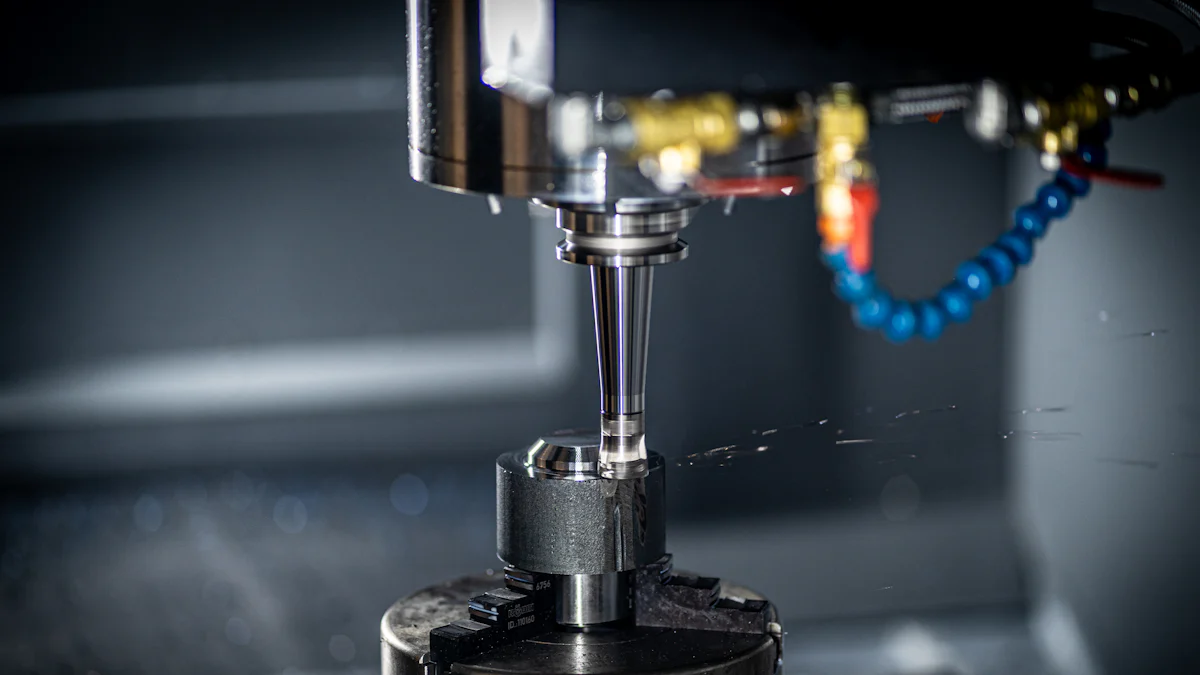
The complexity of your design significantly impacts cnc machining costs. Intricate geometries often require advanced machinery and skilled operators. Features like overhangs, undercuts, or tight corners complicate the machining process. These designs demand specialized tools and precise programming, which increase setup times and overall costs. Additionally, complex parts may require multiple machining passes, further extending production time. Simplifying your design where possible can reduce these factors and lower costs.
Tolerances and precision requirements
Tight tolerances and high precision add to cnc machining cost. Achieving these specifications requires advanced equipment and experienced operators. For example, producing parts with tolerances of ±0.001 inches demands more time and effort than standard tolerances. Specialized tooling and meticulous quality checks also contribute to higher costs. By balancing your tolerance requirements with functional needs, you can optimize manufacturing expenses.
Number of Setups
Multi-setup processes vs. single-setup machining
The number of setups required for your part directly affects cnc machining costs. Multi-setup processes involve repositioning the part multiple times, which increases labor and machining time. In contrast, single-setup machining, often achieved with 5-axis machines, reduces handling and improves efficiency. While 5-axis machines have higher hourly rates, they can save costs by minimizing setup time for complex parts.
Time and labor implications
Each setup requires careful alignment and calibration, which adds to labor costs. Multi-setup processes also increase the risk of errors, leading to potential rework. Opting for designs that allow single-setup machining can streamline production and reduce both time and labor expenses.
Prototyping and Iterations
Costs associated with design revisions
Prototyping plays a crucial role in refining your design. Each iteration involves additional machining time and material costs. However, cnc machines excel at producing precise prototypes, ensuring your design meets performance and safety standards. By testing and refining your design early, you can avoid costly revisions during full-scale production.
Importance of design-for-manufacturing (DFM) principles
Applying design-for-manufacturing principles can significantly reduce costs. DFM focuses on creating designs that are easy to machine, minimizing unnecessary complexity. For example, symmetrical parts are easier to produce and less prone to errors. By incorporating DFM principles, you can streamline the manufacturing process and achieve cost-effective results.
Labor Costs and CNC Machining Cost
Labor costs are a significant factor in determining the overall cnc machining cost. The expertise of operators, programming and setup time, and regional labor rates all influence the final price quote for custom machining projects.
Operator Expertise
Skilled labor vs. automated processes
Skilled operators play a crucial role in cnc machining. They enhance productivity and reduce machining times, which lowers labor costs. High-precision machining often requires experienced operators to handle setup, programming, and operation. While automation can streamline some processes, skilled labor remains essential for complex or custom machining projects. Investing in workforce training and advanced technologies can make manufacturing more cost-effective.
Training and experience levels
The complexity of your project determines the level of expertise required. Projects with intricate designs or tight tolerances demand operators with advanced training and experience. These professionals ensure efficient cnc machine operation, but their expertise comes at a higher cost. However, their ability to minimize errors and optimize production can offset these expenses in the long run.
Programming and Setup Time
CAM programming for CNC machines
Programming is a critical step in cnc machining. Computer-aided manufacturing (CAM) software translates your design into machine-readable instructions. The time required for programming depends on the complexity of your design. Simple parts take less time, while intricate geometries require detailed programming, increasing costs. Efficient programming reduces errors and ensures smooth production runs.
Setup time for different production runs
Setup time varies based on the quantity and complexity of your production run. Small batches often require frequent setups, which increases the cost per part. Larger production runs benefit from fewer setups, spreading the setup cost across more units. Streamlining your design can reduce setup time, saving both time and money.
Location and Labor Rates
Regional differences in labor costs
Labor rates vary significantly across regions, affecting cnc machining costs globally. Countries with lower labor costs offer more competitive pricing. In contrast, developed nations face higher labor expenses, which directly impacts the cost per part. The availability of skilled machinists also influences pricing. Regions with a shortage of skilled labor may charge higher rates due to increased demand.
Outsourcing vs. in-house production
Outsourcing cnc machining to regions with lower labor costs can reduce expenses. However, you must consider factors like shipping, lead times, and quality control. In-house production offers greater control but often comes with higher labor and operational costs. Balancing these tradeoffs is essential for optimizing your manufacturing strategy.
Volume and Production Runs in CNC Machining
Low-Volume vs. High-Volume Production
Cost per unit in small vs. large batches
The size of your production run volume directly affects the cost per unit. Small batches often involve higher costs because the setup time and tooling expenses are spread across fewer parts. For example, a single setup for a low-volume production run can significantly increase the price quote per unit. In contrast, high-volume production allows you to distribute these fixed costs over a larger quantity, reducing the cost per part.
Economies of scale in CNC machining
High-volume production benefits from economies of scale. With larger runs, you can optimize plastic CNC machining processes, reduce material waste, and improve efficiency. This approach lowers overall costs and makes high-volume CNC manufacturing more cost-effective. If your project allows, increasing production run volume can help you achieve better pricing.
Lead Times and Urgency
Expedited production costs
Short lead times often require heightened efficiency. Meeting tight deadlines may involve running machines at maximum capacity or scheduling overtime, which increases CNC manufacturing costs. Excessive equipment usage can also lead to wear and tear, raising maintenance expenses. While expedited production ensures faster delivery, it comes at a higher cost.
Balancing speed and cost efficiency
Balancing speed with cost efficiency is crucial. Efficient processes allow you to meet deadlines without compromising quality. For example, optimizing plastic CNC machining workflows minimizes waste and reduces production time. However, overemphasizing speed can lead to employee fatigue and equipment damage. A sustainable approach ensures consistent lead times and manageable costs.
Batch Consistency
Quality control in large production runs
Maintaining consistency in large production runs requires strict quality control. Precision-focused processes ensure tight tolerances but increase CNC machining costs. For example:
Tighter tolerances demand advanced tooling and skilled operators.
Complex designs require intricate programming and precise control.
Increased waste and stringent inspections raise overall costs.
Reducing defects to save costs
Reducing defects improves efficiency and lowers manufacturing cost. Implementing robust quality control measures minimizes errors during plastic CNC machining. This approach reduces waste and ensures consistent results, saving you money in the long run.
Additional Costs of CNC Machining
Finishing Processes
Surface treatments (e.g., anodizing, polishing)
Finishing processes enhance the appearance, durability, and functionality of CNC machined parts. Surface treatments like anodizing, polishing, and powder coating are common options. For example, anodizing improves corrosion resistance and adds a decorative finish, while polishing creates a smooth, reflective surface. These treatments vary in cost depending on the material and finish type.
Material | Surface Finish | Unit Price (Estimated) |
|---|---|---|
Aluminum | As Machined | $15 – $30 |
Aluminum | Anodizing | $20 – $40 |
Aluminum | Bead Blasting | $15 – $35 |
Aluminum | Polishing | $25 – $50 |
Aluminum | Powder Coating | $30 – $60 |
Aluminum | Electroplating | $35 – $70 |
Aluminum | Brushing | $20 – $45 |
Selecting the right surface treatment depends on your project’s requirements. While these processes add to the cost, they ensure the final product meets aesthetic and functional standards.
Secondary operations (e.g., threading, deburring)
Secondary operations like threading and deburring refine CNC machined parts. Threading ensures proper assembly, while deburring removes sharp edges for safety and precision. These processes require additional time and resources, increasing overall costs. However, they are essential for achieving high-quality results in manufacturing.
Packaging and Shipping
Protective packaging for delicate parts
Packaging protects CNC machined parts during transit. Delicate components require specialized packaging, such as foam inserts or custom boxes, to prevent damage. Efficient packaging solutions reduce the risk of defects and ensure safe delivery.
Transportation costs for heavy or bulky items
Shipping costs depend on the size and weight of your parts. Heavier items incur higher fees, and the choice of transportation mode also affects expenses. For instance, air freight is faster but more expensive than ground shipping. Optimizing packaging design can help minimize shipping costs while maintaining product safety.
Quality Assurance
Inspection and testing costs
Quality assurance ensures your parts meet specifications. Inspection processes, such as dimensional checks and material testing, add to CNC machining costs. These steps verify accuracy and functionality, reducing the risk of defects in the final product.
Certifications and compliance requirements
Certifications like ISO 9001 or AS9100 improve manufacturing processes and ensure compliance with industry standards. Adhering to these certifications reduces material waste and enhances cost-efficiency. While obtaining certifications involves additional costs, they allow you to access competitive markets and maintain high-quality standards.
How to Optimize CNC Machining Costs
Simplify Design
Reduce unnecessary complexity
Simplifying your part design is one of the most effective ways to reduce CNC machining costs. Complex geometries often require advanced machinery, multiple setups, and custom tooling, all of which increase expenses. By eliminating unnecessary features, you can streamline the manufacturing process and save time and money. For example, avoid intricate undercuts or tight corners unless absolutely necessary. A simpler design not only reduces machining time but also minimizes the risk of errors during production.
Use design-for-manufacturing (DFM) principles
Applying design-for-manufacturing (DFM) principles ensures your design is optimized for efficient production. DFM focuses on creating parts that are easy to machine while maintaining functionality. Key principles include cost reduction, increased productivity, and improved product quality. The table below highlights how DFM can help you achieve these goals:
Principle | Description |
|---|---|
Cost Reduction | Minimizes overall manufacturing costs by simplifying designs and using materials more efficiently. |
Increased Productivity | Enhances the production process through streamlined operations and reduced need for extensive manual labor. |
Improved Product Quality | Ensures higher quality outcomes by addressing potential manufacturing issues during the design phase. |
Faster Time to Market | Accelerates the product development cycle by reducing the time spent on troubleshooting and redesigns. |
Sustainability | Promotes more sustainable manufacturing practices by reducing waste and optimizing resource use. |
By incorporating these principles, you can lower costs and improve the efficiency of your CNC machining projects.
Choose Cost-Effective Materials
Balance performance and cost
Selecting the right material is crucial for balancing performance and cost. Start by understanding your project requirements, such as the part’s purpose and desired properties. Evaluate material options based on strength, durability, and machinability. For example, aluminum offers excellent machinability at a lower cost, while titanium provides superior strength but at a higher price. Consider your budget constraints and choose a material that meets your needs without exceeding your cost limits.
Consider material availability
Material availability also impacts costs. Common materials like aluminum and ABS are more affordable due to their widespread availability. In contrast, specialized materials like PEEK or titanium may have higher prices because of limited supply. Assess the machining environment to ensure compatibility with the selected material. Choosing readily available materials can help you avoid delays and keep costs under control.
Order in Bulk
Leverage economies of scale
Ordering CNC machined parts in bulk significantly reduces the cost per unit. While the overall cost increases with larger orders, the per-unit cost decreases because fixed expenses like setup and tooling are spread across more parts. For example, producing 1,000 units instead of 100 can lower the cost per part by up to 50%. This approach is especially beneficial for high-volume production runs.
Reduce setup and tooling costs per unit
High start-up costs, such as programming and machine setup, are a significant percentage of the total cost for small quantities. By increasing your order size, you can distribute these costs over a larger number of parts. This strategy not only reduces the per-unit cost but also improves overall manufacturing efficiency. If your project allows, consider consolidating orders to maximize these savings.
Partner with the Right Manufacturer
Look for expertise and efficiency
Choosing the right CNC machining manufacturer can significantly impact your project’s success. A manufacturer with expertise ensures high-quality results and efficient processes. Look for companies with experience in handling your specific material and design requirements. For example, machining titanium requires advanced skills and equipment, while simpler materials like aluminum may not demand the same level of expertise.
Efficiency is another critical factor. Manufacturers with streamlined workflows and automated processes can reduce machining times and labor costs. This efficiency translates to lower expenses for you. Automated systems also minimize errors, ensuring consistent quality across production runs. When evaluating manufacturers, ask about their capabilities, such as the type of CNC machines they use and their approach to handling complex designs.
Evaluate pricing transparency and support
Transparent pricing helps you understand how costs are calculated and allows you to make informed decisions. A reliable manufacturer provides a detailed price quote that breaks down expenses, including material costs, labor, and additional services like finishing or shipping. This transparency ensures there are no hidden fees, helping you stay within budget.
Support services also play a vital role. Manufacturers offering design assistance or prototyping services can help you optimize your parts for machining. This support reduces unnecessary complexity, saving time and money. Additionally, consider their ability to handle large production volumes. Manufacturers with scalable operations can offer better pricing for bulk orders, leveraging economies of scale.
When selecting a manufacturer, consider factors like material selection, design complexity, and shipping costs. These elements influence the final price quote and overall project cost. Negotiating effectively and choosing a manufacturer with the right expertise ensures you receive quality results at a competitive price.
The cost of cnc machining depends on several factors, including material selection, machine capabilities, design complexity, labor, and production volume. You can optimize costs by simplifying part designs, using standardized components, and selecting economical materials that meet your needs. Efficient tooling strategies and early supplier involvement also help reduce expenses. Adopting lean manufacturing practices, such as eliminating waste and improving processes, ensures long-term savings.
By understanding these cost factors, you can plan your cnc projects effectively. This approach helps you balance quality and cost, ensuring better value for your manufacturing efforts.
FAQ
What is the most cost-effective material for CNC machining?
Aluminum is one of the most cost-effective materials. It offers excellent machinability, durability, and affordability. For plastic parts, ABS is a budget-friendly option. Your choice depends on the part’s requirements, such as strength or heat resistance.
How can you reduce CNC machining costs for complex designs?
Simplify your design by eliminating unnecessary features. Use design-for-manufacturing (DFM) principles to make parts easier to machine. Opt for standard tooling instead of custom tools. These steps reduce machining time and setup costs.
Does ordering in bulk always lower CNC machining costs?
Yes, ordering in bulk reduces the cost per unit. Fixed costs like setup and tooling are spread across more parts. However, ensure your project justifies the larger quantity to avoid unnecessary expenses.
How do tight tolerances affect CNC machining costs?
Tight tolerances require advanced equipment, skilled operators, and more machining time. These factors increase costs. Evaluate your design to determine if such precision is necessary for functionality.
What factors influence CNC machining lead times?
Lead times depend on design complexity, material availability, and production volume. Expedited orders increase costs. Planning ahead and simplifying your design can help you meet deadlines without extra expenses.
See Also
How CNC Precision Parts Impact Overall Manufacturing Expenses
Understanding CNC Milling Costs: What Precision Machining Really Costs
Key Elements That Influence CNC Precision Parts Processing Costs
Investigating CNC Machining Solutions for High-Quality Manufacturing
Streamlined CNC Machining Services for Accurate Manufacturing Needs
About US
Follow Us
Your prototype holds unparalleled significance, and we deeply value its uniqueness. Collaborating with you during the preparation phase for running your prototype or parts is a commitment we gladly embrace. Whether it's a single part or a complex assembly, we are dedicated to selecting the optimal tools and pathways to bring your envisioned product to life.
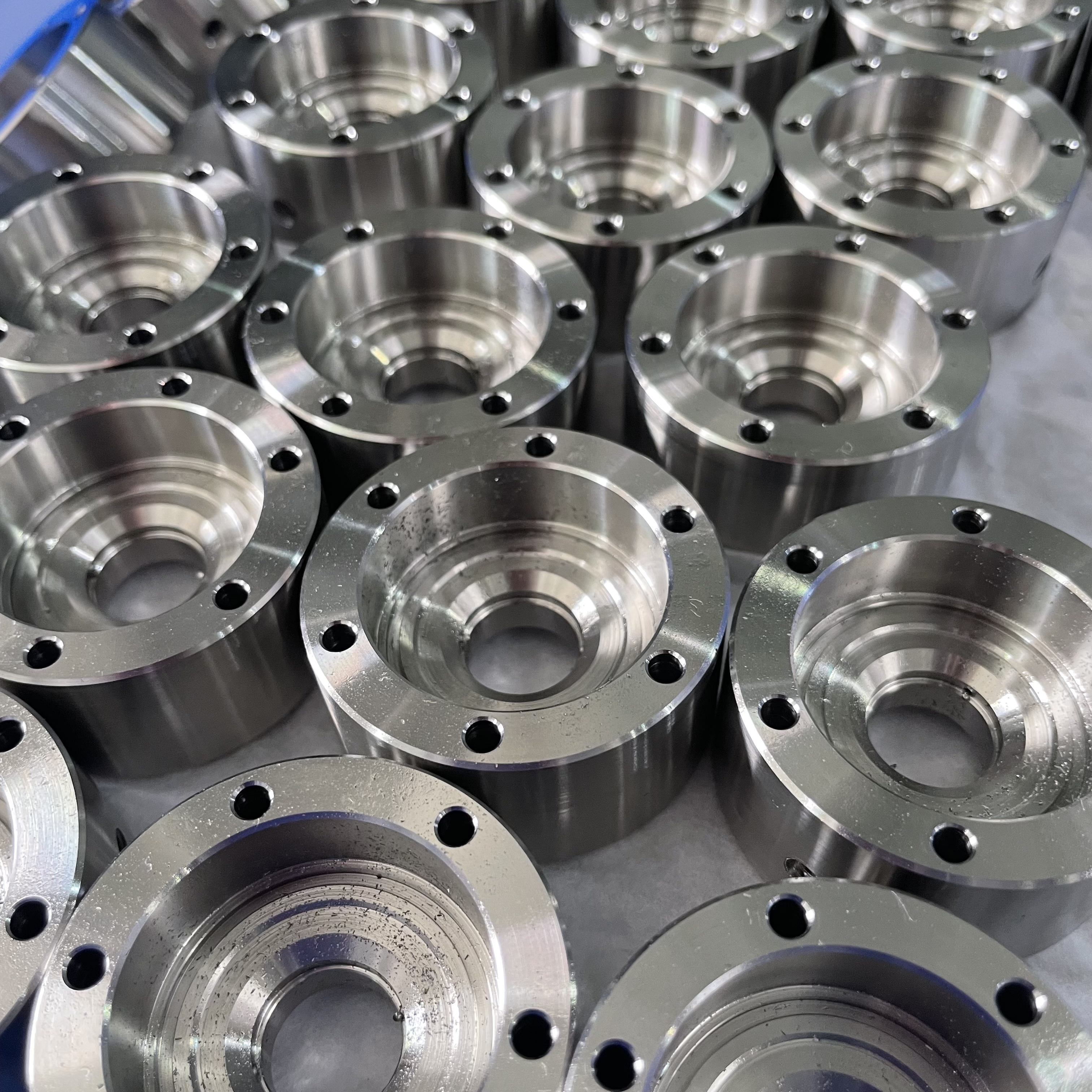
At Precision Fab CNC Machining, we specialize in producing parts for prototypes, short runs, and high-volume production. Our prototyping machine capabilities extend across metal, plastic, and wood machining, with welding fabrication services available to complement and finalize your prototype if required.
Address
Address: Room320 10F, Building A,Nanshan international building, Dayawan District, Huizhou, Guangdong, 516001 China
Contacts
billy@timaycnc.com