The Difference Between CNC and Traditional Manufacturing

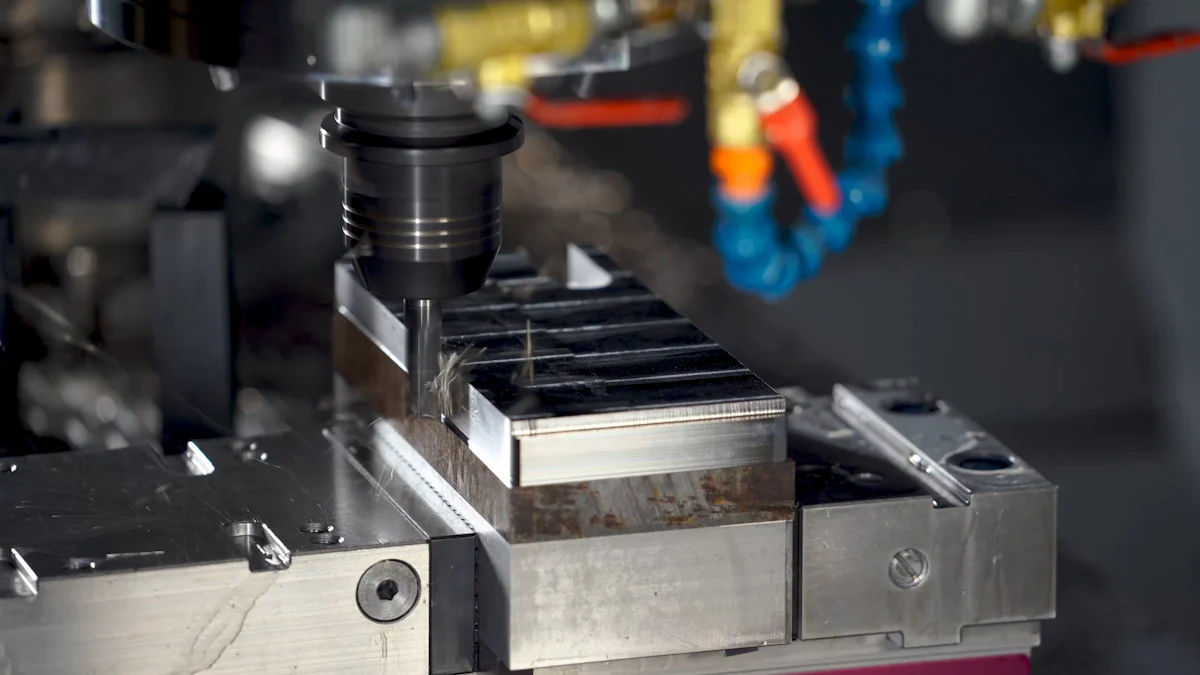
Manufacturing has evolved significantly over the years. Computer numerical control (CNC) manufacturing uses automated machines to produce parts with high precision. Traditional manufacturing, on the other hand, relies on manual tools and human labor. The difference between CNC and traditional manufacturing becomes clear in industries like robotics, electronics, and construction, where CNC has replaced older methods. CNC excels in creating complex components like valves, pistons, and drill bits. By understanding these methods, you can choose the best approach for your production needs.
Key Takeaways
CNC machines are very accurate and consistent. They are great for detailed designs and making many items quickly.
Traditional methods allow for more creativity and are better for simple designs or small projects.
Think about how hard your project is and your budget before picking CNC or traditional methods.
CNC machines work with many materials, but traditional ways are better for custom work that needs changes as you go.
Using CNC can save money over time by needing less work and making things faster.
Overview of CNC and Traditional Manufacturing
What is CNC?
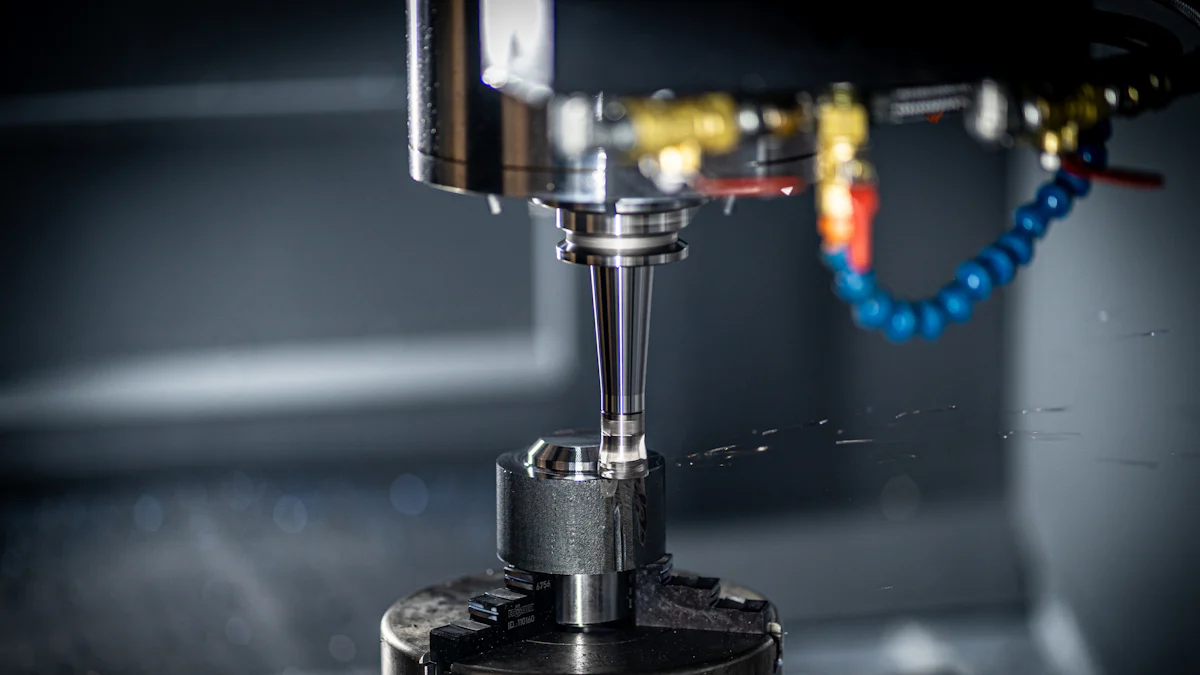
CNC, or computer numerical control, refers to a manufacturing process where machines are operated using pre-programmed software. These machines, known as CNC machine tools, follow precise instructions to cut, shape, or drill materials into desired forms. The CNC machining process eliminates the need for manual intervention during production. Once programmed, the machines work autonomously, ensuring consistent results. This technology originated in the 1940s and 1950s, evolving from simple punched tape systems to modern digital controls. Today, CNC machine tools are integral to industries like aerospace, automotive, and electronics, where precision and efficiency are critical.
CNC machining excels in creating complex designs with tight tolerances, often as precise as ±0.001 inches. It also offers unmatched repeatability, making it ideal for high-volume production. The integration of CAD (computer-aided design) and CAM (computer-aided manufacturing) software allows you to translate intricate designs into physical products seamlessly. Modern CNC machines even incorporate AI and IoT technologies, further enhancing their capabilities.
What is Traditional Manufacturing?
Traditional manufacturing relies on manual labor and traditional machine tools to produce parts. Skilled machinists operate these tools, such as lathes, mills, and drills, to shape materials. Unlike CNC machining, traditional machining requires hands-on control, which allows for on-the-fly adjustments. This flexibility makes it suitable for custom or small-batch projects. However, it depends heavily on the expertise of the machinist, which can lead to variations in quality.
Traditional machine tools have been used for centuries and are valued for their craftsmanship. They are often preferred for simpler designs or when a human touch is desired in the final product. While traditional methods may lack the speed and precision of CNC, they remain a practical choice for certain applications, especially when budget constraints are a concern.
Key Features of CNC and Traditional Manufacturing
Both CNC and traditional manufacturing have unique features that set them apart. Here’s a quick comparison:
Feature | CNC Manufacturing | Traditional Manufacturing |
|---|---|---|
Precision | Achieves tolerances as tight as a few microns | Depends on machinist skill; less precise |
Automation | Fully automated; minimal supervision needed | Manual operation; requires constant input |
Speed | Faster for complex designs and high volumes | Slower; better for simpler tasks |
Repeatability | Consistently produces identical parts | Variations may occur between parts |
Flexibility | Best for pre-programmed designs | Allows for real-time adjustments |
Cost | Higher initial investment; cost-effective long-term | Lower upfront cost; higher labor expenses |
CNC machine tools stand out for their precision, speed, and automation. On the other hand, traditional machine tools offer flexibility and craftsmanship. Choosing between the two depends on your production needs, budget, and the complexity of the design.
Key Differences Between CNC and Traditional Manufacturing
Precision and Accuracy
When it comes to precision and accuracy, the difference between CNC and traditional manufacturing is significant. CNC machining stands out for its ability to produce high-precision parts with tolerances as tight as 0.001 inches. This level of accuracy is achieved through the use of pre-programmed software that controls CNC machine tools, ensuring consistent results every time. In contrast, traditional machining relies on the skill of the operator. While skilled machinists can achieve precise results, human error often leads to variations in quality.
CNC machining provides unmatched precision and consistency, making it ideal for industries like aerospace and medical devices.
Traditional machining depends heavily on the operator’s expertise, which can result in variability between parts.
If your project requires consistent accuracy across multiple parts, CNC machining is the better choice. However, for simpler designs or one-off projects, traditional machine tools may suffice.
Speed and Efficiency
CNC machining excels in speed and efficiency, especially for complex designs and high-volume production. The automation in the CNC machining process eliminates the need for constant supervision, allowing you to produce parts faster. For example:
CNC turning reduces waste and minimizes rework, saving time and resources.
Industries like aerospace benefit from faster production cycles, meeting tight deadlines with ease.
Traditional machining, on the other hand, is slower due to its manual nature. Each part requires individual attention, which increases production time. If you need to meet tight deadlines or handle large-scale production, CNC machine tools offer a clear advantage.
Cost and Budget Considerations
The cost implications of CNC and traditional manufacturing depend on your production scale. CNC machining involves higher upfront costs due to the investment in advanced CNC machine tools. However, these costs are offset by long-term savings through reduced labor expenses and faster production rates. For small-scale production, traditional machining may seem more affordable initially. Yet, frequent adjustments and longer setup times can increase operational costs.
Reducing machining time with CNC can lower overall costs for larger production runs.
Traditional machine tools are more cost-effective for small-batch or custom projects.
If you plan to scale up production, CNC machining becomes more economical over time. For smaller projects, traditional machining remains a practical option.
Labor and Skill Requirements
CNC manufacturing significantly reduces the need for manual labor. CNC machine tools operate autonomously once programmed, requiring minimal supervision. You only need skilled operators to set up the machines, monitor their performance, and perform occasional maintenance. This reduces the dependency on highly skilled machinists, making it easier to scale production.
In contrast, traditional machining relies heavily on the expertise of machinists. Operators must manually control traditional machine tools, which demands a high level of skill and experience. The quality of the final product often depends on the machinist's ability to maintain precision and accuracy during the process. This reliance on human skill can lead to inconsistencies, especially in large-scale production.
If you prioritize consistency and efficiency, CNC machine tools offer a clear advantage. However, traditional machining remains valuable for projects requiring craftsmanship or a personal touch. Traditional machining technology also allows for real-time adjustments, which can be beneficial for custom or experimental designs.
Scalability and Flexibility
CNC manufacturing excels in scalability. Once you program the CNC machine tools, they can produce identical parts in large quantities without compromising precision. This makes CNC ideal for industries requiring mass production, such as automotive or aerospace. You can also reprogram the machines to create new designs, offering flexibility for evolving production needs.
Traditional machine tools, on the other hand, are less scalable. Each part requires individual attention, which limits the number of units you can produce in a given timeframe. However, traditional machining offers greater flexibility for small-batch production or unique designs. You can make on-the-fly adjustments to accommodate changes, which is not always possible with CNC.
If your project demands high-volume production with consistent accuracy, CNC is the better choice. For smaller, custom projects, traditional machining provides the adaptability you need.
Material Versatility
CNC machine tools can handle a wide range of materials, including metals, plastics, wood, and composites. This versatility allows you to use CNC for diverse applications across industries. The precision of CNC ensures that even challenging materials can be machined with minimal waste.
Traditional machine tools also work with various materials but may struggle with harder or more complex ones. The manual nature of traditional machining makes it harder to achieve the same level of precision as CNC. However, for simpler materials or designs, traditional machining remains a practical option.
If your project involves intricate designs or hard-to-machine materials, CNC provides the versatility and accuracy you need. Traditional machining is better suited for straightforward tasks or when working with softer materials.
Advantages and Disadvantages of CNC and Traditional Manufacturing
Advantages of CNC Machining
CNC machining offers several benefits that make it a preferred choice for modern manufacturing. One of its key strengths lies in its precision. CNC machine tools operate autonomously, eliminating human error and ensuring consistent results. They use digital templates to achieve high accuracy, which is essential for industries like aerospace and medical devices. The software also enables flawless repetitive actions, making it ideal for producing identical parts in large quantities.
Automation is another significant advantage. The CNC machining process reduces reliance on manual labor, enhancing efficiency and minimizing errors. This automation ensures economical long-term production with consistent quality. Whether you need large or small batch sizes, CNC machining delivers high accuracy and reliability. Additionally, it excels in creating complex products with intricate designs, which would be challenging to achieve using traditional machining methods.
CNC machine tools also save time. By automating processes, they streamline production and reduce the need for constant supervision. This efficiency allows you to meet tight deadlines without compromising quality.
Disadvantages of CNC Machining
Despite its advantages, CNC machining has some drawbacks. The initial investment can be high. Purchasing CNC machine tools and setting up the first production run often require significant capital. This makes it less accessible for small businesses or projects with limited budgets.
Maintenance is another consideration. Regular upkeep is necessary to prevent breakdowns and ensure consistent performance. While CNC machines are highly efficient, they require skilled technicians for programming and maintenance. This adds to the overall cost of operation.
For simpler designs or low-volume production, CNC machining may not always be the most cost-effective option. Traditional machining might offer a more practical solution in such cases.
Advantages of Traditional Manufacturing
Traditional machining remains valuable for specific applications. It offers flexibility, allowing you to make real-time adjustments during the production process. This adaptability is particularly useful for custom or experimental designs where changes may be needed on the fly.
Another advantage is the lower initial cost. Traditional machine tools are more affordable than CNC machine tools, making them a practical choice for small-scale projects or businesses with tight budgets. Skilled machinists can also add a personal touch to the final product, which is often appreciated in industries that value craftsmanship.
Traditional machining works well for simpler tasks and straightforward designs. It provides a hands-on approach that can be beneficial for unique or one-off projects.
Disadvantages of Traditional Manufacturing
Traditional machining has several drawbacks that you should consider before choosing it for your project. One of the biggest challenges is its reliance on skilled labor. Operators must have extensive experience to produce high-quality results. This dependence on human expertise can lead to inconsistencies, especially when producing multiple parts. Variations in quality often occur because no two machinists work exactly the same way.
Another disadvantage is the slower production speed. Traditional machining requires manual adjustments and constant supervision. Each part must be crafted individually, which increases the time needed for production. If you need to meet tight deadlines or produce large quantities, this method may not be the best choice.
Traditional machining also struggles with complex designs. The manual nature of the process makes it difficult to achieve the precision required for intricate components. CNC machining, by comparison, handles these tasks with ease. If your project involves tight tolerances or detailed patterns, traditional machining may fall short.
Cost is another factor to consider. While the initial investment in traditional machine tools is lower, the ongoing labor costs can add up. Skilled machinists often command higher wages, and the slower production speed increases overall expenses. For large-scale production, these costs can quickly outweigh the initial savings.
Tip: If your project demands high precision, fast production, or scalability, traditional machining might not be the most efficient option.
While traditional machining remains valuable for certain applications, its limitations make it less suitable for modern manufacturing needs. You should weigh these disadvantages carefully when deciding on a manufacturing method.
Practical Applications and Suitability
When to Use CNC Machining
You should consider CNC machining when precision and efficiency are critical. This method excels in producing parts with tight tolerances, ensuring consistent quality. If your project involves complex designs or requires high-volume production, CNC machines provide the scalability you need. They also handle a wide range of materials, from metals to composites, making them versatile for various industries.
CNC machining is ideal for industries like electronics, healthcare, and aerospace. For example:
Electronics: Producing components like PCBs and semiconductor parts.
Healthcare: Manufacturing surgical instruments and prosthetics.
Aerospace: Creating lightweight, high-precision parts like turbine blades.
If your project demands customized components or intricate designs, CNC machining offers the accuracy and repeatability required.
When to Use Traditional Manufacturing
Traditional manufacturing works best for simpler designs or low-volume projects. You should choose this method when each part requires individual attention or when budget constraints are a concern. It is also suitable for tasks that involve basic milling or turning.
This approach is practical for custom work or experimental designs where real-time adjustments are necessary. For example, traditional machining is often used for simpler part geometries that do not require complex processes. If your project involves straightforward tasks and you value craftsmanship, traditional manufacturing remains a reliable choice.
Industries and Use Cases for CNC and Traditional Manufacturing
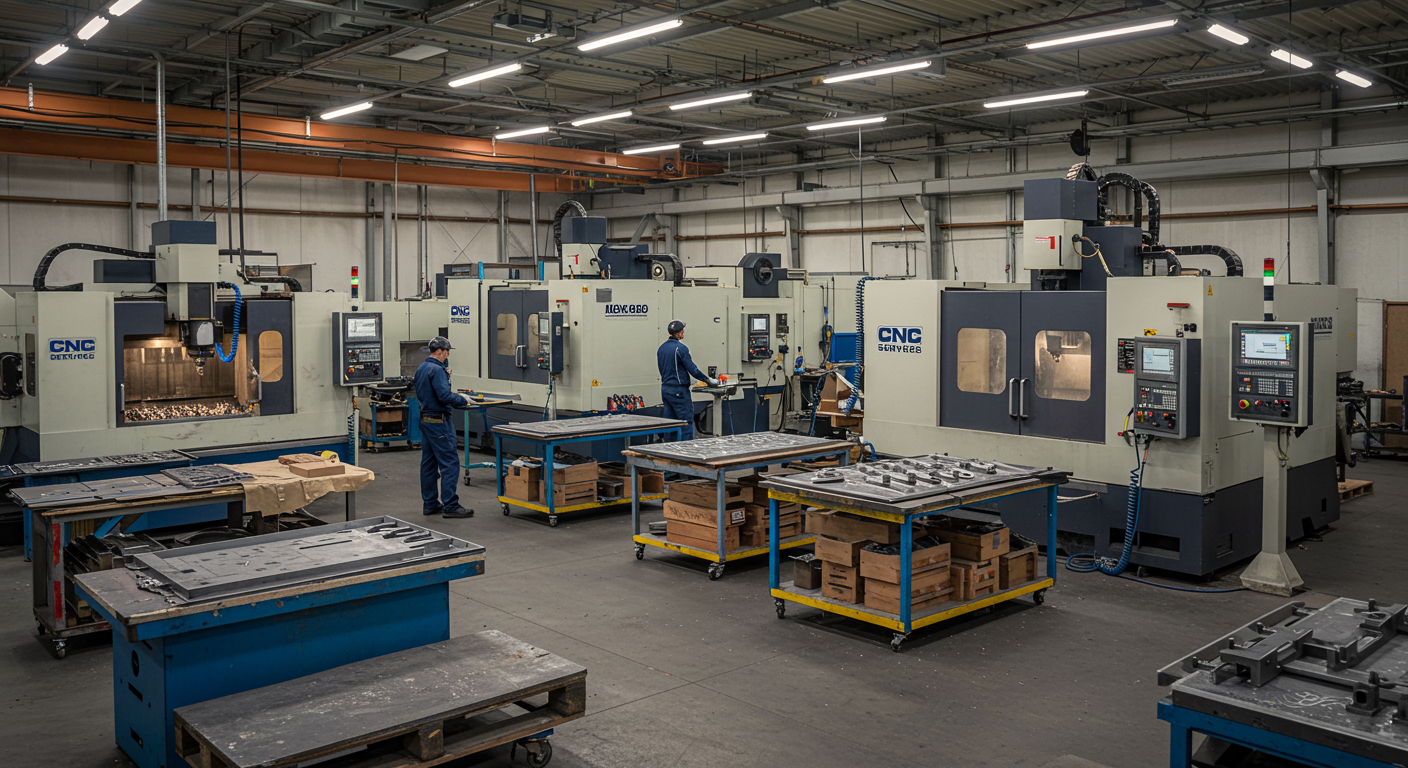
CNC and traditional manufacturing serve different purposes across industries. In the automotive sector, CNC machines create complex parts like engine components and crankshafts. Traditional methods, however, are often used for simpler tasks like basic milling.
In aerospace, CNC machining dominates due to its ability to produce lightweight, high-precision parts. It ensures consistency and meets strict industry standards. Traditional methods may still play a role in crafting prototypes or simpler components.
For niche industries like jewelry or furniture, CNC machining enables intricate designs, while traditional methods add a personal touch. Your choice depends on the complexity, volume, and precision required for your project.
CNC machining offers unmatched precision, efficiency, and scalability, making it the go-to choice for complex designs and high-volume production. While the initial investment may seem high, the long-term benefits—such as reduced labor costs, minimal material waste, and faster production—often outweigh these costs. On the other hand, traditional manufacturing remains a practical option for simpler, low-volume projects or when budget constraints are a priority.
The difference between CNC and traditional manufacturing lies in their approach to production. CNC machining automates processes, ensuring consistent results, while traditional methods rely on skilled labor for flexibility and craftsmanship. Your choice should depend on your project’s complexity, production scale, and budget.
Tip: As manufacturing evolves, trends like AI integration and hybrid methods are shaping the future of CNC machining, offering even greater efficiency and adaptability.
FAQ
What is the main difference between CNC and traditional manufacturing?
CNC manufacturing uses computer-controlled machines to automate production, ensuring precision and consistency. Traditional manufacturing relies on manual labor and tools, which allows for flexibility but often results in variations in quality.
Which method is better for high-volume production?
CNC machining is better for high-volume production. It ensures consistent quality and faster production rates. Traditional manufacturing is slower and less efficient for large-scale projects due to its manual nature.
Can CNC machines handle all types of materials?
CNC machines can work with a wide range of materials, including metals, plastics, wood, and composites. However, some materials may require specialized tools or settings to achieve optimal results.
Is traditional manufacturing still relevant today?
Yes, traditional manufacturing remains relevant for custom, low-volume, or budget-sensitive projects. It offers flexibility for real-time adjustments and is ideal for simpler designs or when craftsmanship is valued.
How do I decide between CNC and traditional manufacturing?
Consider your project’s complexity, budget, and production scale. Choose CNC for precision, scalability, and efficiency. Opt for traditional manufacturing if you need flexibility, lower upfront costs, or a personal touch in the final product.
Tip: Evaluate your production needs carefully to select the most suitable method.
See Also
Comparing CNC And Traditional Manufacturing Across Various Sectors
Exploring CNC Technology Advancements And Their Manufacturing Applications
The Transformation Of Precision Manufacturing Through CNC Machining
About US
Follow Us
Your prototype holds unparalleled significance, and we deeply value its uniqueness. Collaborating with you during the preparation phase for running your prototype or parts is a commitment we gladly embrace. Whether it's a single part or a complex assembly, we are dedicated to selecting the optimal tools and pathways to bring your envisioned product to life.
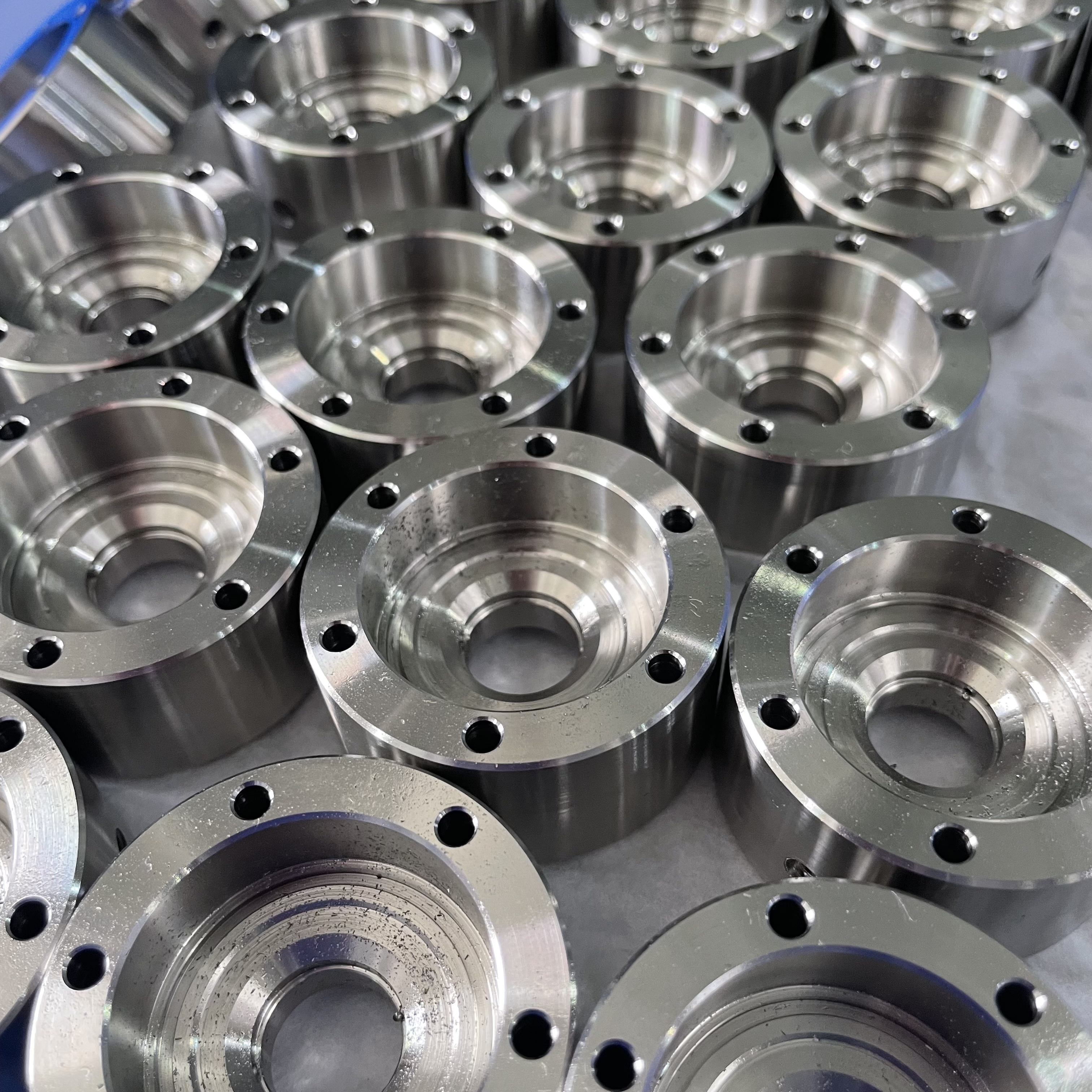
At Precision Fab CNC Machining, we specialize in producing parts for prototypes, short runs, and high-volume production. Our prototyping machine capabilities extend across metal, plastic, and wood machining, with welding fabrication services available to complement and finalize your prototype if required.
Address
Address: Room320 10F, Building A,Nanshan international building, Dayawan District, Huizhou, Guangdong, 516001 China
Contacts
billy@timaycnc.com