How CNC Machining Saves You Time and Money

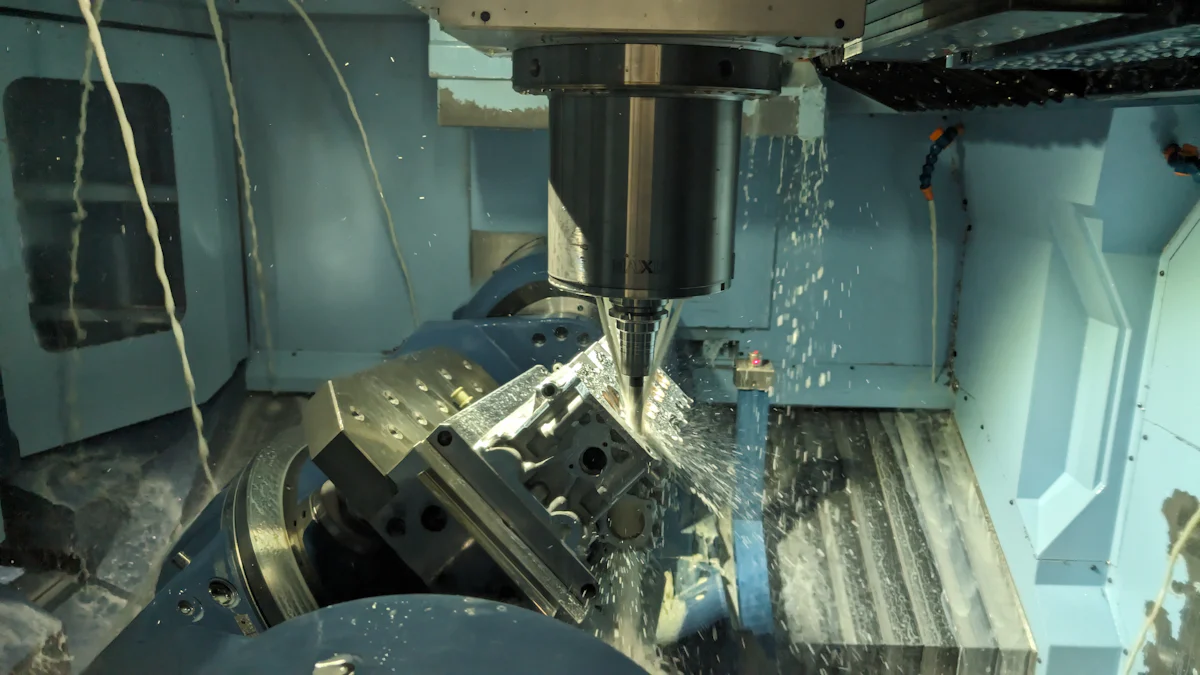
CNC machining, or computer numerical control, revolutionizes manufacturing by automating processes and delivering unmatched precision. This technology minimizes manual labor, reducing costs while improving production efficiency. Unlike traditional methods, CNC machining optimizes cutting paths, which reduces material waste and ensures better resource utilization. It also accelerates production cycles, helping you save time and money on your machining project. Whether you need high-volume production or intricate designs, CNC machining services provide the scalability and accuracy required to meet your goals.
Key Takeaways
CNC machining uses machines to work, cutting down human effort and mistakes. This saves a lot of money.
These machines run all the time, making things faster and more efficient. This helps meet big orders quickly.
CNC machining is very accurate. It makes parts that fit perfectly, so there’s less fixing and better quality every time.
It uses materials wisely, creating less waste. This helps the environment and lowers material costs.
CNC machines can make tricky designs and test ideas fast. This speeds up new product creation and keeps you ahead in business.
Automated Production for Maximum Efficiency
Reduced Manual Intervention
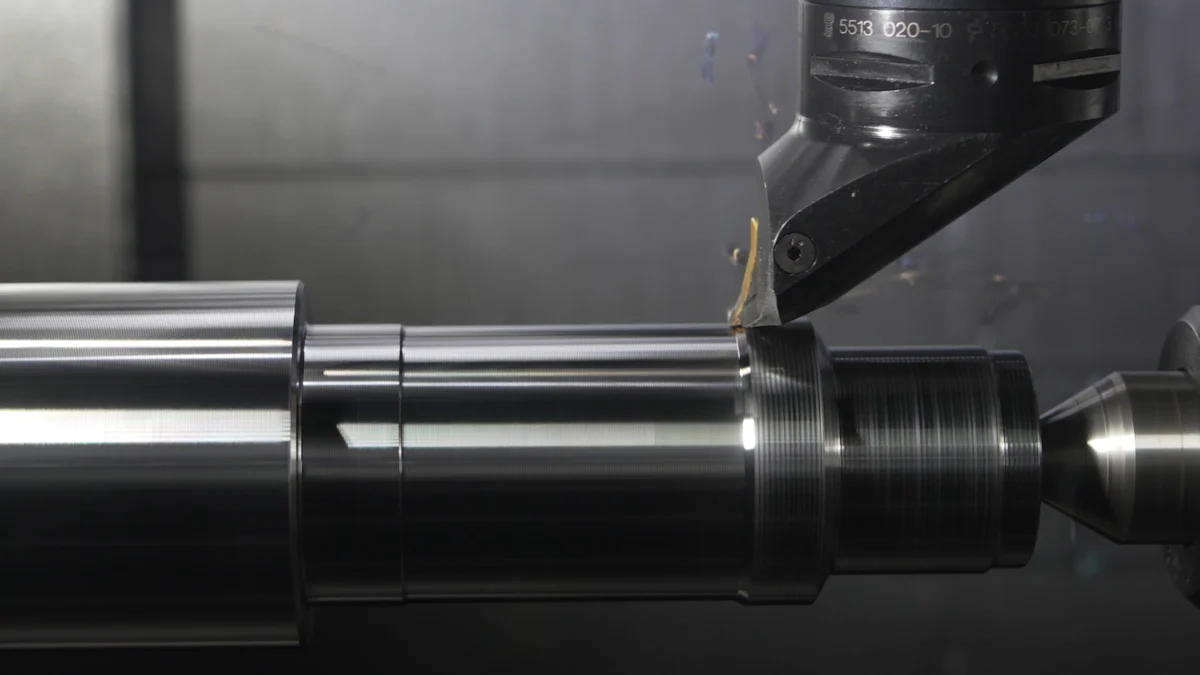
Automation in CNC machining minimizes the need for human oversight, which significantly reduces errors. By relying on pre-programmed instructions, CNC machines execute tasks with precision and consistency. This eliminates the variability that often arises from manual processes. For example, industries like aerospace and medical manufacturing depend on this level of accuracy to produce components such as turbine blades and surgical instruments. These industries benefit from automated production because it ensures consistent quality across every unit.
Automating repetitive tasks also improves production efficiency. Skilled workers can focus on high-value activities instead of spending time on mundane operations. This shift not only reduces labor costs but also enhances workplace safety by automating high-risk tasks. Additionally, centralized digital systems streamline communication between departments, minimizing downtime and improving resource management. These advantages make automated production a cornerstone of modern manufacturing.
Continuous Operation
CNC machines operate continuously, 24/7, without requiring breaks. This capability allows you to meet high production demands while maintaining accuracy. Unlike manual processes, which are limited by human fatigue, CNC machining ensures uninterrupted workflows. For instance, in the automotive industry, CNC machines produce high-precision parts like engine components and transmission systems at a much faster rate.
Running machines around the clock increases production speed and capacity. Pre-programmed designs enable CNC machining services to deliver consistent results without constant human intervention. This increased efficiency reduces lead times and accelerates production cycles. Whether you need a single prototype or a large batch of parts, continuous operation ensures improved productivity and faster turnaround times.
By leveraging automated production, you can improve production efficiency, reduce costs, and enhance overall manufacturing output. Industries such as oil and gas, military, and defense have already embraced this technology to produce durable, high-tolerance components. The ability to maintain consistent quality while scaling production makes CNC machining an invaluable tool for businesses aiming to stay competitive.
Precision and Efficiency in Manufacturing
High Accuracy and Reduced Errors
Achieving tight tolerances with CNC machining.
CNC machining delivers unmatched precision, making it ideal for industries requiring tight tolerances. You can achieve tolerances as precise as ±0.002 inches for CNC turning and ±0.005 inches for CNC milling. These levels of accuracy surpass what manual methods can offer. For example, a 7/8-inch diameter part can be manufactured to within 0.05 inches, ensuring consistent quality across all components. This precision is especially beneficial for small parts that demand high accuracy, such as those used in aerospace or medical applications.
By relying on computer numerical control, you eliminate the inconsistencies of manual processes. This ensures every part meets exact specifications, reducing the need for rework. The ability to produce high-quality components with minimal variation improves production efficiency and enhances your overall manufacturing output.
The role of computer programming in eliminating human error.
Computer-driven precision plays a critical role in reducing errors during production. CNC programming allows you to simulate machining processes before actual production begins. This step identifies potential issues, preventing material waste and ensuring smooth operations. Regular training for CNC programmers further enhances efficiency by minimizing mistakes during setup and execution.
Quality control measures embedded in CNC machining services ensure adherence to design specifications. These measures, combined with advanced programming techniques, help you maintain consistent quality while reducing costly errors. This approach not only saves time but also boosts production efficiency.
Optimized Material Usage
How precision machining minimizes waste and scrap.
CNC machining optimizes cutting paths to minimize wastage. By using precise calculations, you can reduce material waste to as little as 0.005 inches per every 0.025 inches of material. This efficiency is far superior to traditional methods, which often result in higher scrap rates. Industries like automotive and hydraulic manufacturing have significantly reduced waste by adopting CNC machining.
Efficient material usage also promotes sustainable manufacturing practices. By minimizing scrap, you lower the amount of waste sent to landfills, reducing your environmental footprint. This approach not only benefits the planet but also helps you save on material costs.
Cost savings from efficient material utilization.
Optimized material usage translates directly into cost savings. Selecting cost-effective materials that balance durability and machinability can further reduce expenses. CNC machining services allow you to maximize resource utilization, ensuring you get the most out of every material. This efficiency helps you maintain profitability while meeting high-quality standards.
Additionally, CNC machining supports closed-loop systems where leftover materials can be reused. This reduces waste and contributes to a more sustainable production process. By adopting these practices, you can improve production efficiency and reduce overall costs.
Cost Reduction Through Advanced Technology
Lower Labor Costs
How fewer operators are needed for CNC machining.
CNC machining offers a cost-effective solution by reducing the need for a large workforce. Once programmed, CNC machines operate autonomously with minimal supervision. This allows one operator to monitor multiple machines simultaneously, significantly lowering labor costs. Unlike traditional manufacturing methods, which require skilled workers for manual tasks, CNC machining automates the process. This automation not only improves production efficiency but also enables you to allocate resources to other critical areas of your business.
CNC machines also run continuously, 24/7, without breaks. This capability boosts productivity and reduces manufacturing time. By minimizing reliance on manual labor, you can save money while maintaining high-quality standards. The scalability of CNC machining ensures that even complex tasks are completed with fewer operators, making it an ideal choice for businesses aiming to reduce costs.
Savings from reduced rework and error correction.
CNC machining minimizes errors by operating based on detailed computer programs. This precision ensures that exact specifications are consistently met, reducing the need for rework. Automation eliminates human intervention in tasks like measuring and cutting, which decreases the likelihood of mistakes. Real-time monitoring systems further enhance accuracy by detecting and correcting errors immediately. These features not only improve production efficiency but also save money by avoiding costly corrections.
Faster Cycle Times
Toolpath optimization for shorter production cycles.
Toolpath optimization plays a crucial role in reducing production times. Efficient strategies minimize tool changes, improve chip evacuation, and maximize material removal rates. Techniques like roughing and finishing passes speed up machining processes. These optimizations allow you to reduce manufacturing time while maintaining precision, making CNC machining a cost-effective solution for high-volume production.
How 5-axis machining reduces setup and inspection time.
5-axis machining enhances production efficiency by reducing the number of setups required. Intricate components can be manufactured in a single setup, saving time and minimizing alignment errors. This technology also improves surface finishes and reduces inspection time. By streamlining the process, 5-axis machining helps you improve production efficiency and reduce costs, ensuring faster delivery of high-quality parts.
Faster Turnaround Times for Scalable Production
Accelerated Manufacturing Processes
How pre-programmed designs speed up production.
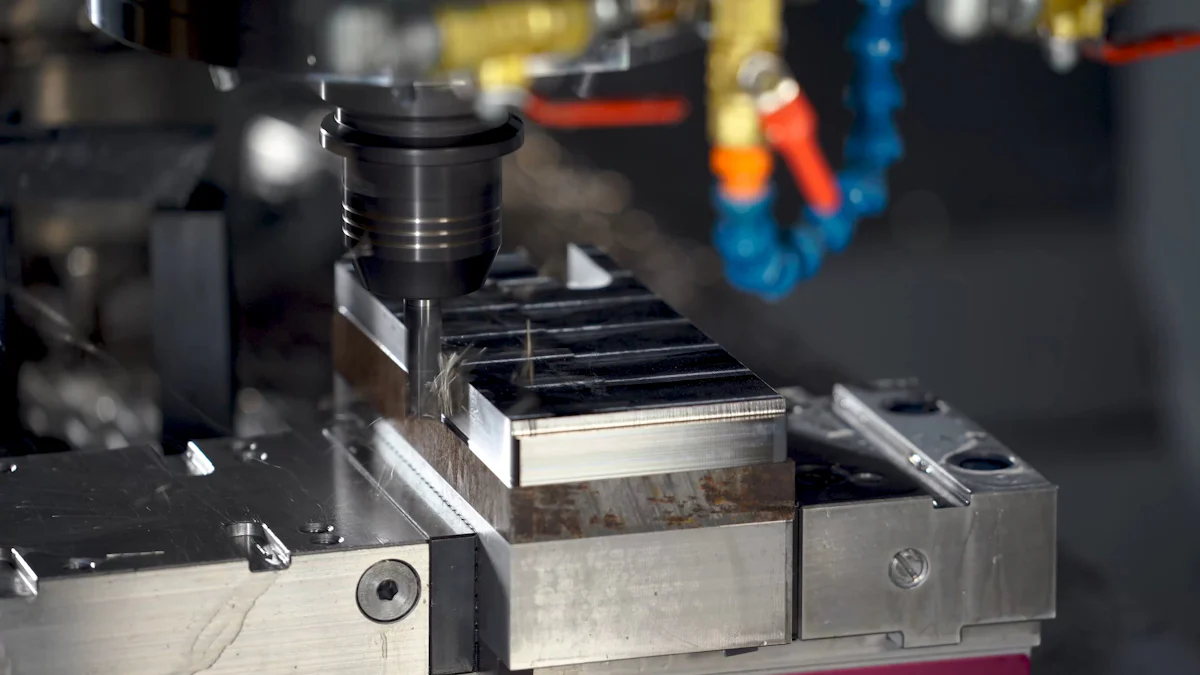
CNC machining uses pre-programmed designs to streamline production. These designs guide machines to perform tasks with precision, reducing errors and eliminating the need for corrections. This approach ensures faster production cycles and minimizes downtime. Automation allows machines to operate continuously, maximizing production speed and efficiency. Rapid prototyping capabilities further enhance timelines by enabling quick iterations and design validations. You can test and refine products faster, which shortens development cycles and accelerates market entry.
Streamlined production planning also plays a key role. CNC machining reduces setup times and improves resource utilization. Faster tooling and fixtures eliminate delays associated with custom tooling. Reduced material handling minimizes human error and waste, further speeding up production. These factors combine to deliver faster turnaround times, helping you meet tight deadlines without compromising quality.
Benefits of completing complex tasks in less time.
CNC machining excels at handling complex tasks efficiently. Advanced programming allows machines to execute intricate operations with ease. This capability reduces the time required for multi-step processes. For example, 5-axis machining can complete complex geometries in a single setup, saving hours of labor. Continuous operation ensures consistent output, even for demanding projects. By completing tasks faster, you can increase production efficiency and meet high demands.
Scalability for Large Orders
Efficient handling of high-volume production.
CNC machining supports scalability by enabling the rapid production of large quantities of identical parts. Once programmed, machines can repeat operations consistently, ensuring uniformity across all units. This consistency is crucial for industries like automotive and aerospace, where thousands of identical components are required. Continuous operation without breaks allows for 24/7 production, further enhancing scalability. Automation also improves manufacturing speed, making it easier to handle high-volume orders efficiently.
Meeting tight deadlines without compromising quality.
CNC machining ensures you can meet tight deadlines while maintaining high-quality standards. Automation allows machines to run continuously, reducing idle time and maximizing operational efficiency. Precision programming minimizes errors, reducing the need for rework and speeding up production. Rapid prototyping capabilities shorten development timelines, enabling quicker market entry. Streamlined production planning further reduces setup times, ensuring faster delivery of high-quality parts. These advantages make CNC machining an ideal solution for industries with high demand.
Design Flexibility and Innovation
Creating Complex Geometries
How CNC machining enables intricate and innovative designs.
CNC machining empowers you to create intricate and innovative designs that traditional methods cannot achieve. Multi-axis machines, such as 5-axis CNC machines, allow for the production of highly complex geometries. These machines can move in multiple directions, enabling the creation of parts with unique angles and features. For example, advanced CNC milling machines reduce the number of setups required, making it easier to manufacture complex components efficiently. This capability is especially valuable in industries like aerospace and medical device manufacturing, where precision and complexity are essential.
By integrating seamlessly with CAD software, CNC machining translates digital designs into physical parts with high precision. This integration streamlines the manufacturing process, ensuring that even the most intricate designs meet tight tolerances. Whether you need parts with detailed contours or unique shapes, CNC machining provides the flexibility to bring your innovative ideas to life.
The ability to produce parts that are challenging with traditional methods.
Traditional methods often struggle with producing parts that require intricate details or complex shapes. CNC machining overcomes these limitations by leveraging advanced programming and multi-axis capabilities. You can manufacture parts with precise shapes, tight tolerances, and unique features that would be impossible with manual processes. This technology opens the door to new possibilities in product design, allowing you to push the boundaries of innovation.
Rapid Prototyping
How CNC machining accelerates the prototyping process.
CNC machining accelerates the prototyping process by enabling rapid production of accurate prototypes directly from CAD models. This automation eliminates the need for extensive manual adjustments, allowing you to validate designs quickly. Engineers can test and refine prototypes in less time, reducing the overall product development timeline. This efficiency helps you bring products to market faster, giving you a competitive edge.
Benefits of testing and refining designs quickly.
Rapid prototyping with CNC machining offers several advantages. You can create multiple prototypes in a short time, enabling quick iterations and design optimizations. This process helps you identify and address issues early, avoiding costly revisions later. Additionally, rapid prototyping fosters better communication among teams and stakeholders, ensuring that everyone is aligned on the final design. By refining your designs quickly, you can improve production efficiency and reduce time-to-market for your products.
CNC machining transforms manufacturing by helping you save time and money while maintaining exceptional quality. Automation reduces labor costs and material waste, while precision ensures consistent, high-quality parts with fewer defects. You can achieve faster turnaround times and scale production efficiently, whether for prototypes or large orders. Its unmatched production efficiency and versatility make it ideal for creating intricate designs and meeting tight deadlines. By adopting CNC machining, you optimize your processes, save money, and stay competitive in today’s fast-paced market.
FAQ
What industries benefit the most from CNC machining?
CNC machining supports industries like aerospace, automotive, medical, and electronics. These sectors require high precision, scalability, and complex designs. You can rely on CNC machining to produce intricate components, such as turbine blades, engine parts, and surgical instruments, with consistent quality.
How does CNC machining reduce production costs?
CNC machining reduces costs by minimizing labor, material waste, and errors. Automation allows fewer operators to manage machines, while optimized cutting paths reduce scrap. You save money by avoiding rework and maximizing material efficiency.
Can CNC machining handle custom designs?
Yes, CNC machining excels at custom designs. You can create intricate geometries and unique parts by integrating CAD software with CNC machines. This flexibility allows you to produce prototypes or specialized components with high accuracy.
Is CNC machining suitable for small production runs?
CNC machining works well for both small and large production runs. You can produce a single prototype or a limited batch of parts efficiently. Pre-programmed designs ensure consistent quality, even for low-volume orders.
How does CNC machining improve turnaround times?
CNC machining accelerates production with pre-programmed designs and continuous operation. Machines run 24/7, reducing idle time. You can complete complex tasks faster, meet tight deadlines, and bring products to market quickly.
See Also
Streamlined CNC Machining Solutions For Accurate Manufacturing Needs
How CNC Part Processing Affects Overall Manufacturing Expenses
The Role Of CNC Technology In Precision Manufacturing Evolution
Discovering Seven Advantages Of CNC Machining In Manufacturing
CNC Precision Machining Effects: Benefits And Upcoming Trends
About US
Follow Us
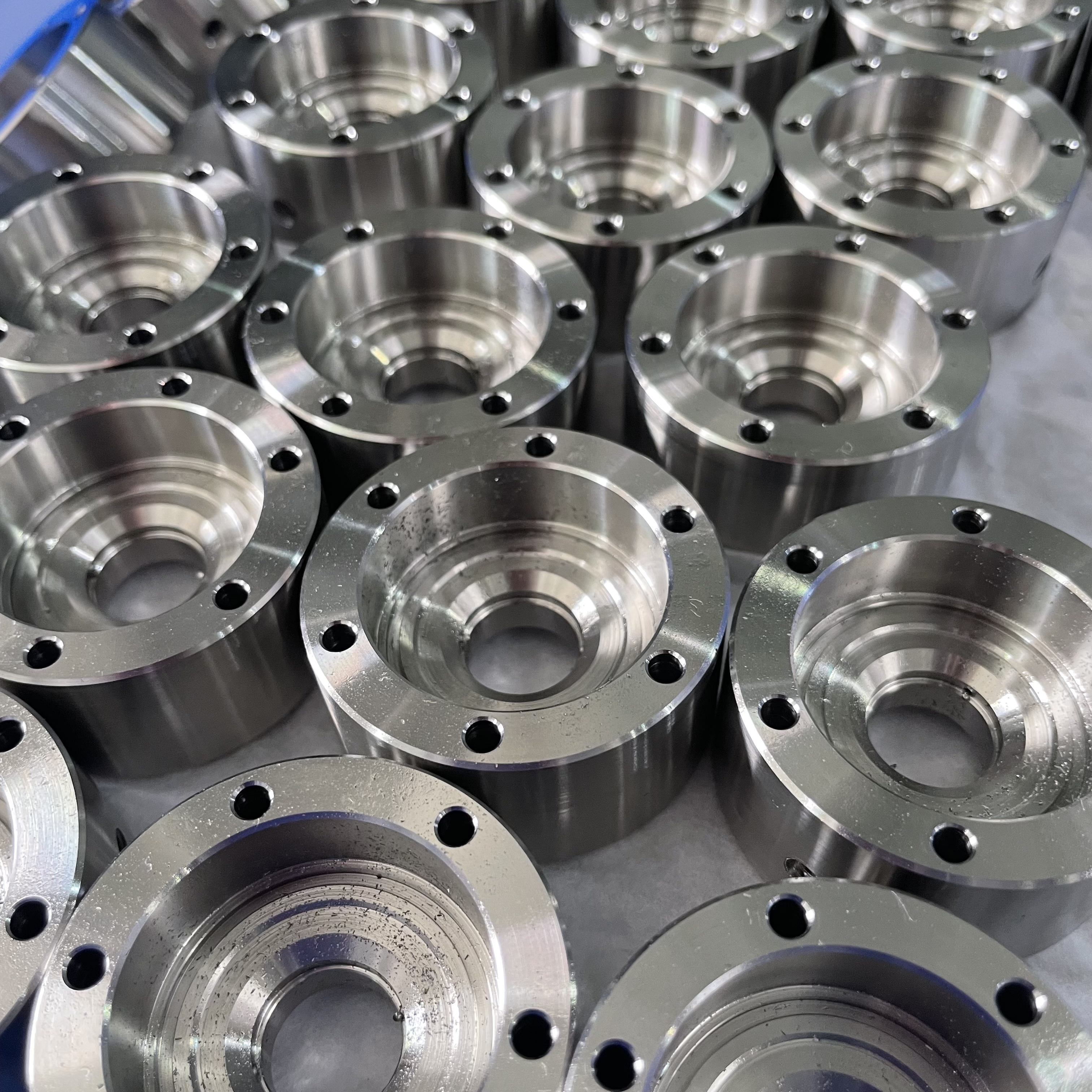
Your prototype holds unparalleled significance, and we deeply value its uniqueness. Collaborating with you during the preparation phase for running your prototype or parts is a commitment we gladly embrace. Whether it's a single part or a complex assembly, we are dedicated to selecting the optimal tools and pathways to bring your envisioned product to life.
At Precision Fab CNC Machining, we specialize in producing parts for prototypes, short runs, and high-volume production. Our prototyping machine capabilities extend across metal, plastic, and wood machining, with welding fabrication services available to complement and finalize your prototype if required.
Address
Address: Room320 10F, Building A,Nanshan international building, Dayawan District, Huizhou, Guangdong, 516001 China
Contacts
billy@timaycnc.com