The Top 5 Benefits of Using CNC Machining for Precision Parts

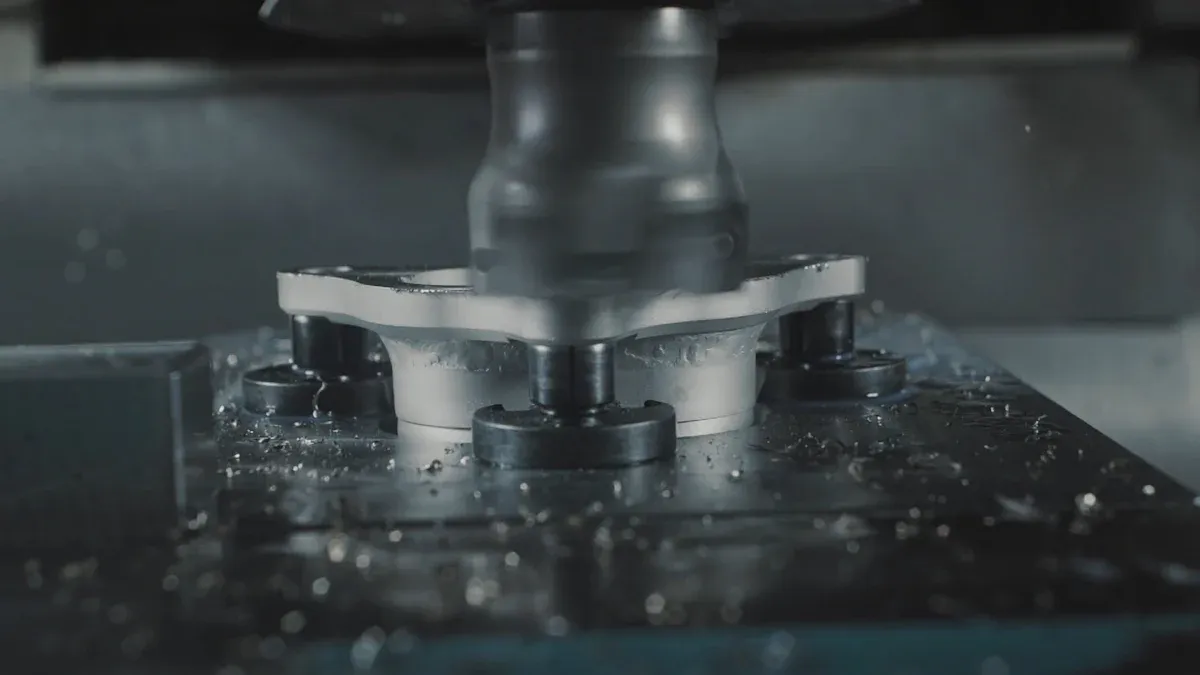
CNC machining has revolutionized how you manufacture CNC precision parts. It delivers unmatched accuracy and efficiency, making it a cornerstone of modern industries. The global CNC machine market is expected to hit $128.86 billion by 2026, driven by its ability to reduce costs, improve manpower efficiency, and meet the demands of sectors like automotive and aviation.
Key Takeaways
CNC machining is very precise, with tolerances as small as ±0.0005 inches. This is important for fields like aerospace and medical.
CNC machines are automated, which boosts productivity. They need less manual work and can run nonstop, making them more efficient.
CNC machining works with many materials. It can create complex shapes and designs that older methods cannot make.
Improved Precision and Accuracy with CNC Machining
Achieving tight tolerances for cnc precision parts
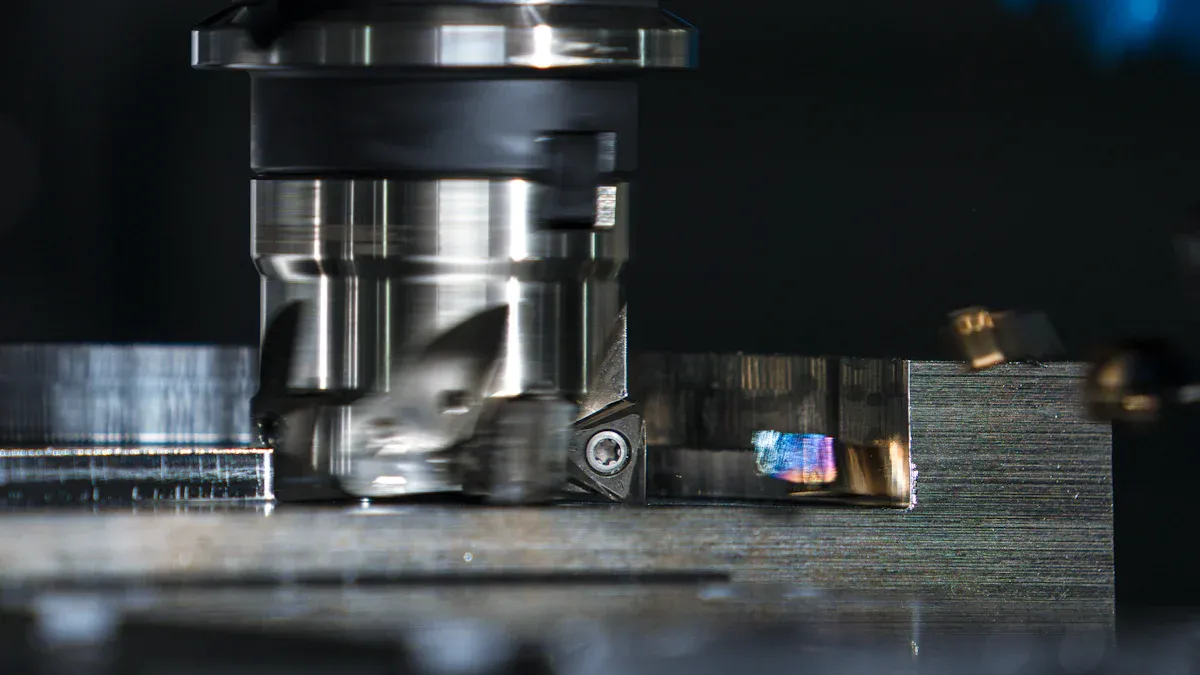
CNC machining excels in delivering tight tolerances, ensuring parts meet exact specifications. This level of precision is vital for industries where even the smallest deviation can lead to failure. For most CNC processes, the standard tolerance is ±0.005 inches (0.13 mm). However, tighter tolerances, such as ±0.002 inches (0.051 mm) or even ±0.0005 inches (0.0127 mm), are achievable for critical applications. The table below highlights the tolerances for various CNC machining processes:
CNC Process | Tolerance |
|---|---|
Router | ± 0.005″ or 0.13 mm |
Lathe | ± 0.005″ or 0.13 mm |
Milling (3-axis) | ± 0.005″ or 0.13 mm |
Milling (5-axis) | ± 0.005″ or 0.13 mm |
Engraving | ± 0.005″ or 0.13 mm |
Screw Machining | ± 0.005″ or 0.13 mm |
These tolerances ensure that CNC machining delivers unmatched precision, making it a preferred choice for manufacturing high-quality parts.
Applications in industries like aerospace and medical
The aerospace and medical industries rely heavily on CNC machining for its precision and efficiency. In aerospace, CNC machines produce turbine blades with intricate detailing and tight tolerances, ensuring optimal performance and safety. Similarly, medical devices like implants, MRI machines, and FDA-approved products demand high accuracy to meet strict regulatory standards. CNC machining benefits these industries by consistently delivering parts that meet their exacting requirements.
Advantages over traditional machining methods
CNC machining offers significant advantages over traditional machining methods. Automated software ensures higher precision and reduces material waste, improving overall efficiency. Unlike traditional machining, which depends on manual labor and operator skill, CNC machining eliminates human error. This automation ensures consistent quality across multiple parts, even in large production runs. Traditional methods often struggle to achieve the same level of accuracy and repeatability, making CNC machining the superior choice for precision manufacturing.
Enhanced Productivity in CNC Machining
Automation reducing manual intervention
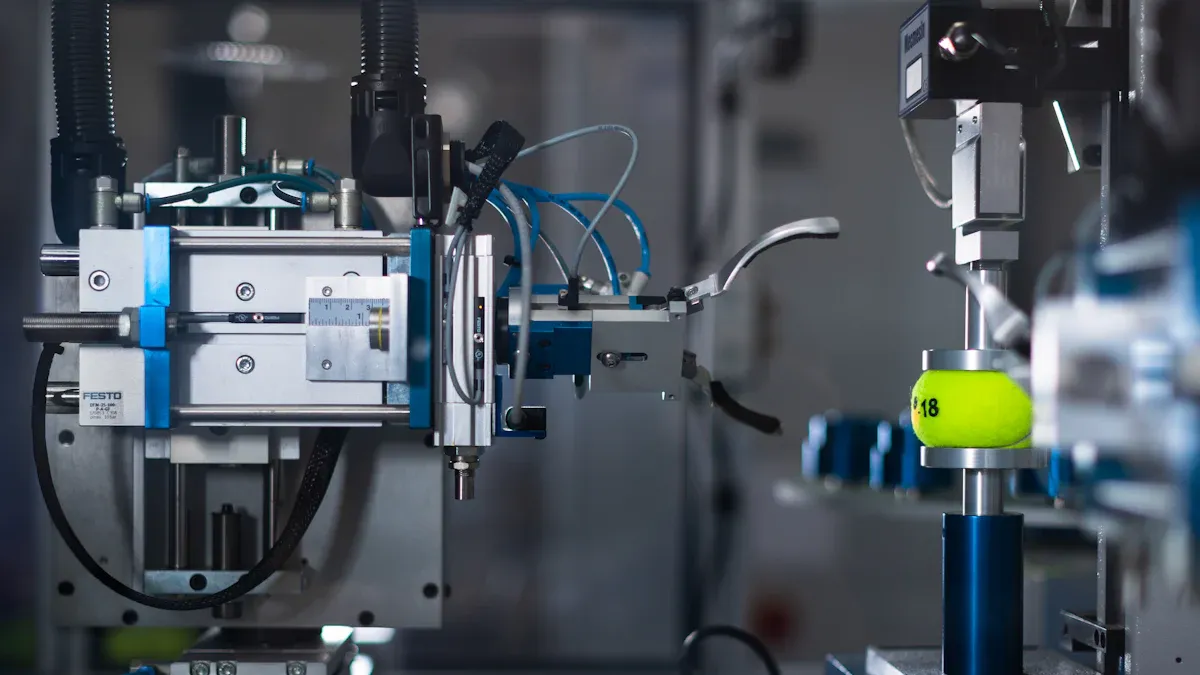
The automated nature of CNC machines significantly reduces the need for manual intervention, streamlining production processes and enhancing efficiency and productivity. Automation eliminates manual data entry and adjustments, minimizing human error and ensuring improved accuracy. CNC machining systems can operate continuously without breaks, increasing machine uptime and overall productivity. Tasks like loading, unloading, and quality inspections are handled by robotic systems equipped with advanced sensors. These systems maintain high levels of precision and consistency, even during high volume manufacturing. By automating repetitive tasks, you can focus on other critical aspects of your operations.
Faster production cycles and lead times
CNC machining benefits your production by delivering faster production cycles compared to traditional methods. The cycle time includes setup, machining, tool changes, and part handling. Factors like machining speed, feed rate, and machining length influence the total duration. Optimizing these factors reduces cycle times and improves efficiency. CNC machining in manufacturing ensures enhanced efficiency and productivity by maintaining consistent output quality while speeding up operations. This capability allows you to meet tight deadlines and reduce lead times, giving you a competitive edge in the market.
Scalability for both small and large production runs
CNC machining offers unmatched scalability, making it suitable for both small-scale and high volume manufacturing. Whether you need a single prototype or a large batch of parts, CNC machining adapts to your requirements. Automated operations allow businesses to meet rising demands without proportional increases in labor or resources. The computer-controlled systems ensure consistent quality and increased efficiency across varying production volumes. This flexibility enables you to tailor solutions for specific client needs while maintaining cost-effectiveness. CNC machining empowers you to scale your operations seamlessly, ensuring long-term growth and success.
Versatility of CNC Machining in Manufacturing
Compatibility with diverse materials like metals and plastics
CNC machining supports a wide range of materials, making it a versatile solution for various industries. You can work with metals like stainless steel, aluminum, and titanium, each offering unique properties. Stainless steel resists corrosion and is ideal for surgical tools and automotive parts. Aluminum, known for its lightweight and machinability, finds applications in aerospace and automotive sectors. Titanium, with its toughness and biocompatibility, is perfect for medical implants and aerospace components.
Non-metal materials like plastics also benefit from CNC machining. Plastics are lightweight and chemically resistant, making them suitable for consumer products and electronic components. This compatibility with diverse materials highlights the versatility in manufacturing capabilities that CNC machining offers.
Creating complex geometries and intricate designs
CNC machining excels at producing intricate designs and complex geometries that traditional methods struggle to achieve. You can create precision tooling, aerospace components, and medical devices with high accuracy. For example, automotive parts often require detailed designs to ensure proper functionality. CNC machining benefits industries by enabling the production of these intricate shapes without compromising quality.
The ability to handle such complexity makes CNC machining indispensable for industries requiring high precision. Whether you need a prototype or a finished product, this technology ensures your designs come to life with unmatched accuracy.
Applications across industries such as automotive and electronics
CNC machining plays a critical role in industries like automotive and electronics. In the automotive sector, it produces engine parts and custom body panels with precision. Electronics manufacturers rely on CNC machining for circuit boards, heat sinks, and enclosures. The table below highlights some key applications:
Industry | Application Examples |
|---|---|
Automotive | Engine parts, custom body panels |
Electronics | Circuit boards, heat sinks, enclosures |
The high speed and precision of CNC machining ensure reliable components for both professional equipment and consumer electronics. This adaptability across industries demonstrates its importance in modern manufacturing.
Cost-Effectiveness and Waste Reduction in CNC Machining
Optimized material usage through precision cutting
CNC machining ensures cost-effectiveness and waste reduction by optimizing material usage. Precision cutting minimizes excess material removal, reducing waste and saving costs. You can achieve this by selecting materials with good machinability, such as aluminum, which lowers tool wear and machining times. Simplifying part designs also reduces machining steps, cutting down production time and expenses. Additionally, optimizing machining paths eliminates unnecessary movements, leading to shorter machining cycles and extended tool life. These practices not only save resources but also contribute to cost-effective parts manufacturing.
Lower labor costs due to automation
Automation in CNC machining significantly reduces labor costs. Automated systems handle tasks like tool changes, part loading, and unloading with minimal operator involvement. This reduces the need for manual labor and lowers direct labor expenses. Automated finishing processes also eliminate the need for labor-intensive manual finishes, further cutting costs. By optimizing operations, CNC machining minimizes energy use and material waste, reducing the cost per unit. These advancements make CNC machining a highly cost-effective solution for modern manufacturing.
Long-term savings in production and maintenance
CNC machining offers long-term cost savings through efficient production and maintenance practices. Regular maintenance prevents unexpected tool failures and maintains cutting efficiency. Efficient machine setups reduce downtime, ensuring consistent performance. By adopting lean manufacturing principles and continuous improvement, you can eliminate waste and optimize processes. These strategies enhance product quality and maintain a competitive edge while reducing costs. The table below highlights key practices for achieving long-term savings:
Practice | Benefit |
|---|---|
Regular Maintenance | Prevents tool failures and ensures cutting efficiency |
Lean Manufacturing | Reduces waste, improves quality, and enhances competitiveness |
Efficient Setup | Minimizes downtime and ensures consistent performance |
Continuous Improvement | Focuses on waste elimination and process optimization |
By implementing these practices, you can achieve sustainable cost-effectiveness in CNC machining operations.
Consistent Quality Control in CNC Precision Parts
Ensuring repeatability in mass production
CNC machining ensures repeatability in mass production, making it a reliable choice for manufacturing superior quality parts. Once you program the machine, it can produce identical parts repeatedly with unmatched precision. This consistency is vital for industries where even minor variations can compromise functionality.
CNC machining guarantees uniformity in part designs, ensuring consistent quality control.
High-volume production benefits from this repeatability, as it eliminates variations caused by manual processes.
By relying on CNC machining, you can achieve mass production and repeatability without sacrificing quality or efficiency.
Integration of quality assurance processes
To maintain consistent quality control, CNC machining integrates advanced quality assurance processes into its workflows. These processes ensure that every part meets the required standards of precision and reliability.
Visual inspection identifies visible defects.
Dimensional inspection verifies tolerances using tools like calipers and CMMs.
Surface finish inspection measures roughness and texture.
Non-destructive testing detects internal flaws without damaging the part.
Optical inspection uses cameras for detailed analysis.
Automated systems combine these techniques for rapid and accurate assessments.
Additionally, smart sensors and AI-driven systems monitor production in real time, optimizing processes and reducing errors. These measures ensure that every part meets your expectations for quality and performance.
Minimizing defects and ensuring reliability
CNC machining minimizes defects compared to traditional methods, thanks to its high precision and automation. Traditional machining often struggles with manual errors, leading to higher defect rates. In contrast, CNC machining reduces surface irregularities and dimensional inaccuracies, ensuring superior quality parts.
By implementing consistent quality control measures, you can rely on CNC machining to deliver reliable components. This reliability enhances your products' performance and builds trust with your customers.
CNC machining offers transformative benefits for modern manufacturing:
Improved precision and accuracy ensures parts meet exact specifications.
Enhanced productivity through automation increases output.
Versatility supports diverse materials and complex designs.
Cost-effectiveness reduces waste and operational costs.
Consistent quality control guarantees uniformity in production.
These advantages collectively enhance efficiency, enabling you to meet industry demands with precision and reliability.
FAQ
What industries benefit the most from CNC machining?
CNC machining benefits industries like aerospace, automotive, medical, and electronics. These sectors require high precision, scalability, and consistent quality for their components.
Tip: CNC machining adapts to any industry needing intricate designs or tight tolerances.
Can CNC machines handle custom designs?
Yes, CNC machines can handle custom designs. You can create prototypes or unique parts by programming the machine to follow your specific design requirements.
How does CNC machining reduce production costs?
CNC machining reduces costs by automating processes, minimizing material waste, and lowering labor expenses. Its precision also prevents defects, saving money on rework or replacements.
Note: Optimizing designs and choosing machinable materials further enhances cost savings.
See Also
Top 5 Skills Needed for Precision CNC Drilling Success
A Deep Dive into CNC Machining Services for Precision
Achieving Mastery in CNC Machining for Precision Parts
Streamlined CNC Machining Services for High-Quality Manufacturing
Discovering 7 Major Advantages of CNC Machining in Manufacturing
About US
Follow Us
Your prototype holds unparalleled significance, and we deeply value its uniqueness. Collaborating with you during the preparation phase for running your prototype or parts is a commitment we gladly embrace. Whether it's a single part or a complex assembly, we are dedicated to selecting the optimal tools and pathways to bring your envisioned product to life.
At Precision Fab CNC Machining, we specialize in producing parts for prototypes, short runs, and high-volume production. Our prototyping machine capabilities extend across metal, plastic, and wood machining, with welding fabrication services available to complement and finalize your prototype if required.
Address
Address: Room320 10F, Building A,Nanshan international building, Dayawan District, Huizhou, Guangdong, 516001 China
Contacts
billy@timaycnc.com