Why CNC Prototyping is the Best Choice for Rapid Prototyping in Any Industry

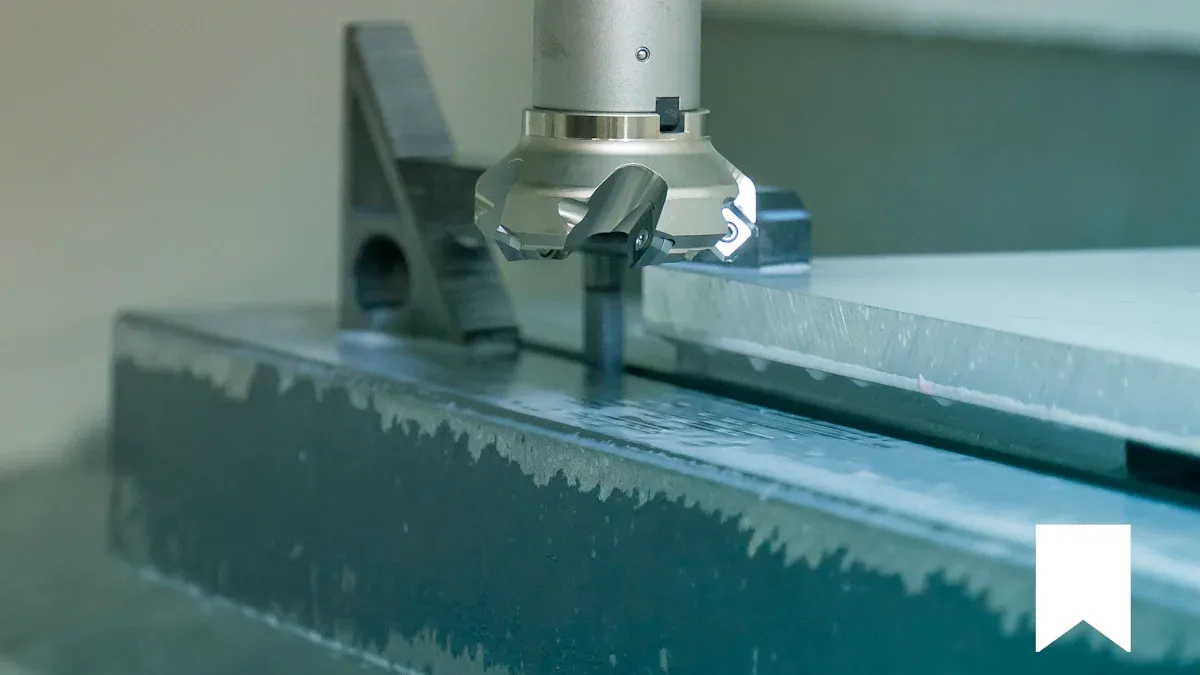
CNC prototyping offers unmatched speed and precision, making it essential for industries requiring high-quality prototypes. For example, the medical field benefits from fast prototyping of life-critical devices, while electronics achieve tight tolerances for specialized materials. The table below highlights how CNC enhances rapid prototyping across various industries:
Industry | Benefits of CNC Prototyping |
|---|---|
Electronics | Handles specialized materials with tight tolerances, enabling rapid production after prototyping and testing. |
Firearms | Ensures accuracy and precision with ultra-tight tolerances, integrating quality assurance and tracking capabilities. |
Medical | Provides impeccable precision for life-dependent devices, with fast prototyping reducing time to market. |
Optical | Saves time in prototyping and production, allowing for design improvements and high-quality control. |
Key Takeaways
CNC prototyping is fast and accurate, perfect for industries needing precise models like medical and aerospace.
CNC machines can quickly change designs, helping prototypes match needs and speeding up production.
CNC prototyping works with many materials, making it useful for cars, electronics, and more, allowing flexible product creation.
Understanding CNC Prototyping and the CNC Machining Process
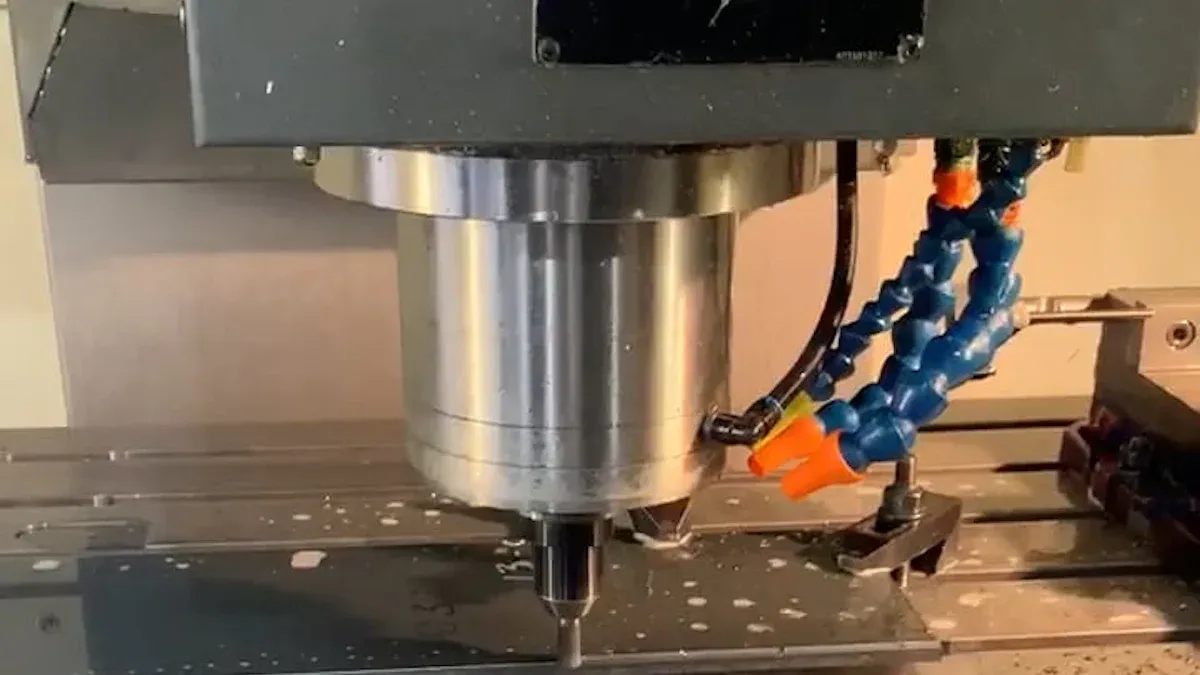
What is CNC Prototyping?
CNC prototyping involves using computer-controlled machines to create precise prototypes from digital designs. This method allows you to transform your ideas into tangible models with exceptional accuracy. CNC machines operate by following programmed instructions, ensuring consistency and repeatability in every prototype. Whether you need a single prototype or multiple iterations, CNC prototyping delivers high-quality results that meet your exact specifications.
How the CNC Machining Process Works
The CNC machining process follows a structured approach to ensure efficiency and precision. Here’s how it works:
Design Concept: You start by generating multiple designs for your product.
3D File Creation: These designs are converted into 3D models using CAD software.
Production Sequence Identification: The machining steps are determined to optimize the process.
CNC Programming: Specific instructions are programmed into the CNC machine.
Automated Machining: The machine executes the instructions to produce the prototype.
This process eliminates the need for manual intervention, reducing errors and saving time. You can also make quick modifications to designs, ensuring the prototype aligns with your requirements.
Key Features of the Rapid Prototyping Process with CNC
CNC rapid prototyping stands out due to its defining features:
High Precision and Accuracy: CNC machines minimize human errors, ensuring exact specifications.
Time-Saving Process: Unlike other methods, CNC does not require molds, speeding up production.
Material Compatibility: CNC supports a wide range of materials, from metals like aluminum to plastics like ABS.
Consistency: Automated processes ensure every prototype meets the same quality standards.
These features make CNC rapid prototyping an ideal choice for industries requiring reliable and efficient prototyping solutions.
Advantages of CNC Rapid Prototyping
Speed and Efficiency in the Rapid Prototyping Process
CNC prototyping excels in speed and efficiency, making it the best rapid prototyping solution for industries that demand quick turnarounds. CNC machines operate with high-speed machining capabilities, removing material faster and reducing production time. By optimizing cutting paths and minimizing unnecessary movements, you can achieve faster results without compromising quality. Additionally, the rapid prototyping process eliminates the need for molds, allowing you to create prototypes directly from digital designs. This flexibility enables quick modifications to your models, ensuring your designs meet exact specifications in record time.
High Accuracy and Consistency in Prototypes
When you need high-quality parts with consistent results, CNC prototyping delivers unmatched precision. CNC machines follow programmed instructions to produce prototypes with tight tolerances, ensuring every piece meets your exact requirements. This level of accuracy is critical for applications like medical devices or aerospace components, where even minor deviations can lead to functionality issues. For example:
The heart simulator prototype required precise bonding of PC boards, achieved through acetone bonding to maintain functionality.
Custom fixtures ensured accurate fitting between CNC-machined and 3D-printed components, preventing structural instability.
Rigorous quality checks at every stage guaranteed consistent results and reliable assembly.
Material Versatility for Diverse Applications
CNC prototyping offers unparalleled material versatility, making it suitable for diverse applications. Whether you need lightweight metals, durable plastics, or advanced composites, CNC machines can handle them all. Here’s a breakdown of materials commonly used in CNC prototyping:
Metal Materials | Plastic Materials | Composite Materials | Other Materials |
|---|---|---|---|
Aluminum Alloys | ABS | Carbon Fiber Composites | Ceramics |
Stainless Steels | Nylon | Glass Fiber Composites | High-Density Foam Board |
Titanium Alloys | PEEK | Wood |
This flexibility allows you to create prototypes for industries ranging from automotive to medical, ensuring your designs are tailored to specific needs.
Cost-Effectiveness and Reduced Time to Market
CNC prototyping is a cost-effective process that helps you bring products to market faster. By reducing machining time through efficient cutting paths and high-speed machining, you can lower production costs significantly. Additionally, strategies like nesting multiple parts on a single material sheet minimize waste and optimize material usage. Here are some ways CNC prototyping saves costs:
Efficient material use reduces waste and maximizes resources.
High-speed machining increases material removal rates, cutting down production time.
Designing parts for single-setup machining minimizes labor and setup costs.
These advantages make CNC prototyping an ideal choice for businesses looking to streamline production while maintaining high-quality standards.
Applications of CNC Prototyping Across Industries
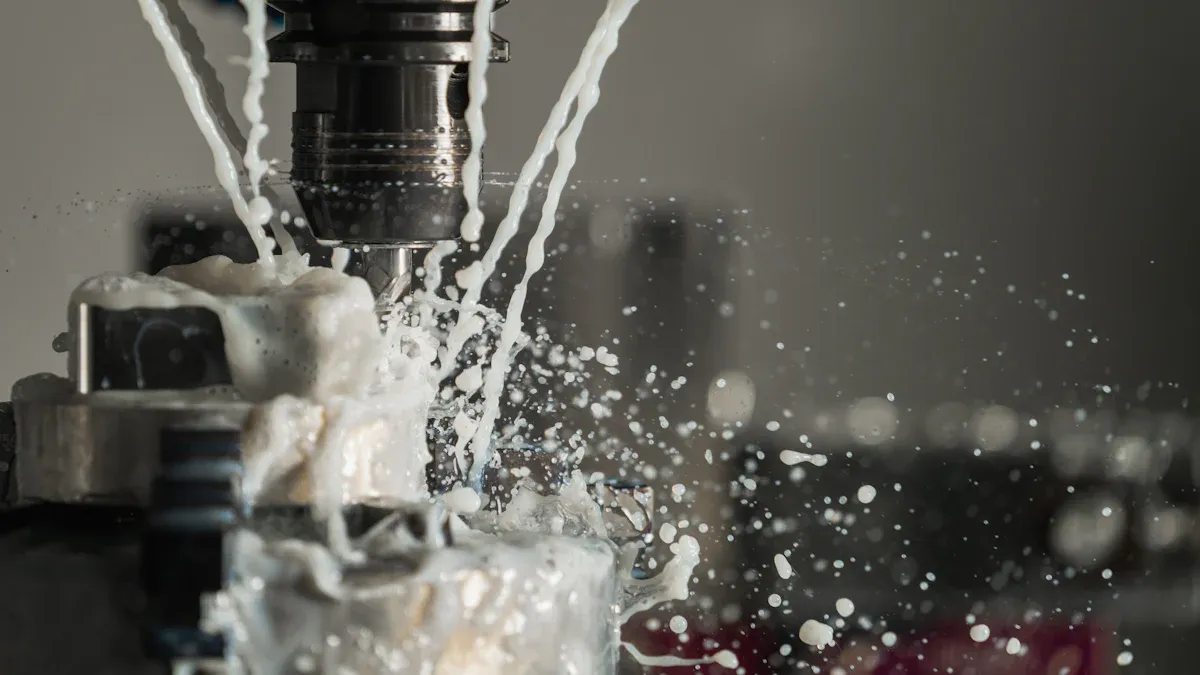
Automotive and Aerospace Innovations
CNC prototyping plays a pivotal role in automotive prototyping and aerospace advancements. You can use CNC machines to create precise components that meet the demanding standards of these industries. For example, CNC prototyping enables the production of critical parts like manifolds, bushings, and airfoils, which are essential for controlling fluid flow, supporting rotating parts, and improving aerodynamics. In aerospace, CNC machines help manufacture bulkheads, wing skins, and engine parts, ensuring high-quality results for complex designs. These components undergo rigorous testing, allowing you to make modifications quickly and refine your models for optimal performance.
Medical and Healthcare Prototyping
In the medical field, rapid prototyping with CNC has revolutionized the development of life-saving devices. CNC machines allow you to produce surgical instruments, orthopedic implants, and dental tools with unmatched precision. This accuracy ensures that prototypes meet strict quality standards, which is crucial for patient safety. Additionally, CNC prototyping supports the creation of prosthetics, diagnostic equipment, and cardiovascular devices. Whether you need handheld devices or implantable prototypes, CNC machines provide the flexibility to adapt designs and deliver reliable results. This adaptability accelerates the production process, helping you bring innovative healthcare solutions to market faster.
Consumer Electronics and Product Design
CNC prototyping is indispensable in consumer electronics and product design. You can use CNC machines to create prototypes for enclosures, housings, and intricate internal components. This process ensures that your designs are functional and aesthetically pleasing. Rapid prototyping allows you to test and refine your models, ensuring they meet user expectations. For example, CNC prototyping helps you produce sleek smartphone cases, durable laptop frames, and ergonomic wearables. By enabling quick modifications, CNC machines streamline the design process and reduce time to market, giving you a competitive edge in the fast-paced electronics industry.
Industrial Manufacturing and Tooling
In industrial manufacturing, CNC prototyping enhances efficiency and precision. You can rely on CNC machines to produce custom tooling, molds, and fixtures that meet exact specifications. This capability is essential for industries that require high-quality prototypes for mass production. CNC prototyping also supports the creation of durable components for heavy machinery, ensuring they withstand rigorous use. By using CNC machines, you can optimize designs, reduce waste, and improve overall production quality. This approach not only saves time but also minimizes costs, making CNC prototyping a valuable asset for industrial applications.
CNC Prototyping vs. Other Rapid Prototyping Methods
CNC Prototyping vs. 3D Printing
When comparing CNC prototyping and 3D printing technology, each method offers unique advantages. However, CNC prototyping stands out for its speed, precision, and material versatility. The table below highlights the key differences:
Feature | CNC Machining | 3D Printing |
|---|---|---|
Speed | Generally faster for larger production runs | Can be slower for complex geometries |
Precision | High accuracy and precision | Good accuracy, but may vary based on technology |
Material Options | Wide array of production-grade materials | Can use materials difficult to machine, like TPU |
CNC machines excel in creating fully functional prototypes with tight tolerances, making them ideal for industries requiring high-quality control. Additionally, CNC prototyping allows for quick and easy modifications to designs, ensuring you can adapt your models efficiently. While 3D printing offers flexibility for intricate geometries, CNC machining remains the preferred manufacturing technique for building correct models with production-grade materials.
CNC Prototyping vs. Injection Molding
CNC prototyping offers several advantages over injection molding, especially for rapid prototyping purposes:
CNC prototyping eliminates the need for costly molds, making it economical for multiple design iterations.
It allows for rapid production once the design is approved, helping you get your product to market faster.
CNC machines deliver high precision, minimizing material waste and reducing costs.
CNC machining produces prototypes at a much faster rate than injection molding.
It ensures improved performance accuracy during testing and demonstrations.
Prototypes created through CNC can also serve as training models or tools for solving defects.
These benefits make CNC prototyping a more efficient and cost-effective choice for industries aiming to streamline their prototyping process.
Why CNC Prototyping is the Superior Choice
CNC prototyping combines speed, precision, and material versatility, making it the superior choice for rapid prototyping. Recent advancements in CNC technology further enhance its capabilities. Hybrid manufacturing now integrates subtractive and additive processes, enabling the creation of complex parts while reducing production time. Automation and robotics improve productivity and free up technicians for more complex tasks. Multi-axis machining enhances flexibility, allowing for intricate features and better surface finishes.
By leveraging CNC prototyping, you can get your product to market faster while maintaining high quality. The ability to create fully functional prototypes using production-grade materials ensures performance accuracy during testing. This manufacturing technique also supports quick modifications, helping you refine your designs and build correct models efficiently.
CNC prototyping offers unmatched benefits for rapid prototyping, making it the go-to solution for businesses across industries. You can rely on its speed and precision to create accurate prototypes that meet stringent specifications. By using CNC, you streamline your process, reduce costs, and bring your designs to market faster. Its ability to handle complex models and diverse materials ensures your prototypes perform reliably during testing. Industries like automotive, aerospace, and medical have already leveraged CNC technology to enhance their prototyping processes. You can do the same to achieve high-quality results and gain a competitive edge.
FAQ
What industries benefit the most from CNC prototyping?
CNC prototyping benefits industries like automotive, aerospace, medical, and electronics. You can create precise, functional prototypes tailored to specific needs in these fields.
How does CNC prototyping save time compared to other methods?
CNC prototyping eliminates mold creation and uses automated machining. This allows you to produce prototypes directly from digital designs, reducing production time significantly.
Can CNC machines handle complex designs?
Yes, CNC machines excel at creating intricate designs. Their multi-axis capabilities allow you to produce prototypes with detailed features and superior surface finishes.
See Also
Overcoming Hurdles: Improving CNC Prototyping Precision And Speed
Streamlined CNC Machining Solutions For Accurate Production
Investigating CNC Machining Options For High-Quality Manufacturing
The Impact Of CNC Machining On Advanced Precision Production
Revealing CNC Machining Accuracy Within The Aerospace Sector
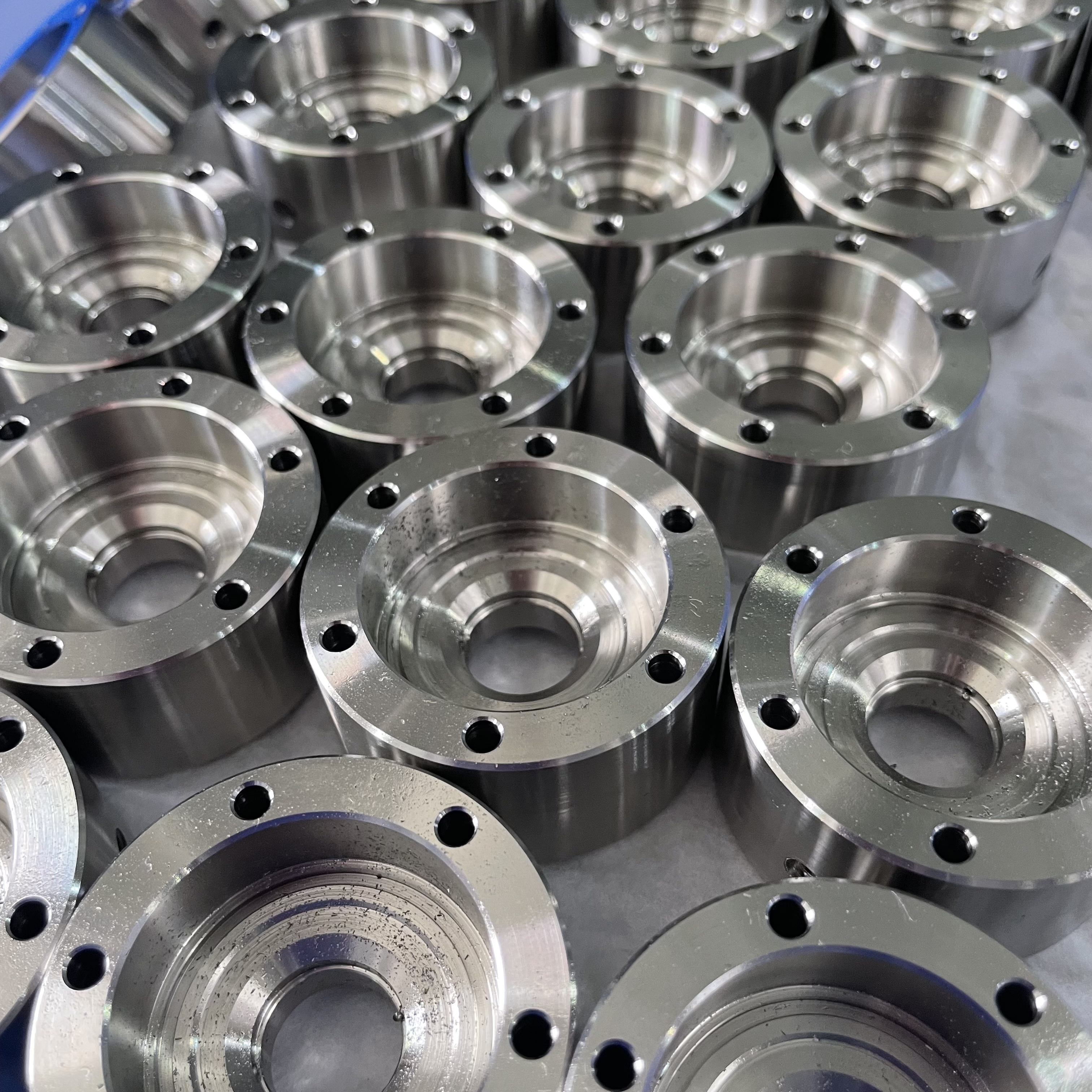
About US
Follow Us
Your prototype holds unparalleled significance, and we deeply value its uniqueness. Collaborating with you during the preparation phase for running your prototype or parts is a commitment we gladly embrace. Whether it's a single part or a complex assembly, we are dedicated to selecting the optimal tools and pathways to bring your envisioned product to life.
At Precision Fab CNC Machining, we specialize in producing parts for prototypes, short runs, and high-volume production. Our prototyping machine capabilities extend across metal, plastic, and wood machining, with welding fabrication services available to complement and finalize your prototype if required.
Address
Address: Room320 10F, Building A,Nanshan international building, Dayawan District, Huizhou, Guangdong, 516001 China
Contacts
billy@timaycnc.com